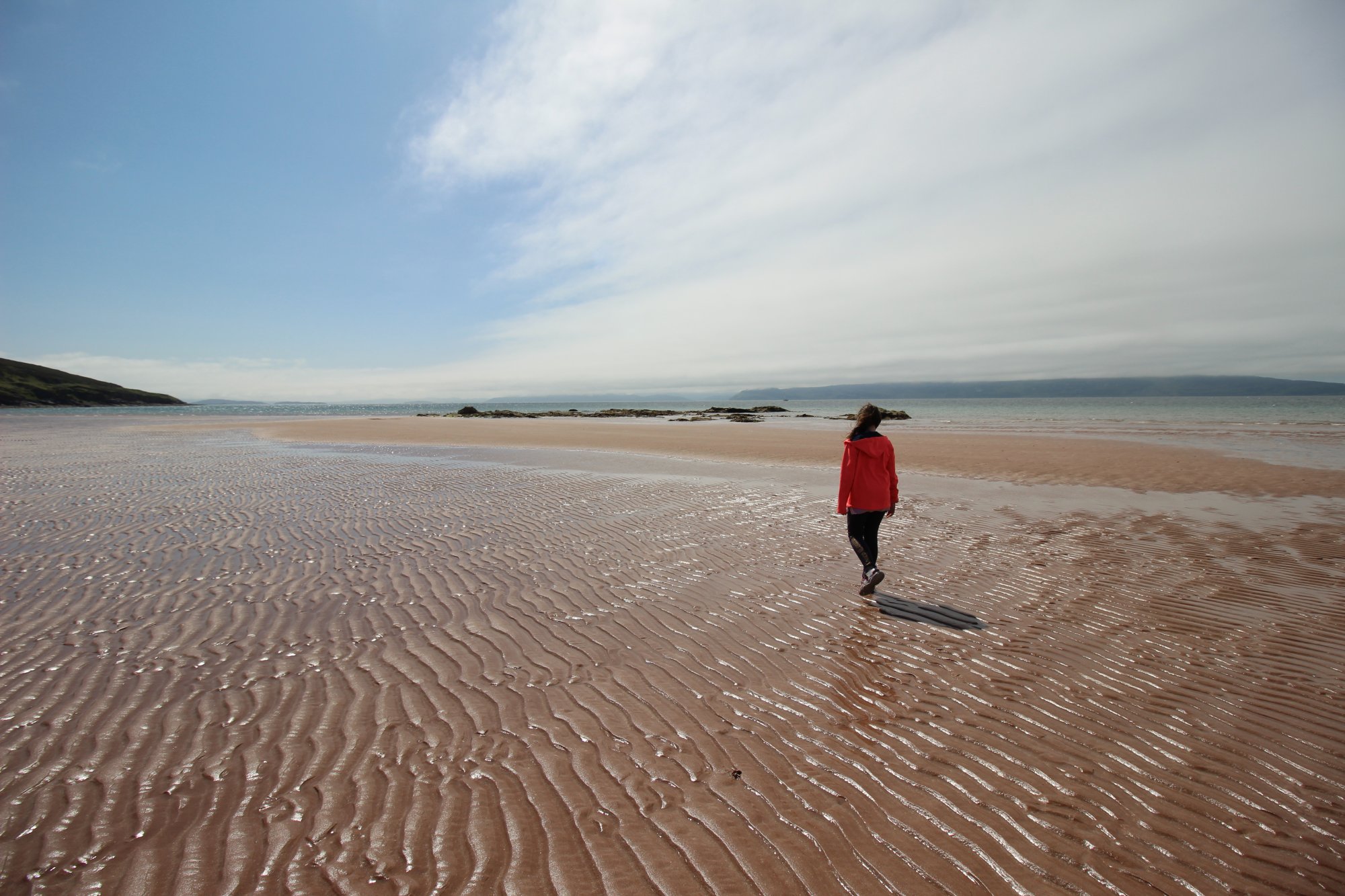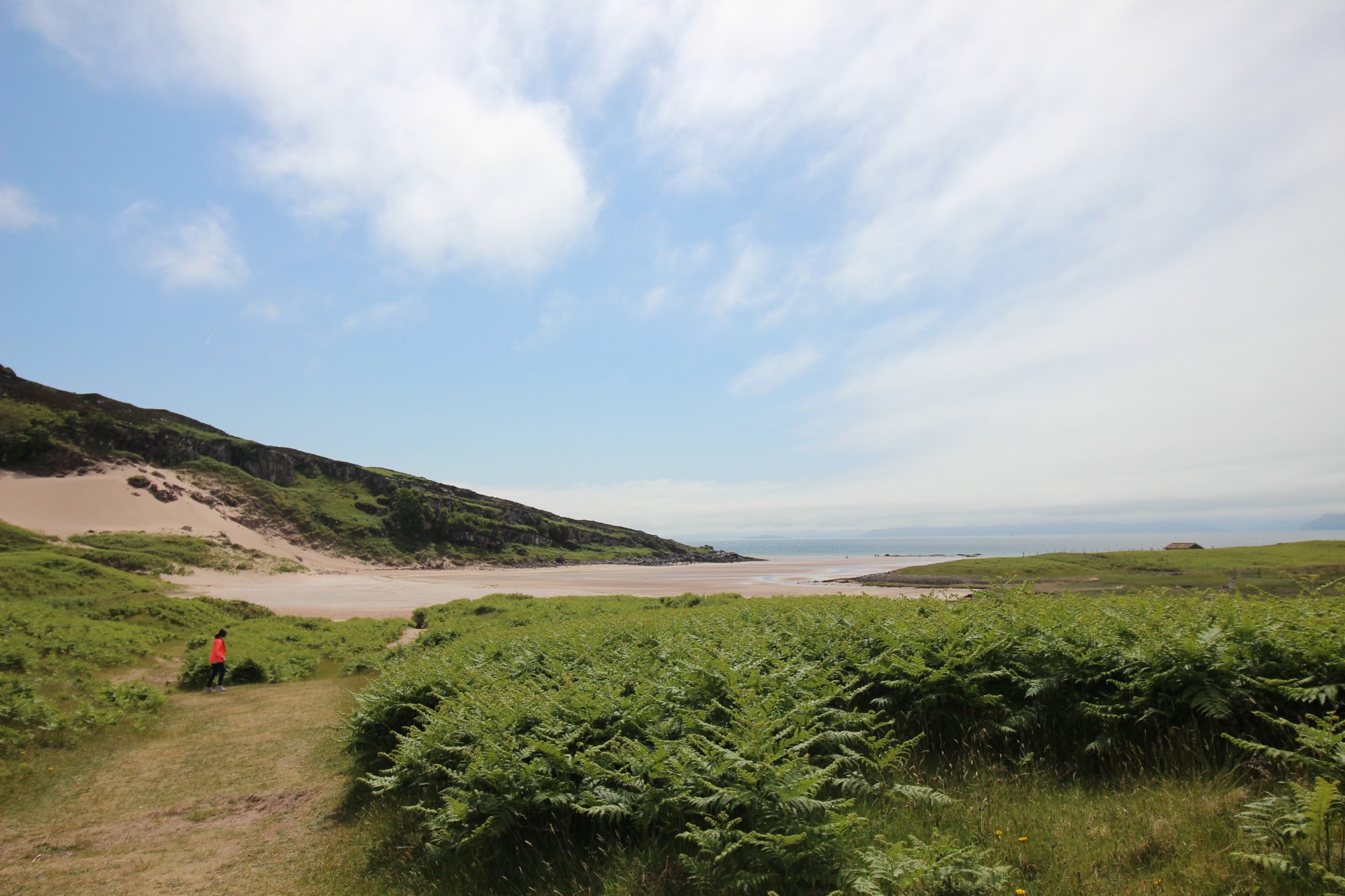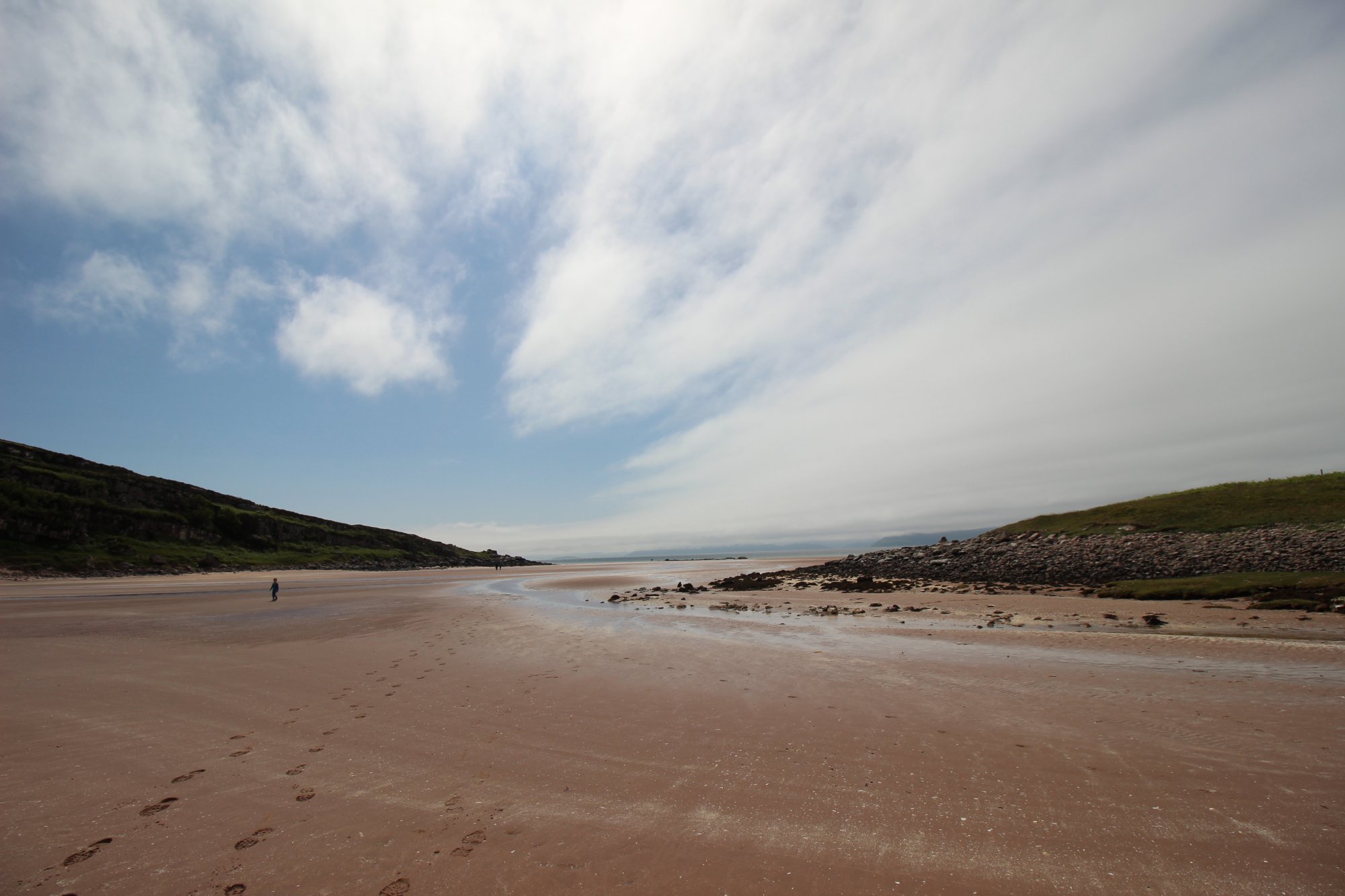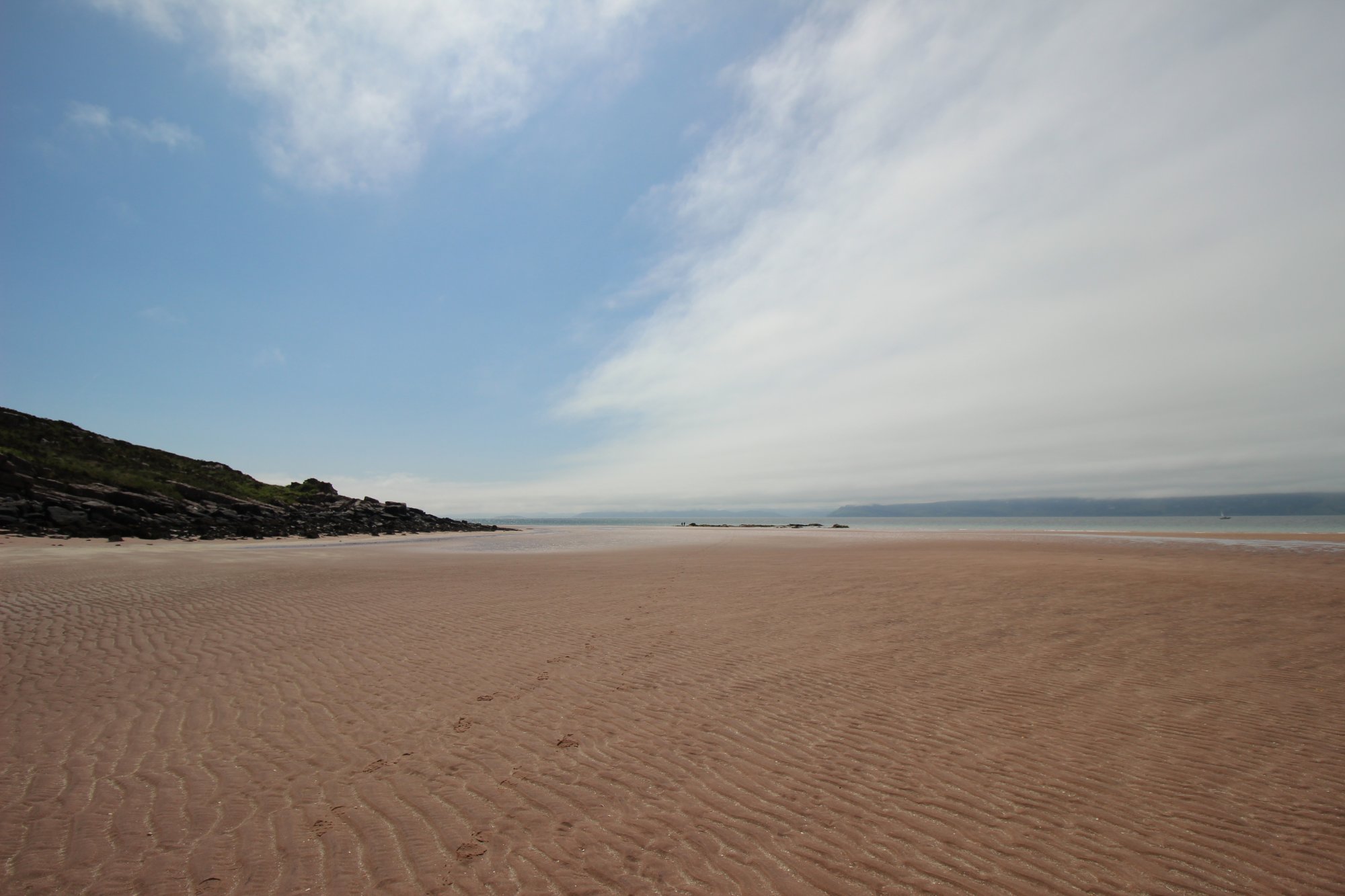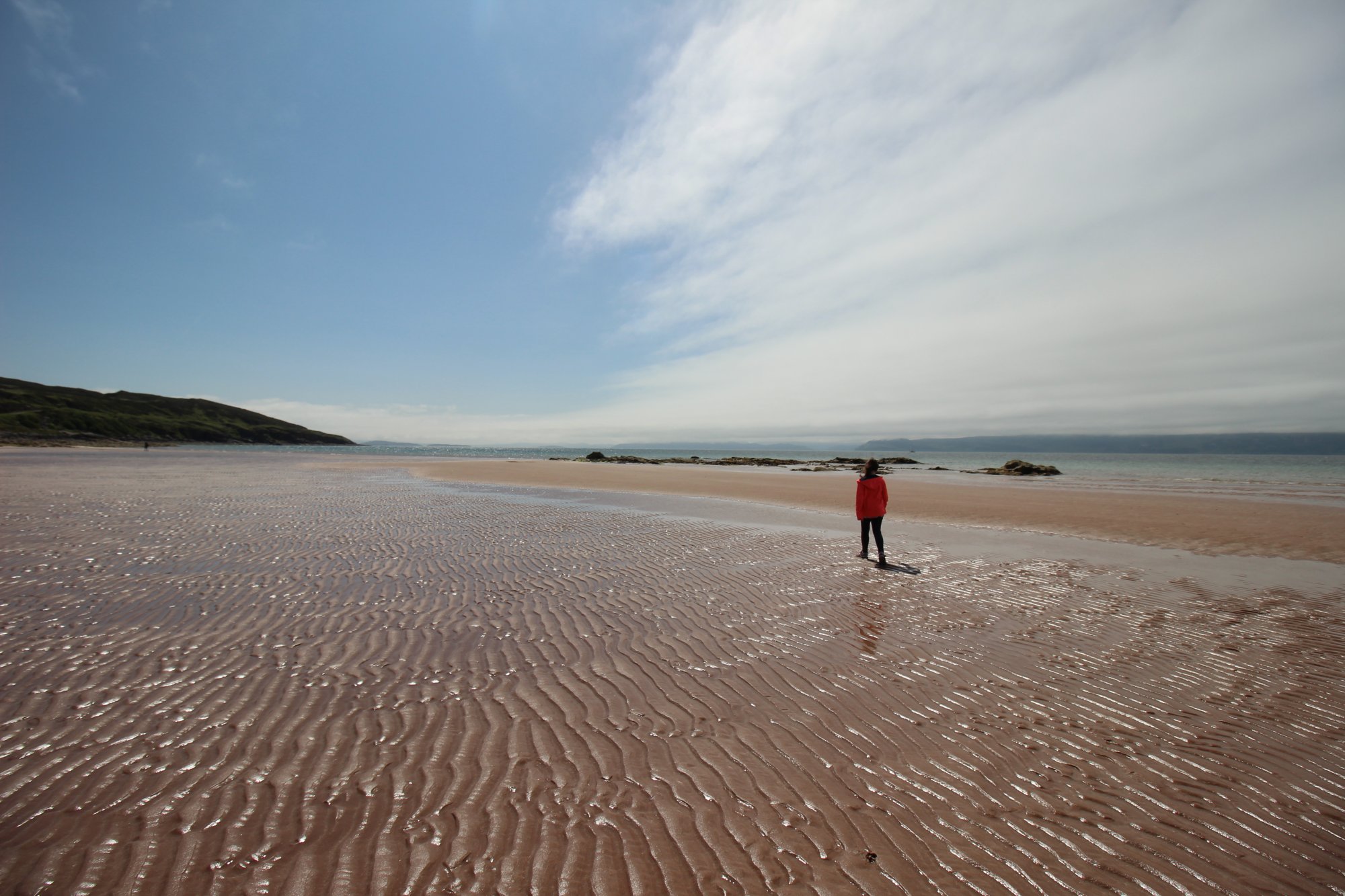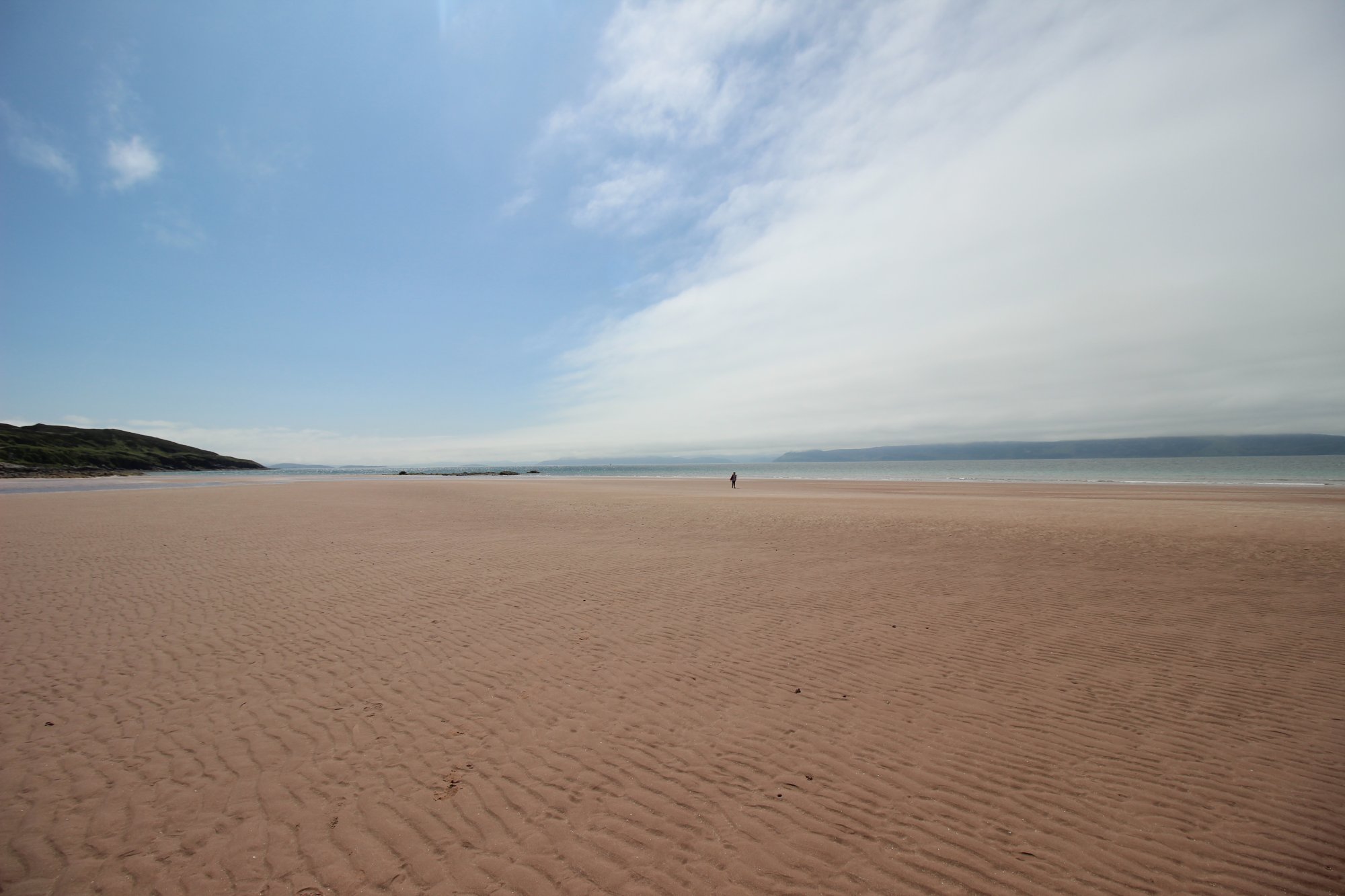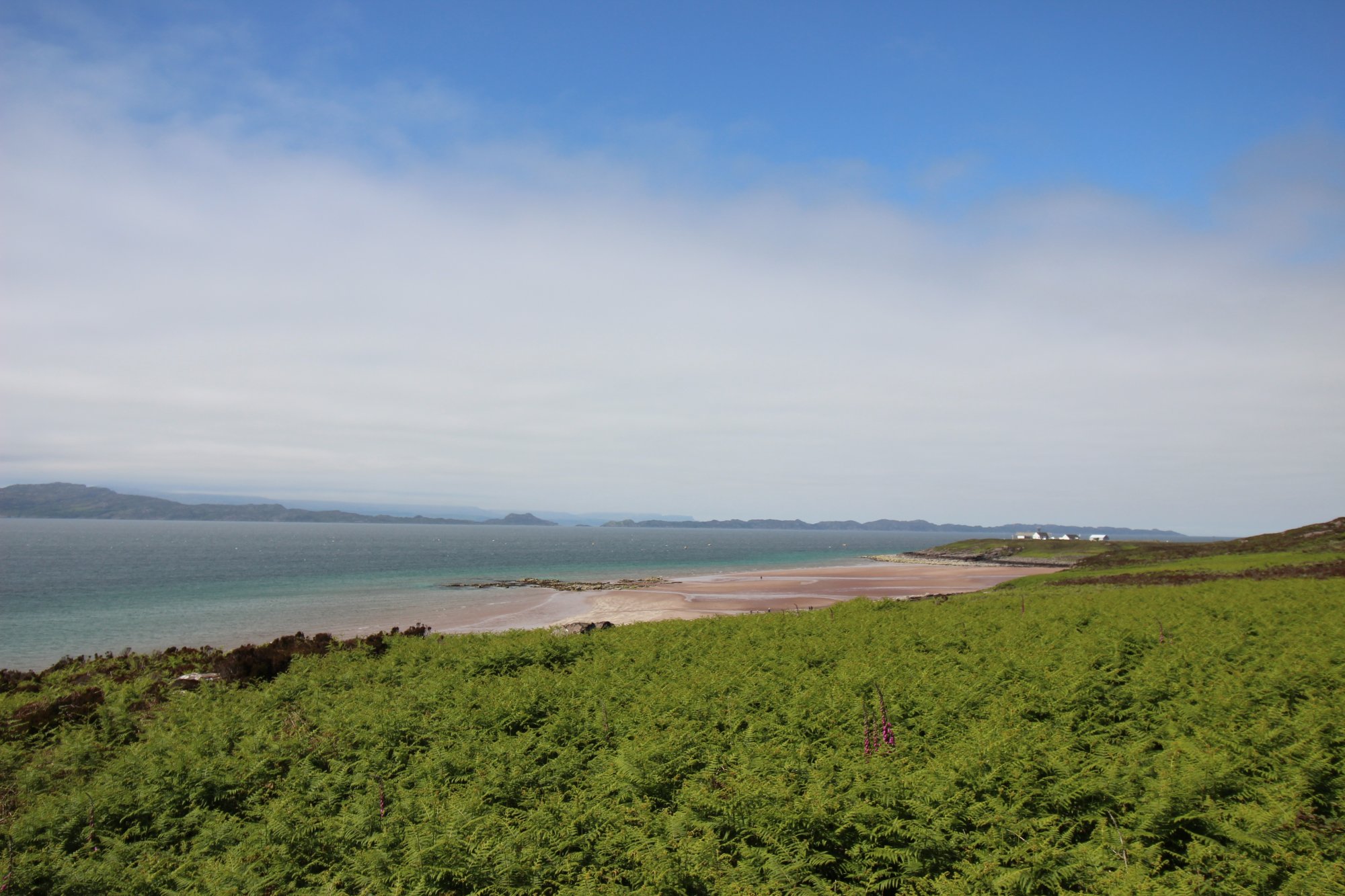


While most visitors to the Applecross Peninsula stop at the bay in front of the village, those who venture just four miles further north along the "Coast Road" are rewarded with a much more dramatic sight: Applecross Sands. Known locally as Sands Beach, this is a vast, wind-swept expanse of white sand and turquoise water that feels like a piece of the Outer Hebrides has been grafted onto the mainland.
Framed by towering cliffs and dominated by a massive, sloping sand dune, Applecross Sands is a place of raw Atlantic beauty. It is far removed from the manicured gardens of the village, offering a sense of isolation and grandeur that makes it a mandatory stop for photographers and nature lovers exploring the North Coast 500 (NC500).
The Landmark: The Great Sand Dune
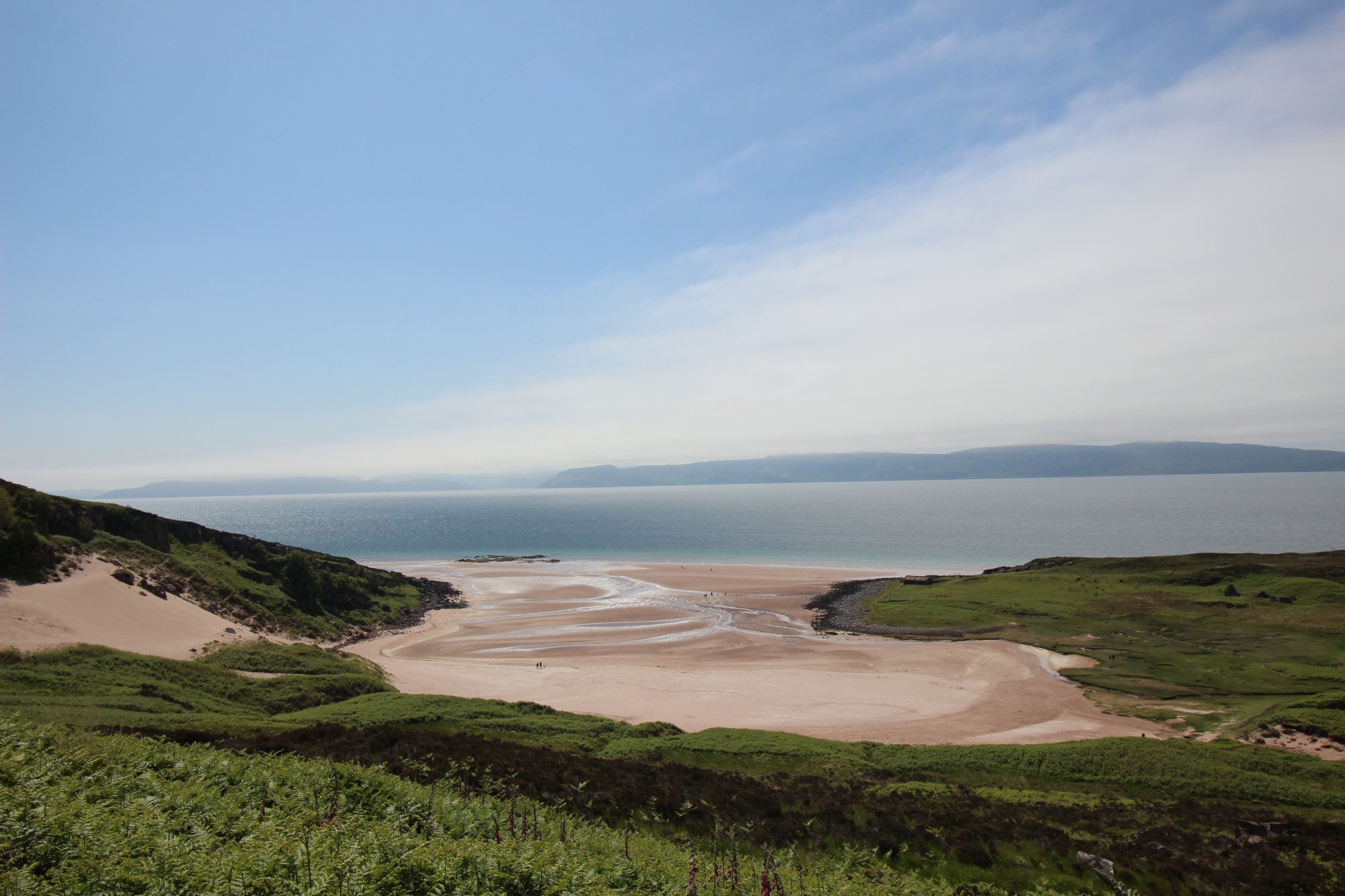
The most striking feature of Applecross Sands is the enormous sand dune that rises from the beach to meet the road. This isn't just a small hill of sand; it is a gargantuan slope that has become a natural playground for visitors.
For generations, children (and adventurous adults) have made it a rite of passage to climb to the very top and run—or tumble—down the steep face toward the sea. From the crest of the dune, you are treated to one of the most spectacular views in Wester Ross, looking straight across the Inner Sound to the Isles of Raasay and Rona, with the jagged peaks of the Isle of Skye forming a dramatic horizon.
A Cinematic Legacy: Monty Halls’ Great Escape
In 2009, Applecross Sands gained international fame as the primary filming location for the BBC series Monty Halls’ Great Escape. The series followed the marine biologist as he turned his back on city life to become a crofter in this remote corner of Scotland.
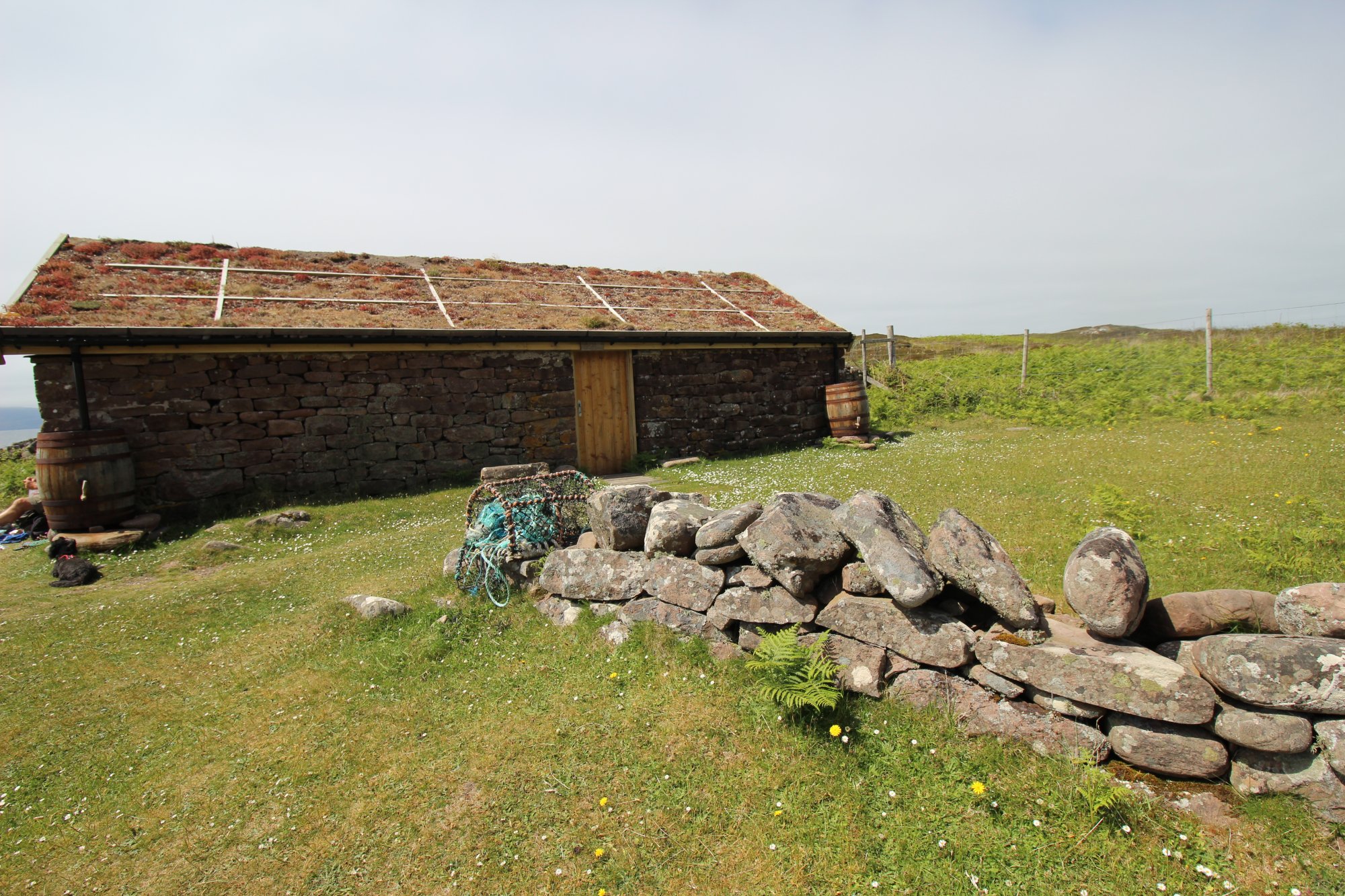
The "Bothy" used in the show is located nearby, and the beach itself featured prominently in almost every episode. This television exposure helped put Applecross on the map for a new generation of travelers, highlighting the beach as the ultimate symbol of the "good life"—a place of self-sufficiency, stunning wildlife, and a deep connection to the land.
The Mesolithic Shelter: Touching Ancient History
Applecross Sands is not just a place of natural beauty; it is a site of immense archaeological importance. Tucked into the cliffs at the northern end of the beach is a Mesolithic rock shelter, one of the oldest inhabited sites in Scotland.
Excavations here have revealed that hunter-gatherers were using this shelter approximately 9,500 years ago. Archaeologists found "middens" (ancient rubbish heaps) containing shells, fish bones, and stone tools, suggesting that these early Scots relied heavily on the rich marine life of the bay. Standing at the mouth of the shelter today, looking out over the same waters that supported humans at the end of the last Ice Age, provides a profound sense of historical continuity.
The Landscape: Machair and Marine Life
The area surrounding the beach is a botanical treasure. The "machair"—a rare, fertile coastal grassland found only in western Scotland and Ireland—comes alive in the spring and summer with a carpet of wildflowers, including harebells, bird's-foot trefoil, and several species of orchid.
In the water, the bay is a haven for marine life:
- Seal Spotting: Harbour and grey seals are frequent visitors to the bay, often seen bobbing in the surf or resting on the rocky outcrops at the edges of the sands.
- Birdlife: Keep an eye out for oystercatchers and ringed plovers nesting in the shingle, as well as majestic Golden Eagles and Sea Eagles which are known to hunt along the cliffs of the peninsula.
- Shell Hunting: Because of the Atlantic currents, the beach is often strewn with interesting shells and sea glass, making it a perfect spot for beachcombing after a winter storm.
Practical Tips for the 2026 Season
- Access and Parking: There is a dedicated parking area at the top of the big dune. In 2026, this area remains popular, so arriving early is advised. From the car park, the descent to the beach is via the sand dune itself—it is a fun way down but a steep and sandy workout on the way back up!
- Facilities: Like many of the best beaches in the Highlands, there are no toilets, shops, or cafes at Applecross Sands. The nearest amenities are four miles away in Applecross Village. Always bring your own water and ensure you "Pack It In, Pack It Out" to keep this pristine environment clean.
- Conservation: The dunes and the machair are extremely fragile environments. Visitors are encouraged to stick to established paths where possible to avoid eroding the grass that binds the sand together.
- Photography: The best light for photography is usually in the late afternoon or "golden hour," when the sun sets behind the Isle of Skye, casting a warm glow over the white sands and the red sandstone cliffs.
Why Applecross Sands is Essential
Applecross Sands is the "wild heart" of the peninsula. It offers a scale and a sense of freedom that the more sheltered Applecross Bay cannot match. Whether you are retracing the steps of Monty Halls, exploring the ancient rock shelter of our Mesolithic ancestors, or simply feeling the Atlantic wind on your face as you stand atop the great dune, the beach is a powerful reminder of Scotland’s rugged, timeless beauty. It is a place that demands you slow down, breathe the salt air, and appreciate the sanctuary that is Applecross.
Applecross Sands
Ross and Cromarty
Jola's score:

Bart's score: