Roads and Transportation
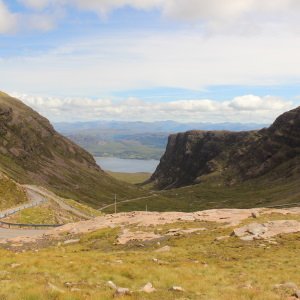
The best way to travel around Scotland is to have your own car or rent one. To rent a car in Scotland, you must have a driving license (valid for at least one year), an identity document (usually a passport) and money for a deposit (approximately £200). The rental price depends on the class of the car and ranges from 10 to 50 pounds. In Scotland, traffic drives on the left, but thanks to the large number of roundabouts there are not many complicated intersections and it is not a big problem to adapt your driving habits to the right. Despite the fact that Scotland is a relatively modern and prosperous country, there are only motorways in the central part of the country, between Edinburgh and Glasgow, between Edinburgh and Aberdeen, and between Glasgow and the border with England. They are all free, as are all bridge crossings. Leading to the far north is the longest road in Scotland and the fifth longest road in the UK, the A9 between Falkirk and Thurso. It is 439 km long and has the status of an expressway, with partial fragments of a multi-lane road. Intensive work has been going on for several years to turn this road into a full highway. The remaining roads, especially those in the north and on the islands, are narrow and winding, as well as extremely picturesque, so they are often an attraction in themselves. The most beautiful, in our opinion, are all the roads of the North Coast 500 route (including Torridon and Bealach na Ba), as well as our favorite routes: - A830 between Fort William and Mallaig, - B869 between Lochinver and Clachtoll, - A82 via Rannoch Mor and Glen Coe, - A93 between Blairgowrie to Breamar, - B8007 on the Ardnamurchan peninsula between Salen and Sanna Bay (please note that this is quite a difficult route), - B8073 and B8035 routes on the Isle of Mull to Eas Fors Falls and Ben More Mountain (also quite demanding), - all roads on the Isle of Harris, - roads near Glen Valtos on the Isle of Lewis, - unmarked road through Glen Etive, - unmarked route between Mount Stac Pollaidh and Inverkirkaig and many others. However, the combination of scenic and winding nature of these roads can lead to accidents, so be careful. You can get to most of the Scottish islands by ferry. Depending on the route, they differ in size and, consequently, in the number of vehicles transported. For most routes, it is better to book tickets in advance, unless you are traveling without a car, then your place on board is always guaranteed. The most popular ferry crossings are: - from Ardrossan to the Isle of Arran, - from Oban to the Isle of Mull, Barra and South Uist, - from Oban to the islands of Tiree and Coll, - from Mallaig to the Isle of Skye, although you can also get there by the bridge at Kyle of Lochalsh, - from Mallaig to the islands surrounding the Isle of Skye: Muck, Eigg, Rum and Canna, - from Aberdeen to Orkney and Shetland, - from the Isle of Skye (Harbor Uig) to the Isles of Harris and North Uist, - from Ullapool to the Isle of Lewis, - from Gills Bay to Orkney, - from the Isle of Mull (Fionnport) to the Isle of Iona (no car allowed) and many others. Recently, traveling in campervans has become very popular, which certainly solves the problem of accommodation and therefore makes travel planning more flexible, although they are increasingly criticized by local residents of northern Scotland and the Hebrides. As we have already written, the roads there are often narrow and winding, so heavy campervan traffic in these regions is undesirable. Apart from the problems with keeping cleanliness by some tourists (including pouring waste directly onto the roadside), a particularly big problem is parking in passing places, which unfortunately some drivers treat as parking bays, which creates problems for the local population and emergency services. Campervans also take up a lot of space on ferries, which means that local residents have problems communicating with the mainland. This has led to regulations that allow campervans to enter only on presentation of a valid reservation and they cannot wait in the standby queue. As far as we know, most locations can be reached by public transport. There is extensive rail and bus infrastructure in Scotland - both locally and intercity. Of course, using public transport involves adapting your plans to timetables and also takes more time due to possible transfers. It should be mentioned that people over 60 years of age have free bus travel and a significant discount on railways.