




Eas a' Bhradain: Skye’s Most Accessible Natural Wonder
For many travelers journeying through the Isle of Skye, the first true encounter with the island’s raw, hydraulic power occurs at Eas a' Bhradain. Known colloquially as the "Blackhill Waterfall," this stunning cascade is situated just off the main A87 artery, near the head of Loch Ainort. In 2026, it remains one of the most frequently photographed landmarks on the island, not merely because of its proximity to the road, but because of the breathtaking amphitheater of mountains that frame it. Eas a' Bhradain serves as a perfect introduction to the Isle of Skye: it is rugged, slightly wild, and deeply connected to the volcanic history of the Inner Hebrides.
A Triple-Tiered Spectacle in the Shadow of Giants
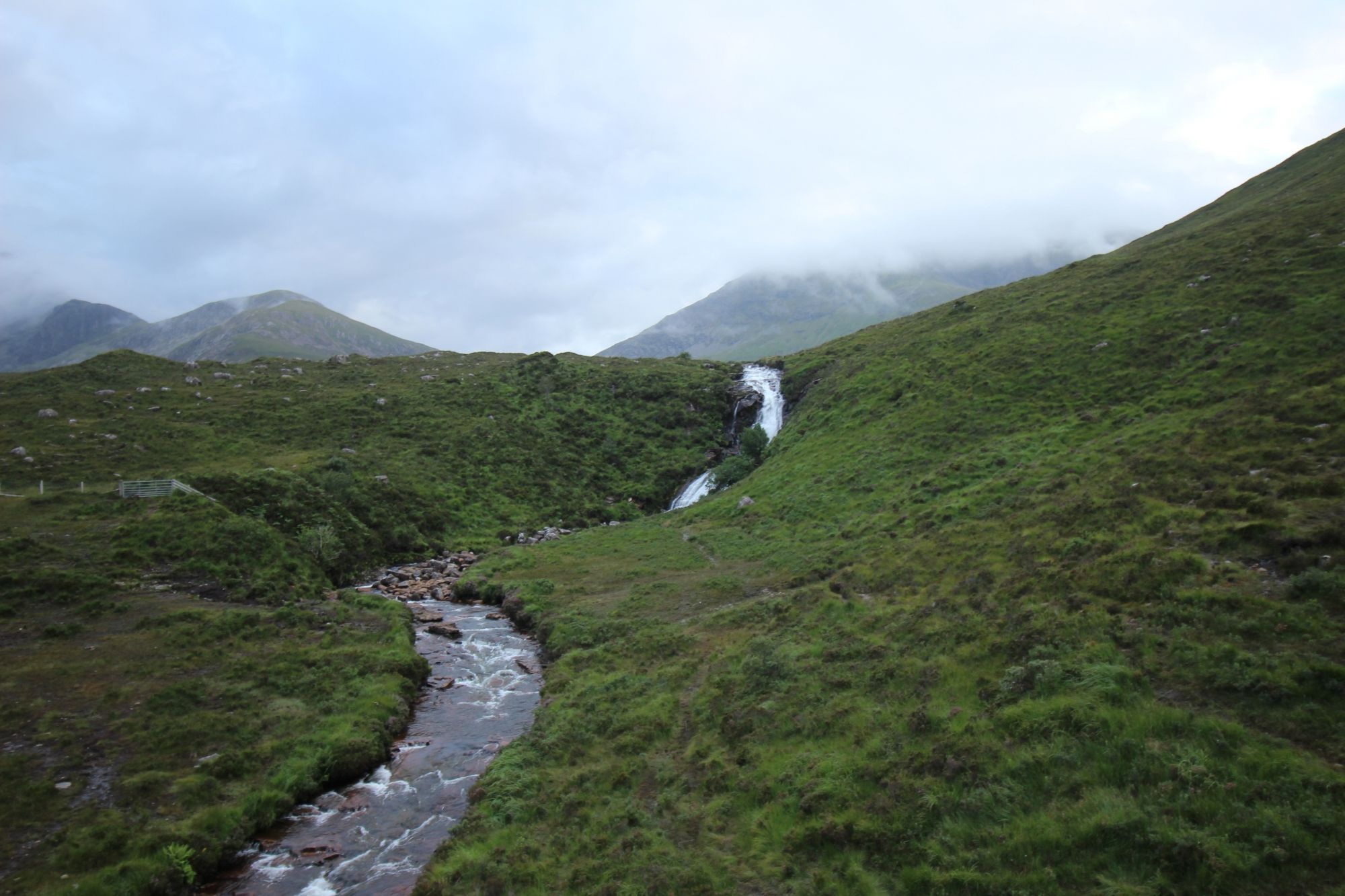
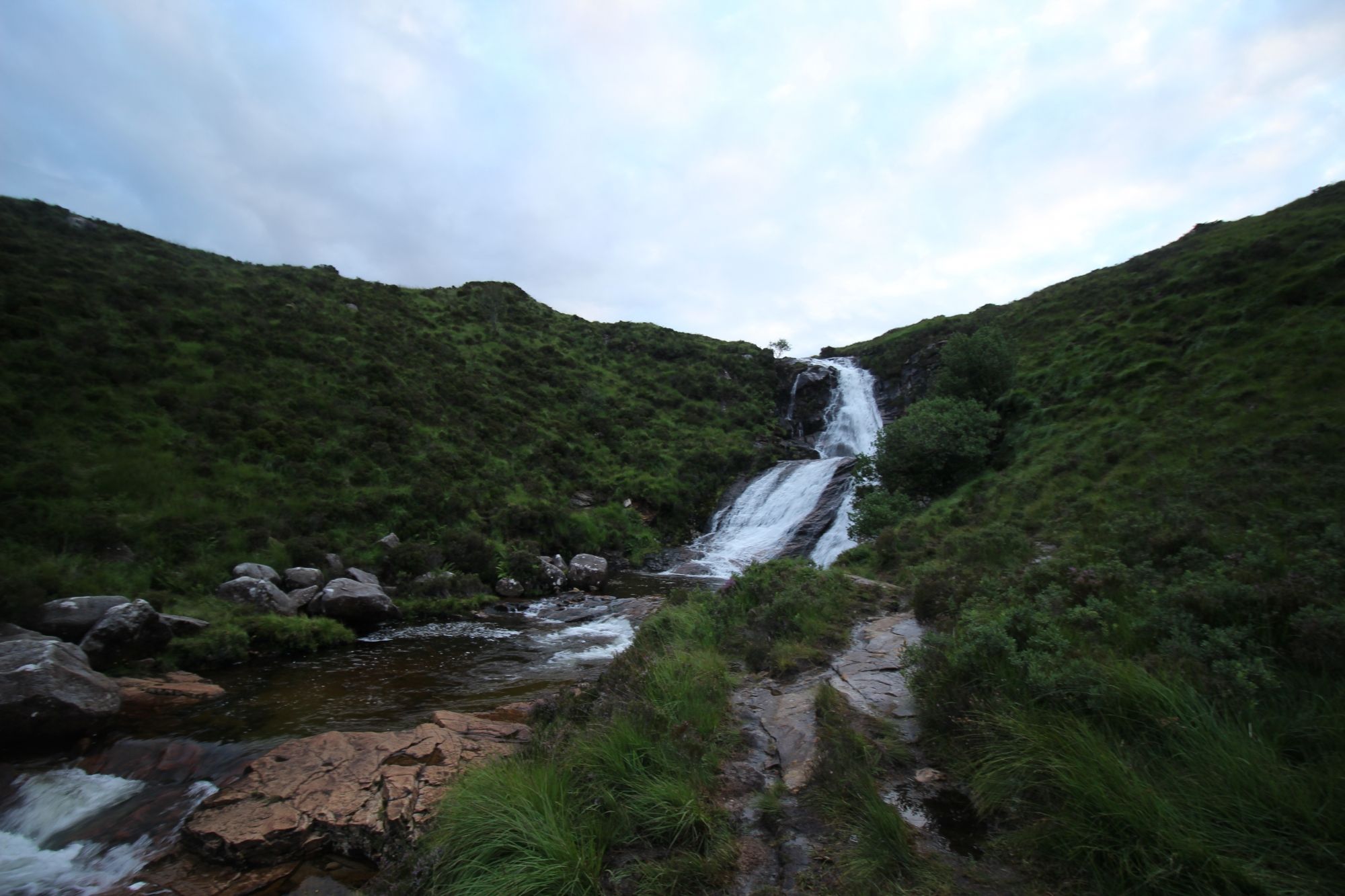
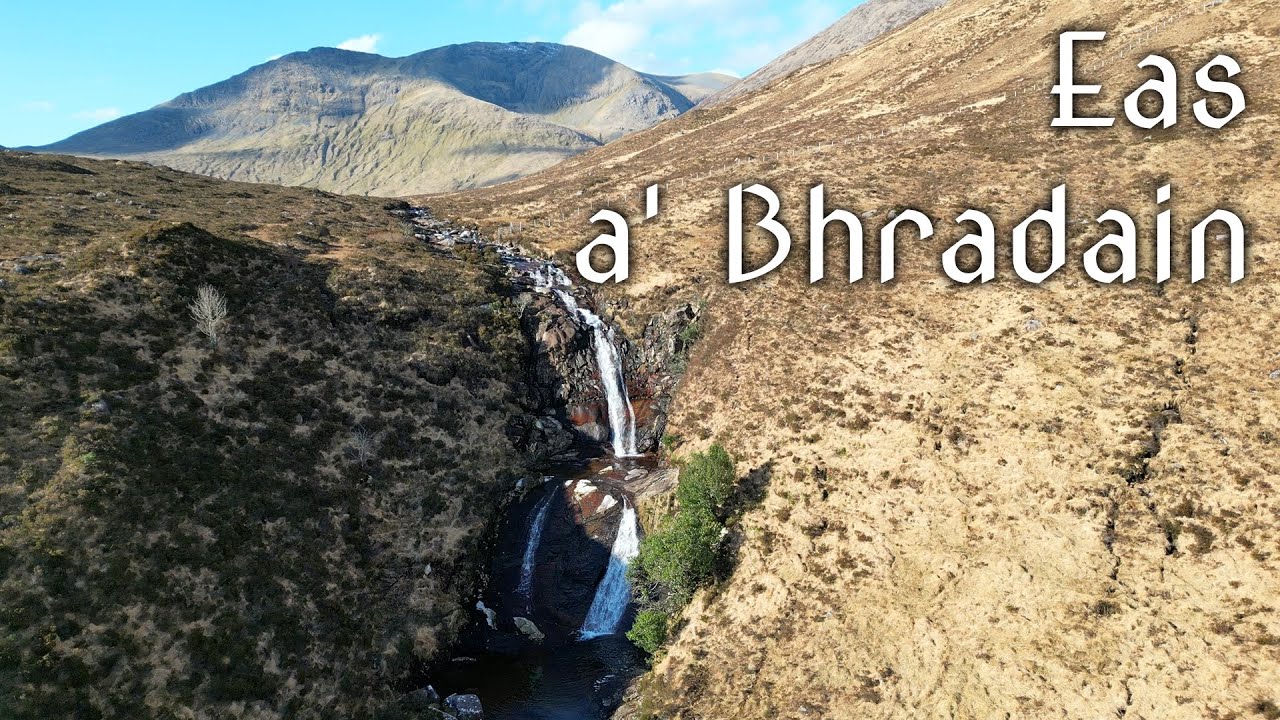
The name Eas a' Bhradain translates from Scottish Gaelic as the "Waterfall of the Salmon," a nod to the rich aquatic life that permeates the island’s river systems. Unlike the sheer, single-drop falls found elsewhere in the Highlands, Eas a' Bhradain is a multi-tiered masterpiece. The water spills over dark, volcanic rock in a series of broad, foaming cascades. While the total height is modest compared to the likes of Mealt Falls, the volume of water—especially after a typical Skye rain shower—creates a thunderous atmosphere that belies its size. The falls are cradled by the iconic Red Cuillin hills, whose rounded, granite peaks provide a softer, warmer contrast to the jagged gabbro of the Black Cuillin further west. To the right, the towering silhouette of Blà Bheinn (Blaven) keeps watch over the glen, often draped in a crown of Atlantic mist.
The Photographer’s Roadside Haven
In 2026, Eas a' Bhradain continues to be a staple for landscape photographers. The waterfall’s orientation makes it an ideal subject for long-exposure photography, where the white water creates a silken contrast against the dark, iron-stained rocks. What makes this spot truly special is the "layered" perspective it offers. A well-composed shot can capture the rushing water in the foreground, the rolling moorland in the middle ground, and the dramatic, scree-covered slopes of the Red Cuillins in the background. Because it is so accessible—located barely a hundred meters from a large roadside layby—it offers professional-grade scenery without the need for a multi-hour trek. However, its popularity means that during the peak 2026 season, the best light (often found at dawn or during the "blue hour") is highly coveted by those looking to avoid the midday tourist crowds.
Navigating the Skye "Bog Factor"
Despite its proximity to the A87, Eas a' Bhradain demands a level of respect common to all Highland adventures. The short path leading from the parking area to the base of the falls is notorious for its saturation. Even during the height of summer, the ground here acts as a giant sponge, retaining water in thick layers of peat and moss. In 2026, veteran Skye travelers still warn newcomers: do not attempt this walk in trainers. Waterproof hiking boots are an absolute necessity. The "bog factor" is a quintessential part of the Skye experience, and navigating the squelching terrain is a small price to pay for standing at the edge of the plunge pool, where the air is thick with cold spray and the scent of damp heather.
Geology and the Red Cuillin Amphitheater
The landscape surrounding Eas a' Bhradain is a textbook for Scottish geology. The waterfall sits at the meeting point of several distinct rock types. The Red Cuillin, which dominate the view to the front and left, are composed largely of granite, which weathers into the smooth, conical shapes seen today. This differs significantly from the Black Cuillin, which are formed of tougher gabbro. This geological diversity is why the light on Skye seems to change so rapidly; the granite of the Red Cuillin catches the evening sun, glowing in hues of pink and ochre, while the water of Eas a' Bhradain reflects the shifting moods of the Hebridean sky. It is a place where you can feel the immense tectonic forces that shaped Scotland millions of years ago.
Practical Information for the 2026 Season
- Location: On the A87, approximately 5 miles north of Broadford. Look for the large gravel layby on the seaward side of the road.
- Timing: The falls are most impressive after heavy rain. On dry days, they can become a gentle trickle, but Skye’s climate ensures this is a rare occurrence.
- Safety: The rocks around the base of the falls are extremely slippery due to algae and mist. Exercise extreme caution if stepping onto the stones for a better camera angle.
- Drone Use: In 2026, drone pilots are reminded to follow CAA regulations. While the falls are beautiful from the air, be mindful of the high winds that often funnel through the glen.
Conclusion: A Mandatory Skye Landmark
Eas a' Bhradain proves that a destination doesn't have to be remote to be magical. It offers a rare moment of profound beauty that is accessible to almost everyone, regardless of their hiking ability. As a gateway to the mountains of the south and the wonders of the north, it remains a mandatory stop on any Isle of Skye itinerary. Whether you are there for a five-minute stretch of the legs or an hour of serious photography, the "Waterfall of the Salmon" captures the spirit of the island in every drop of its rushing Highland water.