



The Chasm of Glen Coe: Capturing the Volcanic Gorges and Waterfalls at The Meeting of Three Waters
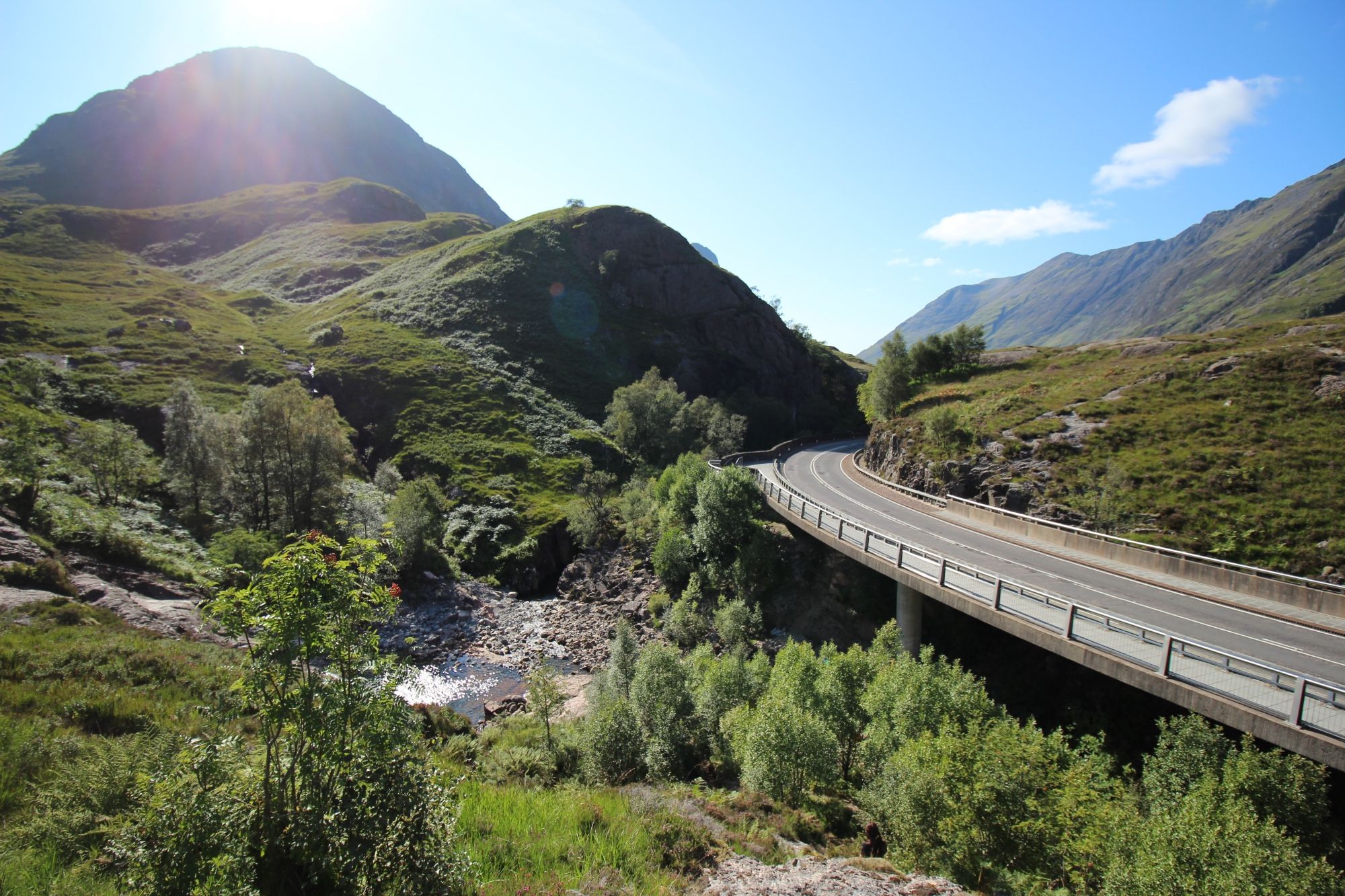
Deep within the precipitous mountain trough of historic Glen Coe, The Meeting of Three Waters stands as an exceptionally beautiful, high-yield hydrographic landmark where the wild mountain torrents of the Lochaber highlands collide. Situated directly at the base of the towering, near-vertical slopes of Gearr Aonach—one of the legendary Three Sisters of Glencoe—this spectacular geographic confluence is where three independent mountain streams merge before plunging into a churning, deep-cut rock chasm. Feeding directly into the River Coe network, the cascading waters roar through ancient wold geology shaped by prehistoric wold-collapse volcanic calderas and radical glacial carving. Positioned immediately adjacent to the iconic A82 trunk road, this accessible yet profoundly raw alpine environment serves as a vital visual hinge for independent wilderness explorers, long-distance hikers, and digital landscape filmmakers looking to capture the hydro-dynamic force of the Scottish Highlands.
The Hydrographic Blueprint: Glacial Hanging Valleys and Chasm Confluences
The unique spatial and auditory power of The Meeting of Three Waters lies in its strategic position at the base of the glen, funneling massive rainfall runoff from the high mountain massifs:
- The Triple Stream Convergence: The confluence brings together three distinct highland water sources. The primary volume is driven by the Allt Coire nam Beithach, draining the high hanging valley between Bidean nam Bian and Gearr Aonach, supplemented by the tumbling waters flowing from the high passes of the atmospheric Lost Valley (Coire Gabhail) and the main upper tributary of the River Coe running parallel to the glen floor.
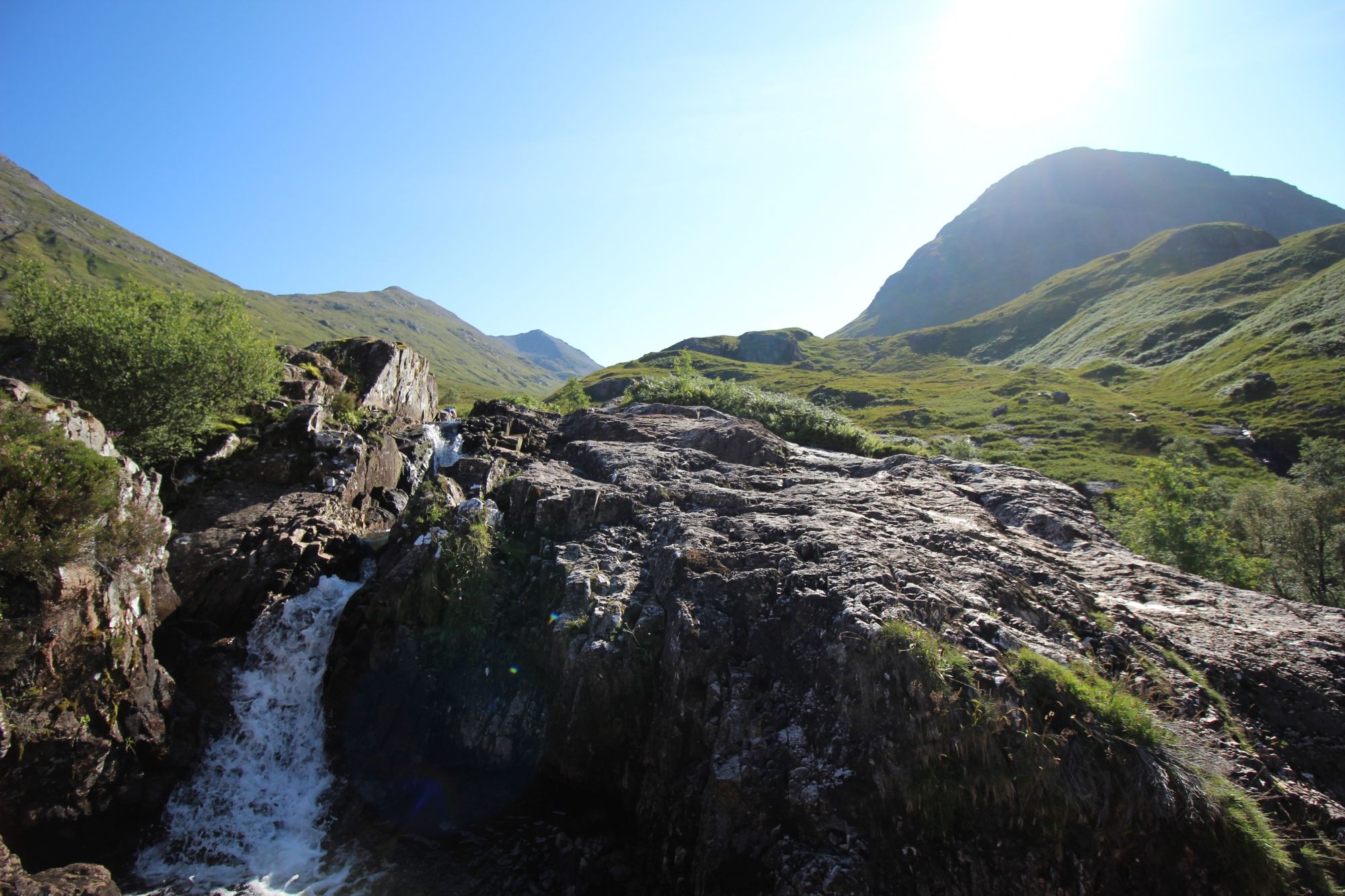
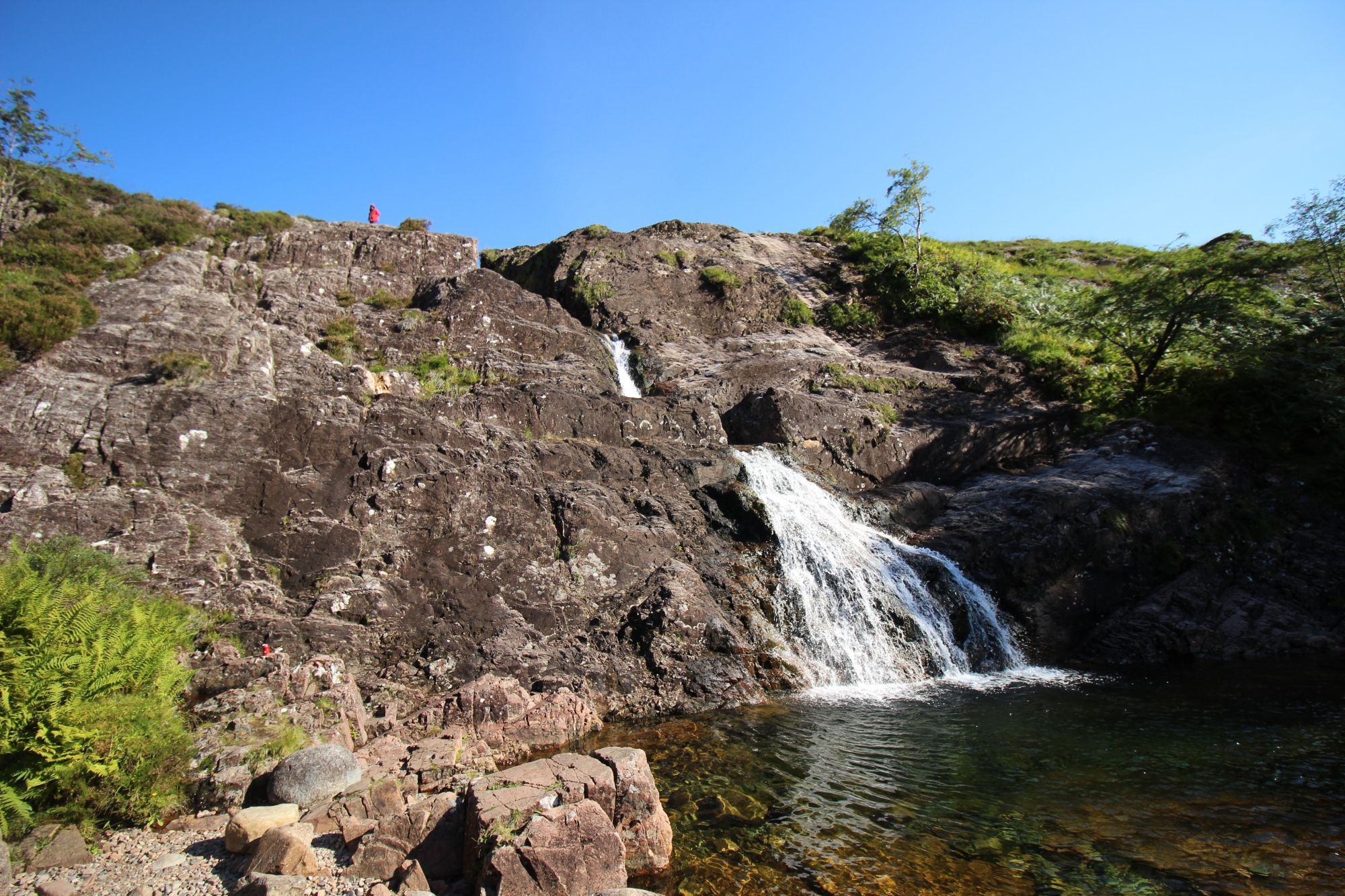
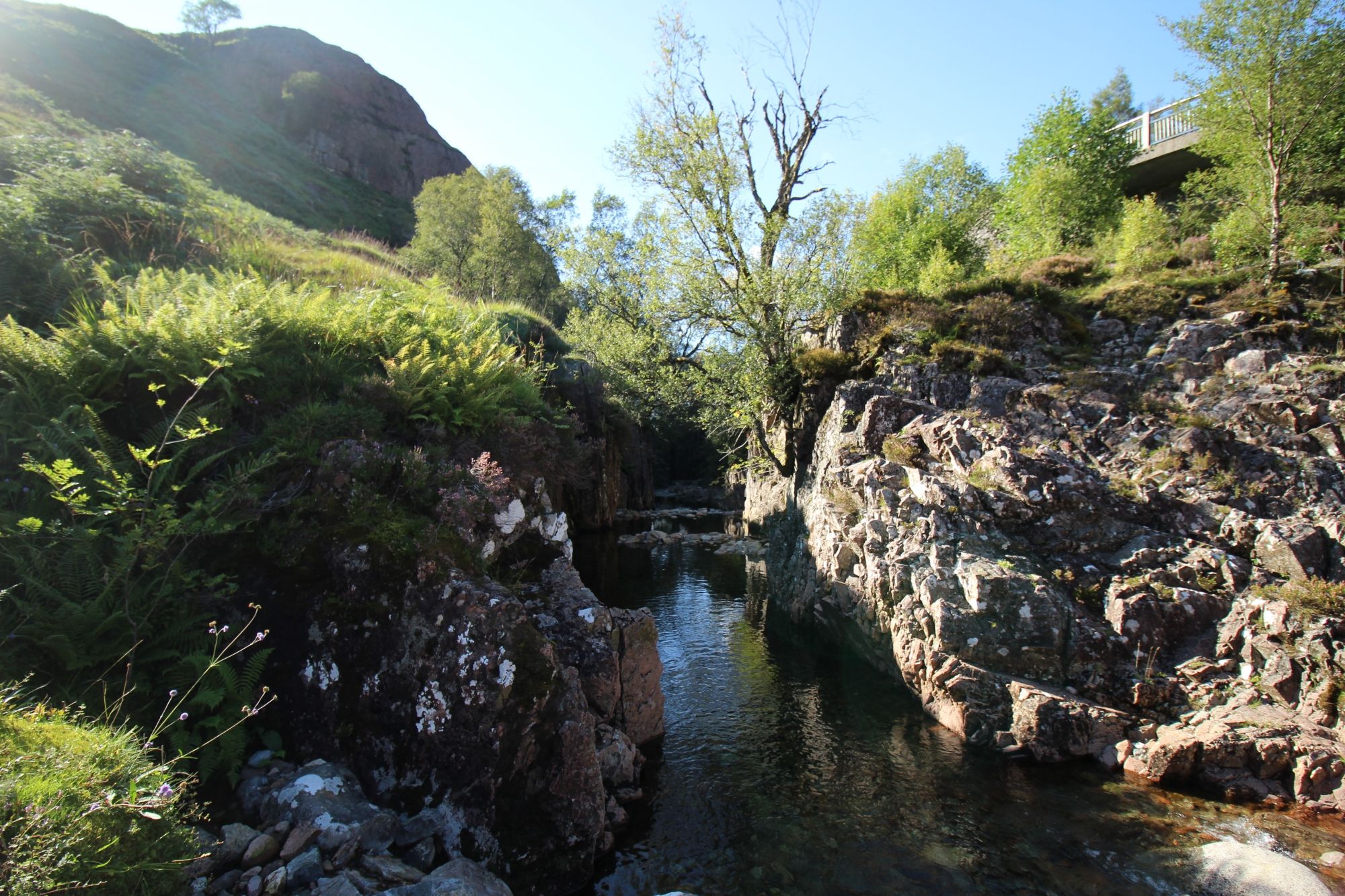
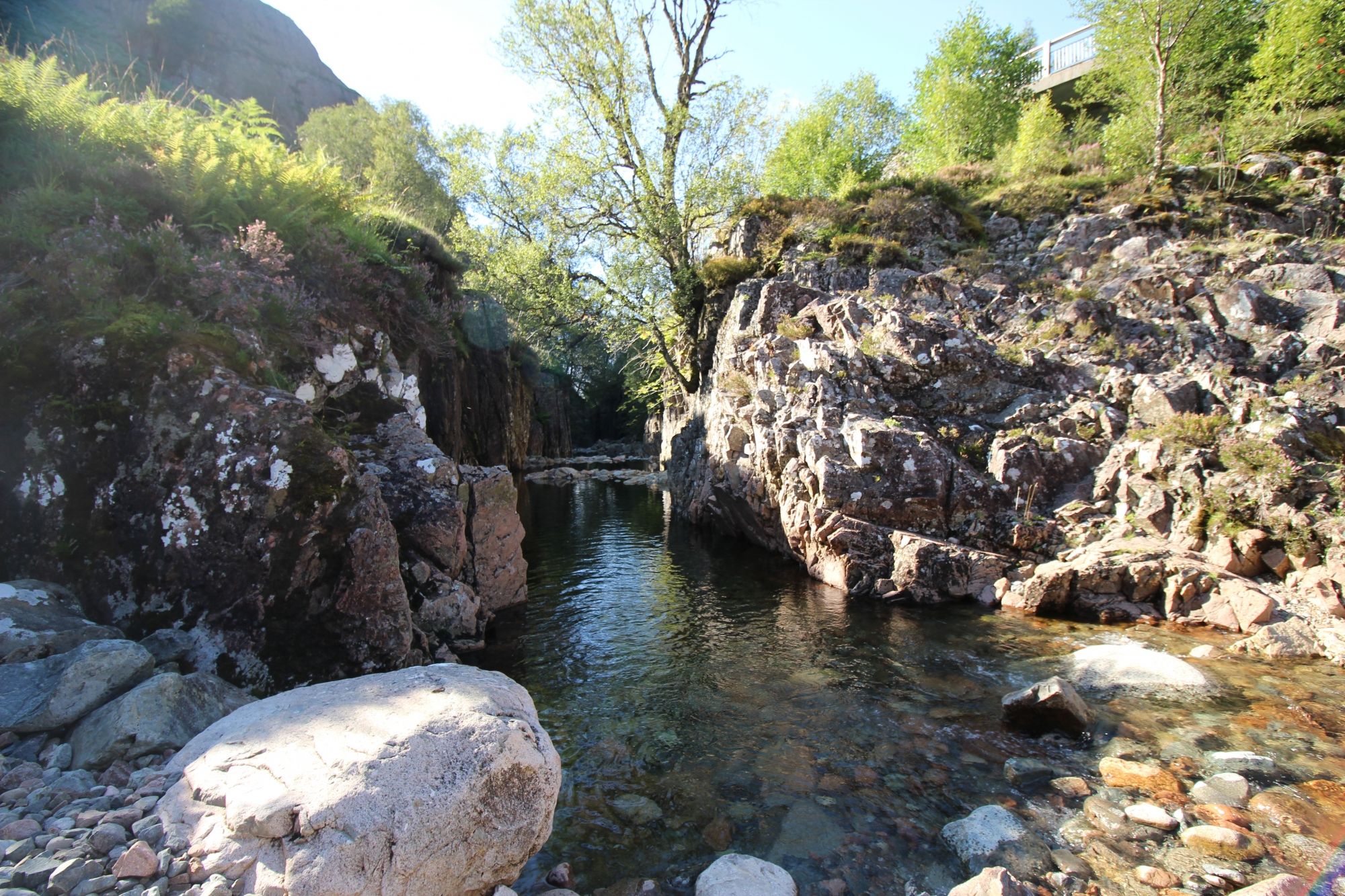
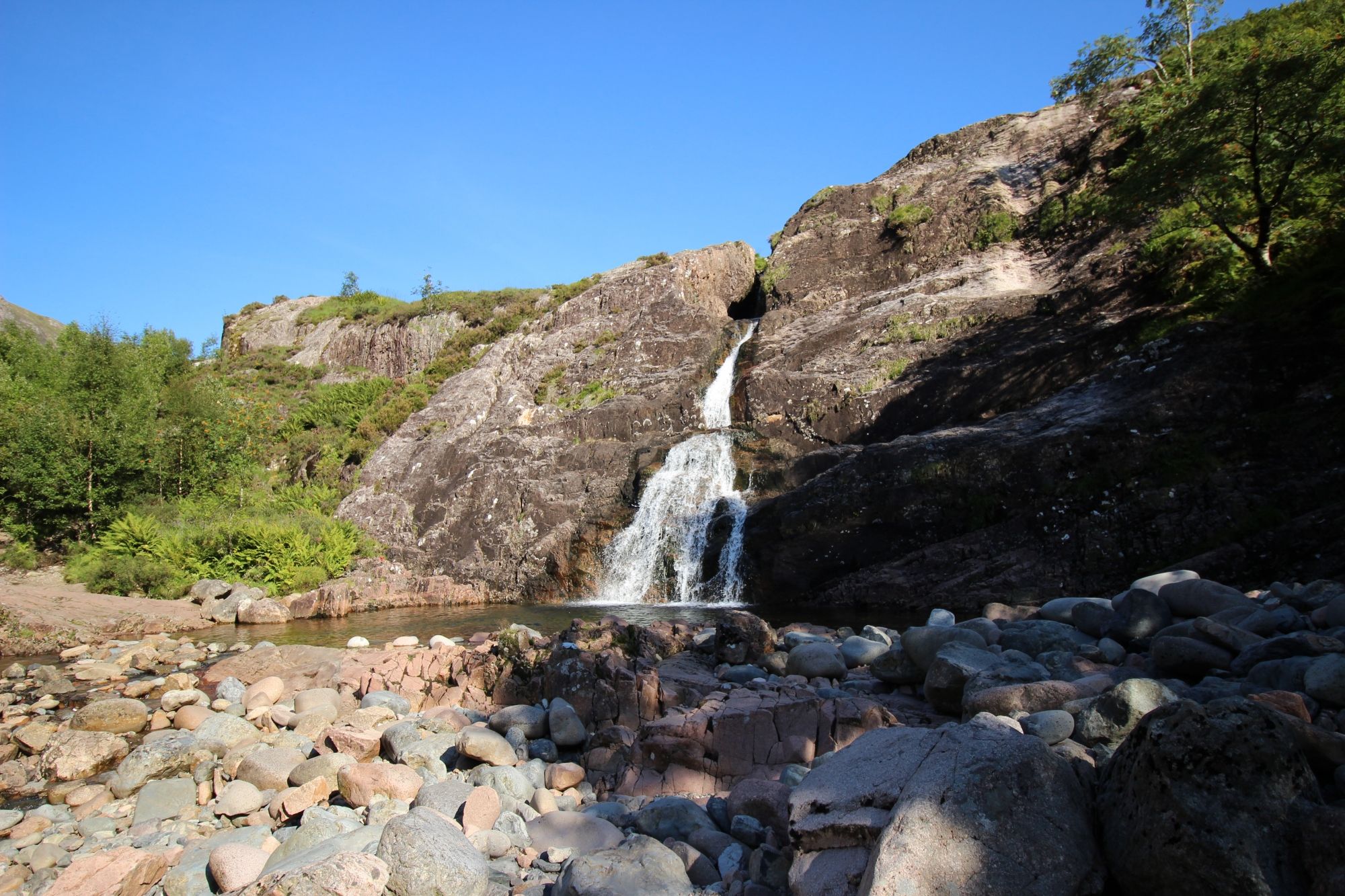
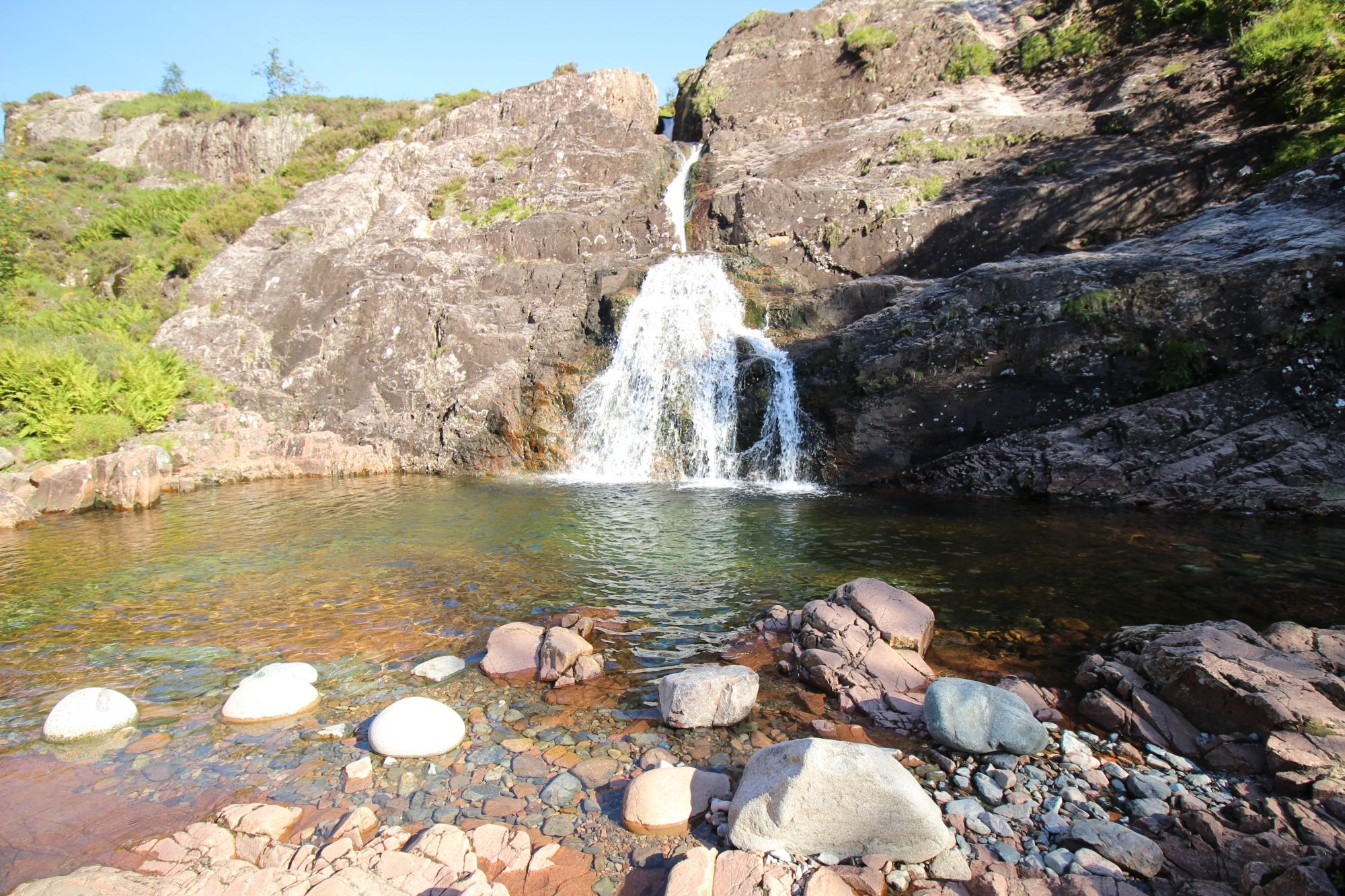
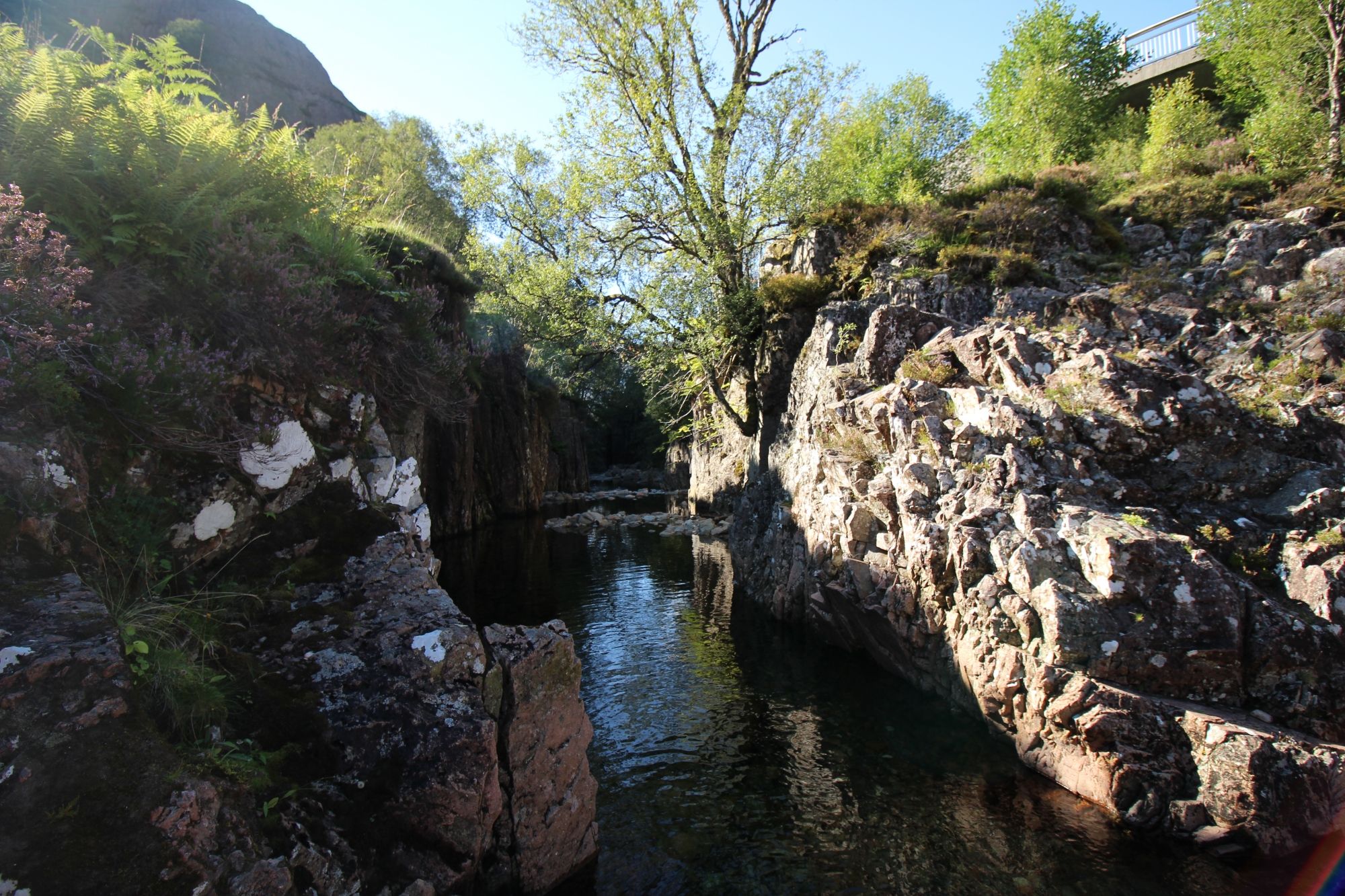
- The Volcanic Gorge and Churning Kettle Pools: Immediately following the point of convergence, the compressed water column drops violently over a series of basaltic steps into a deep, twisting rock gorge. Over millennia, the high-velocity transport of hard quartzite boulders has bored out smooth, circular kettle pools and smooth rock shelves within the dark volcanic stone, creating intense structural patterns in the riverbed.
- The Shadow of the Three Sisters: The visual scale of the waterfalls is dramatically amplified by the mountain architecture looming directly overhead. The near-vertical wall of Gearr Aonach acts as a massive stone backdrop, dropping thousands of feet straight into the river basin, which effectively blocks direct sunlight for long periods of the day and creates a moody, low-contrast micro-climate.
The Trail Blueprint: Staging Logistics and River Edge Realities
While The Meeting of Three Waters is highly visible from passing transport lines, exploring the river edge requires cautious foot placement and solid self-sufficiency:
- Route Overview and Ground Conditions: The site is accessed via a short, unmade mountain path leading down from the elevated roadside viewing platforms. The walk-in takes less than five minutes, but the terrain transitions instantly from level gravel to highly polished, wet river rock, moss-covered boulders, and saturated peat hags. Sturdy trekking boots with deep-lug rubber soles are highly recommended to safely navigate the slippery stone ledges overlooking the deep gorge.
- Arrival Logistics and Parking Constraints: The primary staging point is a dedicated, tarred lay-by situated directly along the westbound lane of the A82 trunk road. Because this specific viewpoint lines up perfectly with the classic view of the Three Sisters and serves as a major photographic stop for international tour buses, the parking spaces are heavily congested throughout the middle of the day. Content creators managing substantial production setups are strongly advised to execute dawn or late-evening visits, which bypasses tourist congestion completely while aligning with optimal directional light.
Cinematography, Audio, and Technical Production Integration
For independent travel filmmakers and landscape photographers, The Meeting of Three Waters represents a world-class white-water studio, demanding precise control over shifting current speeds and intense acoustic environments:
- Managing Shifting Water Speeds and Polarized Stone Textures: The convergence features a complex mix of roaring, white-water cascades and deep, dark reflective pools. Under direct or overcast sky light, the wet river cobbles and foaming water generate massive specular reflections that can easily blind camera sensors. To capture smooth, silky motion blur in the rushing waterfalls while preserving the rich, mossy green and dark brown textures of the underwater rocks, deploy a variable Neutral Density filter ($ND8$ to $ND64$) stacked with a high-efficiency Circular Polarizer (CPL). This eliminates distracting glare from the water surface and preserves fine shadow details in a 10-bit log profile.
- Lens Tactics for Scale Compression: To make the churning rock gorge appear inextricably linked to the massive mountain walls of the Three Sisters looming overhead, avoid wide-angle lenses, which make the background peaks look distant and small. Instead, position your tripod low to the riverbed downstream and utilize a medium telephoto lens ($50 ext{mm}$ to $85 ext{mm}$). This focal range compresses the vertical distance, stacking the foaming water channels directly underneath the colossal stone ridges.
- Acoustic Isolation Within a High-Velocity Chasm: The deep stone basin of the gorge acts as an acoustic amplifier, generating a continuous, high-decibel rumble from the crashing waterfalls that is frequently exacerbated by severe wind shear whistling down the glen. To isolate clean on-camera narration or capture crisp, detailed ambient tracks of individual water channels, directional shotgun microphones must be completely enclosed within a professional, multi-layered fur windjammer (deadcat). Seek out recording positions behind the larger riverside boulders, using the natural rock anatomy as a physical barrier to insulate your microphone capsules from wind distortion.