



The Mamores Arete: Capturing the Alpine Ridges, Glacial Cirques, and Severe Exposure of the Ring of Steall
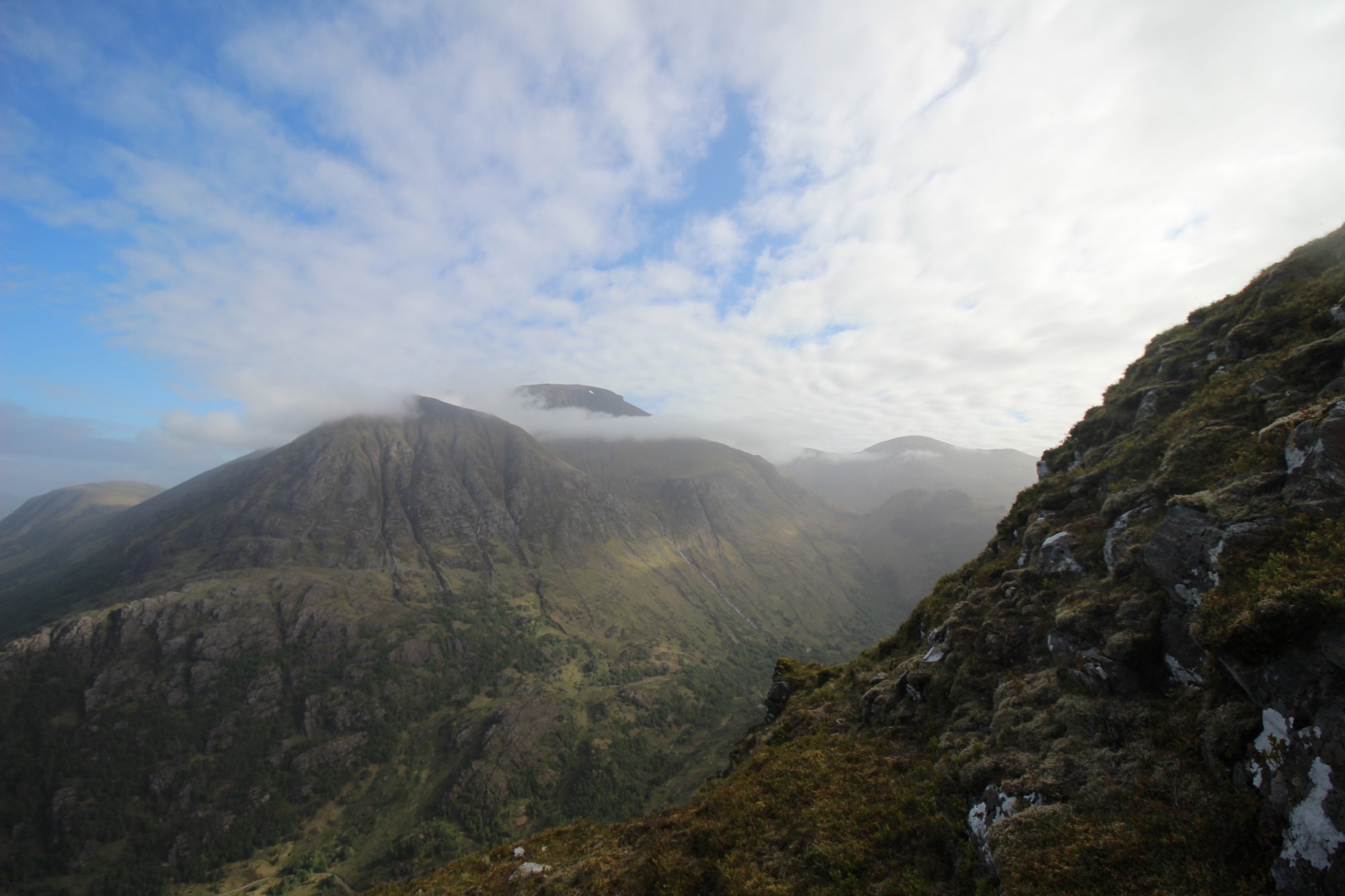
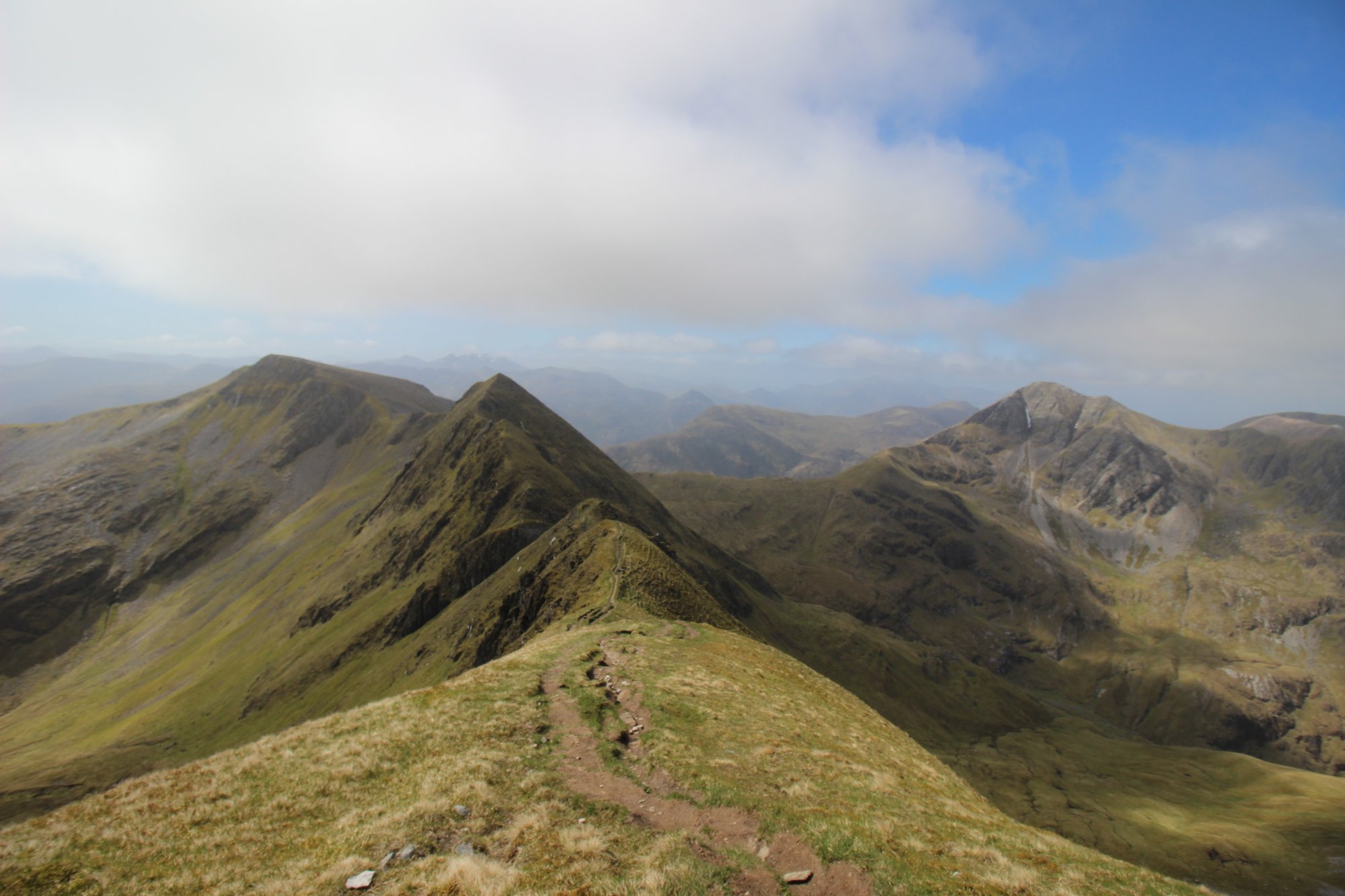
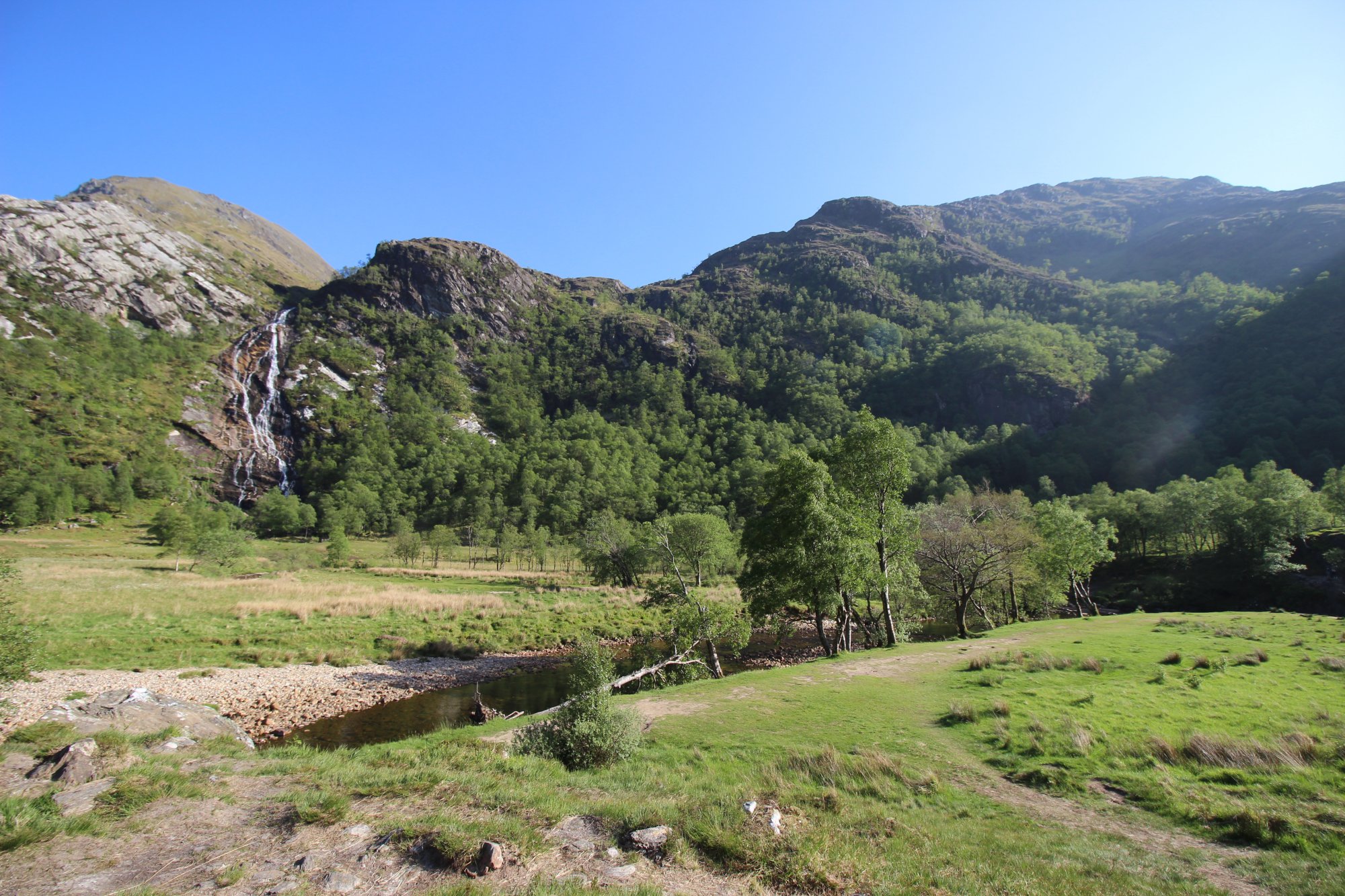
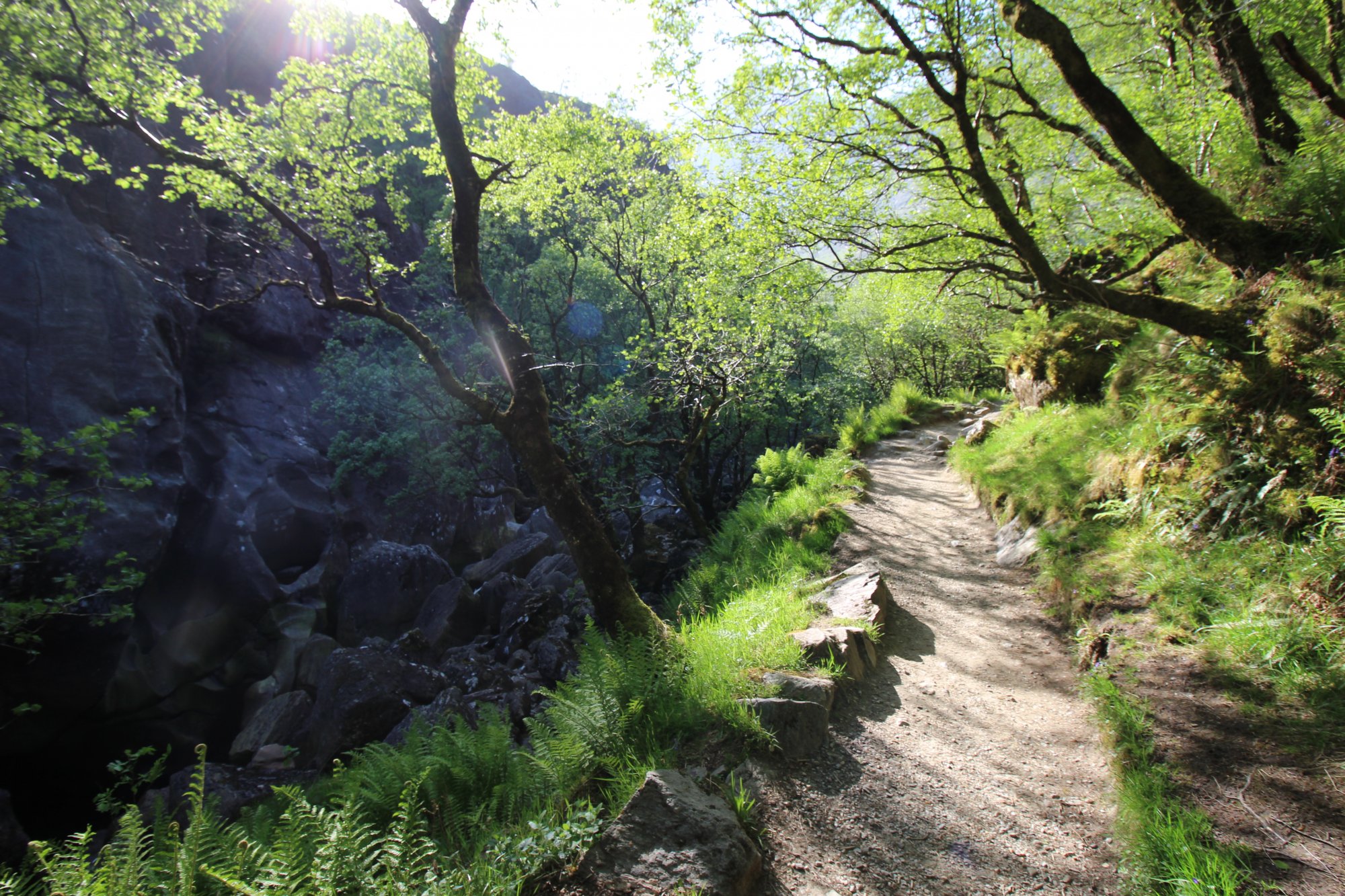
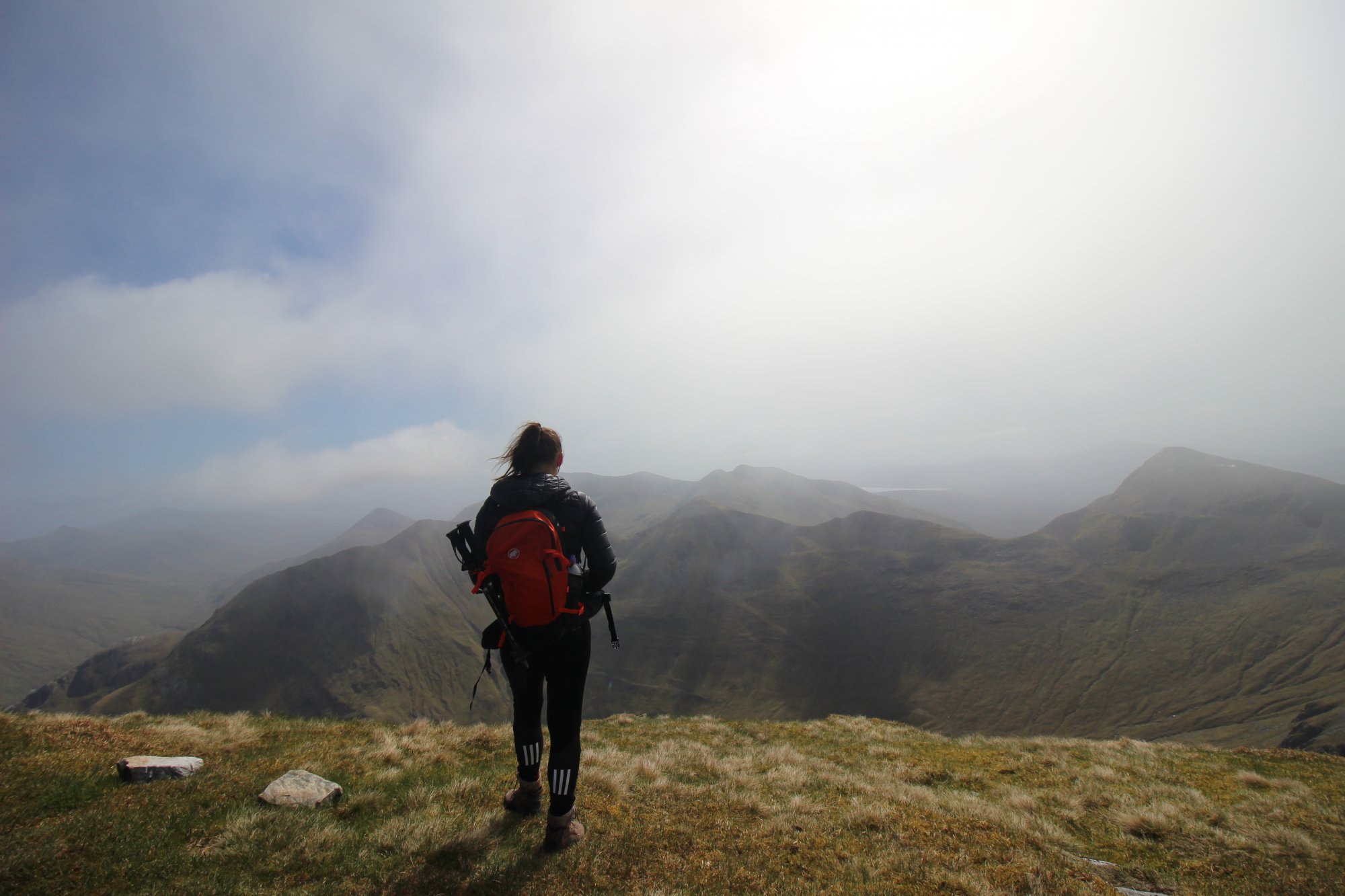
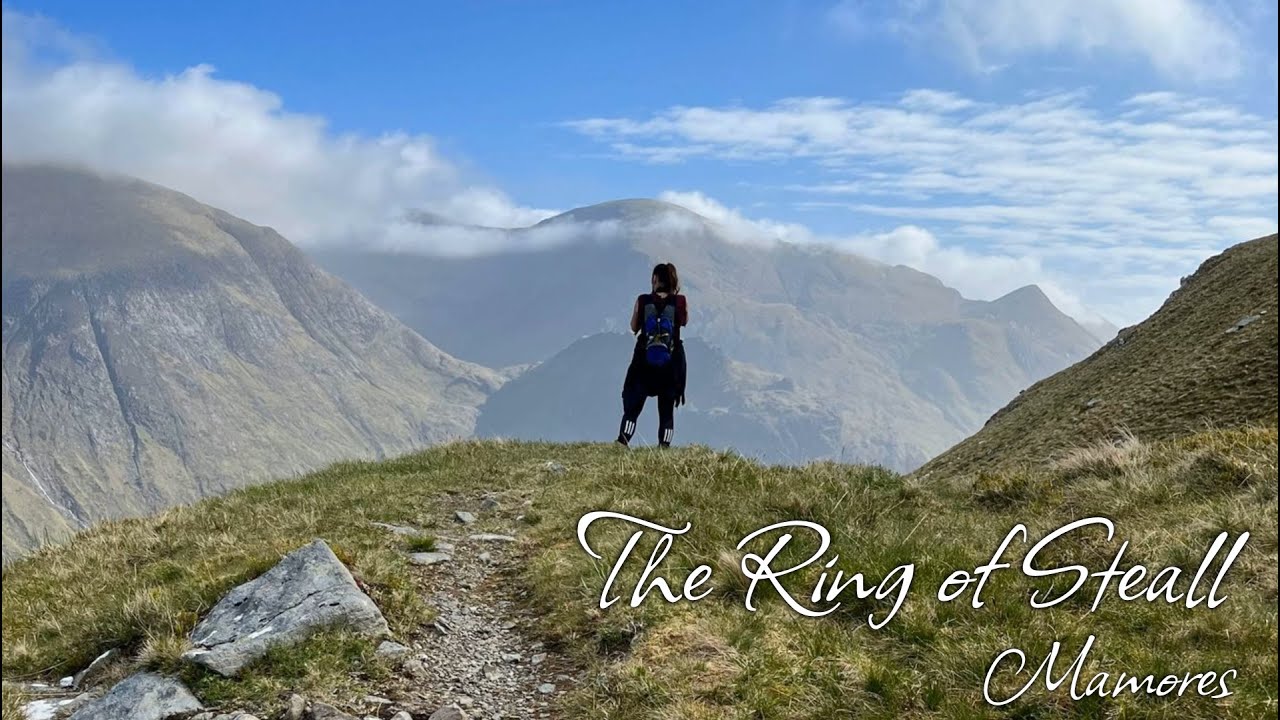
Carved deep into the wild, high-altitude skyline south of Ben Nevis, the Ring of Steall stands as an internationally celebrated masterpiece of glacial erosion and one of the finest mountaineering circuits in the Scottish Highlands. This legendary high-level horseshoe loop traces the jagged crests of the Mamores mountain range, linking four distinct Munro summits—An Gearanach ($982 ext{m}$), Stob Coire a’ Chàirn ($981 ext{m}$), Am Bodach ($1,032 ext{m}$), and Sgùrr a’ Mhàim ($1,099 ext{m}$)—in a continuous, high-exposure traverse. Ranging across rugged quartzite scree slopes and exceptionally narrow rock aretes, the route offers an authentic alpine challenge that demands robust physical fitness, steady scrambling technique, and sharp navigation. Starting from the deep, wooded basin of Glen Nevis, the path launches explorers past the soaring drop of the [Steall Waterfall](http://googleusercontent.com/map_location_reference/0) and over a historic steel wire bridge, providing fell walkers, wilderness purists, and independent digital travel filmmakers an elite, ultra-panoramic mountain studio.
The Structural Blueprint: The Devil's Ridge and Quartzite Aretes
The physical footprint of the Ring of Steall is defined by severe vertical drop-offs and complex metamorphic mountain architecture, splitting the multi-peak expedition into three high-intensity arenas:
- The Four Munro Conundrum: The loop functions as a high-altitude rollercoaster. It begins with the unrelenting, leg-burning ascent of either the scree-covered northwest shoulder of Sgùrr a’ Mhàim or the steep grassy zig-zags of An Gearanach. Totaling approximately 10 miles ($16 ext{ km}$) of travel with over 1,650 meters ($5,413 ext{ feet}$) of vertical ascent, the route typically requires 8 to 10 hours of sustained physical effort.
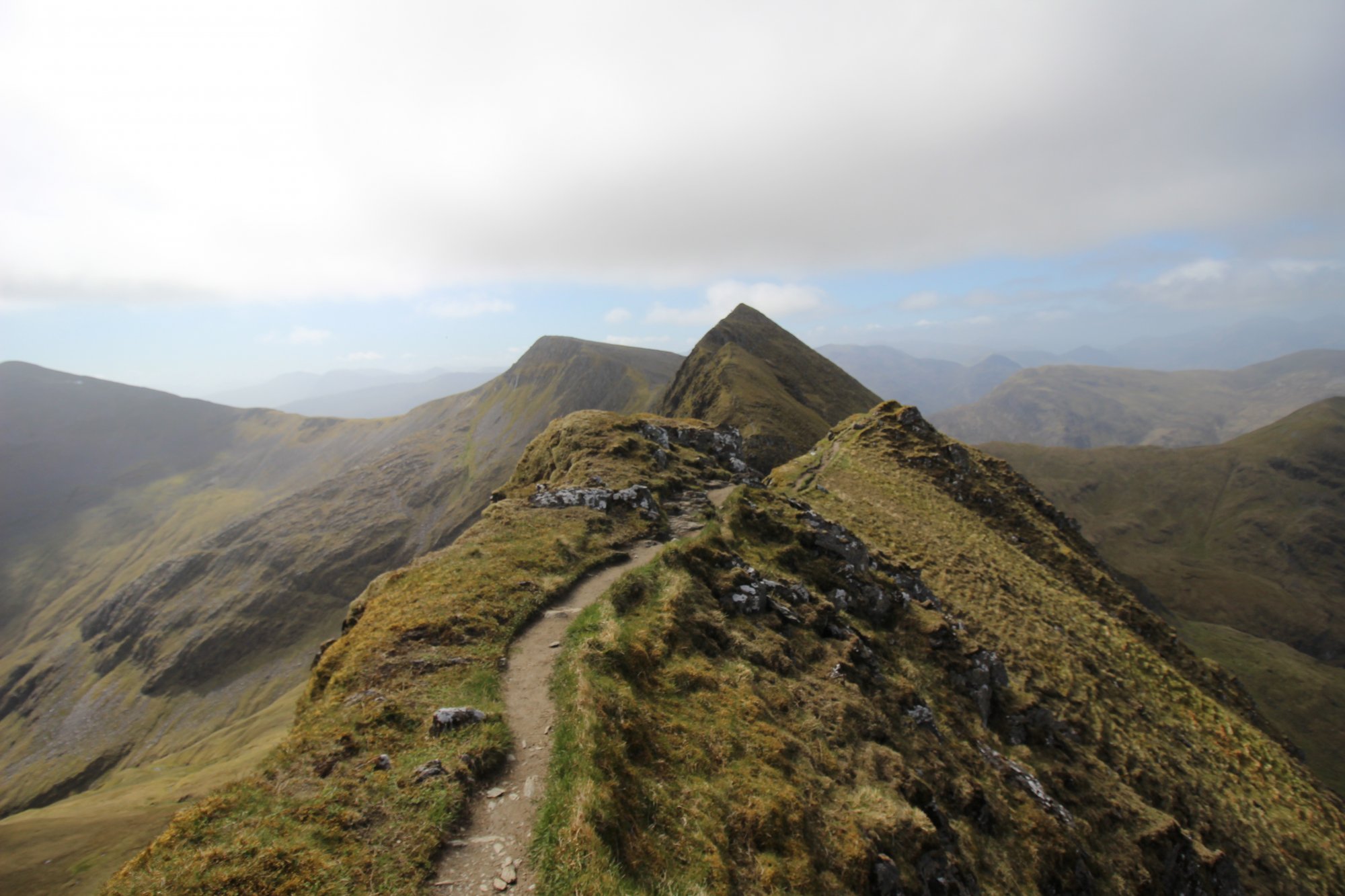
- Traversing the Devil's Ridge: The psychological and technical crux of the circuit is the infamous Devil's Ridge (Stob Choire a’ Mhàil), a narrow, exposed spine of stone connecting Sgùrr a’ Mhàim to the rest of the range. The ridge tapers to a knife-edge path with sheer, vertical drops plunging hundreds of feet on both sides. Navigating the ridge requires passing a prominent rock obstacle known as the "bad step," which requires careful foot placement and a steady head for heights.
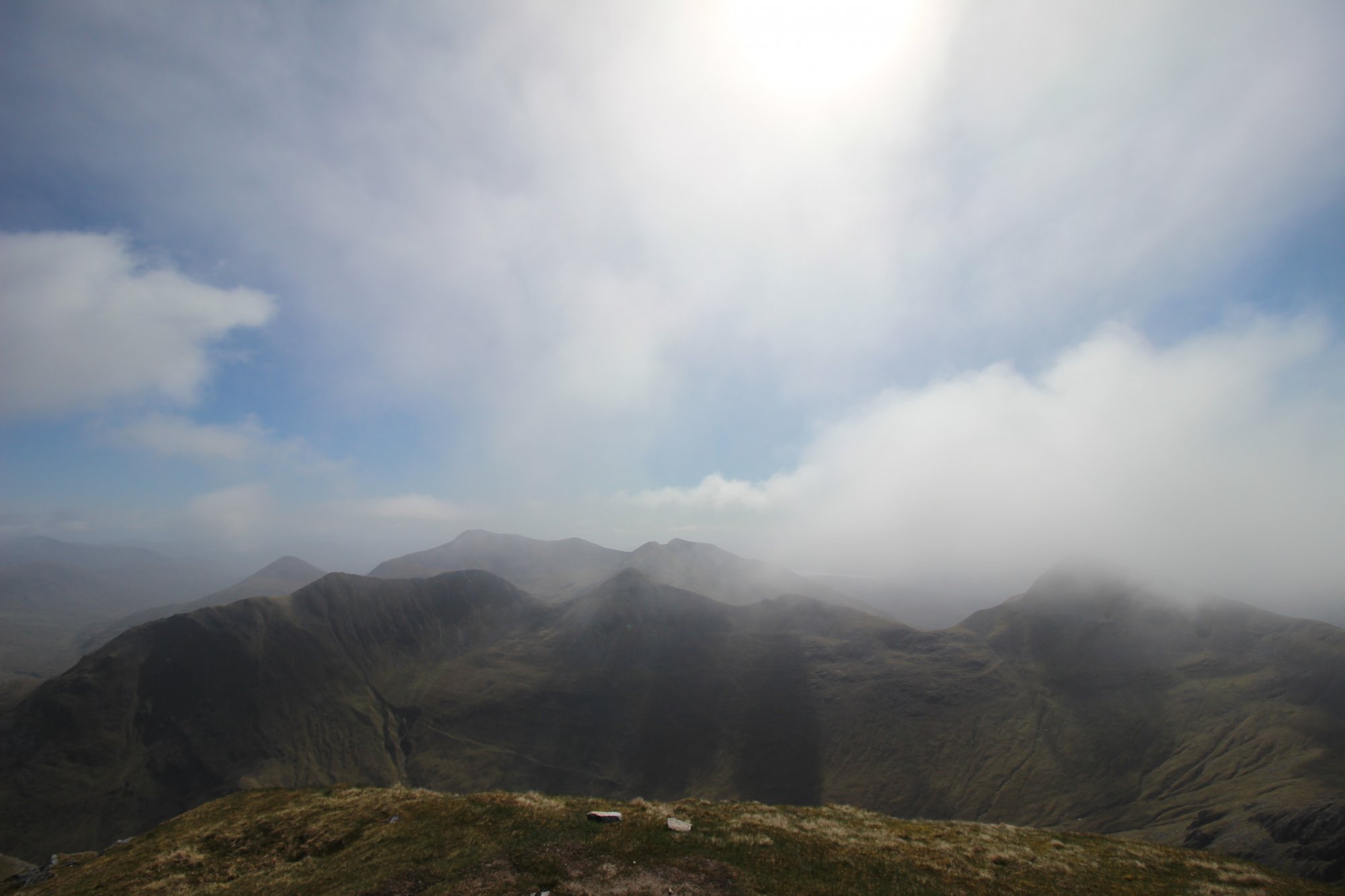
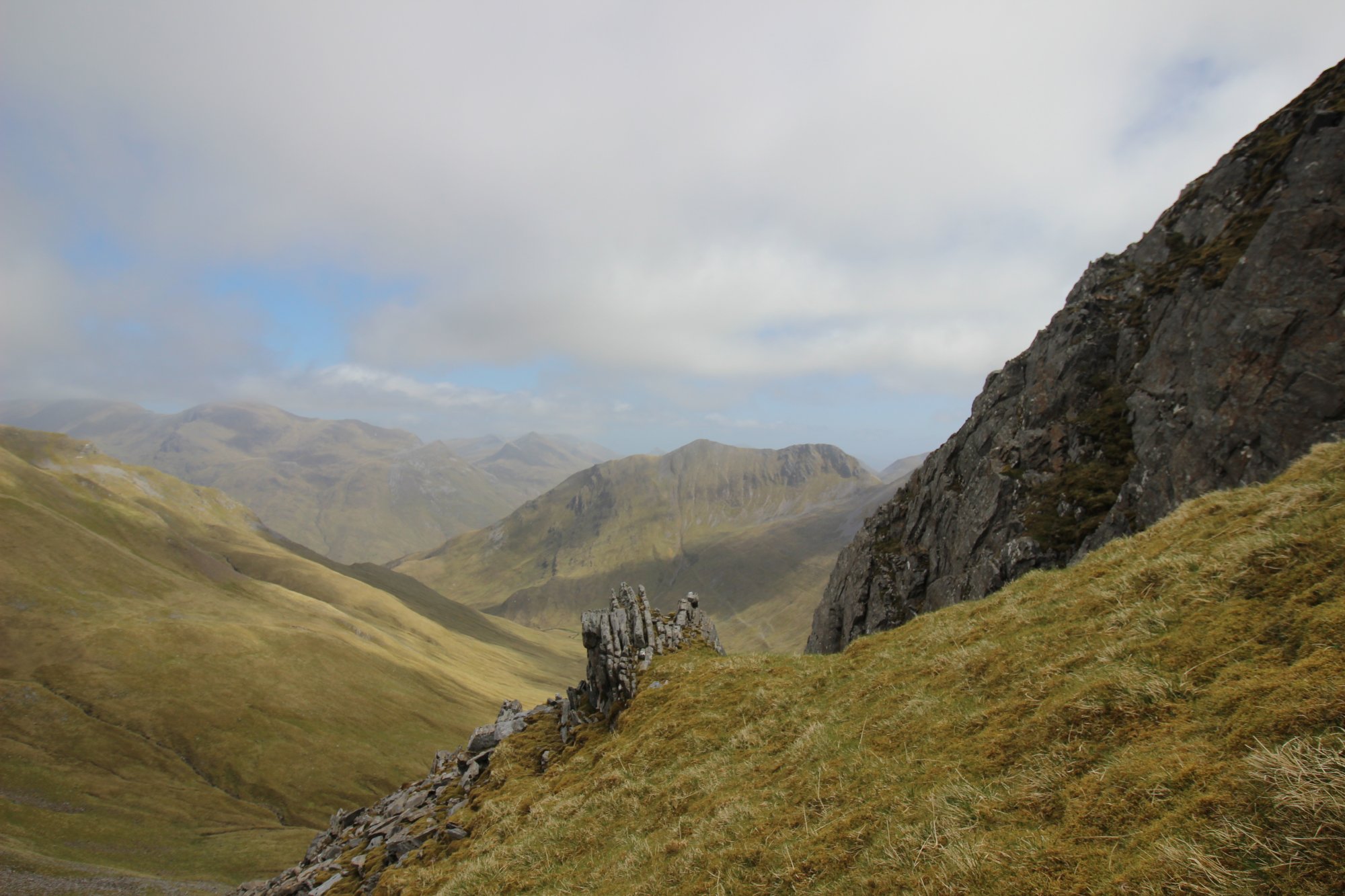
- Metamorphic Scree and Glacial Corries: The high ridges of the Mamores are composed of a striking mix of dark mica-schist and brilliant white Cambrian quartzite. This geological structure forms loose, shifting scree fields on the higher summits that transform into a slippery, unpredictable surface when wet. The ridges frame massive, hollowed-out glacial corries that funnel wind upward, creating sudden, dramatic shifts in visibility and localized mountain weather.
The Trail Blueprint: Valley Staging Areas and River Crossings
Conquering the Ring of Steall requires meticulous logistics and absolute self-sufficiency, particularly regarding the complex valley entry and exit points:
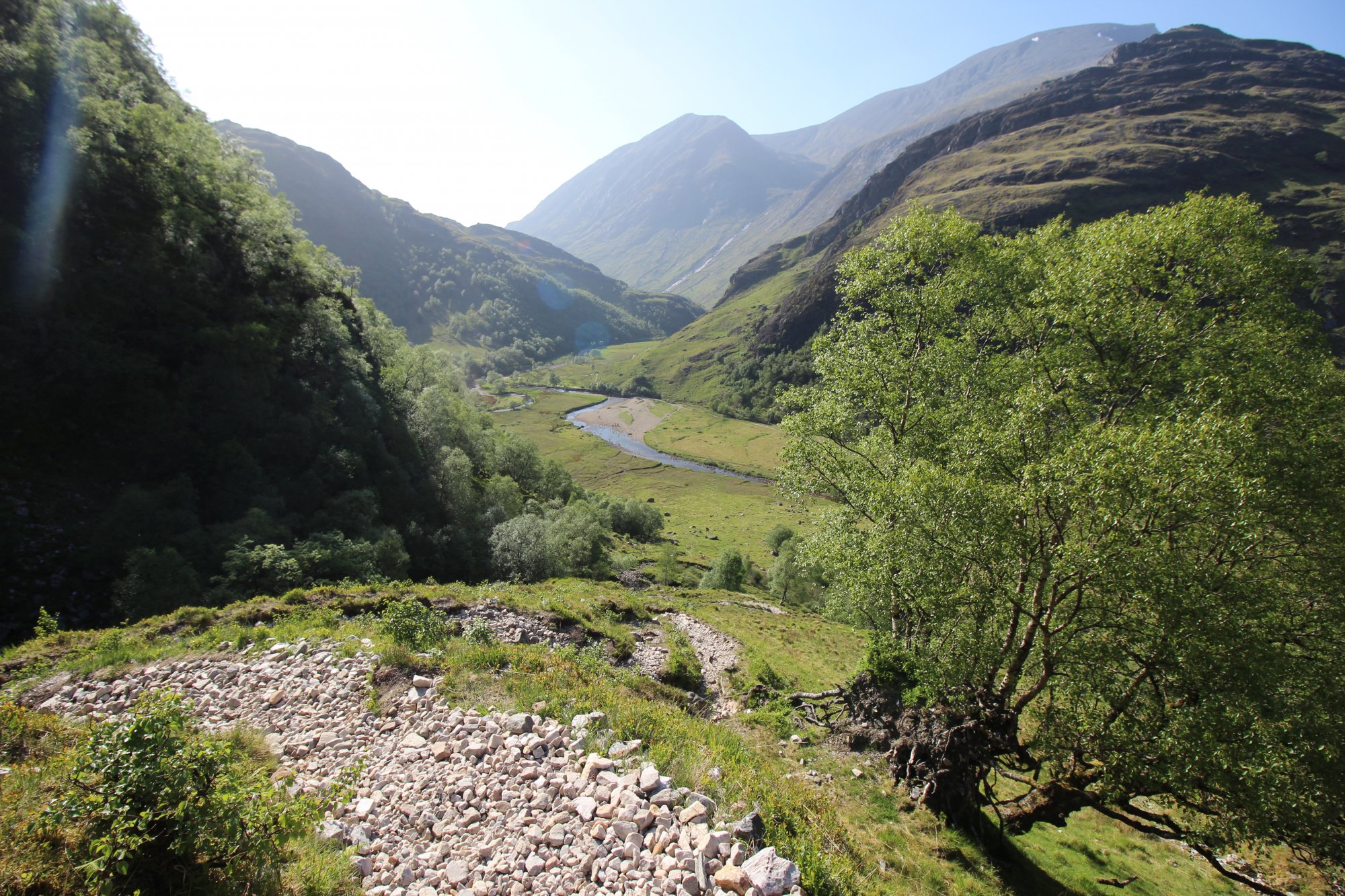
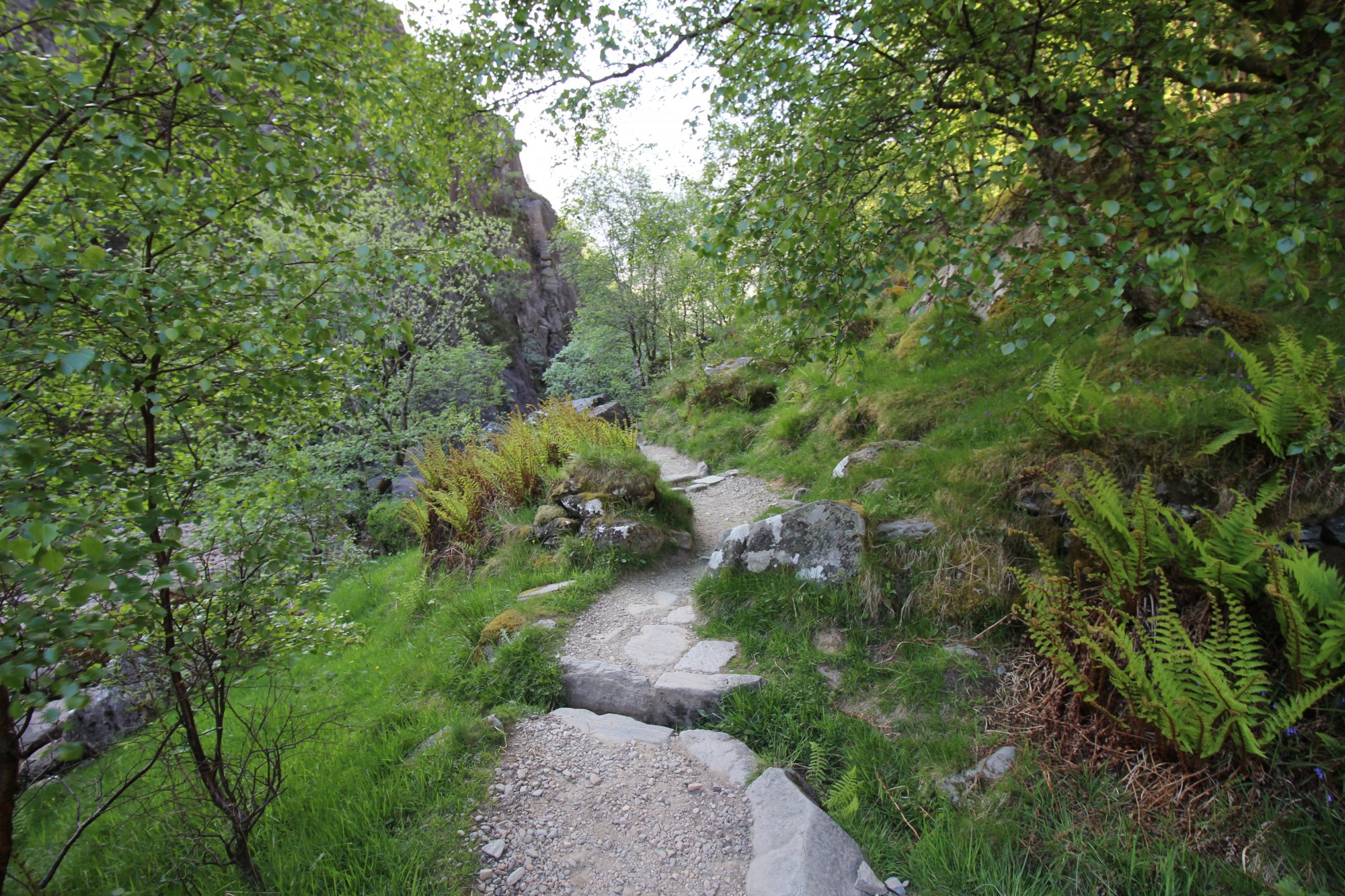
- The Steel Wire Bridge and Steall Meadows: The traditional entryway into the upper basin requires tracking through the dramatic Nevis Gorge before tackling the famous three-wire cable bridge spanning the rushing Water of Nevis. Hikers must balance carefully on a single steel foot-cable while holding onto two parallel hand-cables. During periods of heavy, sustained highland rainfall, the river beneath can swell into an impassable, high-velocity torrent, forcing creators to carefully monitor water levels before setting out.
- Arrival Logistics and Parking Strategies: The primary staging hubs are situated along the single-track Glen Nevis road, with the Upper Falls car park serving as the closest access point to the waterfall and the Lower Falls car park at Achriabhach acting as the natural termination point of the mountain descent. Because the route is a true circle that starts and ends at separate parking bays, many experienced teams execute a two-car shuttle system or prepare for a final 2.5-kilometer tarmac road walk back to their starting point. The parking bays fill rapidly during clear summer mornings, requiring dawn departures to guarantee space.
Cinematography, Scale Illusion, and Technical Production Integration
For independent travel filmmakers and landscape photographers, the Ring of Steall represents a supreme high-altitude canvas, presenting intense dynamic range challenges and complex spatial scales:
- Focal Length Compression on Exposed Aretes: To capture the heart-stopping scale of a hiker traversing the knife-edge crest of the Devil's Ridge with the massive bulk of Ben Nevis towering in the background, avoid wide-angle lenses, which shrink distance and flatten mountain features. Instead, position your tripod across the bealach on the slopes of Sgùrr Iubhair and deploy a medium telephoto lens ($85 ext{mm} ext{ to } 200 ext{mm}$). This focal range compresses the physical miles, stacking the tiny silhouette of the hiker directly against the colossal stone walls of the surrounding glens.
- Managing High Contrast on Quartzite and Scree fields: The brilliant white quartzite bands on peaks like Stob Bàn reflect harsh sunlight with extreme specular highlights, while the deep glacial corries beneath remain locked in heavy shadow. To prevent blown-out highlights while capturing fine geological textures, shoot exclusively in a 10-bit log profile. A high-efficiency Circular Polarizer (CPL) is mandatory to cut through haze, minimize glare off wet scree, and enrich the deep blue and emerald tones of the highland horizon.
- Acoustic Isolation on High-Velocity Mountain Ridges: The open, undulating ridgeline of the Mamores acts as an uninterrupted aerial barrier, catching high-velocity Atlantic wind shear moving off the west coast. To record clean, on-camera narrative tracks or capture the raw, atmospheric hum of the peaks without clipping microphone preamps, directional shotgun microphones must be completely enclosed within a professional, multi-layered fur windjammer (deadcat). Utilize the large summit cairns on Am Bodach or Stob Coire a’ Chàirn as a physical windshield to preserve clean audio.