




The Crimson Titan: Mastering the Cantilever Geometry, Estuary Vistas, and Architectural Scale of the Forth Bridge
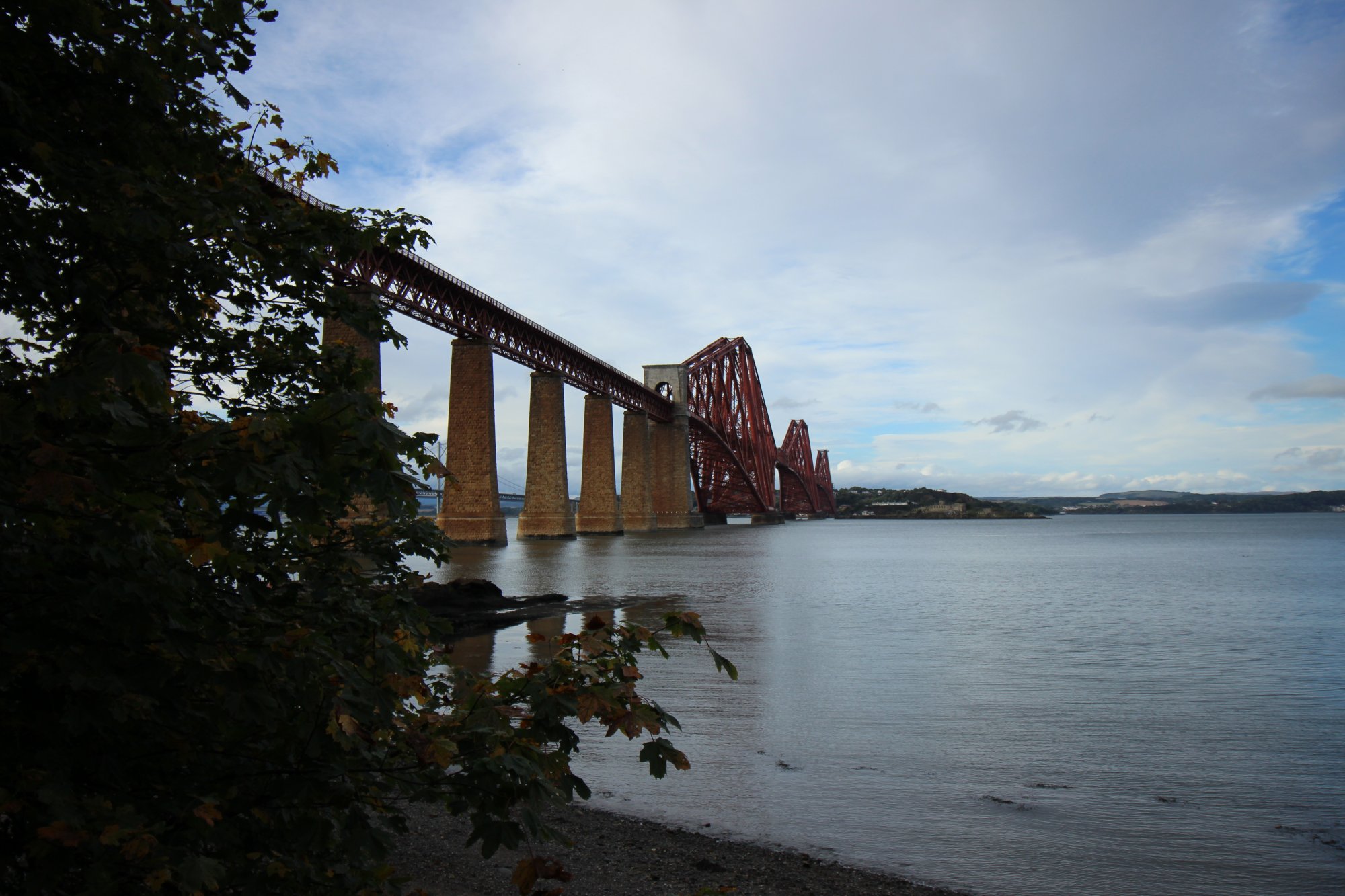
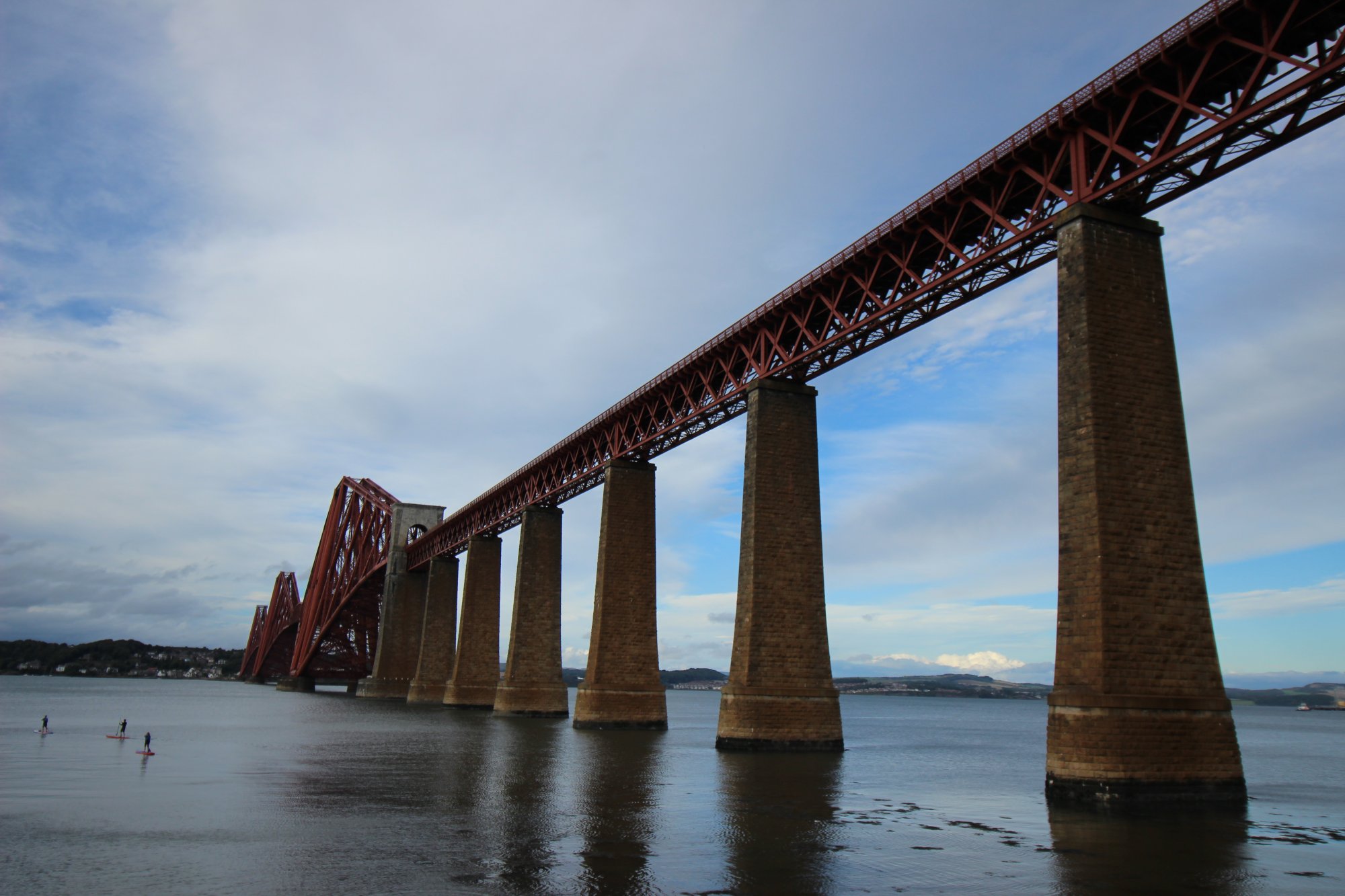
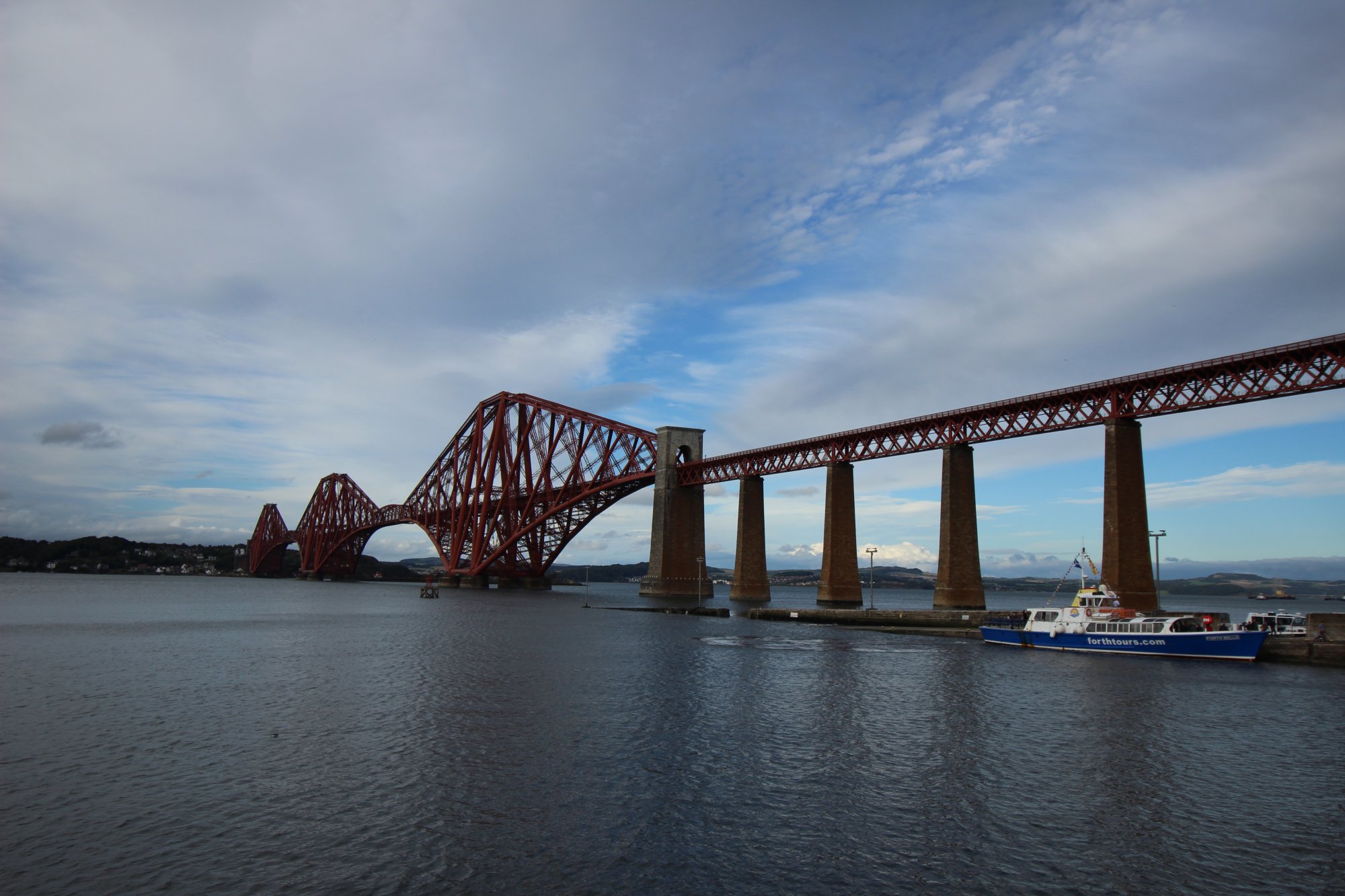
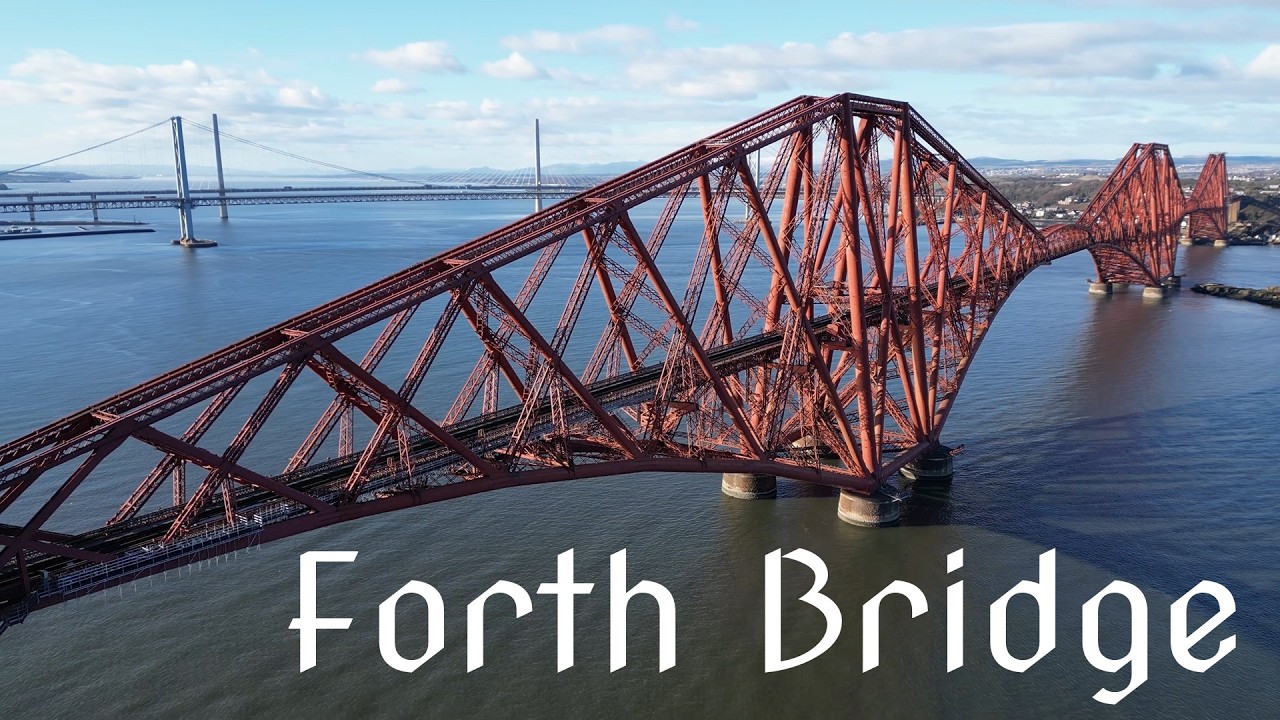
Spanning the deep tidal waters of the Firth of Forth between South Queensferry and North Queensferry, the monumental Forth Bridge stands as an internationally acclaimed masterpiece of Victorian heavy industry and structural engineering. Inscribed as a prestigious UNESCO World Heritage site, this iconic red balance-cantilever railway bridge represents a towering leap in human manufacturing capability. Designed by the visionary civil engineers Sir John Fowler and Sir Benjamin Baker, its massive tubular steel frames stretch a total length of 2,467 meters ($8,094 ext{ feet}$), carrying heavy passenger and freight rail traffic high above the shipping lanes. The structure's intense, deep-red silhouette forms an unforgettable geometric rhythm against the shifting skies of eastern Scotland, providing independent travelers, structural historians, and digital landscape cinematographers an elite, high-contrast industrial studio.
The Structural Blueprint: The Balance Cantilever and Steel Tubes
The physical footprint of the Forth Bridge is a triumph of mathematical balance and material strength, splitting its immense engineering weight into three massive diamond-shaped towers:
- The Cantilever Architecture: The bridge relies on three double-cantilever structures standing over 100 meters ($330 ext{ feet}$) high. Each diamond-shaped steel framework balanced its loads perfectly during construction, building outward simultaneously from central granite piers rooted into the riverbed—including the historic island of Inchgarvie. The spans are connected by internal suspended girders, forming a highly rigid path capable of absorbing the immense weight of crossing express trains.
- Siemens-Martin Open-Hearth Steel: Marking a revolutionary shift away from traditional cast iron, the Forth Bridge was the first major structure in Britain to be built entirely of Siemens-Martin open-heearth steel. Over 53,000 tons of steel, held together by approximately 6.5 million individual rivets, were utilized to complete the frame, creating an elastic grid that effortlessly handles intense thermal expansion and gale-force maritime wind shear.
- The Myth of Endless Painting: For over a century, the phrase "painting the Forth Bridge" was a cultural idiom for an endless task. However, modern engineering developments introduced an advanced, multi-layered glass-flake epoxy coating system. This elite industrial formulation isolates the underlying steel from harsh marine salt spray, protecting the structural core for decades without requiring continuous maintenance.
The Trail Blueprint: Estuary Shoreline Vantage Points and Access Logistics
Exploring the visual angles of the Forth Bridge involves tracking the coastal paths on both sides of the estuary, demanding precise self-sufficiency and transport coordination:
- South Queensferry Shoreline Routes: The southern approach offers flat, beautifully paved coastal walking paths running parallel to the historic town center. Hikers can track along the beach front from the Hawes Pier directly under the massive southern approach spans. The terrain here is smooth and highly accessible, transitioning from cobblestones to firm sand, making it highly manageable for all fitness levels.
- North Queensferry and Fife Coastal Path: Crossing the water via the pedestrian walkways of the adjacent Forth Road Bridge allows creators to track down into North Queensferry. Here, the trail cuts past the old stone pier and lines up underneath the northern cantilevers. This side offers more rugged, undulating paths that integrate directly into the famous Fife Coastal Path, requiring standard footwear with reliable traction for the damp coastal steps.
- Arrival Logistics and Parking Realities: Dedicated parking hubs are situated on both shores of the estuary, with primary visitor lots located at South Queensferry near the automated rail station and below the northern bridge towers. Because the area serves as a busy transport hub and a major site for international maritime tourism, spaces can fill rapidly during clear holiday weekends. Content creators carrying substantial camera configurations are strongly encouraged to execute dawn arrivals to guarantee a parking space and catch the clean, low-angle morning sun hitting the eastern face of the steel towers.
Cinematography, Tone Isolation, and Technical Production Integration
For independent travel filmmakers and architectural photographers, the Forth Bridge represents an elite industrial canvas, presenting severe dynamic range challenges and high-velocity acoustic environments:
- Balancing Industrial Red Against Estuary Shifting Tones: The rich crimson coating of the bridge steel presents a unique color grading challenge against the bright, highly reflective water surface of the Firth of Forth and the shifting background clouds. Under direct midday sun, the red paint can look oversaturated, losing the intricate rivet lines and steel shadows. To preserve the fine structural details, shoot exclusively in a 10-bit log profile, exposing carefully for the highlight sections. A high-efficiency Circular Polarizer (CPL) is mandatory to eliminate distracting surface glare from the sea water and deepen the rich, bold contrast of the steel tubes.
- Focal Compression of the Steel Diamonds: To capture the mind-boggling scale of the three massive cantilever towers stretching across the water, avoid wide-angle lenses, which flatten background structures and shrink distance. Instead, position your tripod over a mile away at the elevated viewing terraces near the Forth Road Bridge or along the Dalmeny Estate shoreline. Deploy a telephoto lens ($100 ext{mm} ext{ to } 300 ext{mm}$) to compress the spatial miles. This stacks the steel structures on top of one another, making the intricate geometry look incredibly imposing while rendering an incoming passenger train as a tiny, detailed element moving through a giant industrial web.
- Acoustic Isolation of Estuary Winds and Heavy Rail Transients: The open waters of the Firth of Forth act as a high-velocity wind tunnel, pushing relentless North Sea gales across the low-lying piers. Additionally, passing diesel and electric trains generate high-decibel structural rumble and track click. To isolate crisp on-camera commentary or capture the clean, immersive sound of the sea below, directional shotgun microphones must be completely enclosed within a professional, multi-layered fur windjammer (deadcat). Position your recording gear behind the old stone harbor walls of North Queensferry, using the heavy masonry as a natural acoustic shield to prevent wind distortion from clipping your audio tracks.