



The Volcanic Shore: Navigating the Black Sands, Sea Stacks, and Tidal Light of Talisker Bay
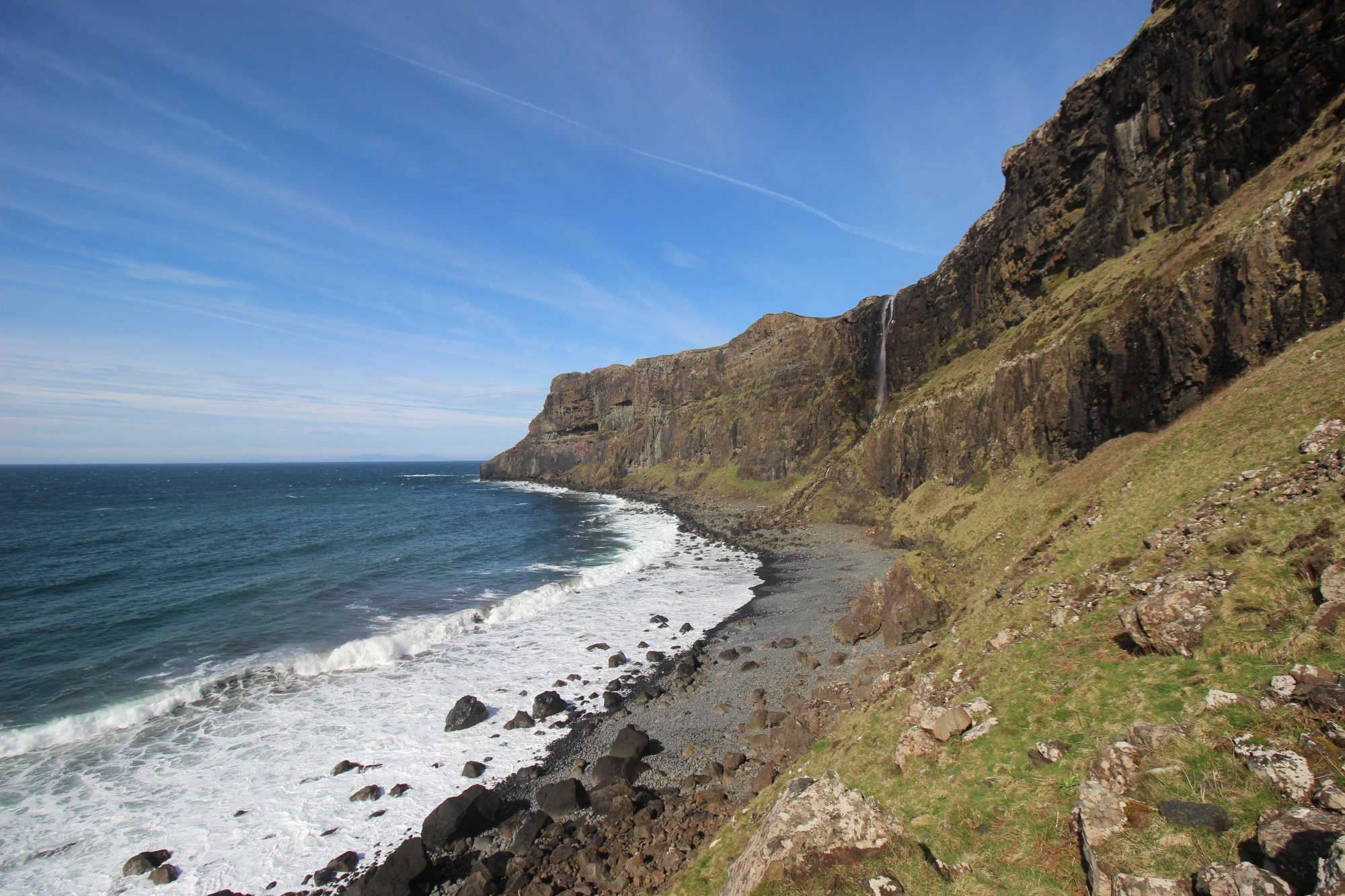
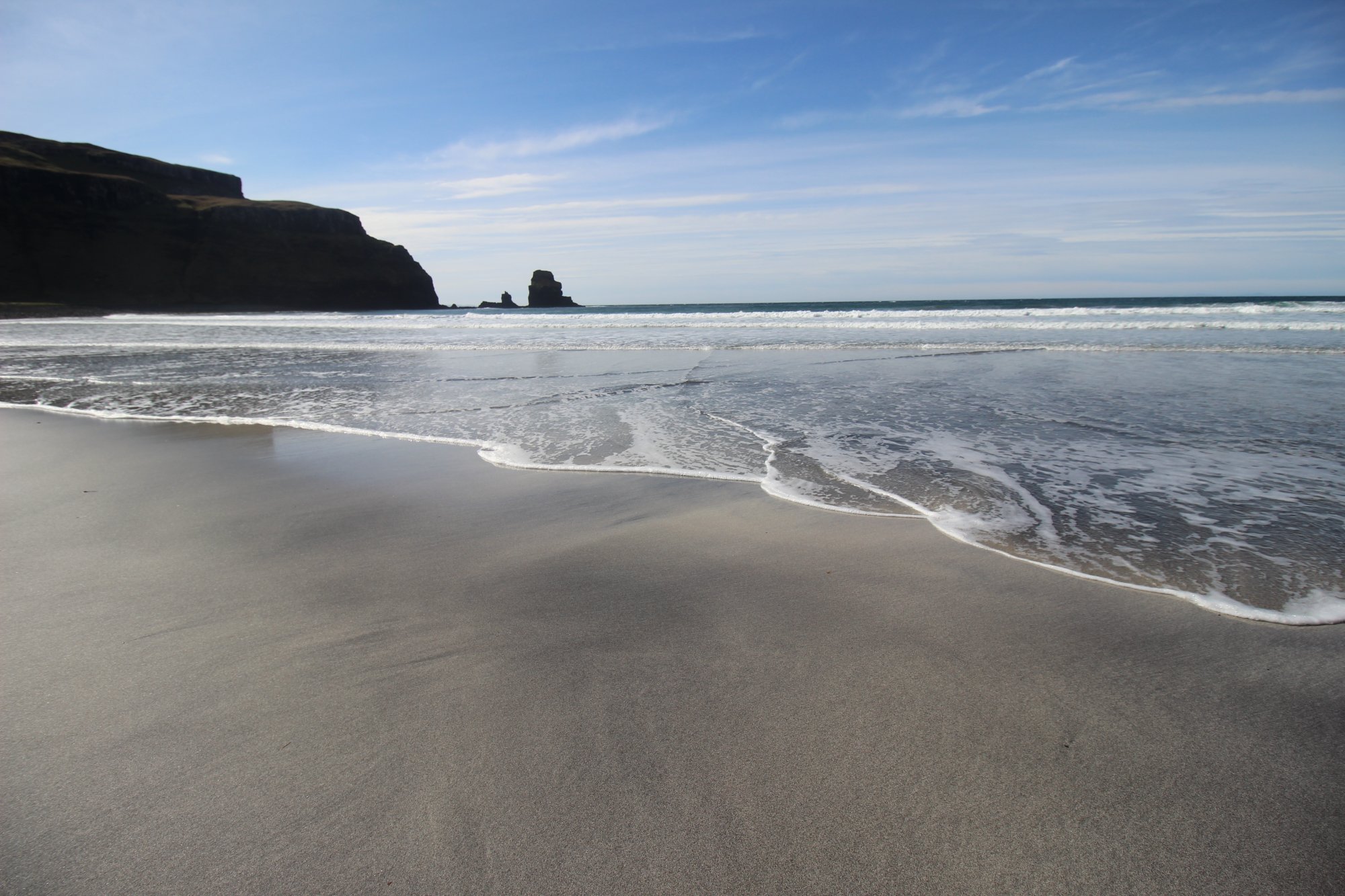
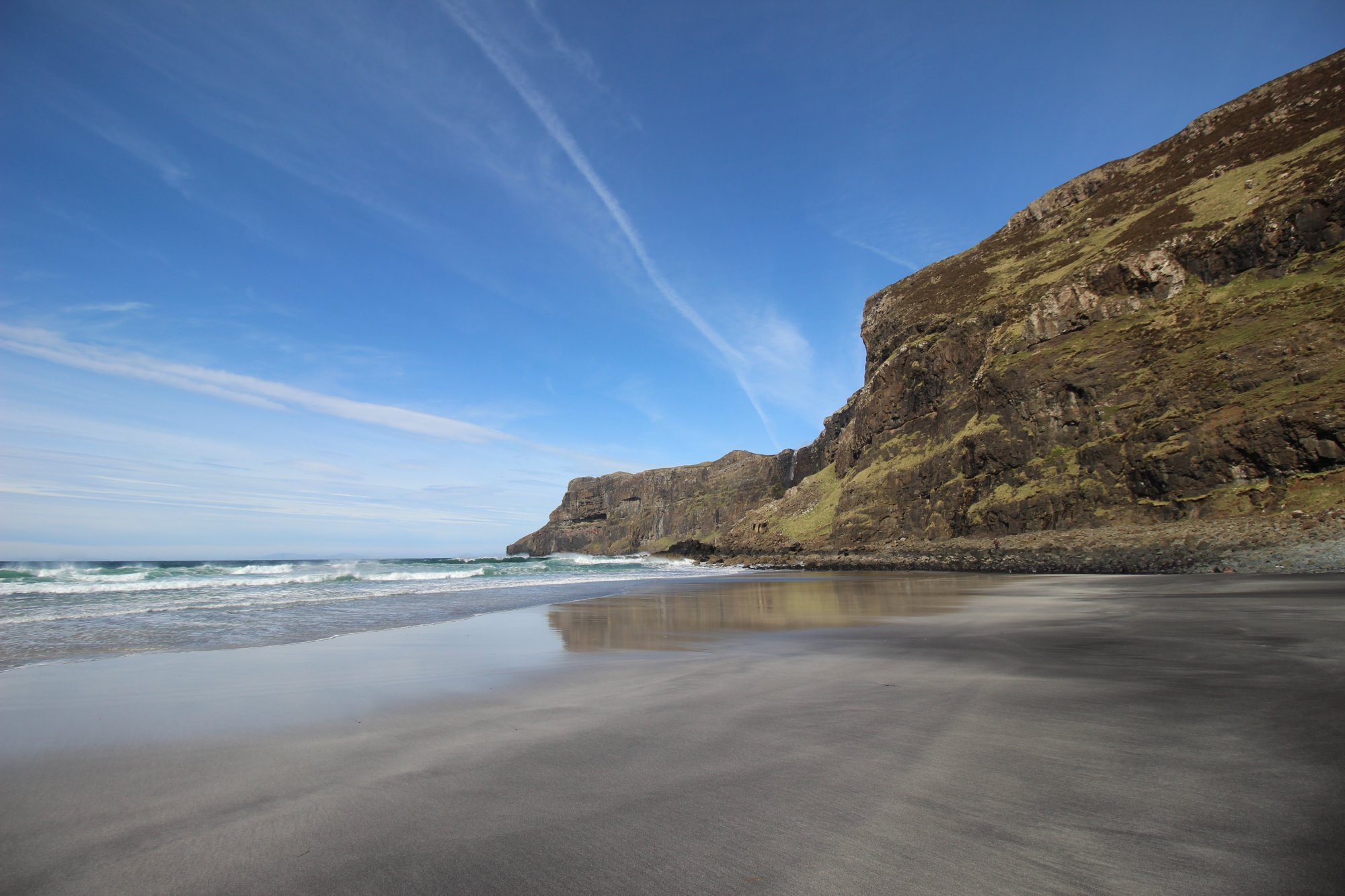
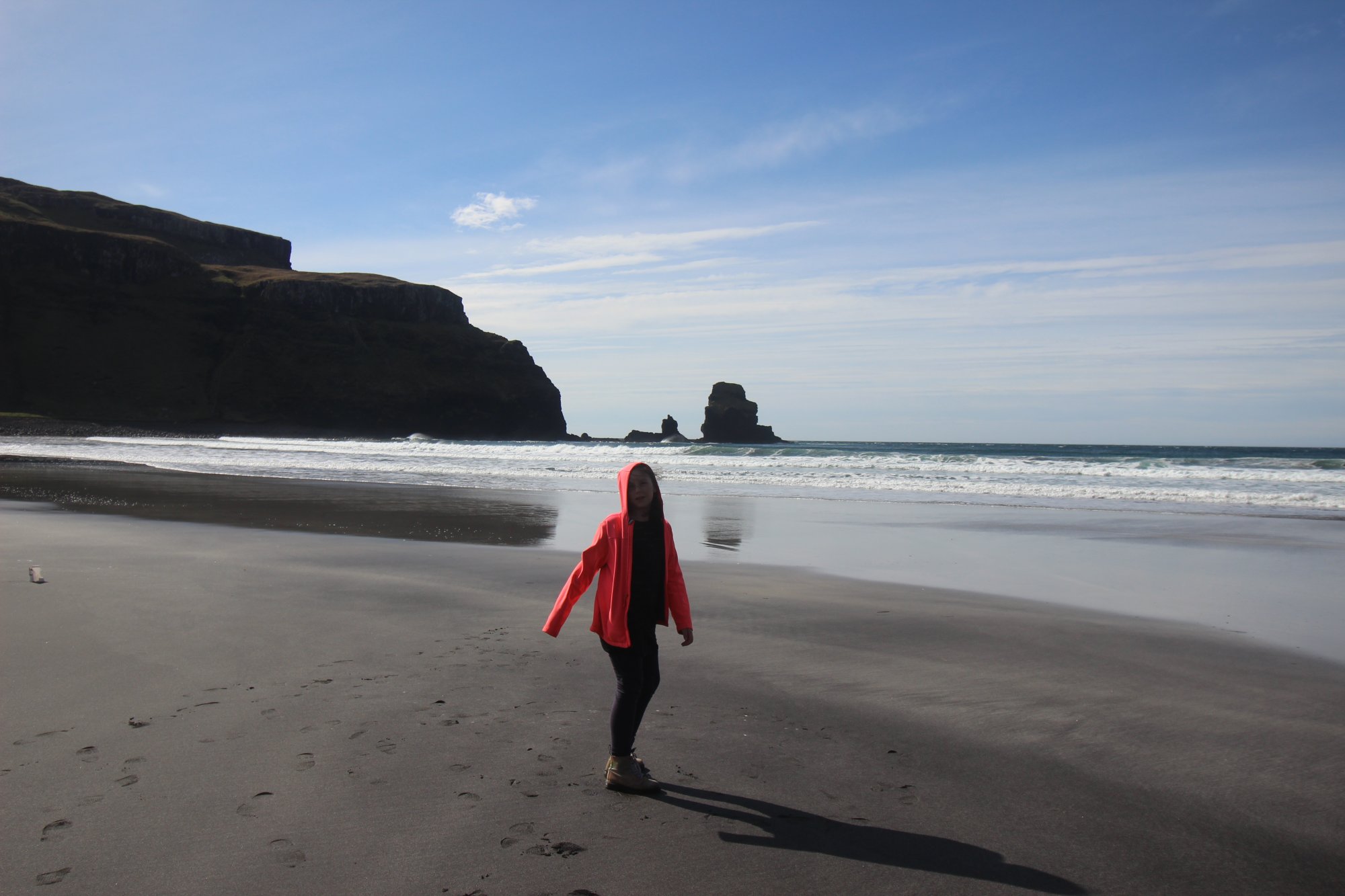
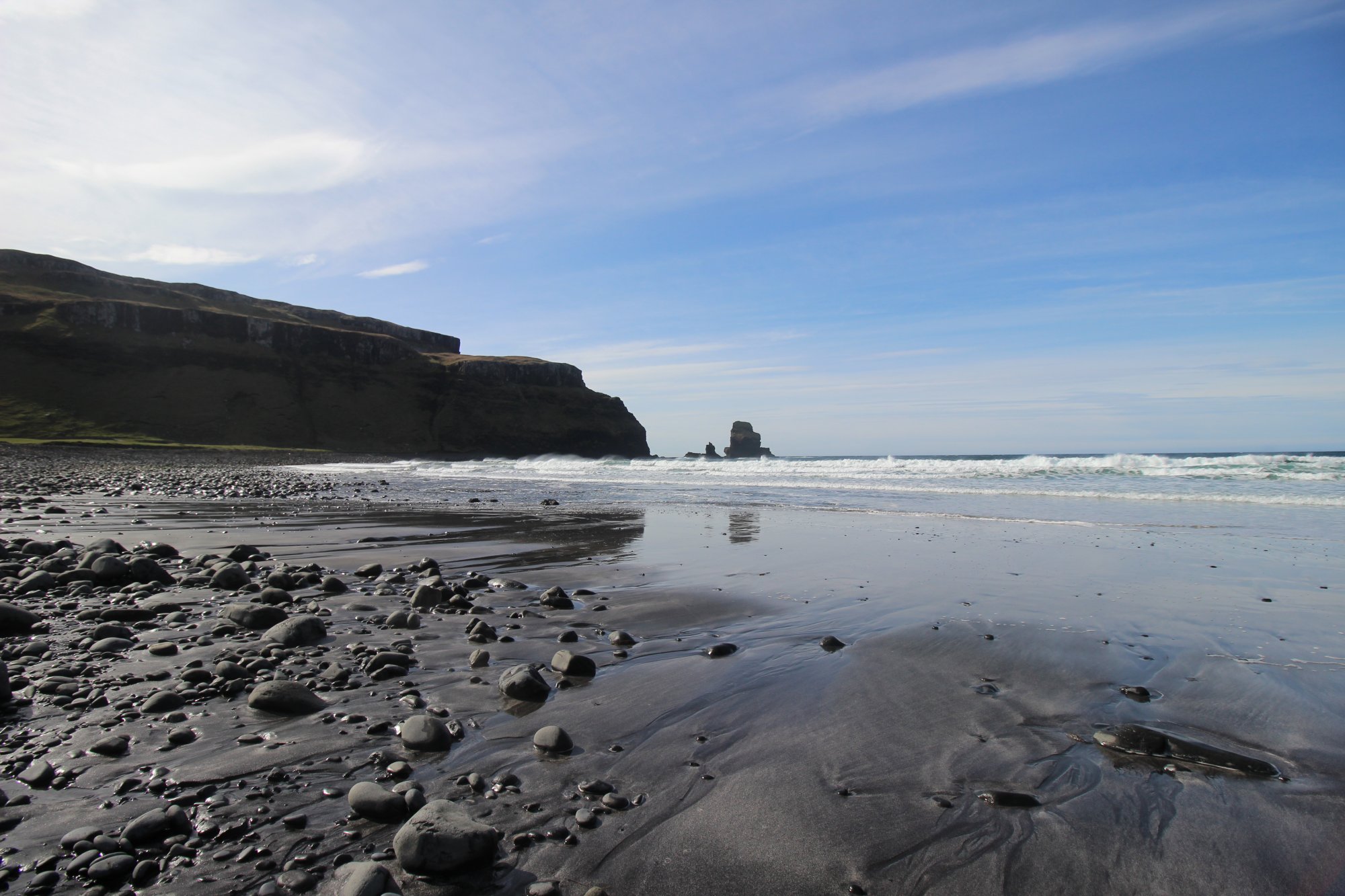
Tucked away on the remote western edge of the Minginish Peninsula, Talisker Bay stands as one of the most geologically raw and visually arresting coastal sanctuaries on the Isle of Skye. Framed by monumental, near-vertical sea cliffs that rise out of the Atlantic, this unique tidal bay is celebrated for its striking floor of polished grey stones and shifting volcanic black sands. Fed by the high moorland streams of the island’s interior, a spectacular 130-meter ($425 ext{ feet}$) waterfall cascades directly over the northern cliff face, vaporizing into sea spray before it hits the boulders below on windy days. Looking south, the jaw-dropping sea stack of Sgeir Mhòr and the distant profiles of Macleod's Maidens dominate the horizon. It offers a masterclass in Paleocene volcanic geomorphology, creating an elite, high-yield environment for coastal hikers, wilderness photographers, and independent digital travel filmmakers looking to capture the moody essence of the Hebrides.
The Geological Blueprint: Basalt Sill Columnar Formations and Black Sands
The unique, melancholic topography of Talisker Bay is a direct result of ancient volcanic activity and relentless maritime erosion:
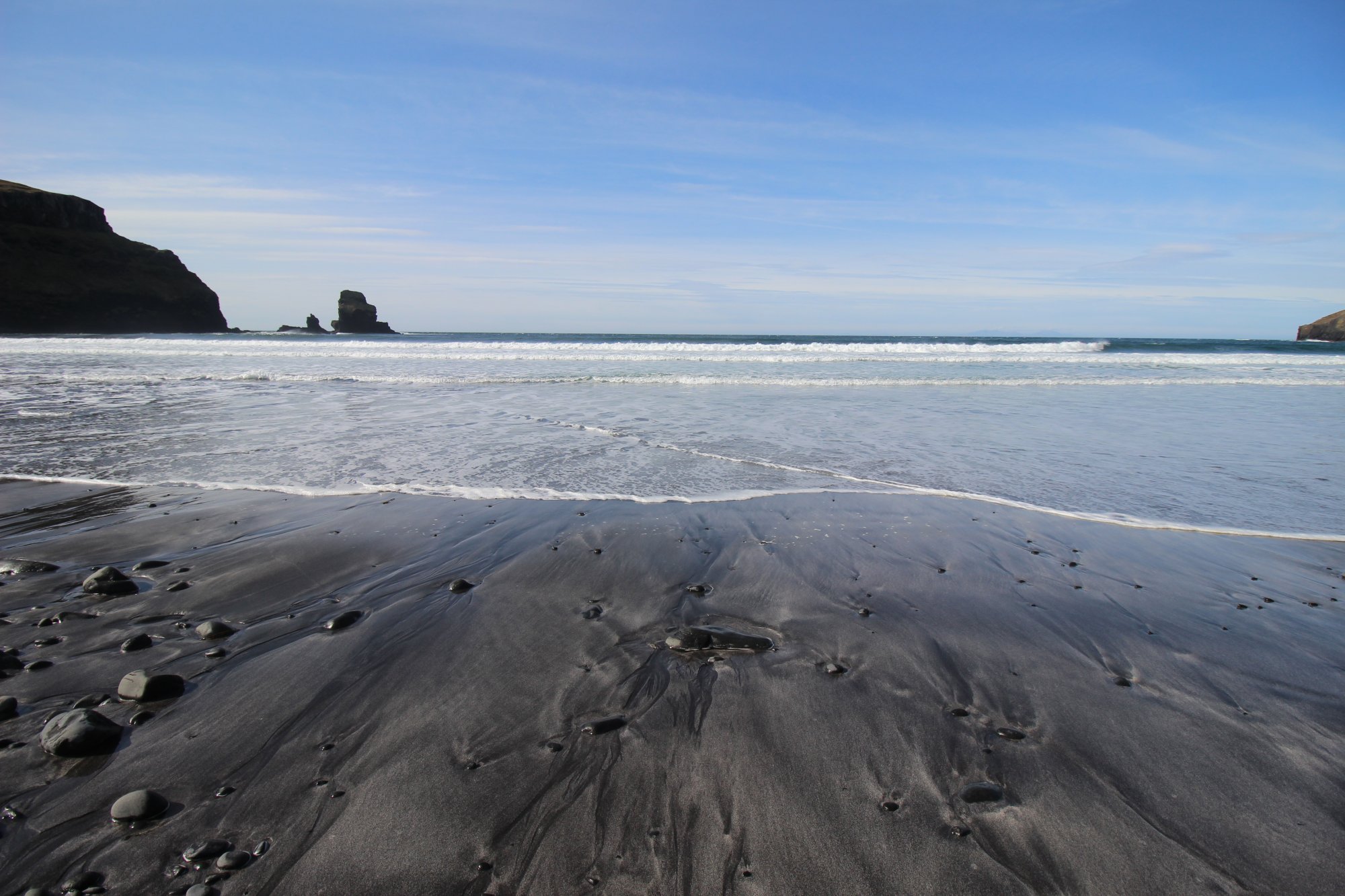
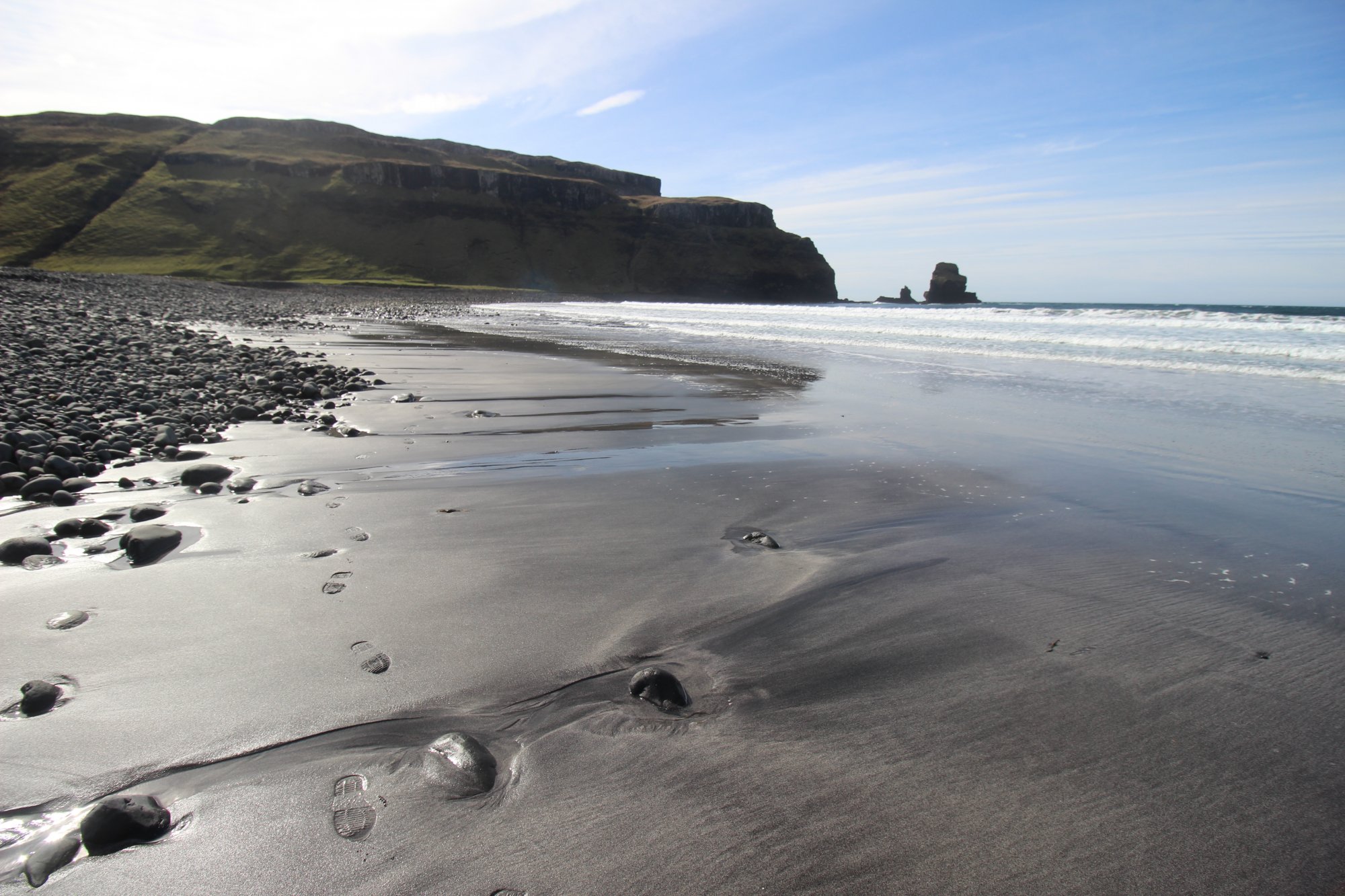
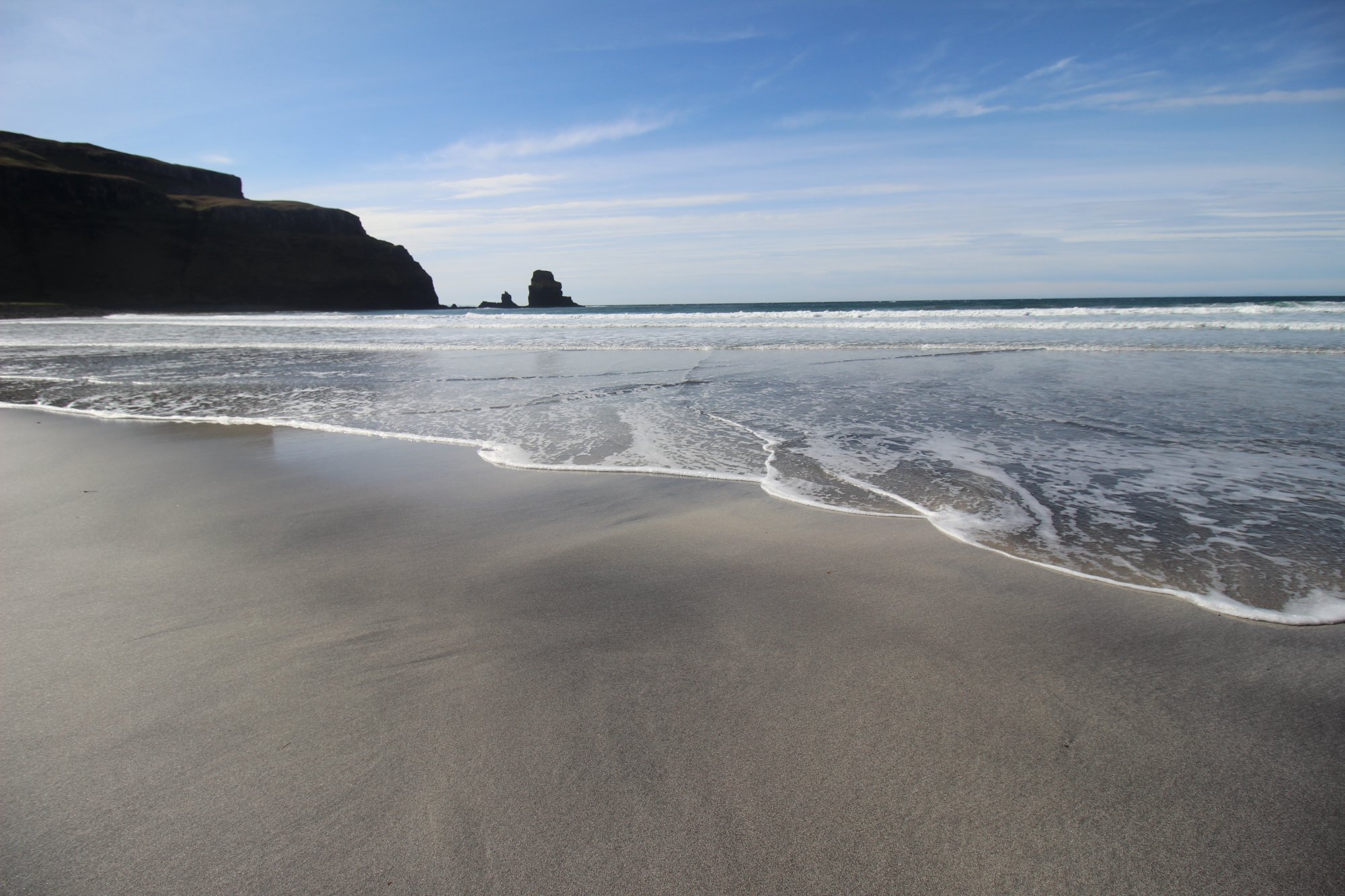
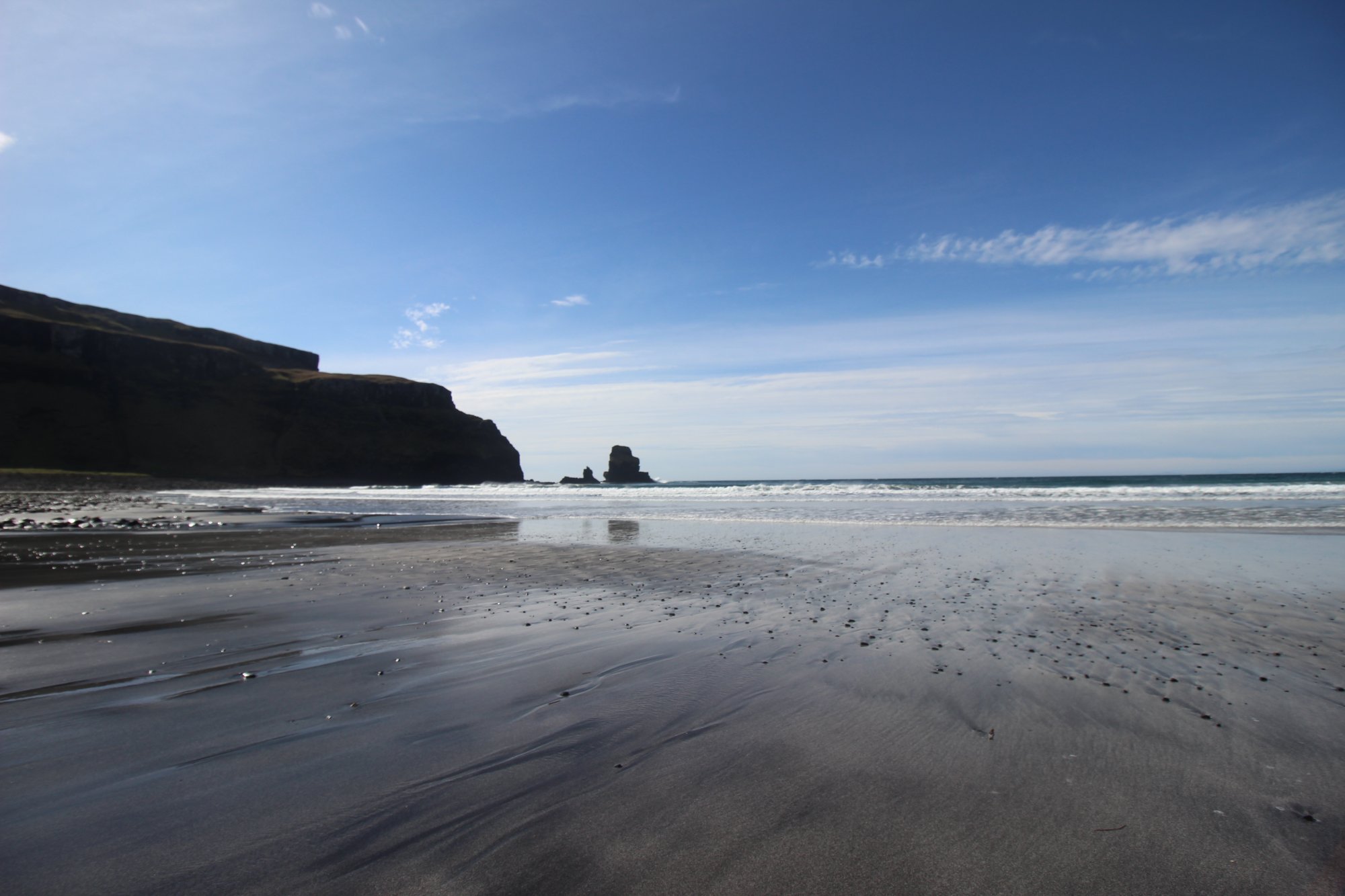
- The Volcanic Sand Matrix: Unlike the white coral beaches found elsewhere on Skye, the dark sands of Talisker Bay are formed from the heavy weathering of the surrounding tertiary basalt lavas. The tidal retreat exposes a vast, reflective floor of fine black magnetite sand bordered by perfectly smooth, ocean-polished grey dolerite cobbles, creating an intense, monochromatic visual foundation.
- The Northern Amphitheater and Cliff Cascades: The northern edge of the bay is enclosed by a massive, columnar basalt cliff wall. The crowning feature is the sheer waterfall that drains the high plateaus of the peninsula. During heavy Atlantic storms, powerful tracking winds frequently catch the cascading water column, blowing it completely backward over the top of the cliff in a dramatic display of natural force.
- Tidal Traps and Sgeir Mhòr Access: At low tide, the bay opens up dramatically, providing foot access to the base of the towering sea stack, Sgeir Mhòr, which stands guard at the southern horn of the bay. However, because the incoming Atlantic tide rushes back across the flat, sandy floor with exceptional speed, hikers and film crews must track tide tables carefully to avoid becoming trapped against the unscalable southern cliffs.
The Trail Blueprint: Route Logistics and Estate Access Realities
The approach to Talisker Bay is pleasantly efficient, offering an accessible route into the wild coast, though infrastructure limits require strict preparation:
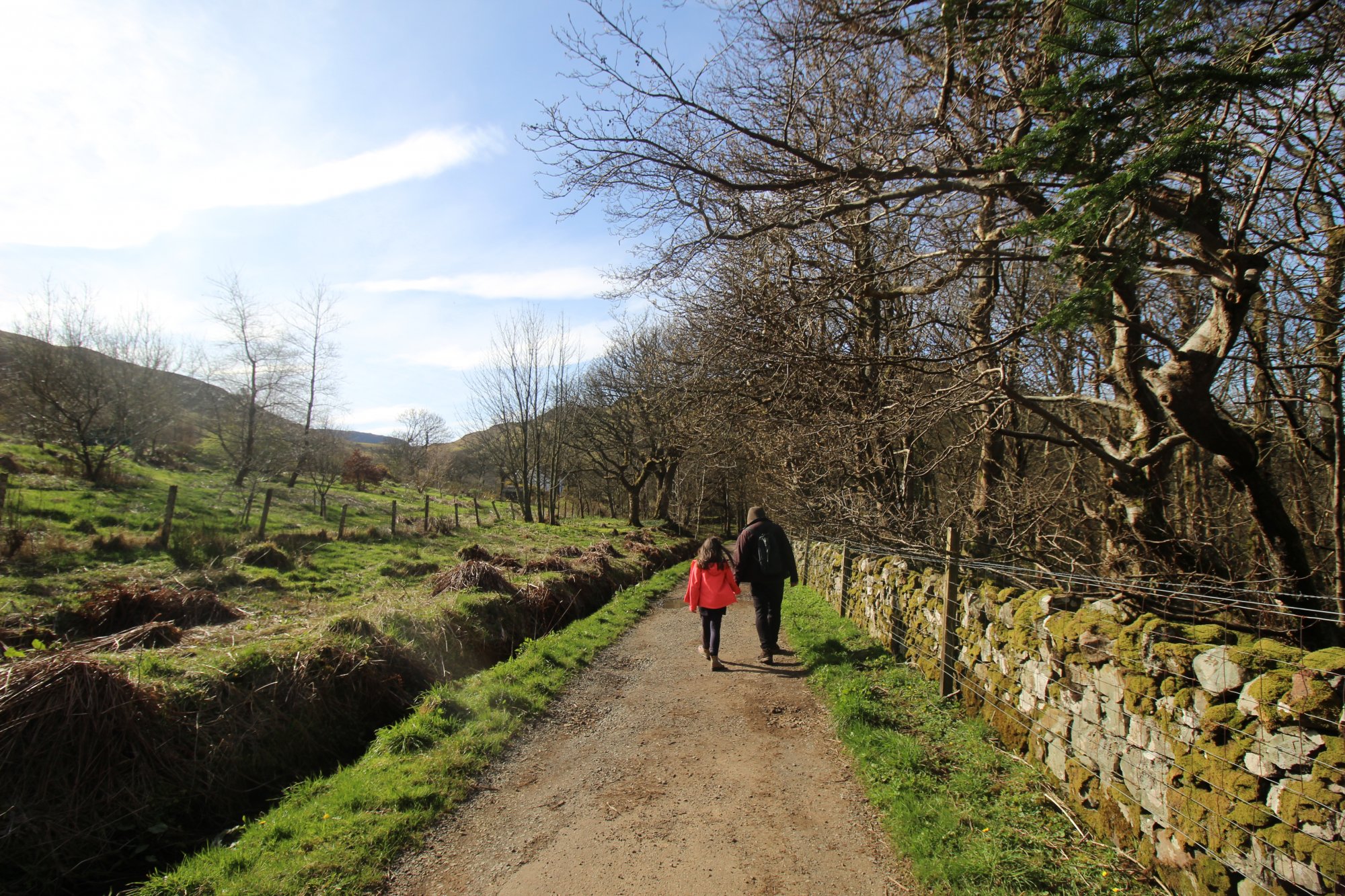
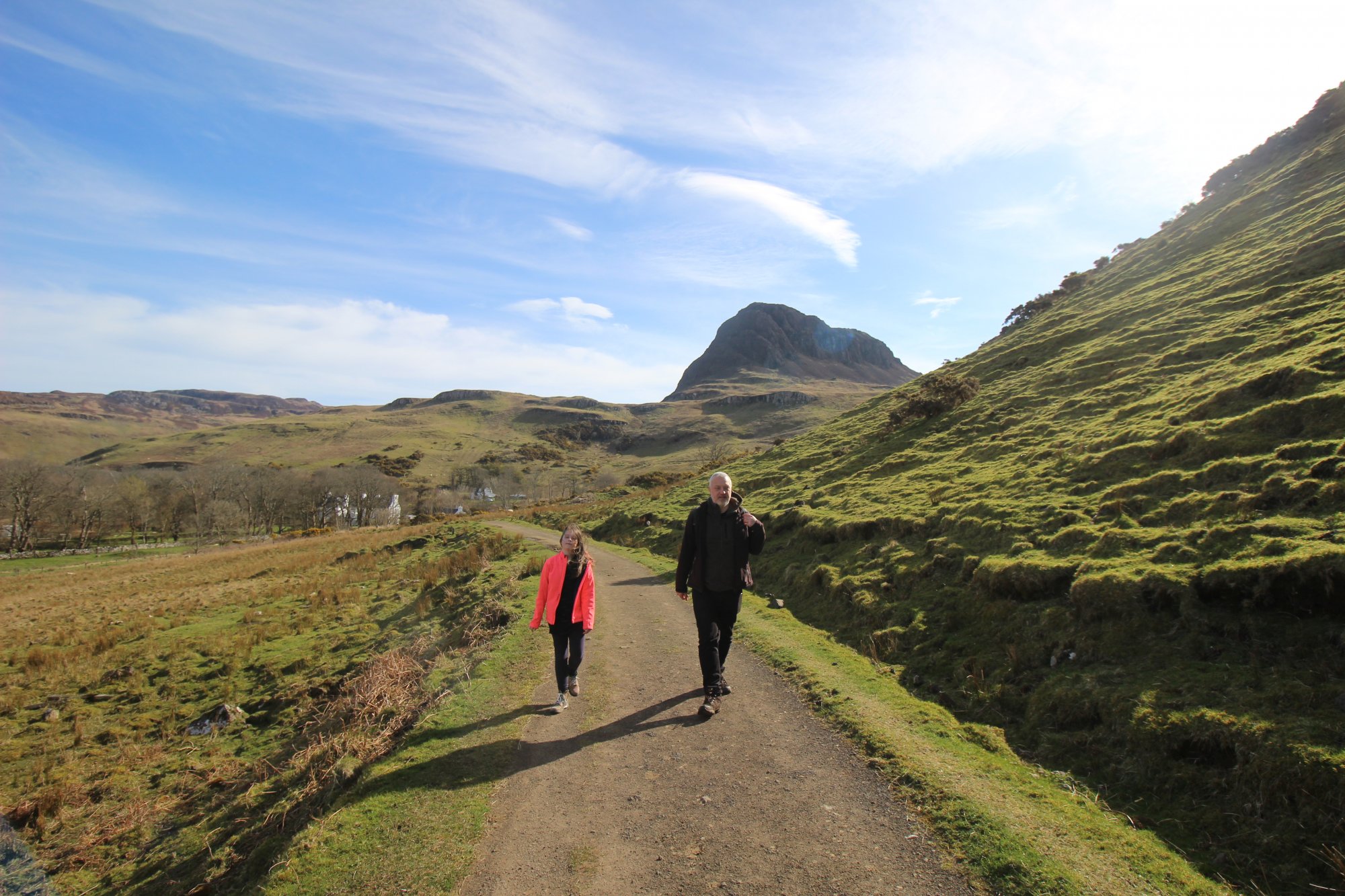
- Trail Grading and Valley Walk: The standard out-and-back route is a gentle 2-mile ($3.2 ext{ km}$) round trip that takes approximately 45 to 60 minutes of walking time. The trail begins at the end of the public single-track road at Talisker and tracks along a flat, well-defined estate track through private farmland and mature woodlands, running parallel to the Talisker River estuary. The terrain is highly manageable, transitioning from gravel into soft sand and loose coastal cobbles near the beach line, making water-resistant hiking boots with reliable grip standard for the rocky sections.
- Infrastructure and Parking Constraints: The public staging area at the road end is exceptionally small, consisting of a tight, informal turning circle with parking restricted to a few roadside gravel lay-bys. Parking is strictly prohibited on the estate verges to ensure local crofters can move tractors and livestock vehicles. To secure a parking space and avoid mid-day tourist traffic, creators are strongly advised to execute early-morning or late-evening departures, which align perfectly with peak golden hour illumination.
Cinematography, Audio, and Technical Production Integration
For independent travel filmmakers and landscape photographers, Talisker Bay presents an elite natural studio, demanding precise control over high-contrast reflections and intense coastal wind shear:
- Long-Exposure Surf Tracking and Matte Sand Reflections: The damp black volcanic sand acts as a giant, dark mirror, reflecting the sky with incredible clarity. Under direct sunlight, this creates a massive contrast challenge against the bright white ocean surf. To capture smooth, cinematic motion blur in the crashing waves while maintaining detail in the dark sand, deploy a high-density Neutral Density filter ($ND1000$) combined with a Circular Polarizer (CPL). This eliminates distracting glare from the wet stones, deepens the rich textures of the basalt cliffs, and preserves fine highlight details in a 10-bit log profile.
- Lens Tactics for Coastal Scale: To emphasize the towering vertical scale of the northern waterfall against the beach, position your tripod low to the wet sand at the center of the bay and use a wide-angle lens ($16 ext{mm}$ to $24 ext{mm}$). This elongates the perspective lines, drawing the viewer's eye across the black sand directly into the massive cliff walls.
- Acoustic Engineering in the Coastal Venturi Funnel: The deep, u-shaped opening of Talisker Bay creates a powerful natural wind funnel, trapping high-velocity Atlantic tracking winds between the two cliff headlands. The soundscape is dominated by the thunderous boom of the surf and the crashing of stones. To isolate clean voice notes or capture the crisp sound of the waterfall, directional shotgun microphones must be completely enclosed within a professional, multi-layered fur windjammer (deadcat). Position your recording setups on the leeward side of the larger beach boulders to block wind distortion from clipping your preamps.