



The Stone Ship of Assynt: Navigating the Glencanisp Approach, Bealach Scrambles, and Wilderness Landscapes of Suilven
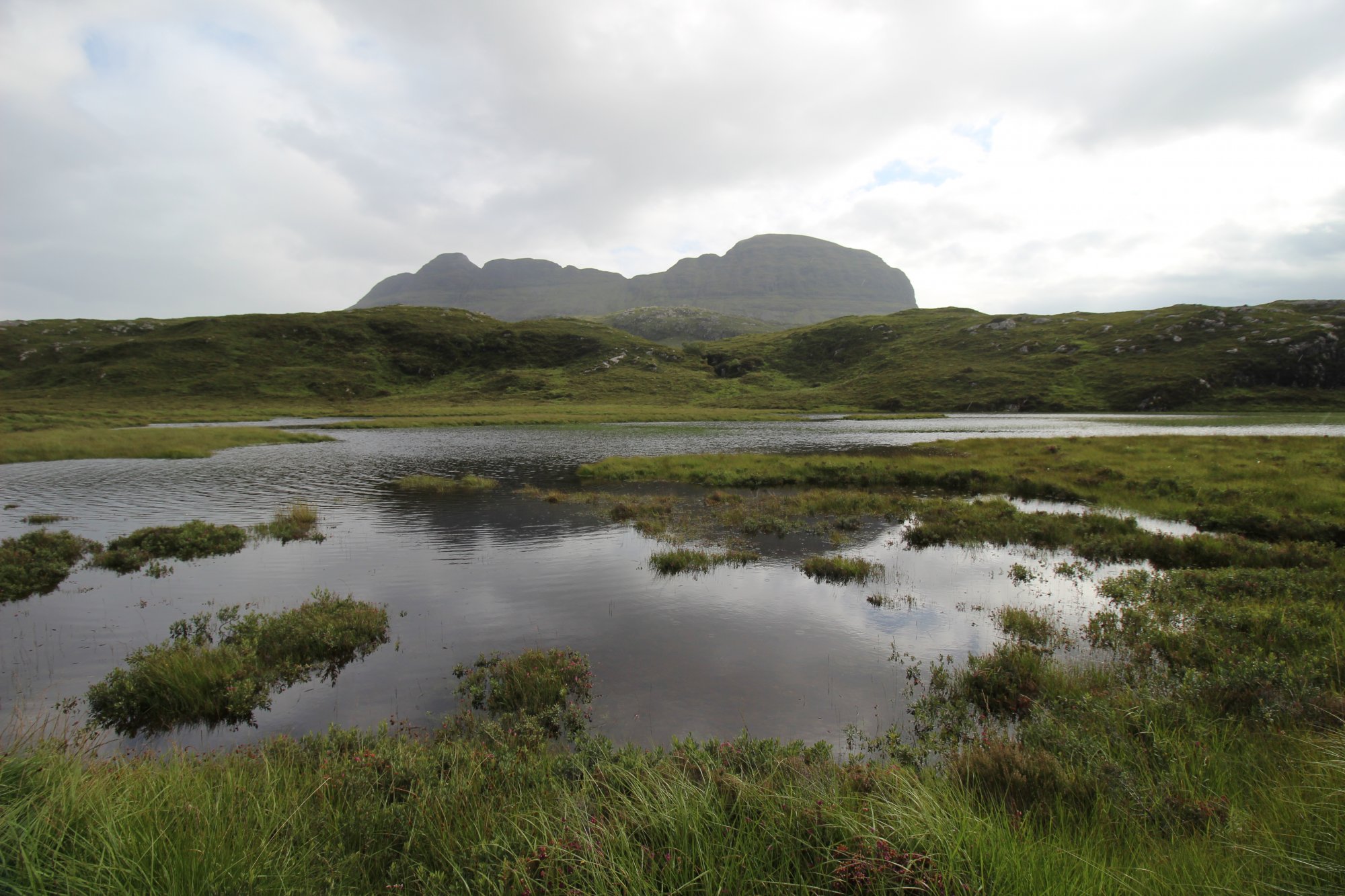
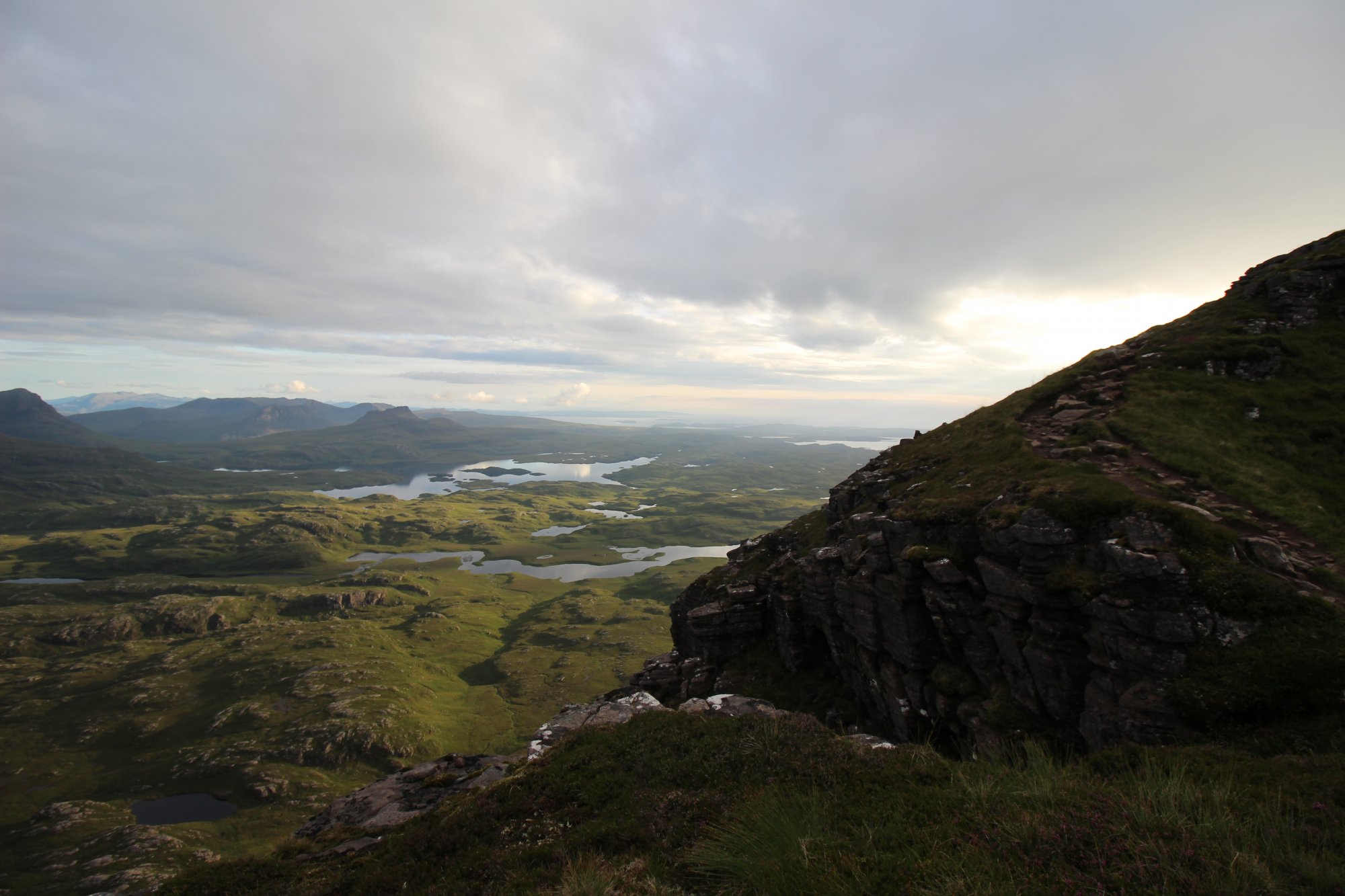
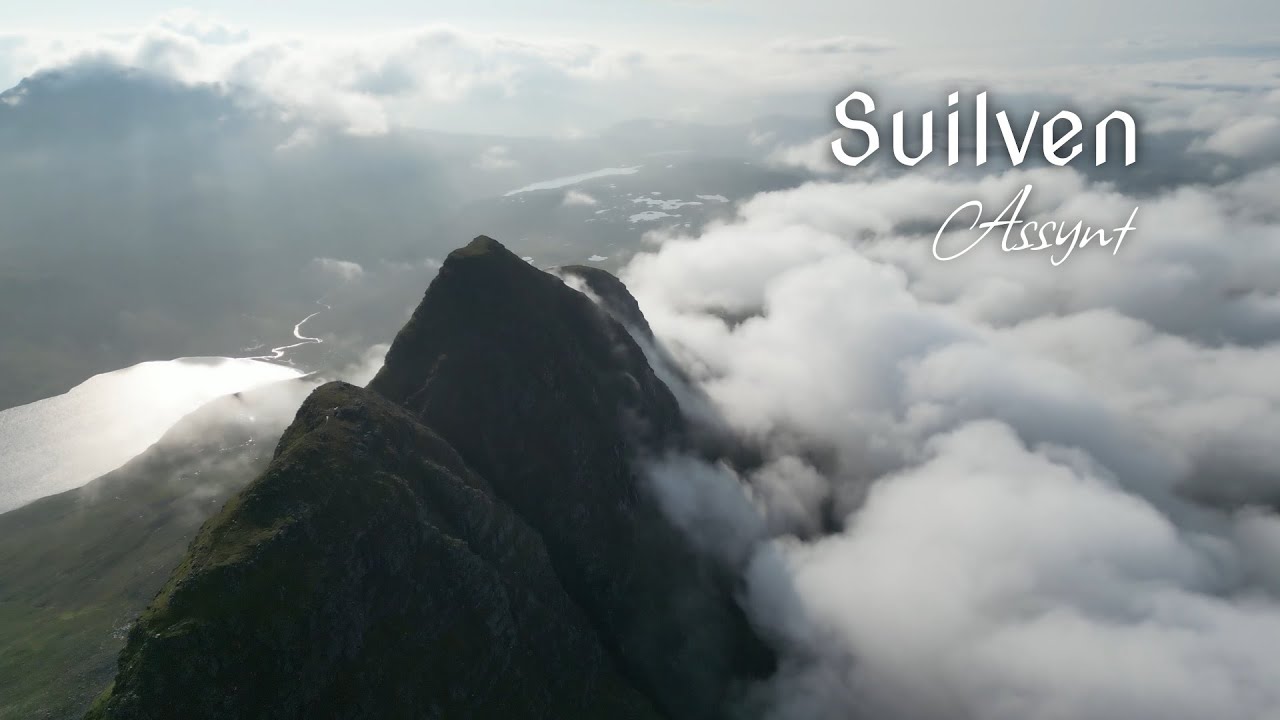
Rising like a colossal, prehistoric stone ship from a vast, water-logged "sea" of ancient peat bogs and shimmering glaciated lochans, Suilven stands as one of the most iconic, structurally dramatic, and visually arresting mountains in Europe. Located deep within the Inverpolly wilderness of the Assynt-Coigach National Scenic Area, this spectacular peak rises to an elevation of 731 meters ($2,398 ext{ feet}$). Although its height classifies it as a modest Graham rather than a Munro, Suilven possesses an architectural grandeur and an isolating presence that dominates the entire landscape of northwest Scotland. Derived from the Old Norse for "Pillar Mountain," its sheer sandstone battlements present an imposing challenge. The route transitions from a grueling, long-distance moorland approach into an intensely steep, physical gully scramble, offering wilderness hikers, wild campers, and digital travel filmmakers an elite backcountry studio.
The Geological Blueprint: Torridonian Inselbergs and Gneiss Platforms
The unique, isolated geomorphology of Suilven is a masterclass in deep-time erosion, standing as an island mountain surrounded by some of the oldest exposed geology on earth:
- The Inselberg Formation: Suilven is a classic inselberg—a lonely mountain remnant left standing after millions of years of glacial sculpting scoured away the surrounding sedimentary layers. The mountain's structural spine is composed of ancient Torridonian sandstone, heavily bedded and resistant to weathering, which sits directly on top of a basement platform of Lewisian gneiss that is roughly three billion years old.
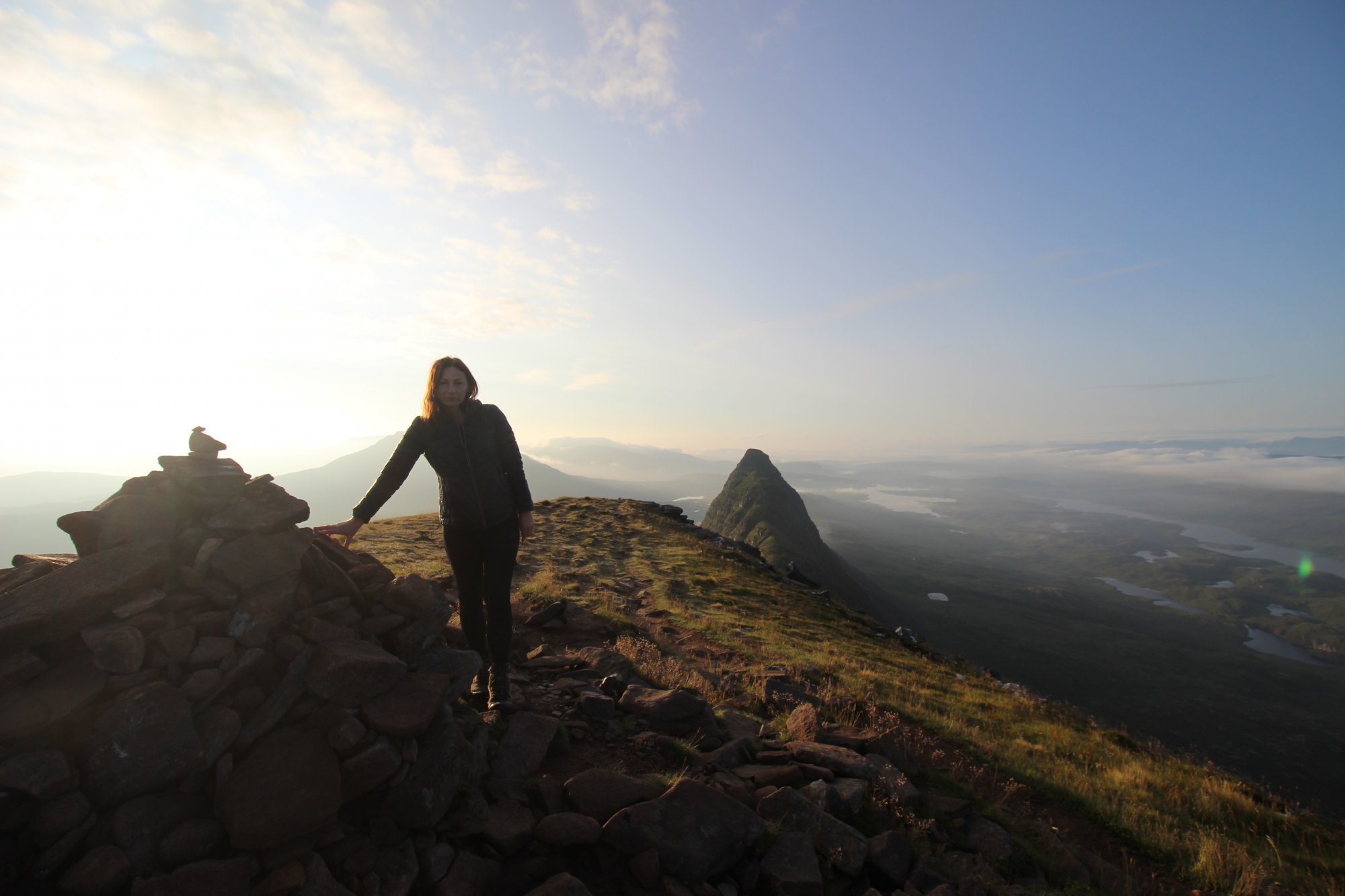
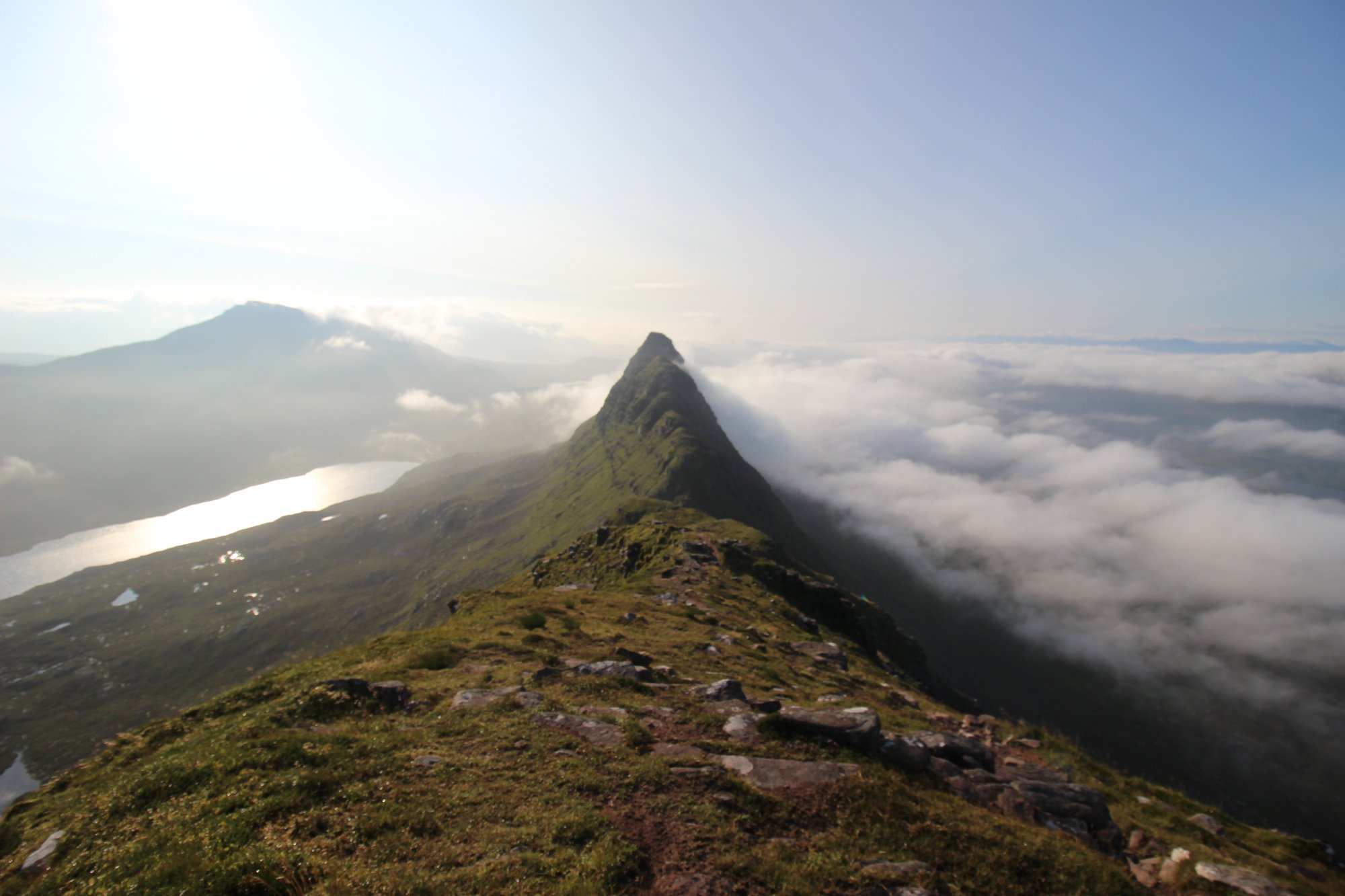
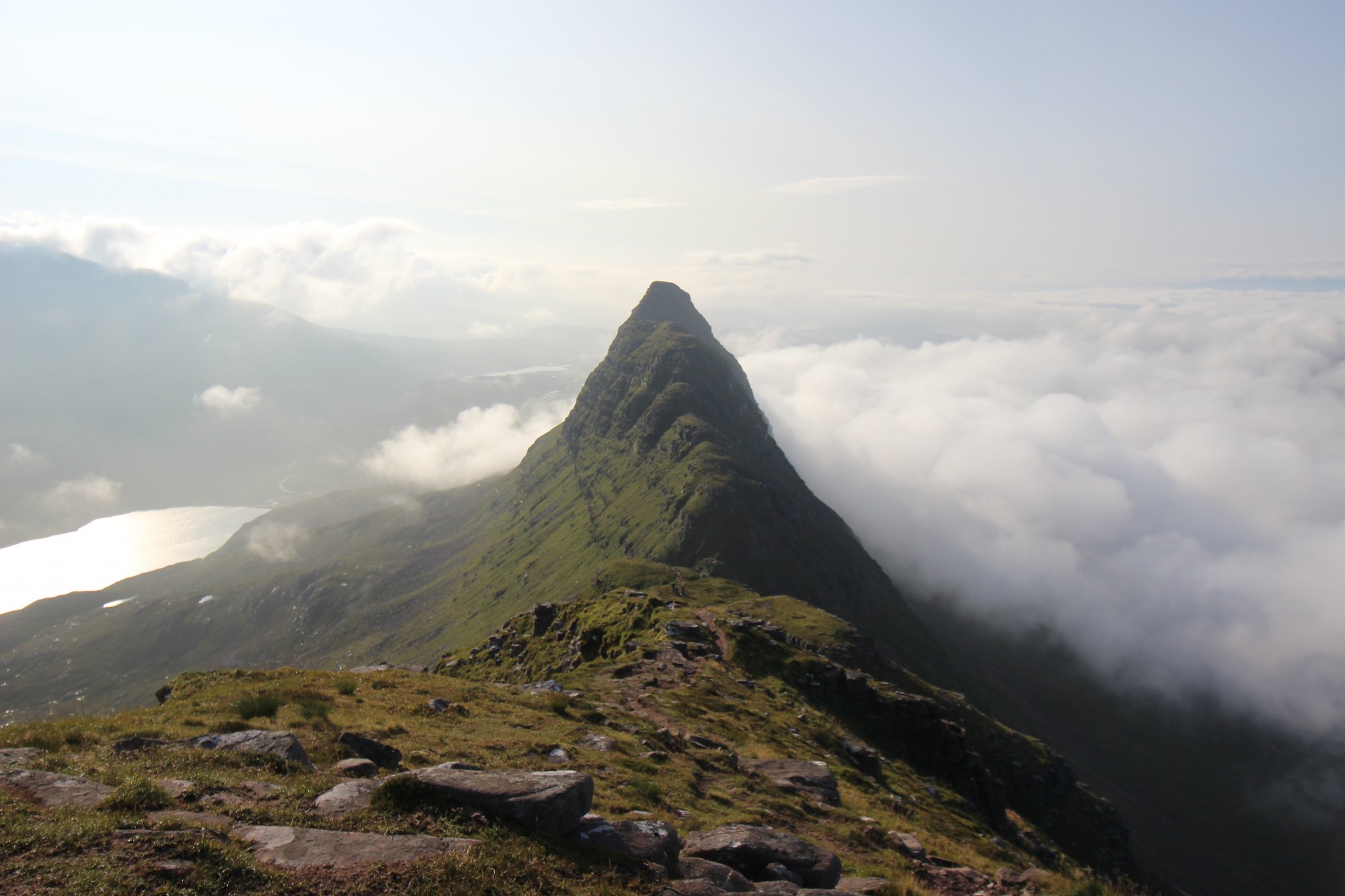
- The Dual Summits: The mountain's elongated ridge is split into distinct technical zones. The western peak, Caisteal Liath (The Grey Castle), is the true summit—a broad, safe, and surprisingly grassy plateau that falls away in sheer cliffs to the glen below. In stark contrast, the eastern end terminates in Meall Meadhonach (The Middle Round Hill), a series of highly technical, jagged sandstone pinnacles connected by narrow, exposed ridges that demand confident, high-level scrambling capability ($Grade ext{ }1/2$).
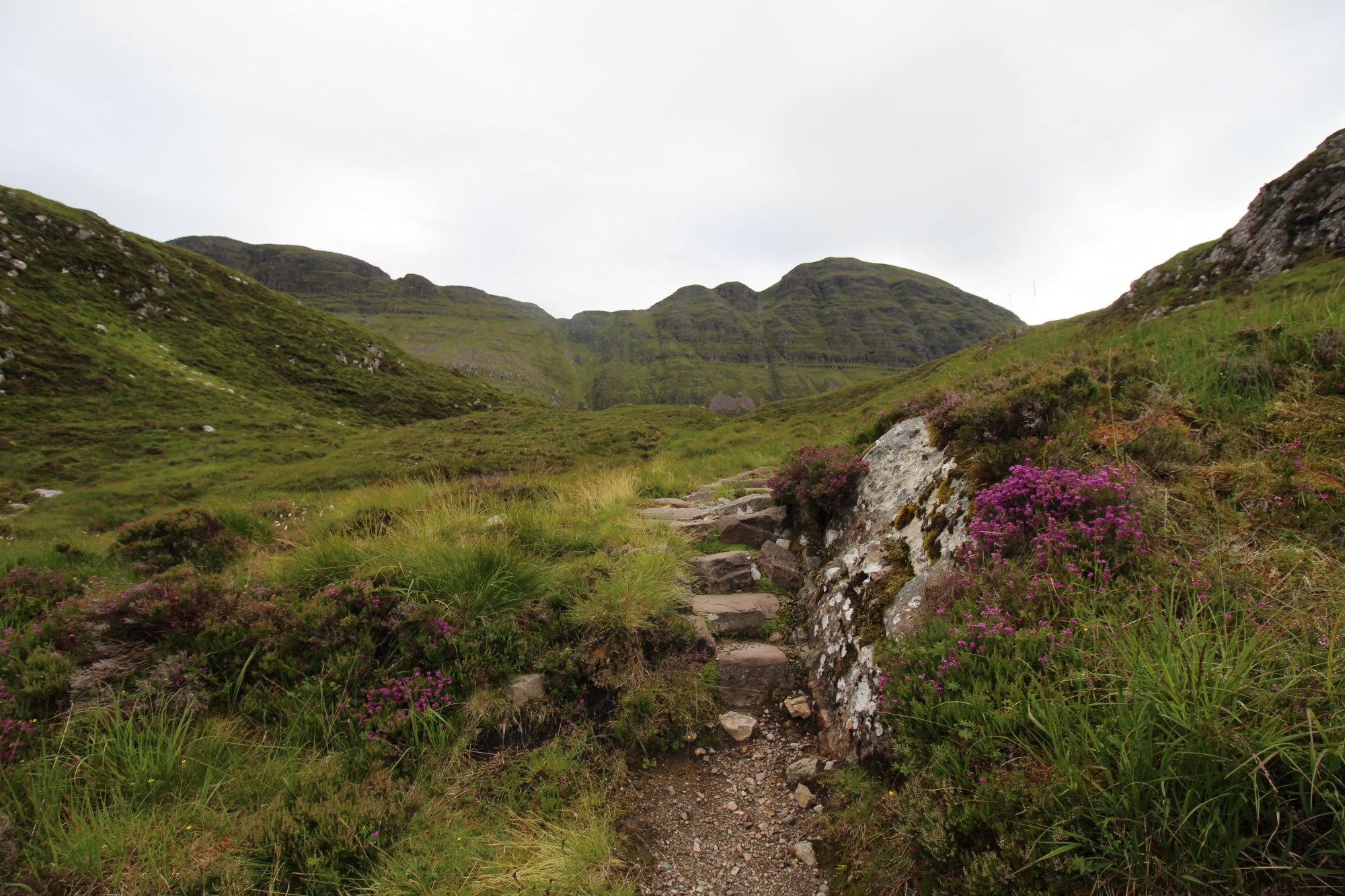
- The Bealach Mòr Divide: The primary gateway to the ridge is the Bealach Mòr, a steep, narrow notch carving through the center of the sandstone wall. Viewed from a distance, this gully appears near-vertical and impassable, but it contains a highly engineered, zig-zagging path restored through community conservation initiatives to arrest severe scree erosion.
The Trail Blueprint: Long Approaches and Ridge Logistics
An expedition to Suilven is defined by its endurance-testing approach, requiring comprehensive physical preparation and precise self-sufficiency:
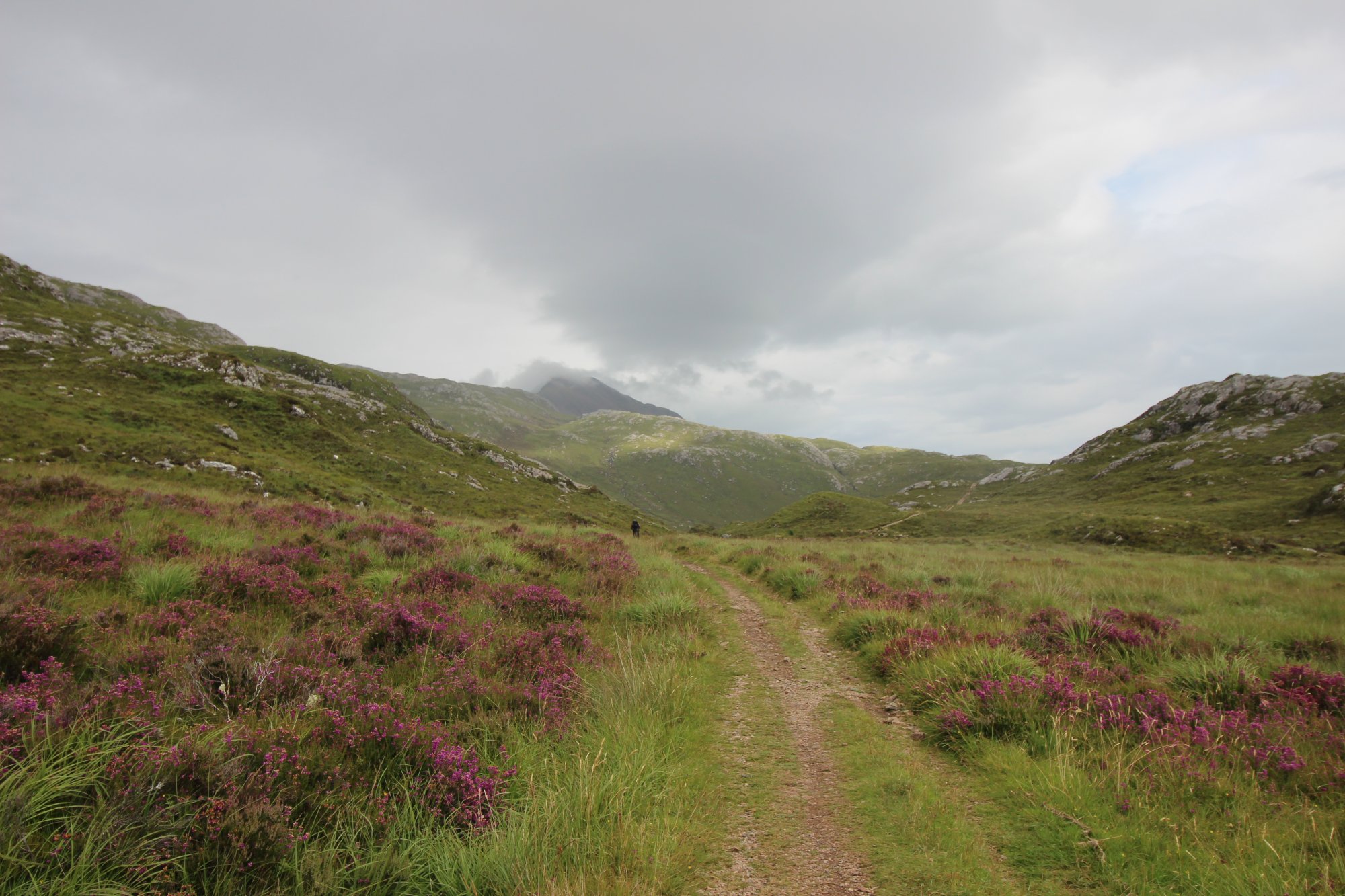
- The Glencanisp and Inverkirkaig Approaches: The standard out-and-back route from the Glencanisp Lodge near Lochinver covers approximately 12.5 miles ($20 ext{ km}$) and takes between 6 to 8 hours to execute. The trail tracks along a well-maintained, gravel estate path winding through miles of rugged moorland before hitting the mountain's base. The alternative southern approach from Inverkirkaig is shorter but significantly more rugged, leading past the roaring Falls of Kirkaig before crossing deeply saturated, pathless peat bogs.
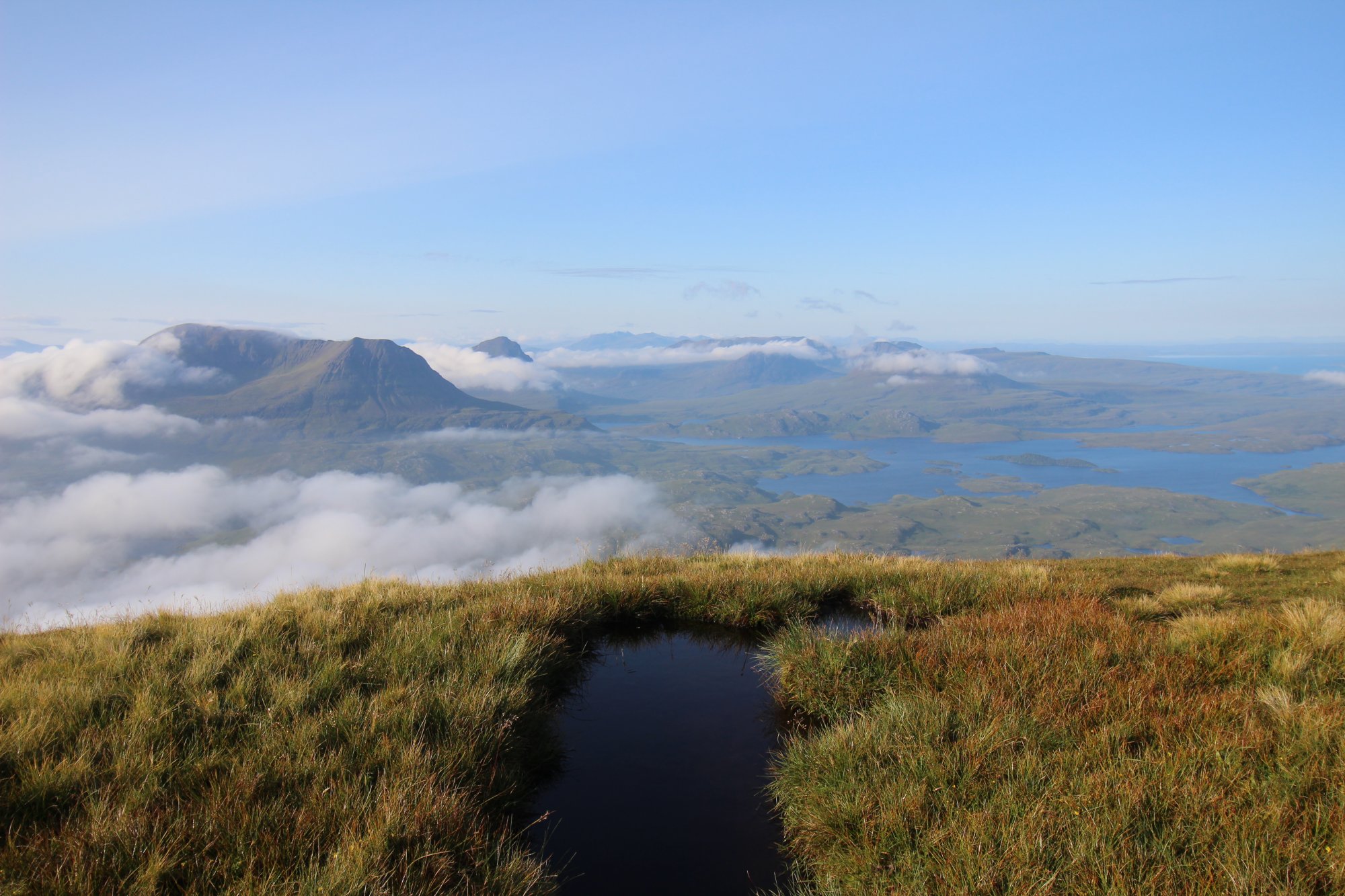
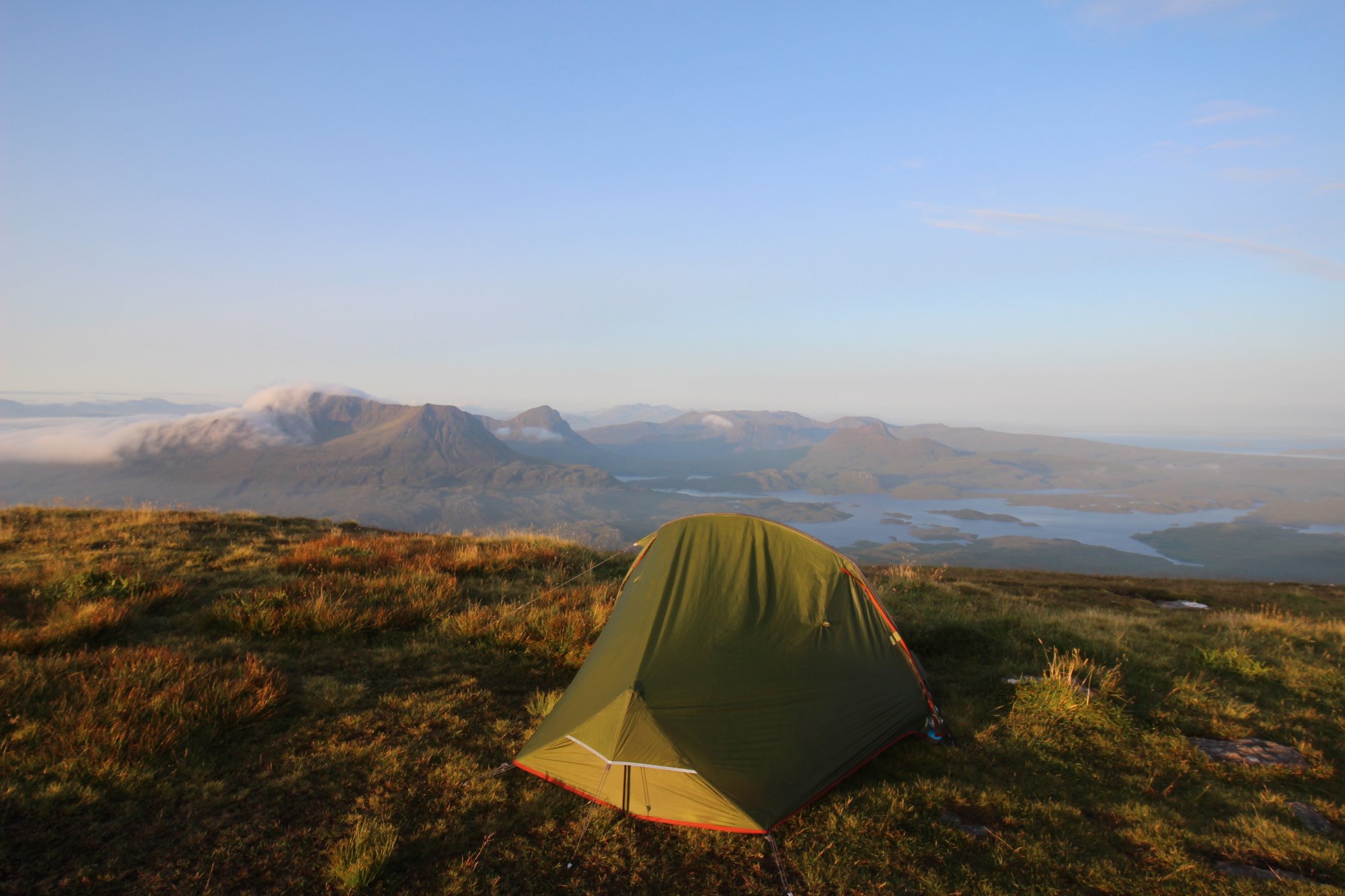
- Water Management and Summit Camping: Because the vertical ascent through the Bealach Mòr gully is intensely physical, hikers must manage hydration carefully. Active freshwater burns are abundant throughout the flat moorland approach, but the mountain structure itself is entirely dry. Wild campers hauling heavy setups to the Caisteal Liath plateau to capture dawn cloud inversions must carry all water provisions up from the base.
- Arrival and Parking Realities: The dedicated wilderness car park is situated at the edge of the Glencanisp estate road. Space is strictly limited and operates on a first-come, first-served basis, routinely filling to capacity by early morning during peak climbing seasons. Film crews carrying substantial production rigs should prioritize first-light departures to secure parking and capitalize on the soft, low-angle morning light slicing across the Assynt lochans.
Cinematography, Tone Compression, and Technical Production Integration
For independent travel filmmakers and landscape photographers, Suilven represents a legendary high-altitude canvas, requiring expert control over extreme contrast variations and relentless maritime winds:
- Focal Compression and Scale Optimization: To capture the raw, surreal scale of Suilven rising solo from the Lewisian gneiss platform, avoid wide-angle lenses, which shrink background features and diminish the mountain's vertical presence. Instead, utilize a medium telephoto lens ($50 ext{mm}$ to $85 ext{mm}$) from the low moorland approach paths. This compresses the physical distance, exaggerating the mountain's sheer sandstone cliffs while rendering the foreground lochans as a dramatic, reflective base. Shoot exclusively in a 10-bit log profile to preserve structural details in both the dark, shadowed vertical fissures and the bright, coastal clouds moving in from the Atlantic.
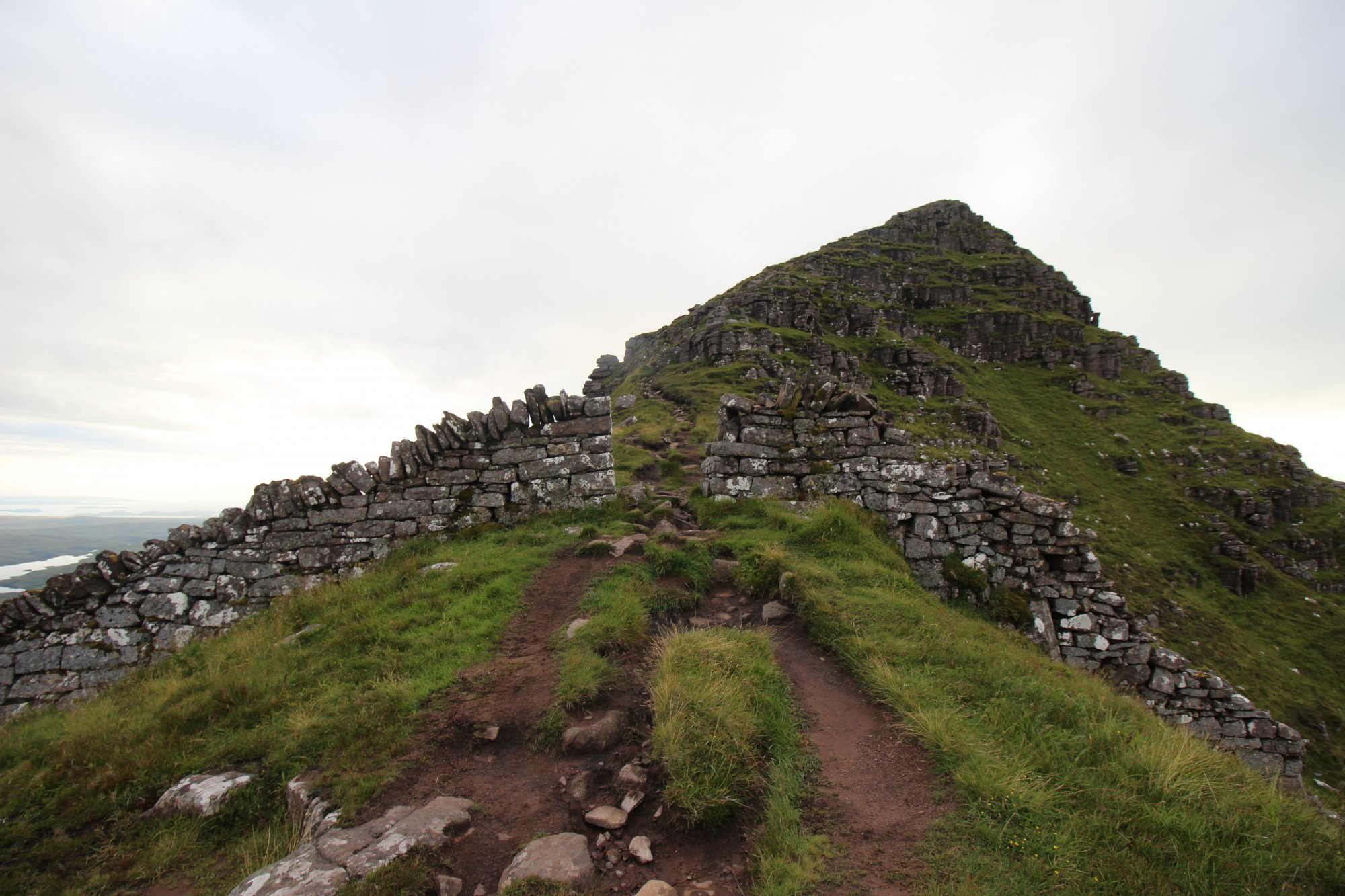
- Acoustic Engineering in the Gully Wind Tunnel: The Bealach Mòr gully acts as a massive natural wind funnel, accelerating Atlantic tracking winds as they hit the sandstone wall. To isolate clean voice tracks or record the deep, percussive roar of the wind over the ridge, directional shotgun microphones must be completely enclosed within a professional, multi-layered fur windjammer (deadcat). When filming on the broad summit plateau of Caisteal Liath, locate recording setups behind the heavy drystone cross-wall built across the ridge, using this historic masonry as a physical barrier to block wind shear from clipping your audio preamps.