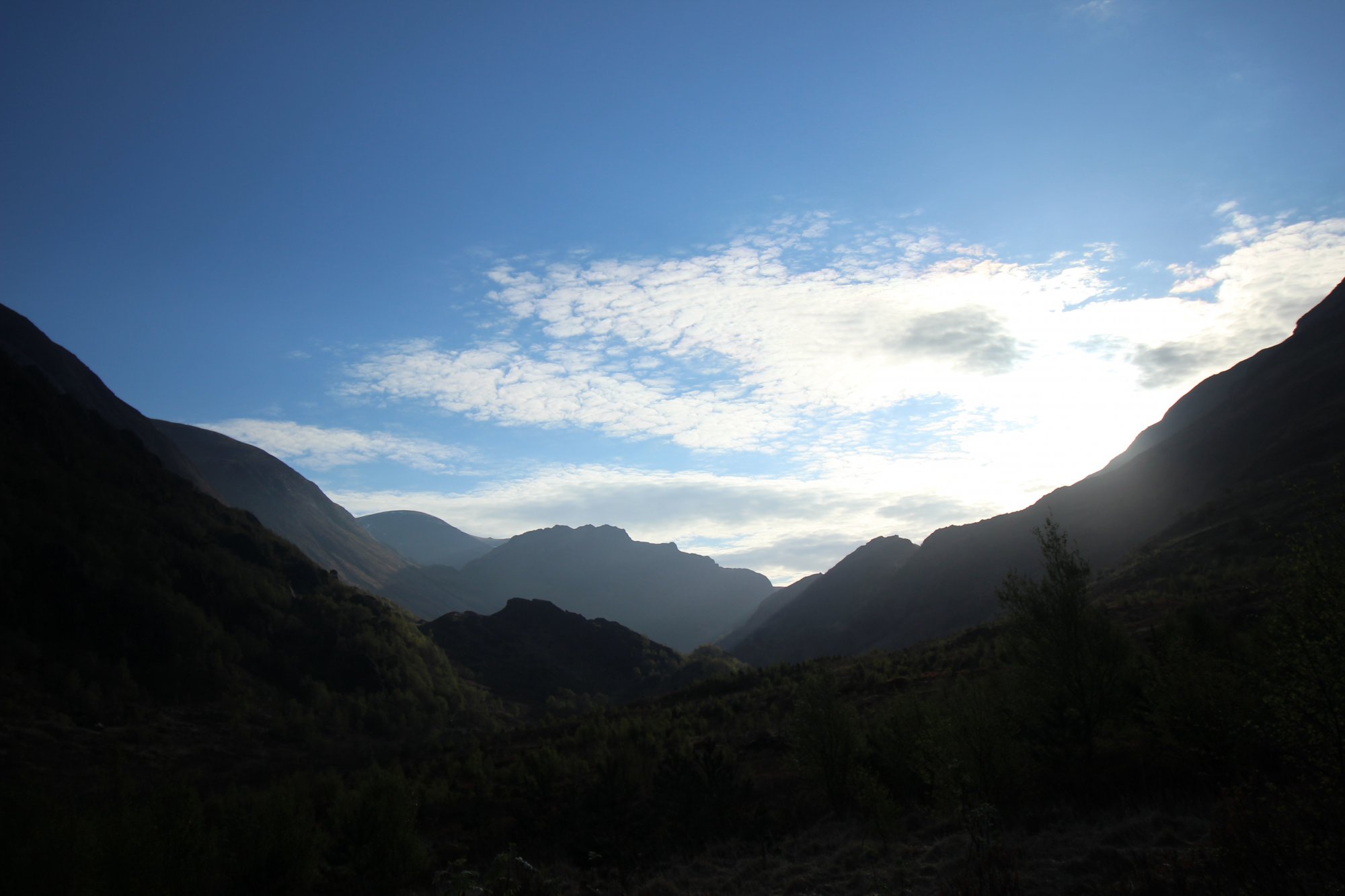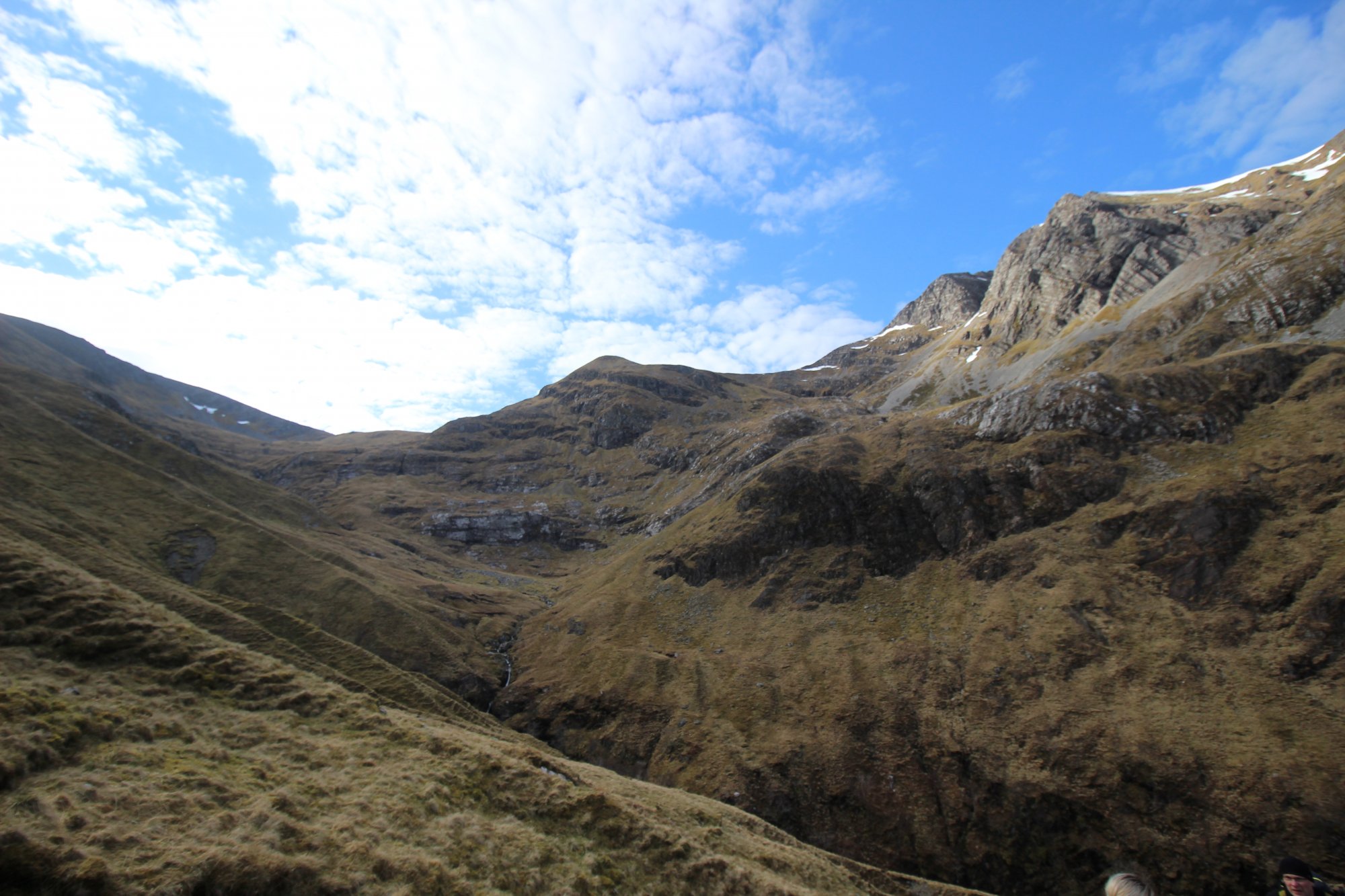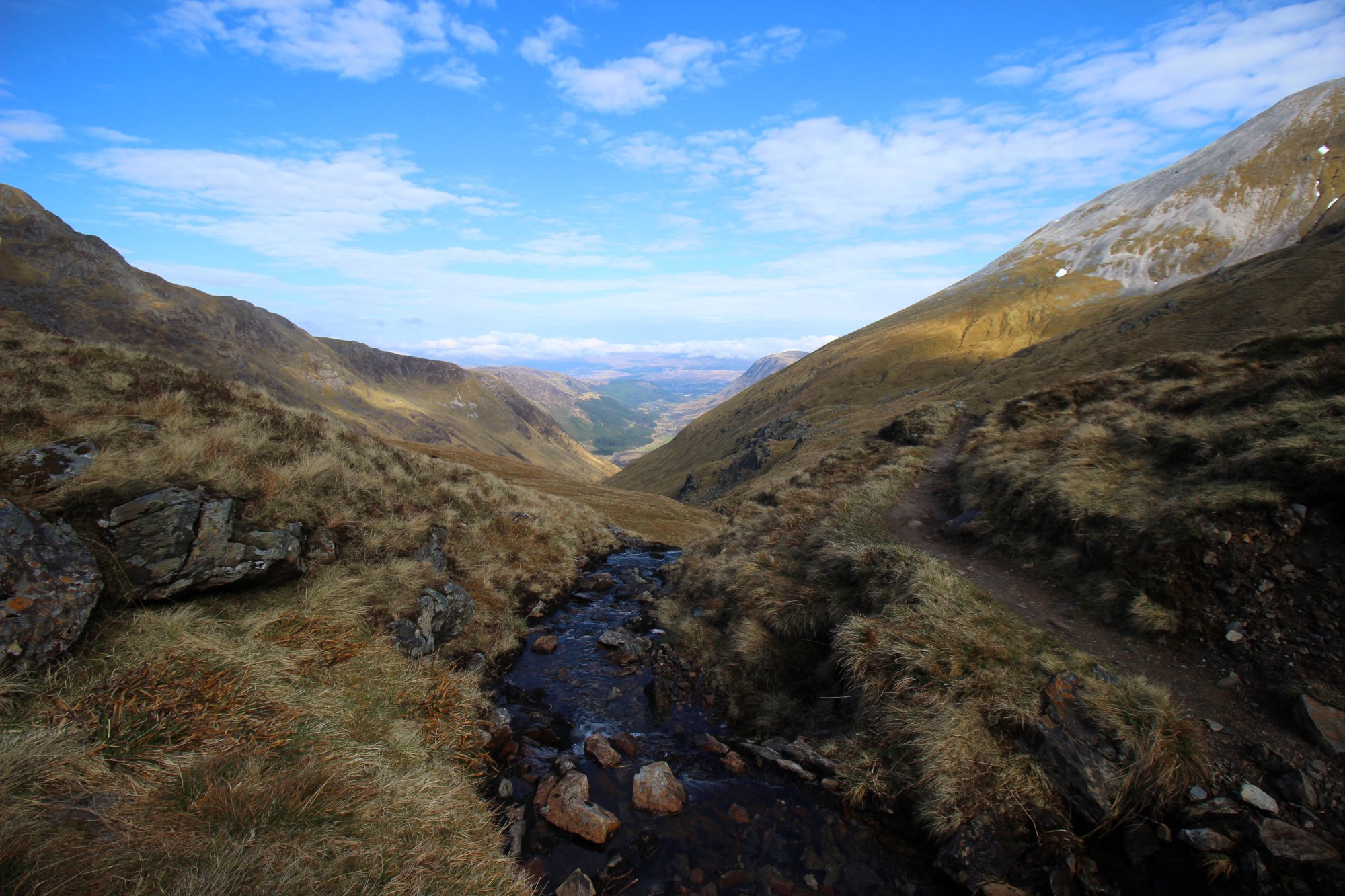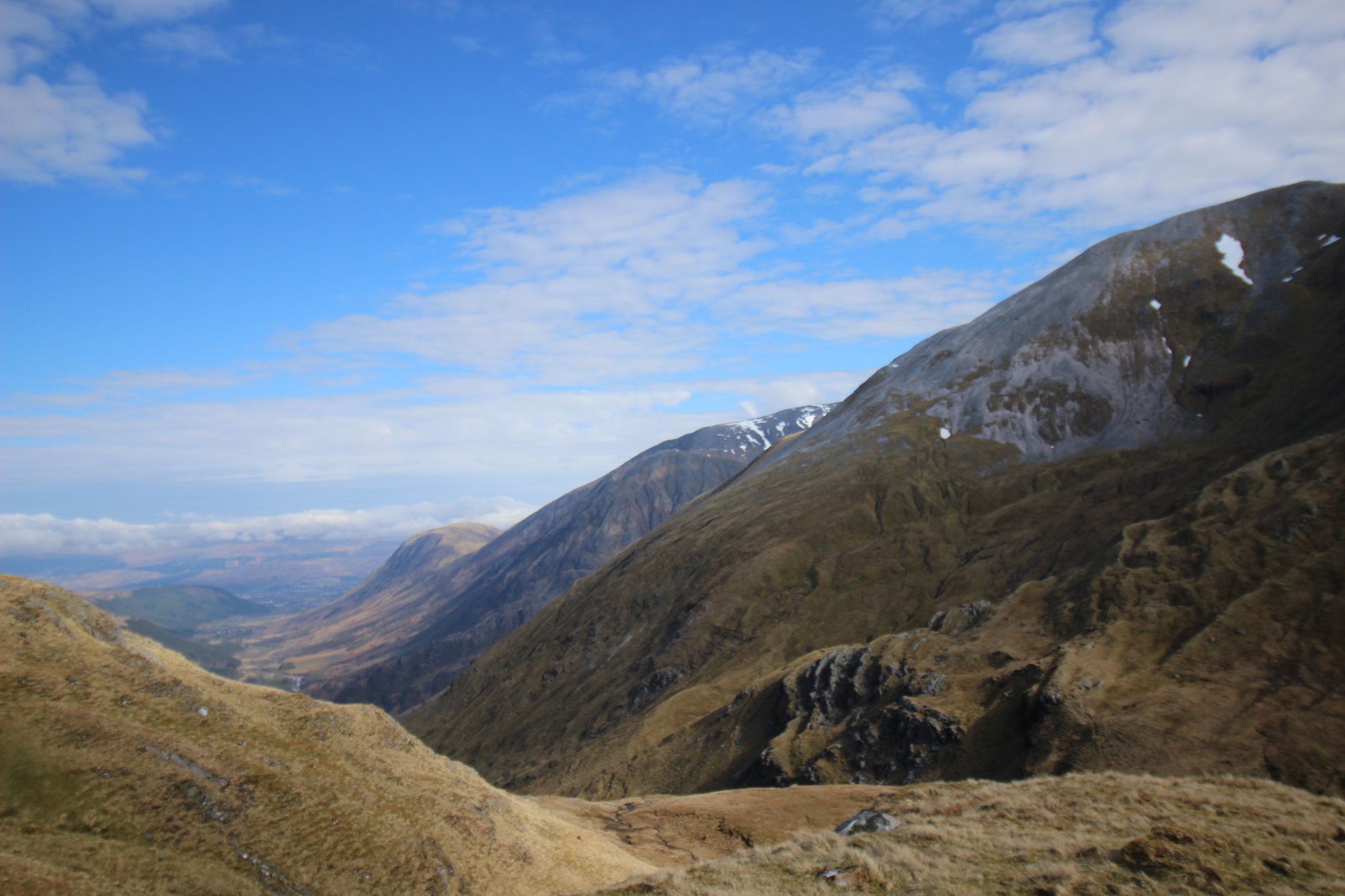




The Quartzite Horseshoe: Navigating the Corries, Ridges, and Visual Contrast of Stob Bàn and Mullach nan Coirean
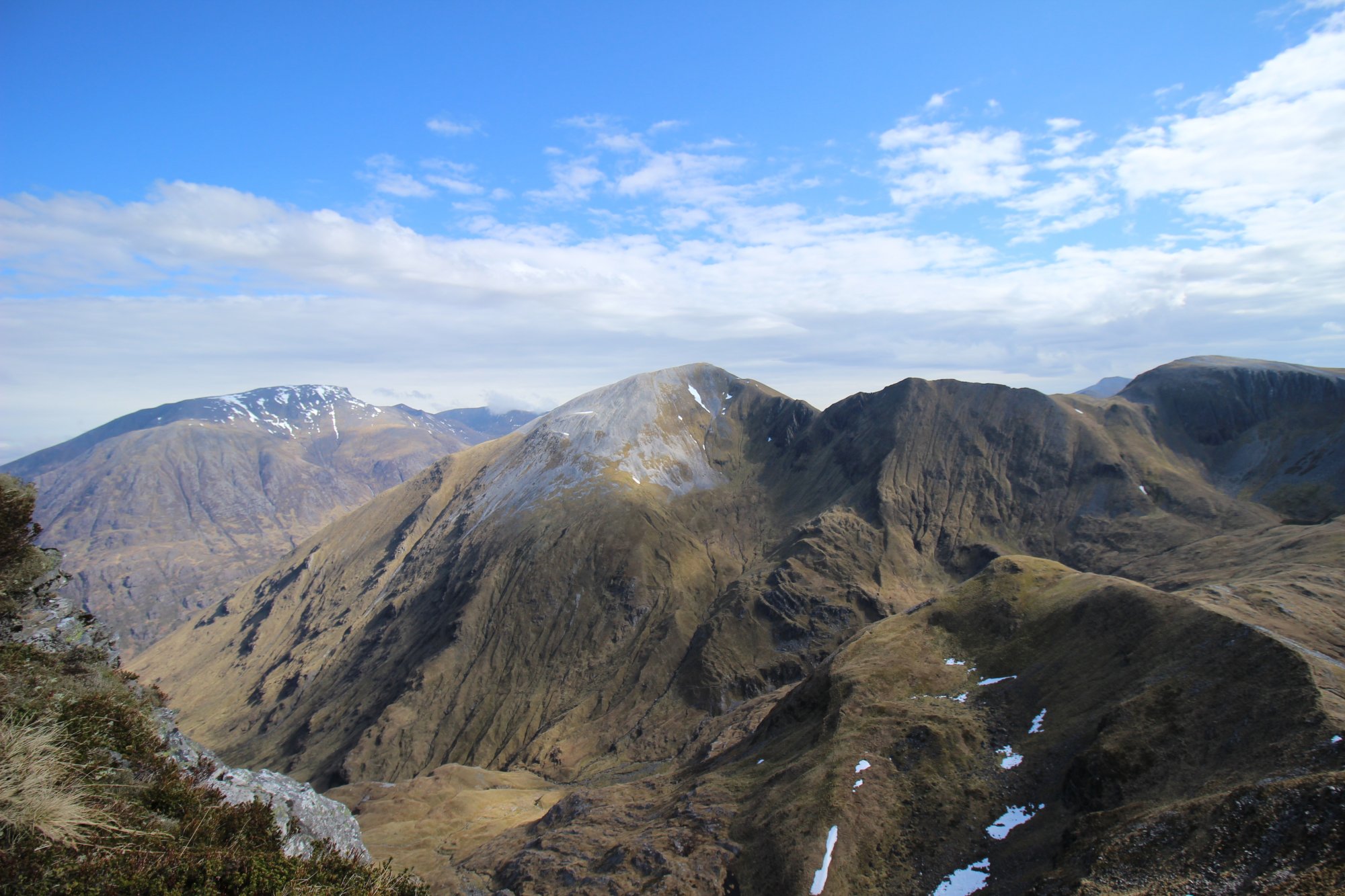
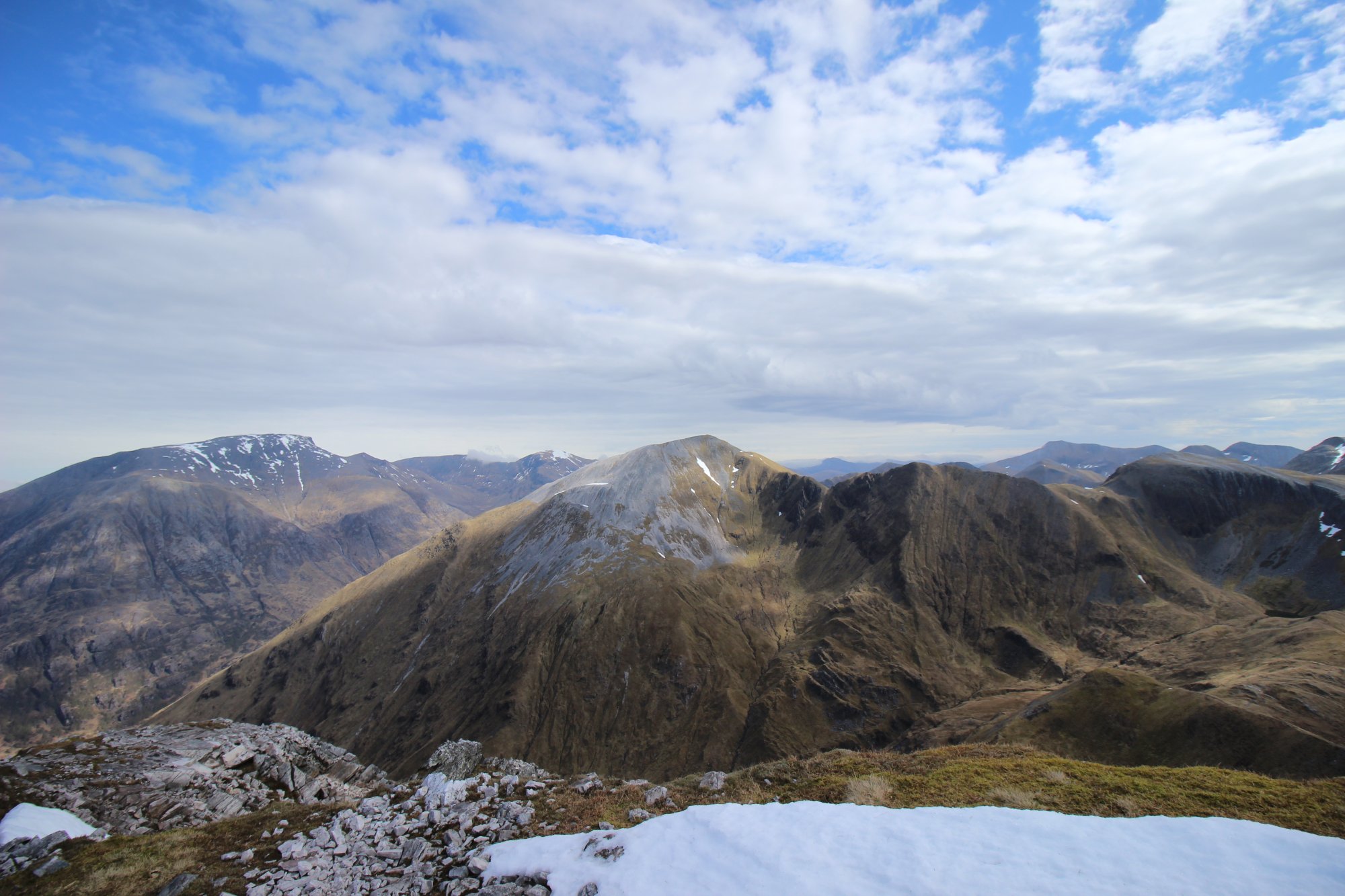
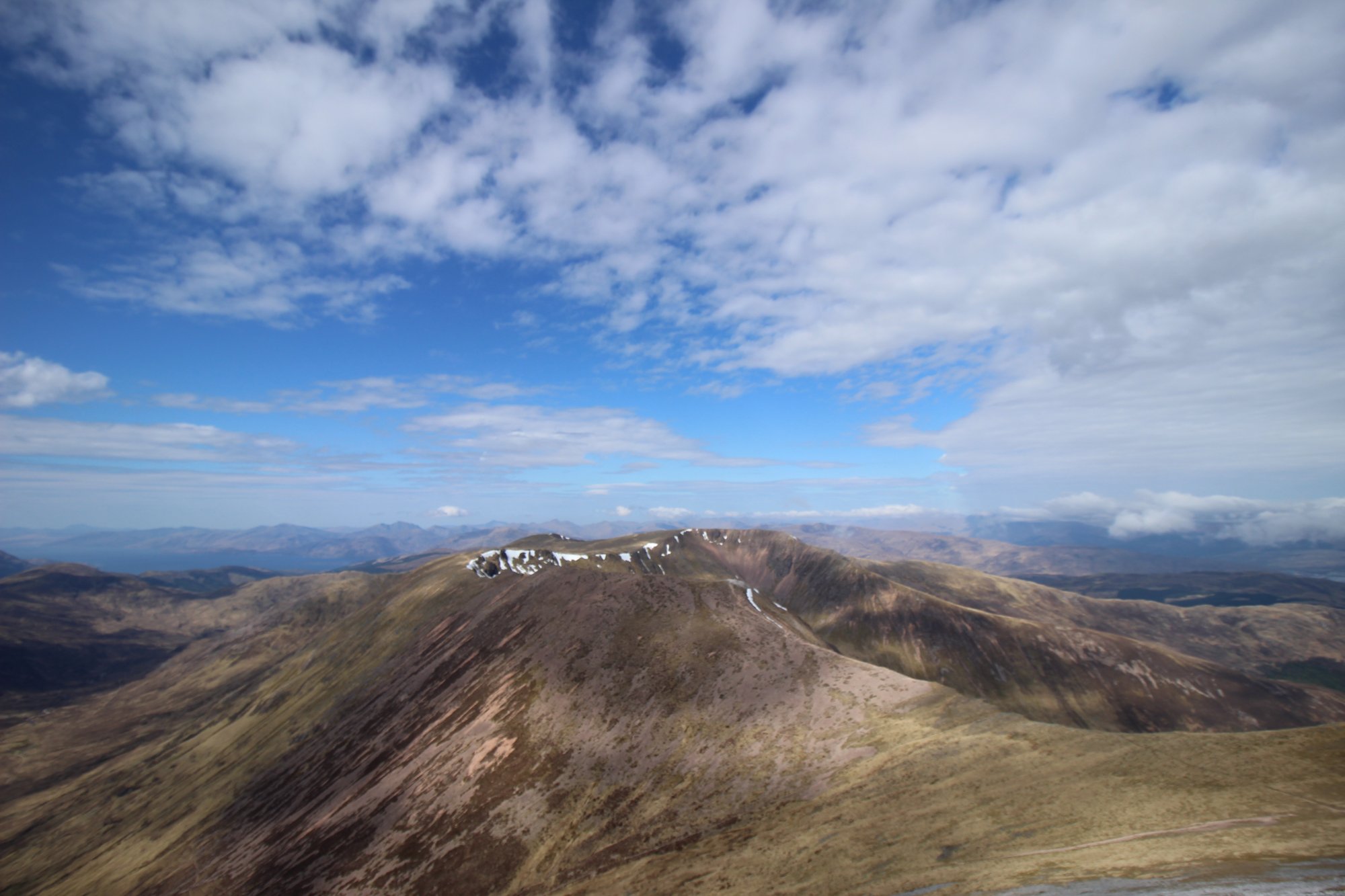
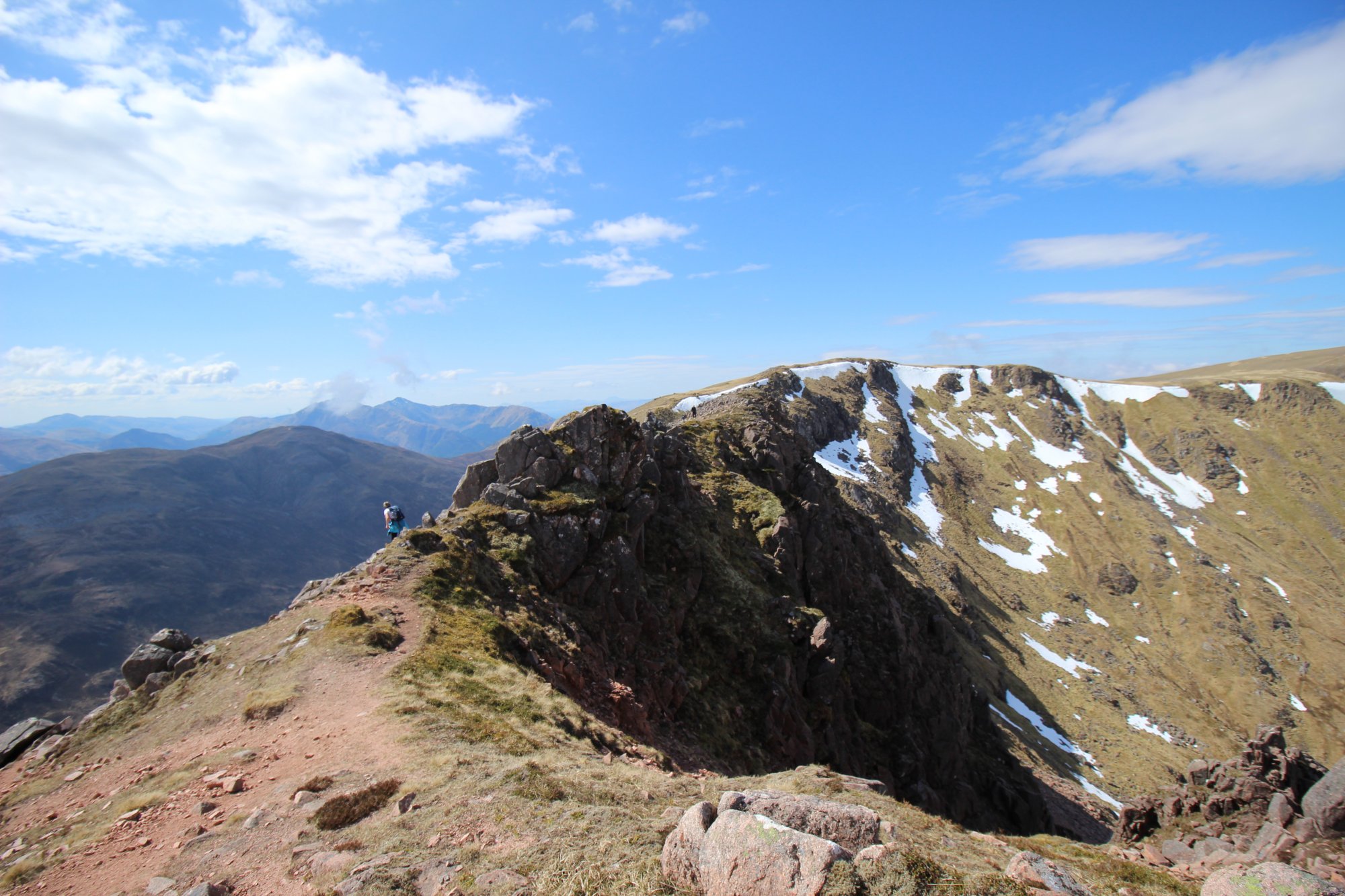
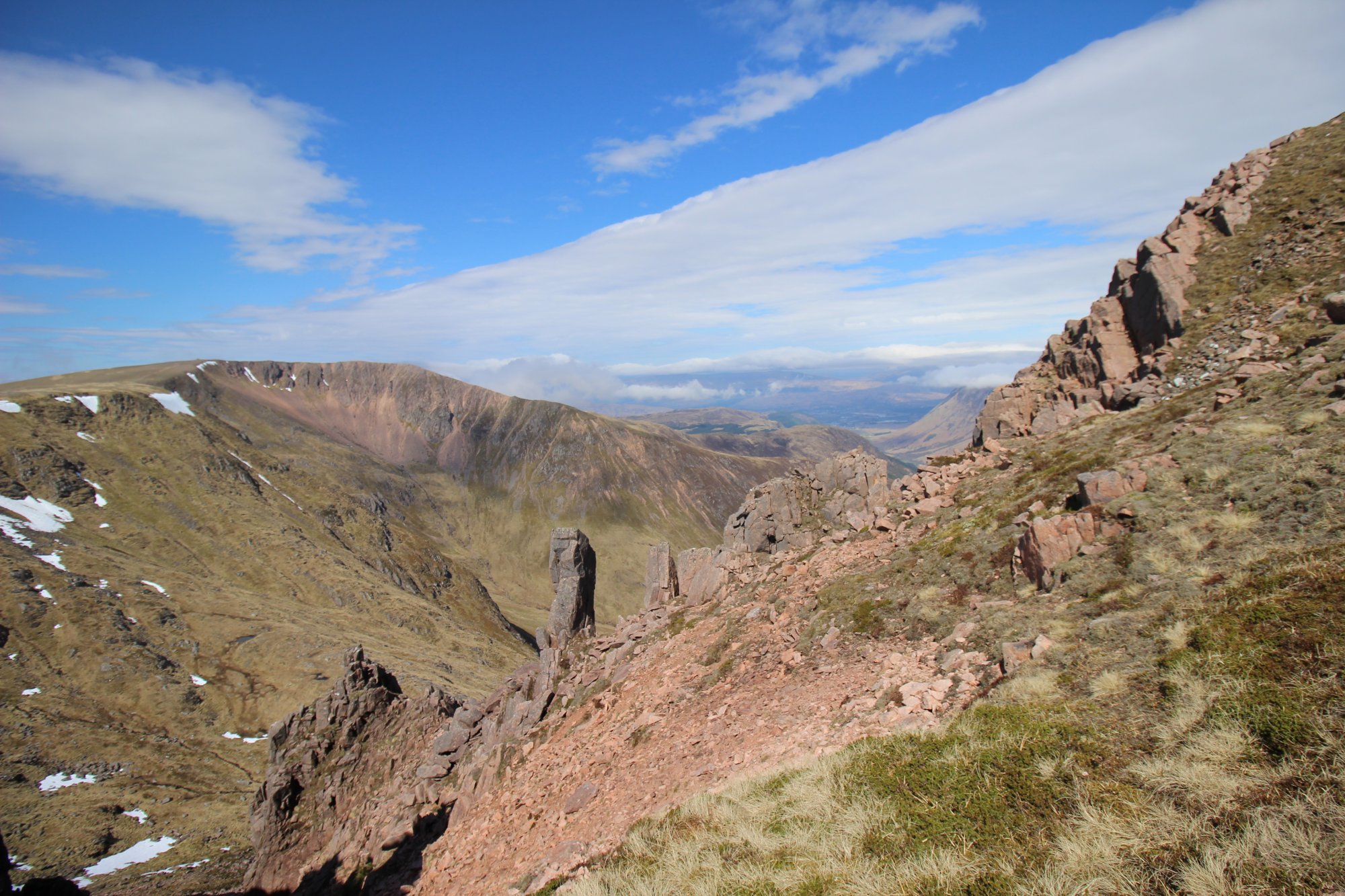
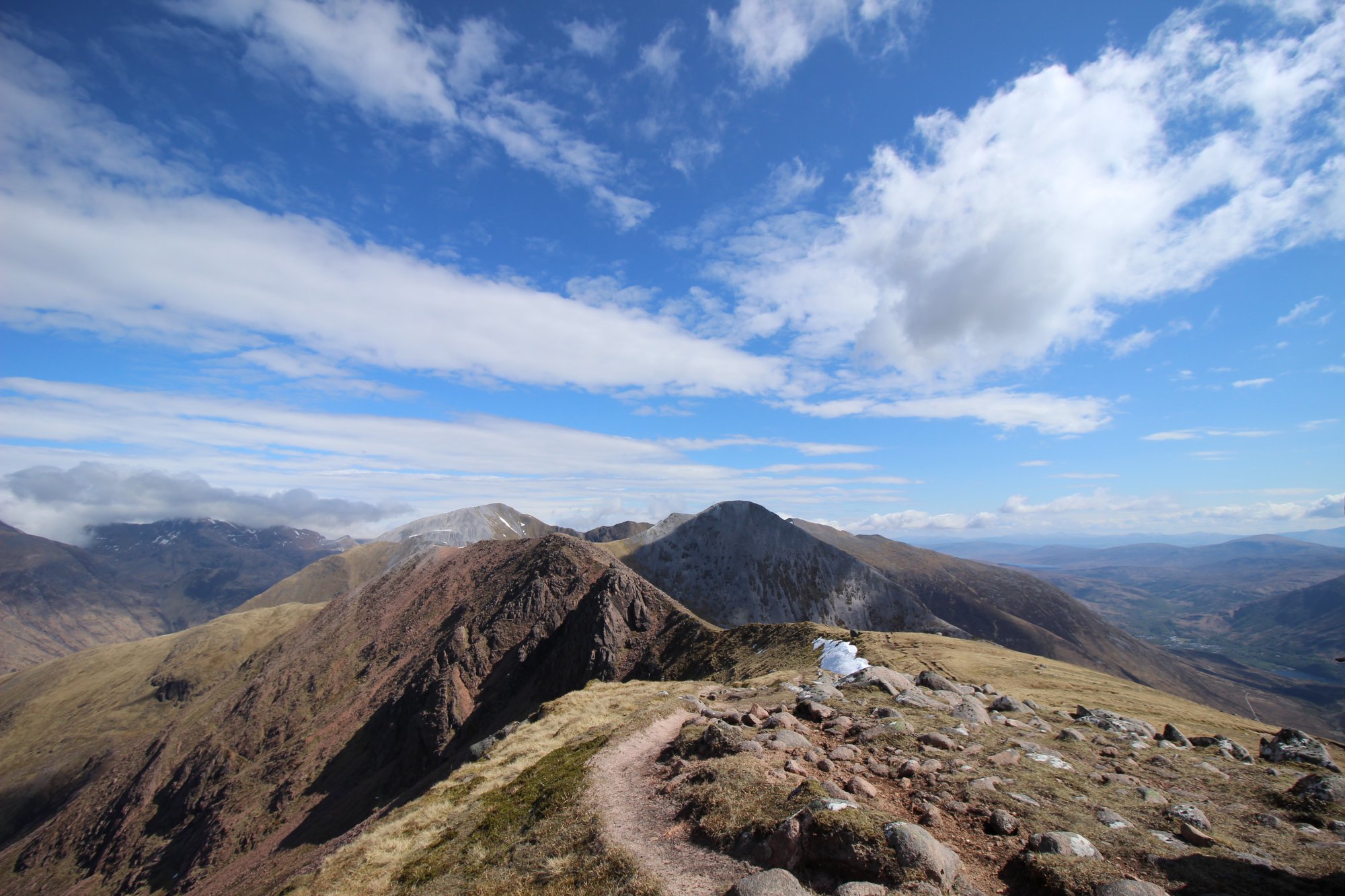
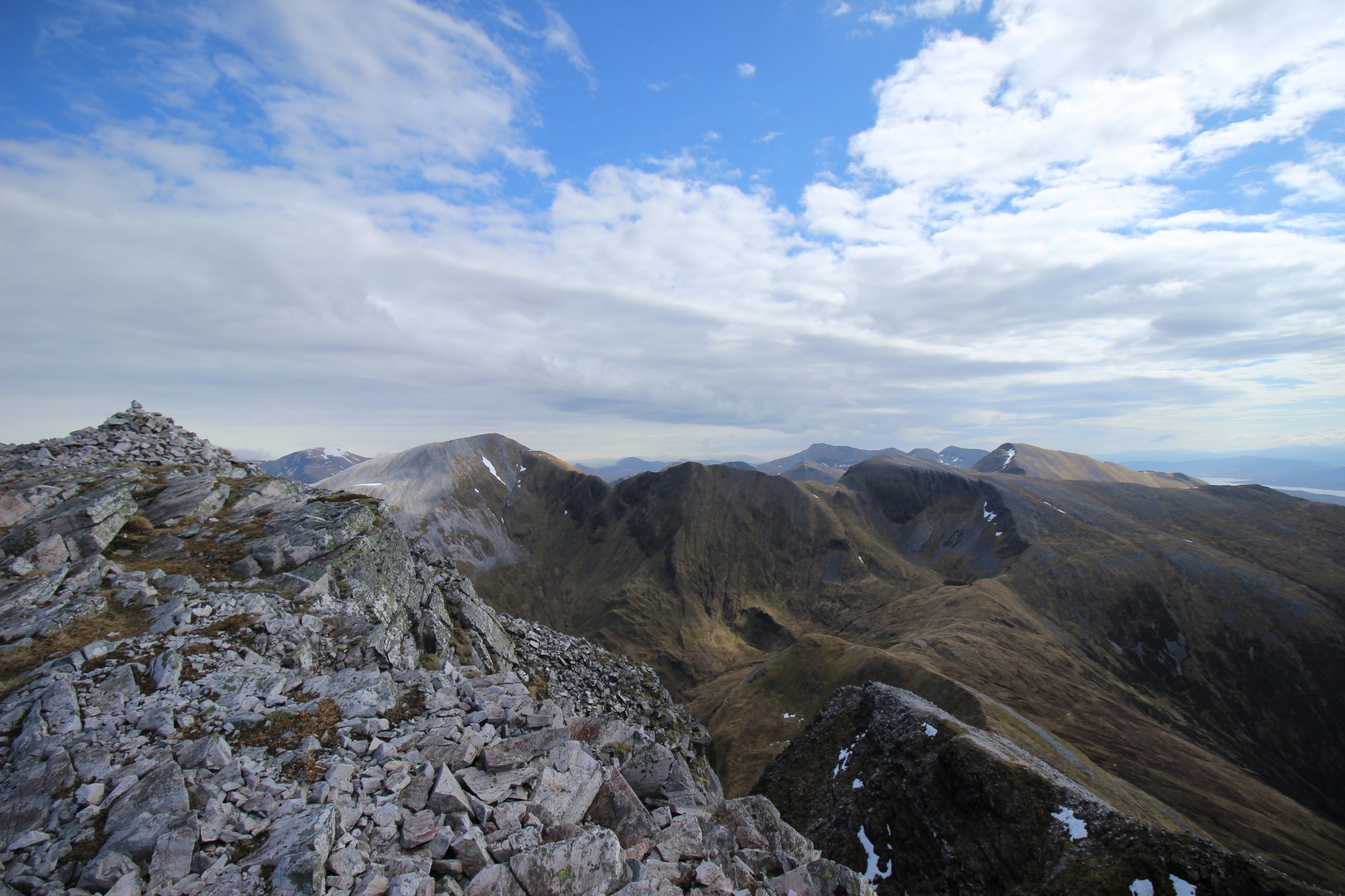
Guarding the western gateway of the rugged Mamores range, the striking alpine duo of Stob Bàn and Mullach nan Coirean forms one of the most geologically fascinating and visually dramatic ridge circuits in the Northwest Highlands. Rising steeply from the wooded floor of Glen Nevis just south of Ben Nevis, this classic horseshoe walk links two distinct Munro summits via a sweeping, high-altitude crest. Stob Bàn—the "White Peak"—is an eye-catching, cone-shaped mountain that punctures the skyline at 999 meters ($3,277 ext{ feet}$), recognizable by its shattered caps of pale crystalline quartzite that mimic a permanent coating of snow. In stark, painterly contrast, its neighbor Mullach nan Coirean stands at 939 meters ($3,080 ext{ feet}$), characterized by its sprawling, boulder-strewn shoulders of deep red granite. This abrupt transition from blinding white stone to rich pink-red earth creates a magnificent arena for wilderness trekkers, fell runners, and landscape cinematographers looking to capture the raw, structural geometry of the Lochaber mountains.
The Geological Blueprint: Crystalline Quartzite meet Red Granite
The defining triumph of the Stob Bàn and Mullach nan Coirean circuit lies in its sharp, immediate geomorphological boundaries, which divide the ridge into two completely different visual environments:
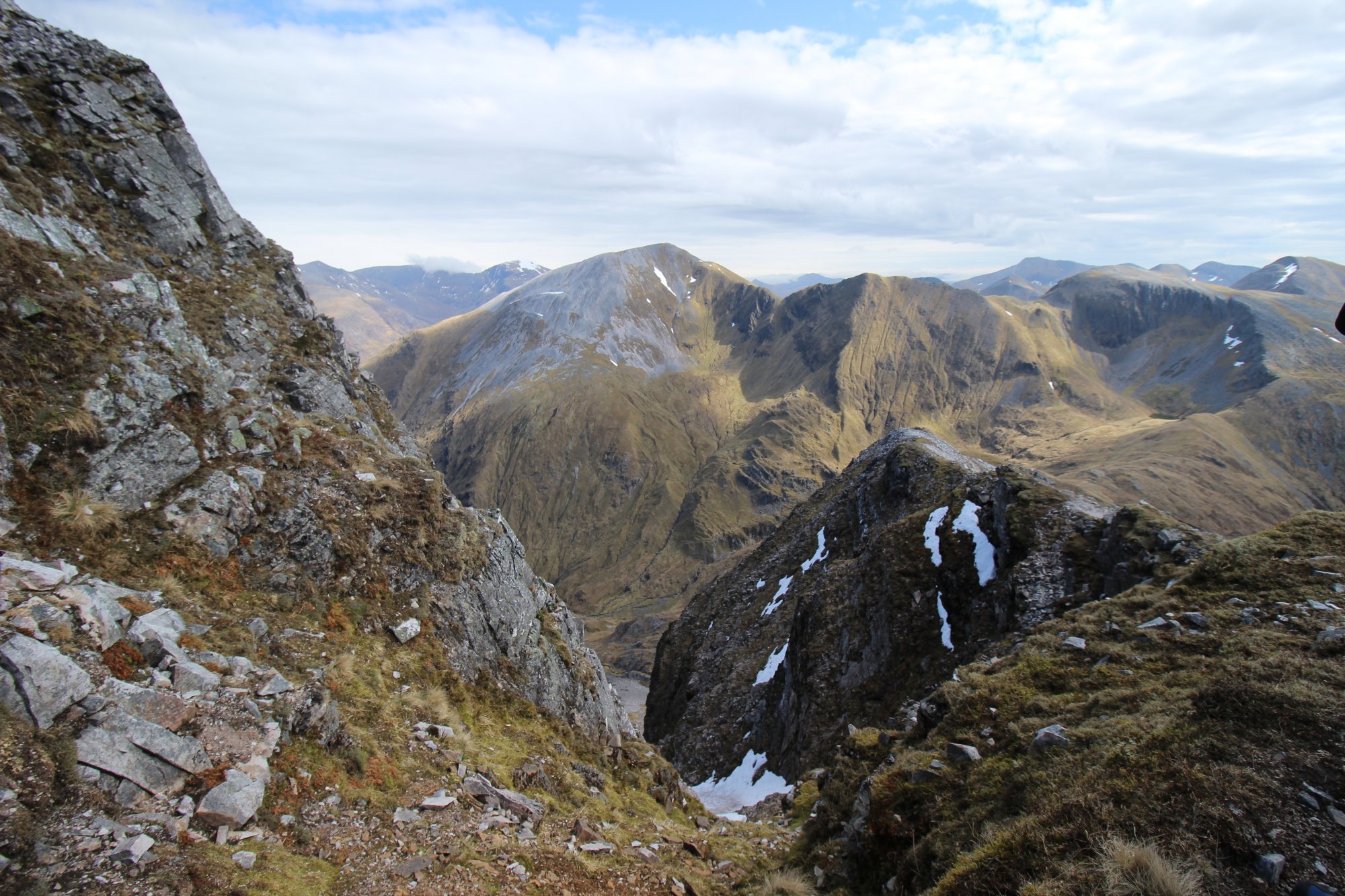
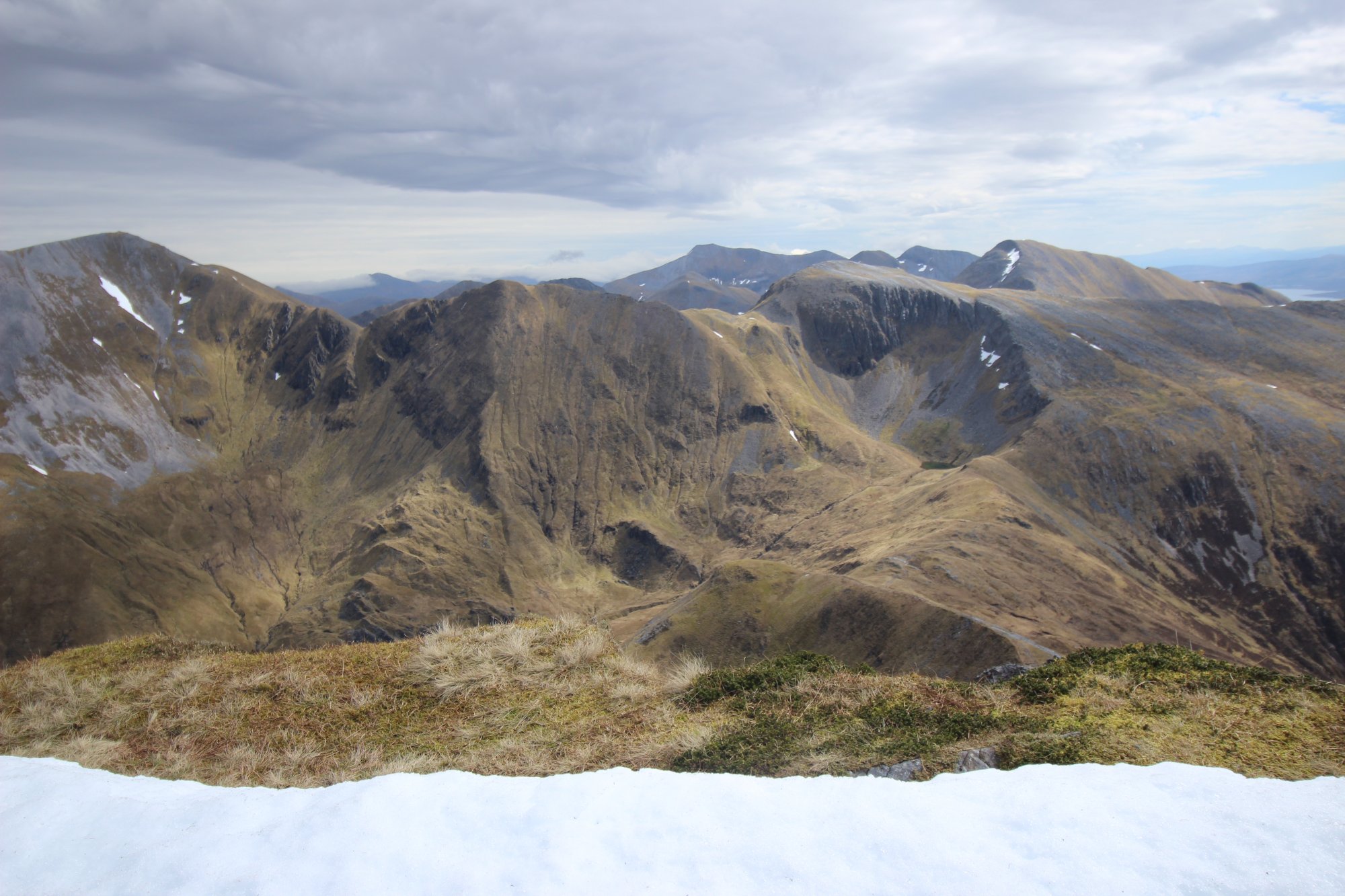
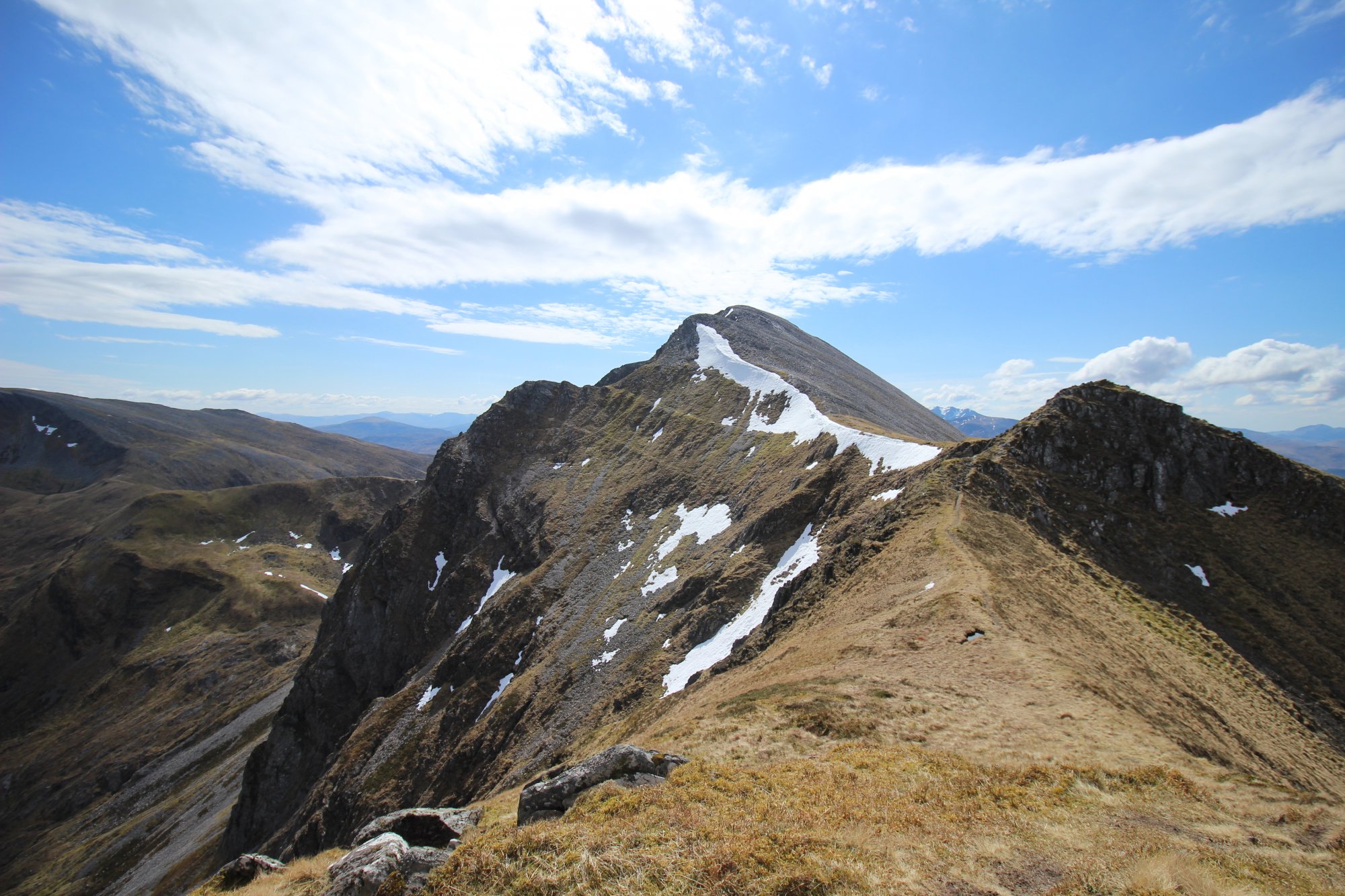
- The Quartzite Bastions of Stob Bàn: The eastern half of the horseshoe is dominated by a dramatic, near-vertical wall of Cambrian quartzite. The summit pyramid is reached via a steep, scree-covered ridge and a complex boulder field that requires steady footwork and careful balance ($Grade ext{ }1 ext{ scrambling}$ in winter conditions). The stark white rock reflects light intensely, creating a sharp, high-altitude alpine atmosphere that drops away precipitously into the deep trough of Coire a' Mhusgain.
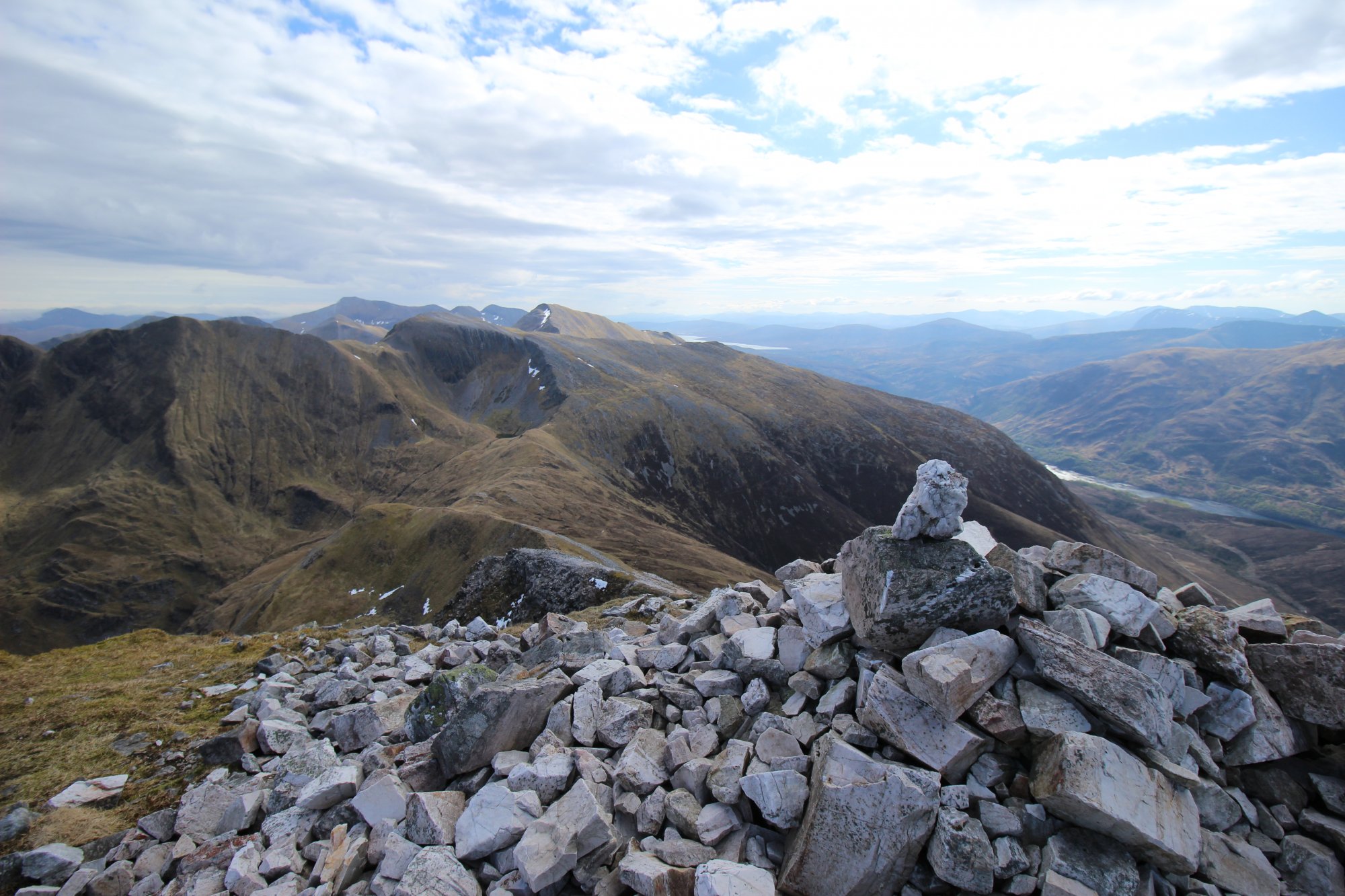
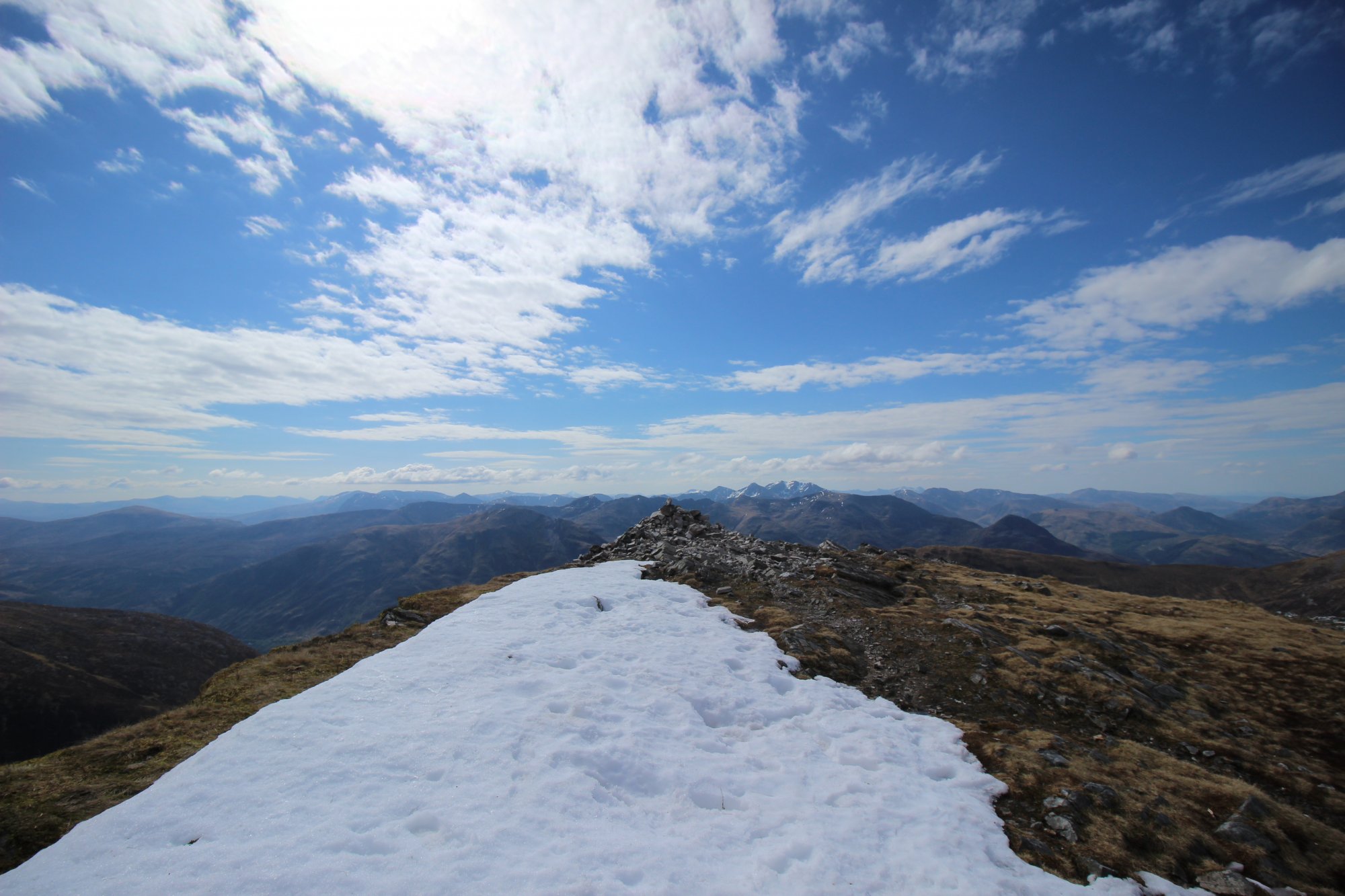
- The Twisting Crest to the Red Summit: Dropping down from Stob Bàn's broad summit cairn, the trail traverses a high, undulating col that traces the rim of Coire Dearg. Here, the underlying geology shifts instantly from metamorphic quartzite to deep Caledonian granite. Mullach nan Coirean (meaning "Summit of the Corries") presents a massive, rounded plateau blanketed in fractured red stone blocks and rich alpine heather, offering sweeping western views over the sparkling waters of Loch Linnhe and out toward Morvern.
The Trail Blueprint: Horseshoe Logistics and Forest Diversions
Completing this high-level loop requires a sustained, full-day mountain effort, demanding solid navigation skills and careful management of the final descents:
- Route Overview and Ground Conditions: The classic clockwise circuit covers roughly 8 miles ($13 ext{ km}$) with a demanding total vertical ascent of 1,160 meters ($3,805 ext{ feet}$). Most hillwalkers require 5.5 to 7 hours to complete the loop. The ascent follows a well-constructed path up through the deep, dramatic ravine of Coire a' Mhusgain before tackling the steep, rocky scrambles of Stob Bàn's northern flank. The terrain transitions rapidly from pristine stone steps to loose, mobile quartzite scree and damp, boggy peat hags along the lower forest exit.
- Arrival Logistics and Parking: The hike begins and terminates near Achriabhach in Glen Nevis, with the primary staging area located at the Glen Nevis Lower Falls car park. This dedicated parking facility requires a small conservation fee and fills incredibly rapidly during clear summer weather. Content creators carrying substantial cinema configurations are strongly advised to execute dawn departures to guarantee a parking bay and maximize the exceptional, low-angle morning light breaking over the eastern peaks.
Cinematography, Tone Isolation, and Technical Production Integration
For independent travel filmmakers and landscape photographers, this Mamores horseshoe serves as an elite laboratory of tone and scale, presenting extreme exposure challenges and severe alpine wind shear:
- Balancing Extreme White and Red Textures: The blinding white quartzite of Stob Bàn and the deep, light-absorbing red granite of Mullach nan Coirean present a massive dynamic range challenge for camera sensors. Under direct afternoon sun, the white scree fields easily blow out into featureless white patches while the granite shadow fissures drop into absolute black. To preserve the intricate crystalline grain and stone lines, shoot exclusively in a 10-bit log profile, intentionally exposing for the highlights. A high-efficiency Circular Polarizer (CPL) is mandatory to strip away the intense surface glare reflecting off the wet quartzite blocks.
- Focal Compression of the Devil's Ridge: From the summit of Stob Bàn, looking eastward reveals a breath-taking profile of the famous Devil's Ridge and Sgùrr a' Mhàim. To capture this razor-sharp ridge line without flattening the dramatic drops, avoid wide-angle lenses. Instead, deploy a medium telephoto lens ($70 ext{mm} ext{ to } 105 ext{mm}$) to compress the mountain miles, making the jagged crest look incredibly imposing while keeping the massive, cloud-capped block of Ben Nevis cleanly separated in the upper third of your frame.
- Acoustic Isolation on High-Exposure Crests: The exposed col connecting these two summits is a high-velocity wind funnel, subjected to unrelenting Atlantic gusts moving up from Loch Linnhe. To record clean, narrative field logs or capture the deep, eerie whistle of the wind through the quartzite spires, use directional shotgun microphones enclosed within a professional, multi-layered fur windjammer (deadcat). Position your recording setups on the leeward side of the massive summit cairns, using the drystone masonry as a natural shield to block wind shear from clipping your audio tracks.