


The Maerl Sanctuary: Discovering the Hidden Turquoise Waters of Plockton Coral Beach
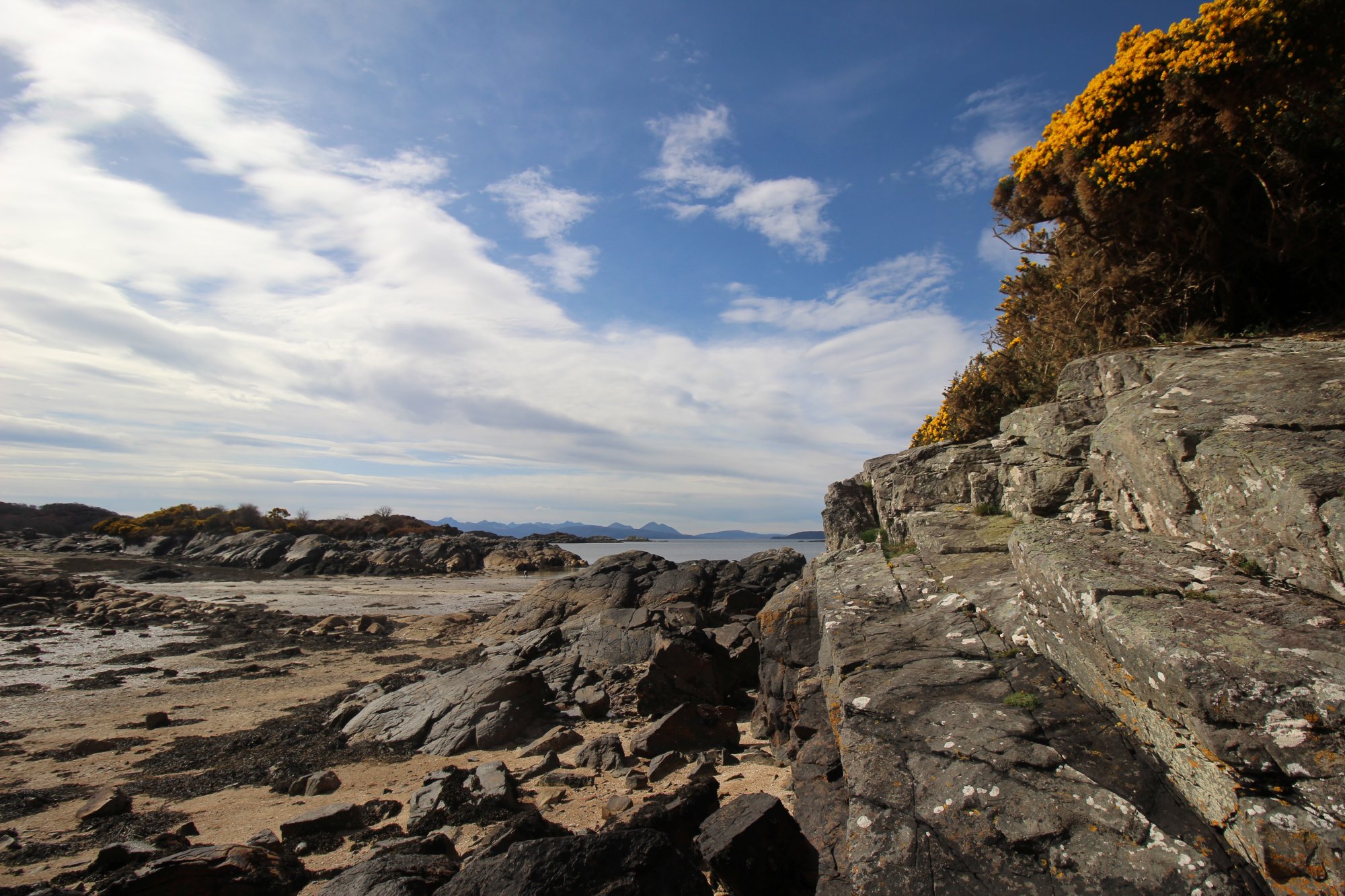
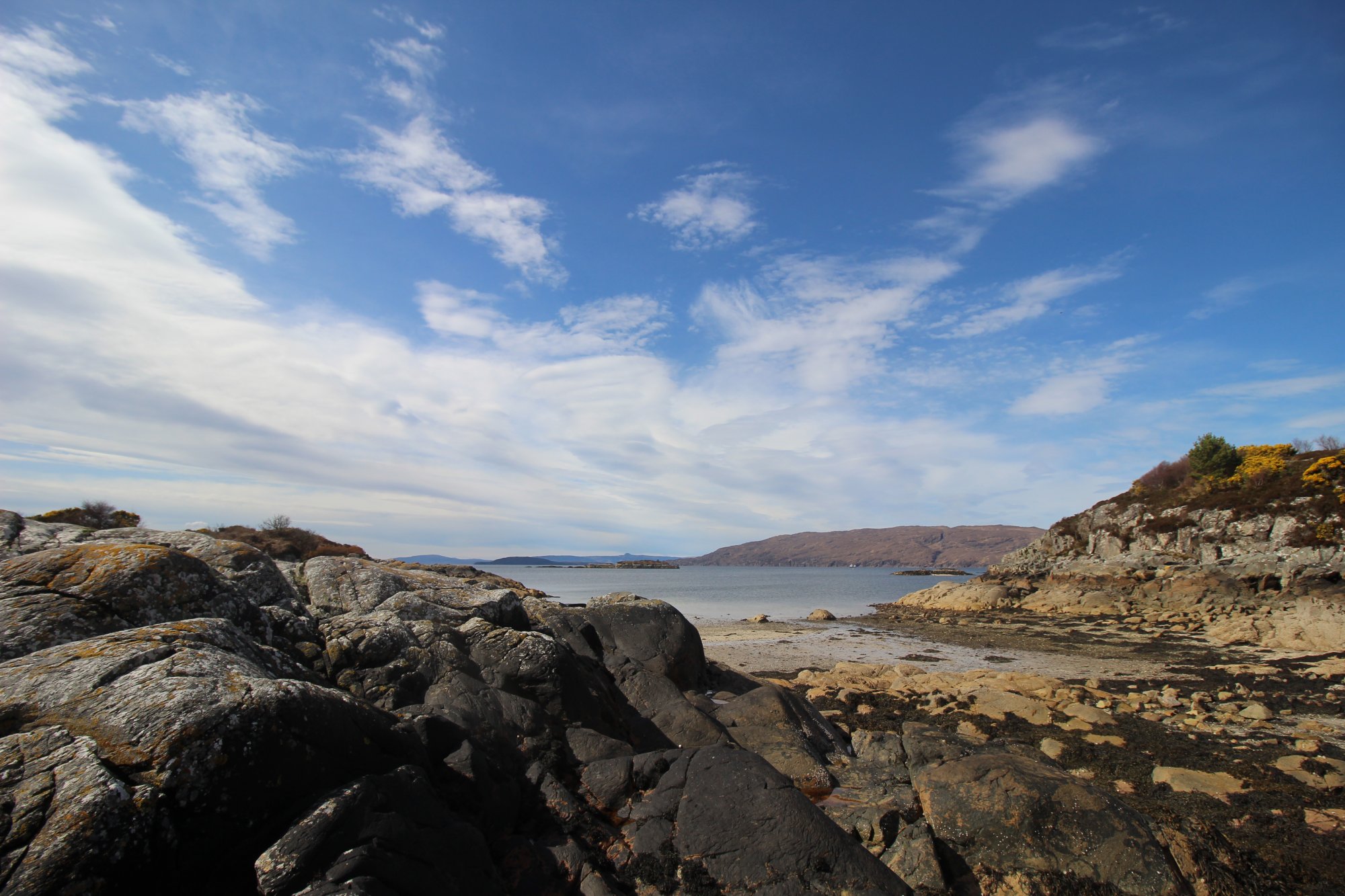
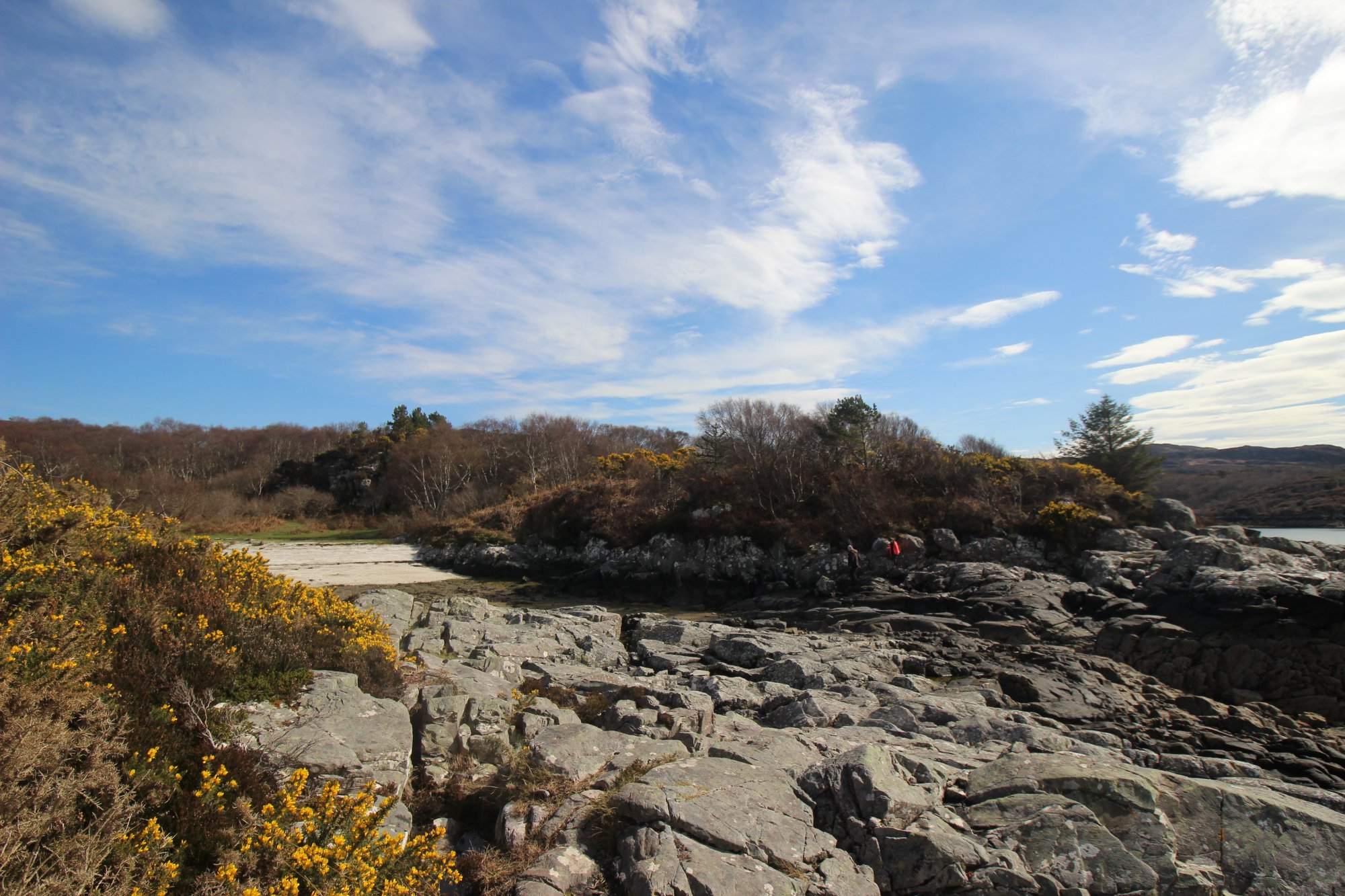
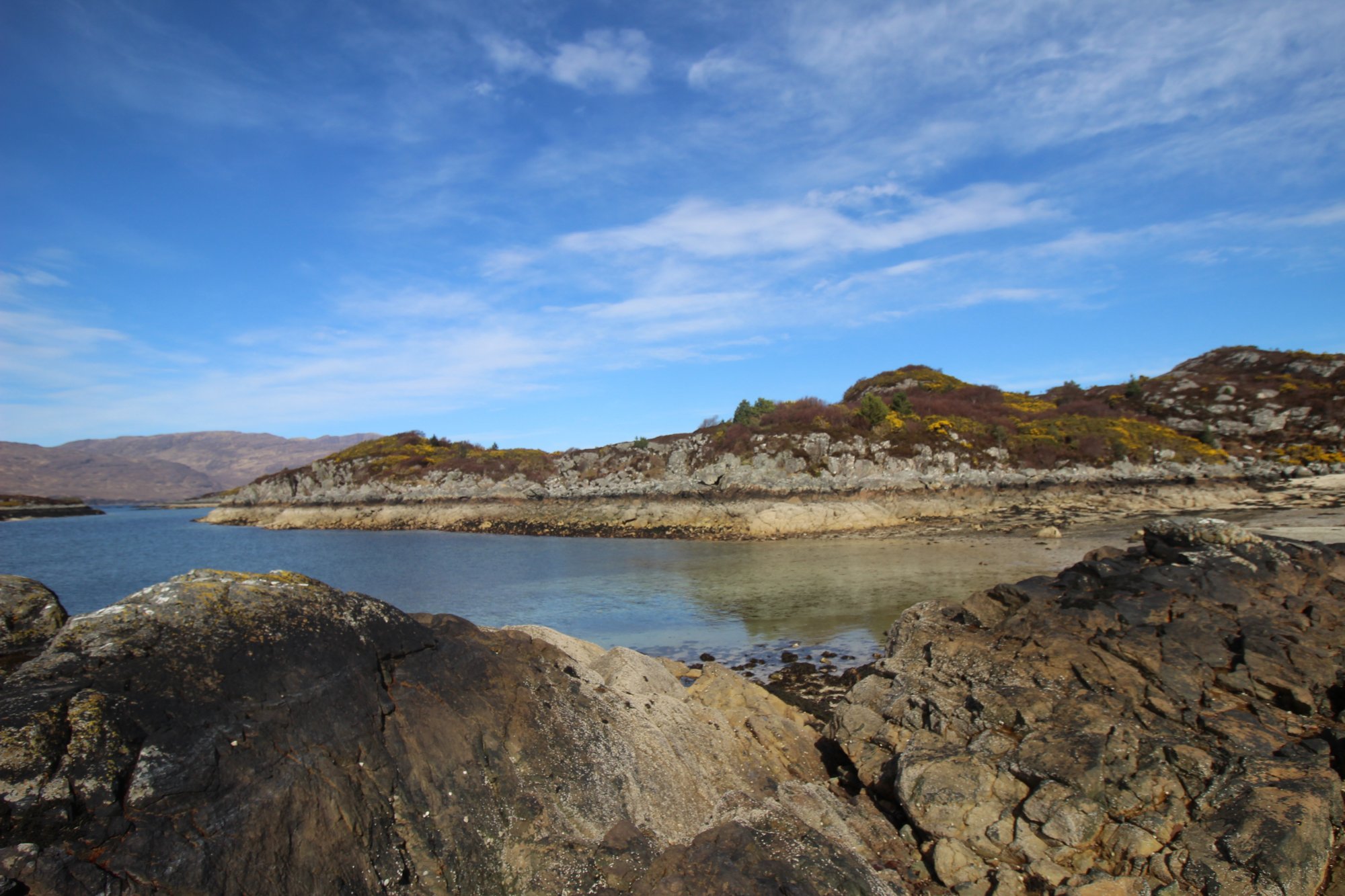
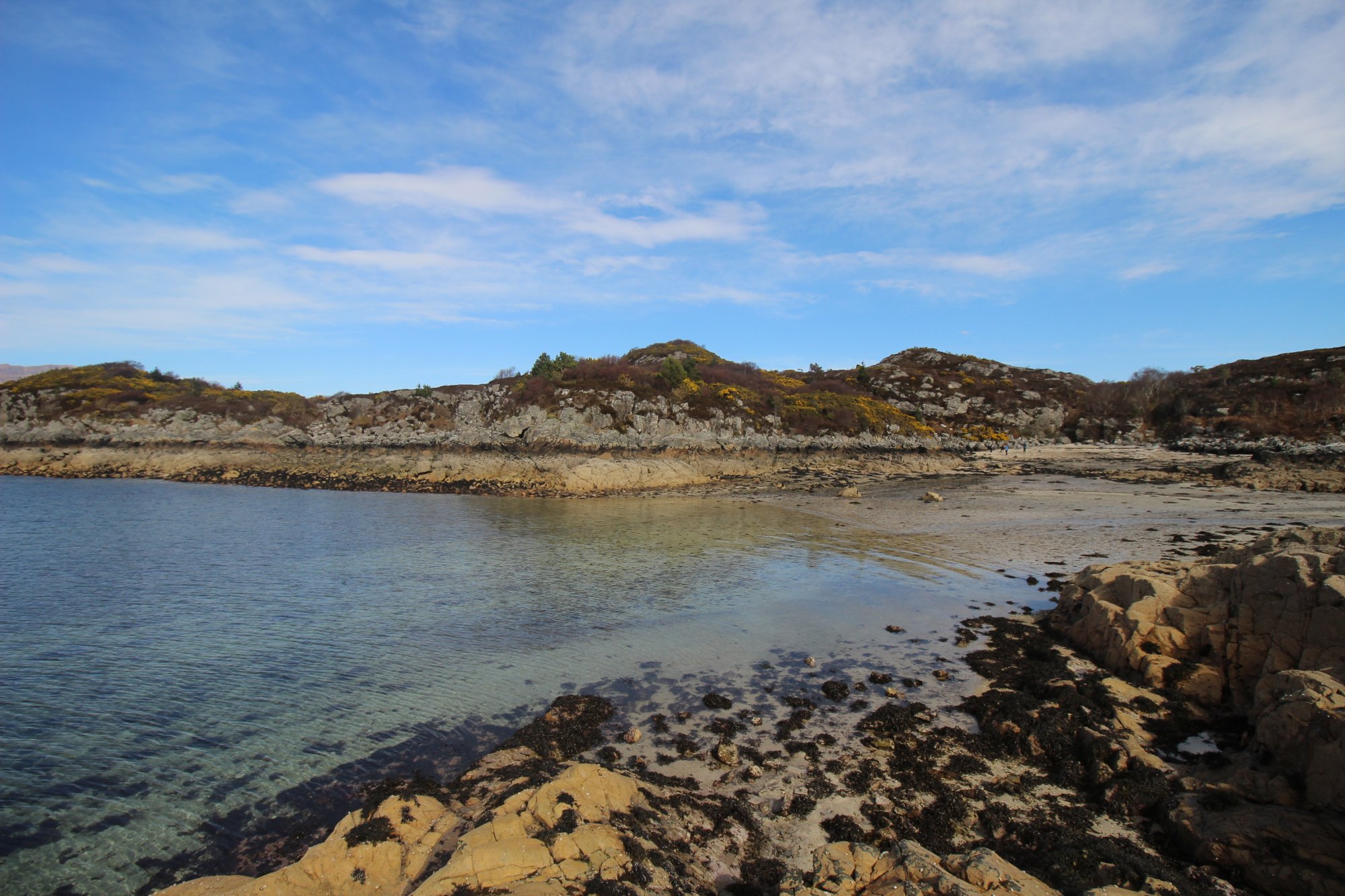
Tucked beneath the low, heather-cloaked ridges of the Balmacara Estate—a historic landscape meticulously protected and managed by the National Trust for Scotland—Plockton Coral Beach stands as a breathtaking testament to the unexpected variety of the Highland coastline. Known locally as Port Luinge, this secluded crescent bay completely disrupts the standard imagery of rugged, dark-pebbled Scottish shores. Instead, visitors are greeted by an immaculate, glowing strand of white sand that drops gently into exceptionally clear, shallow turquoise waters. Framed by rolling coastal moorland, dense patches of native gorse, and sweeping views out across Loch Carron toward the Applecross peninsula and the distant peaks of Skye, this serene cove offers an unmissable, low-impact escape for hikers, creative photographers, and wild swimmers seeking pristine isolation.
The Science of White Sand: What is Maerl?
The defining feature of Plockton Coral Beach is its remarkable, powdery white shoreline, which gives the water its distinct, Caribbean-like luminosity. Despite its popular name, this beach is not formed from true coral. The sand is actually composed of maerl—the accumulated, sun-bleached skeletons of a hard, calcified red seaweed that thrives on the clean, current-swept seabed of the surrounding sea lochs. Over thousands of years, Atlantic swells have broken down these delicate, branching calcareous structures, casting them ashore to form a brilliant, non-pebbly shell strand. This rare marine habitat is incredibly vital to the local ecosystem, acting as a rich nursery ground for various marine invertebrates, rare sea anemones, and young fish, while giving the beach its unforgettable, clean texture underfoot.
Trail Logistics: Past the Aerodrome to the Bay
Reaching this hidden coastal sanctuary requires a short, highly scenic out-and-back walk that serves as an ideal, gentle alternative to the high-altitude mountain trails of Kintail. The journey begins roughly a mile west of Plockton village, taking walkers past the community’s unexpected, small grass airstrip and useful railway station:
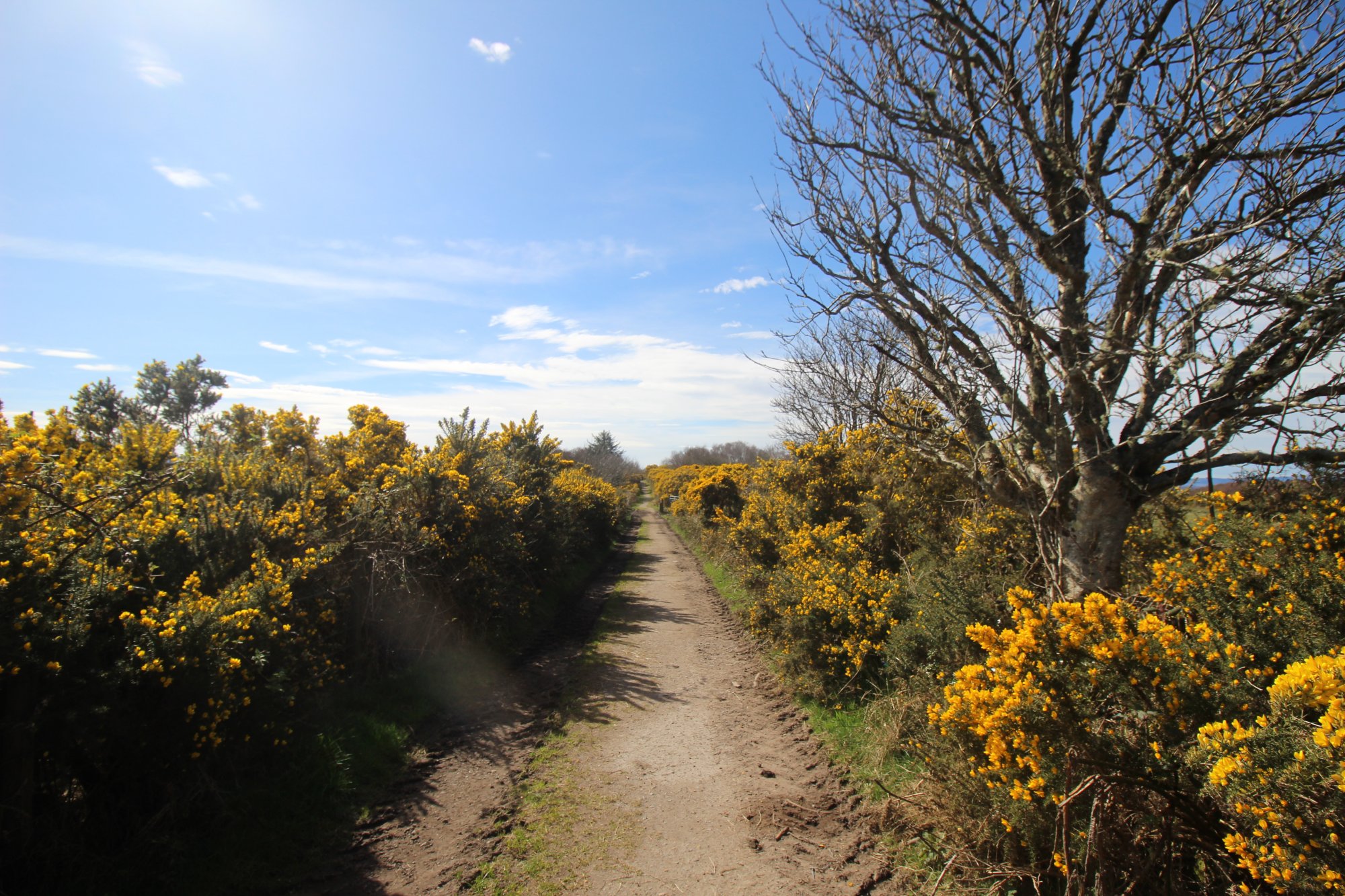
- The Trailhead and Woodland Track: The walk departs from the southern edge of the dedicated public parking area. Walkers follow a wide, clearly defined farm track heading west, which gently cuts through a pleasant, sheltered ribbon of native birch and hazel trees. This initial section is flat and highly accessible, echoing with the song of native woodland birds.
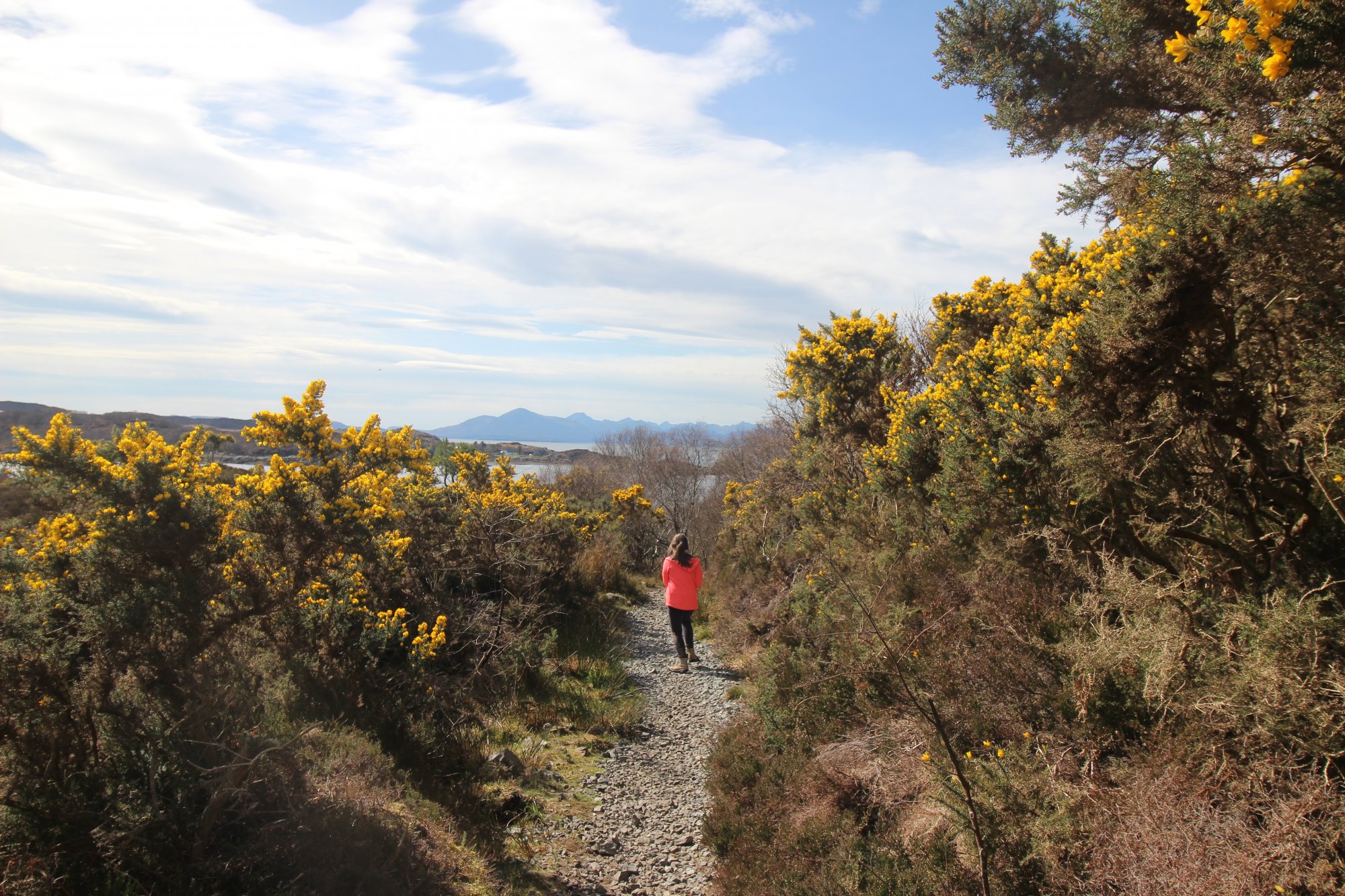
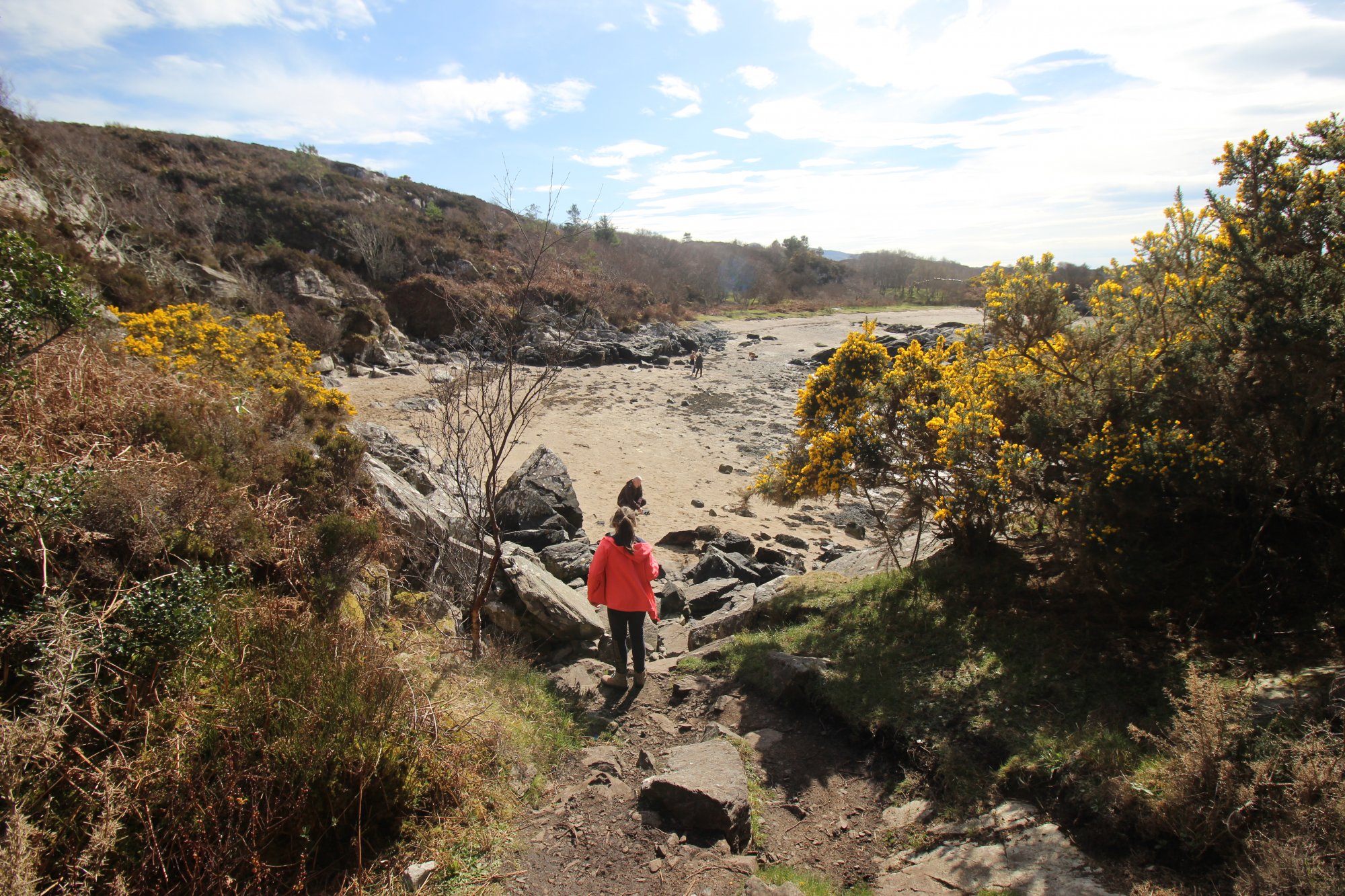
- The Coastal Descent: As you break out of the trees, the track narrows into a well-trodden, natural footpath that winds downward toward the sea. The final few hundred meters before reaching the white sand feature a few rough, rocky steps and exposed tree roots that require steady footing, but the route remains highly manageable for walkers of all ages and fitness levels. The entire one-way stroll from your vehicle to the water’s edge takes approximately 15 minutes of leisurely walking.
Essential Creator and Tidal Logistics
Parking Infrastructure: Visitors can utilize the dedicated Coral Beach Car Park located just off the minor coastal road past the Plockton Aerodrome. This parking area is relatively spacious and serves as an excellent, stress-free alternative to the tightly packed, narrow harbor parking spaces within Plockton village itself during the busy summer regatta season. From this lot, it is also a scenic, gentle 25-minute walk along the coastal road directly into the heart of the village for refreshments.
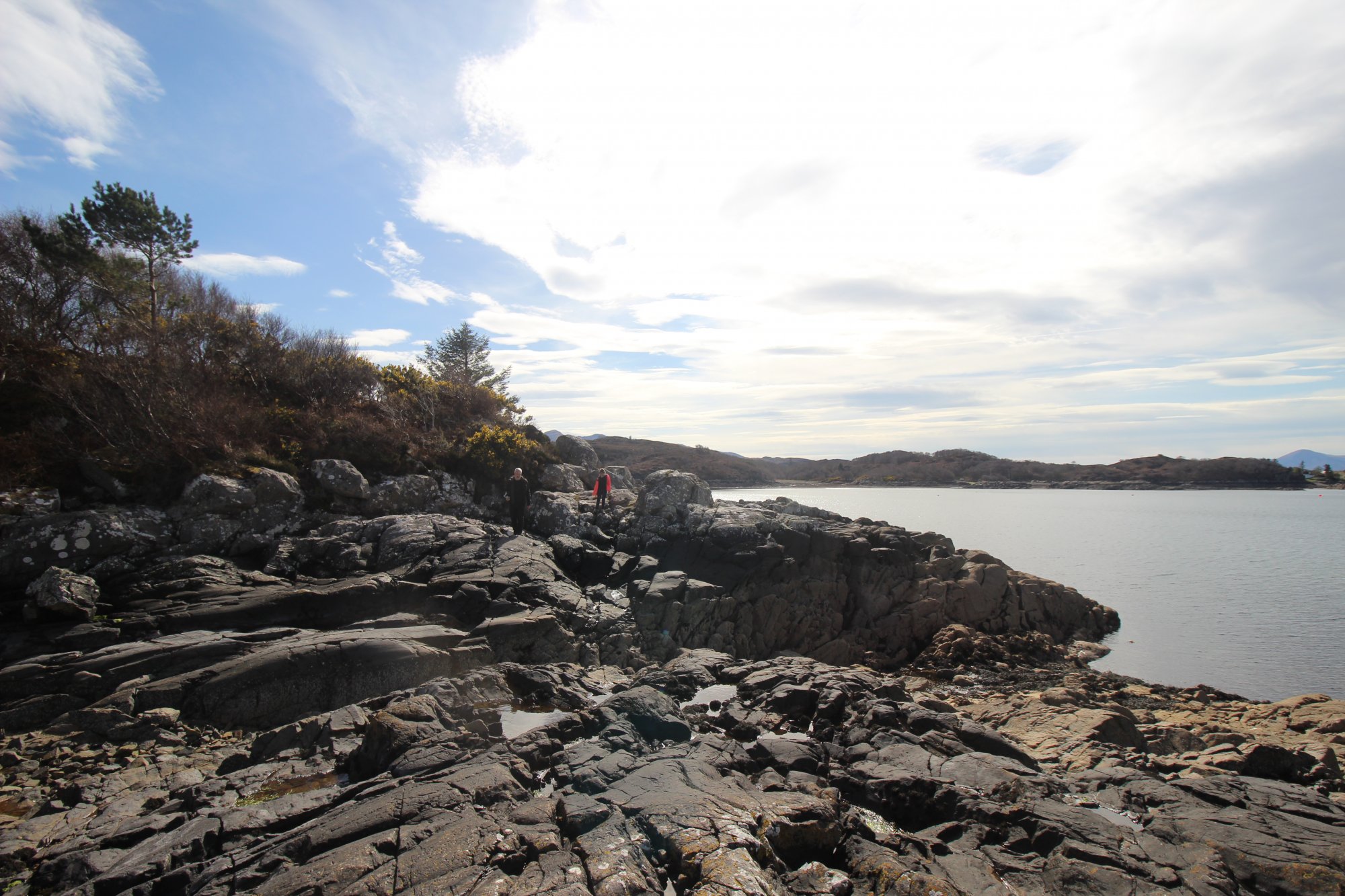
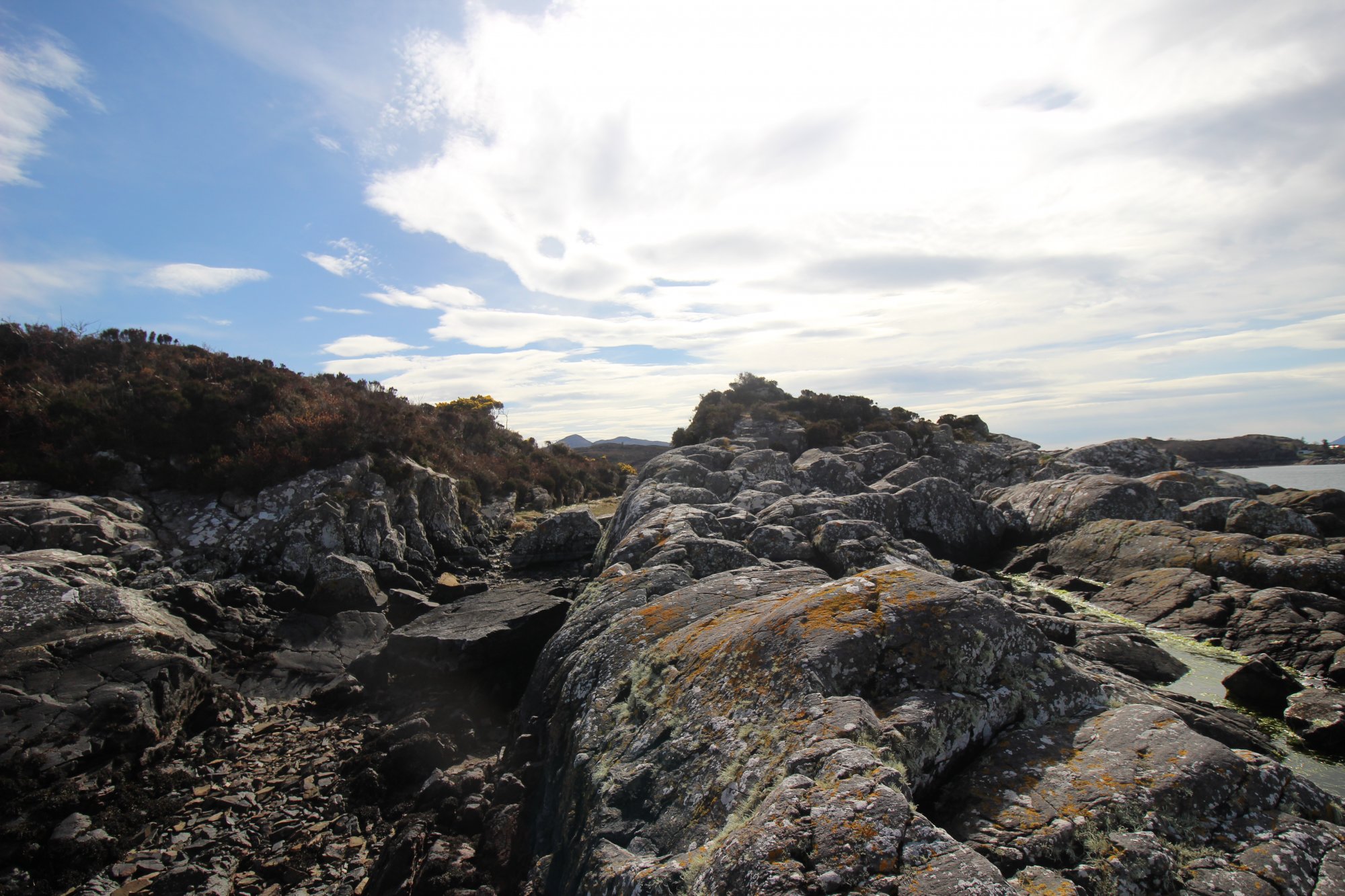
Tidal Planning and Footwear: To fully experience the wide, sweeping majesty of the white maerl sands, timing your visit to coincide with a receding or low tide is highly beneficial. At high tide, the water rises significantly up the strand, requiring visitors to scramble or sit over the larger, seaweed-draped boulders that flank the upper margins of the cove. High-traction, waterproof walking shoes are recommended to comfortably explore the slippery, rock-pooling areas at the northern tip of the bay.
Cinematography and Lighting: For travel vloggers and landscape photographers, Plockton Coral Beach is a premier location for capturing high-contrast, slow-exposure water movement. To truly capture the intense, tropical turquoise color of the lagoon, filming during the bright midday hours when the sun is directly overhead yields the cleanest water clarity. Conversely, the golden hour of a calm summer evening casts a soft, warm amber glow across the white maerl, reflecting beautifully off the glassy surface of Loch Carron.
Conclusion: A West Coast Hidden Oasis
Plockton Coral Beach is a magnificent reminder that Scotland’s most memorable landscapes are often hidden just a few steps off the main beaten path. By beautifully balancing an exotic, white-sand aesthetic with rich marine biology and superb, low-impact accessibility, this Ross-shire gem provides a deeply soothing, atmospheric encounter with the sea. It stands as a timeless, tranquil highlight of the Lochalsh peninsula—a perfect, quiet sanctuary that perfectly encapsulates the pristine, untamed allure of the western Highlands.