




The Safe Haven of the Far North: Exploring Loch Eriboll and Ard Neakie
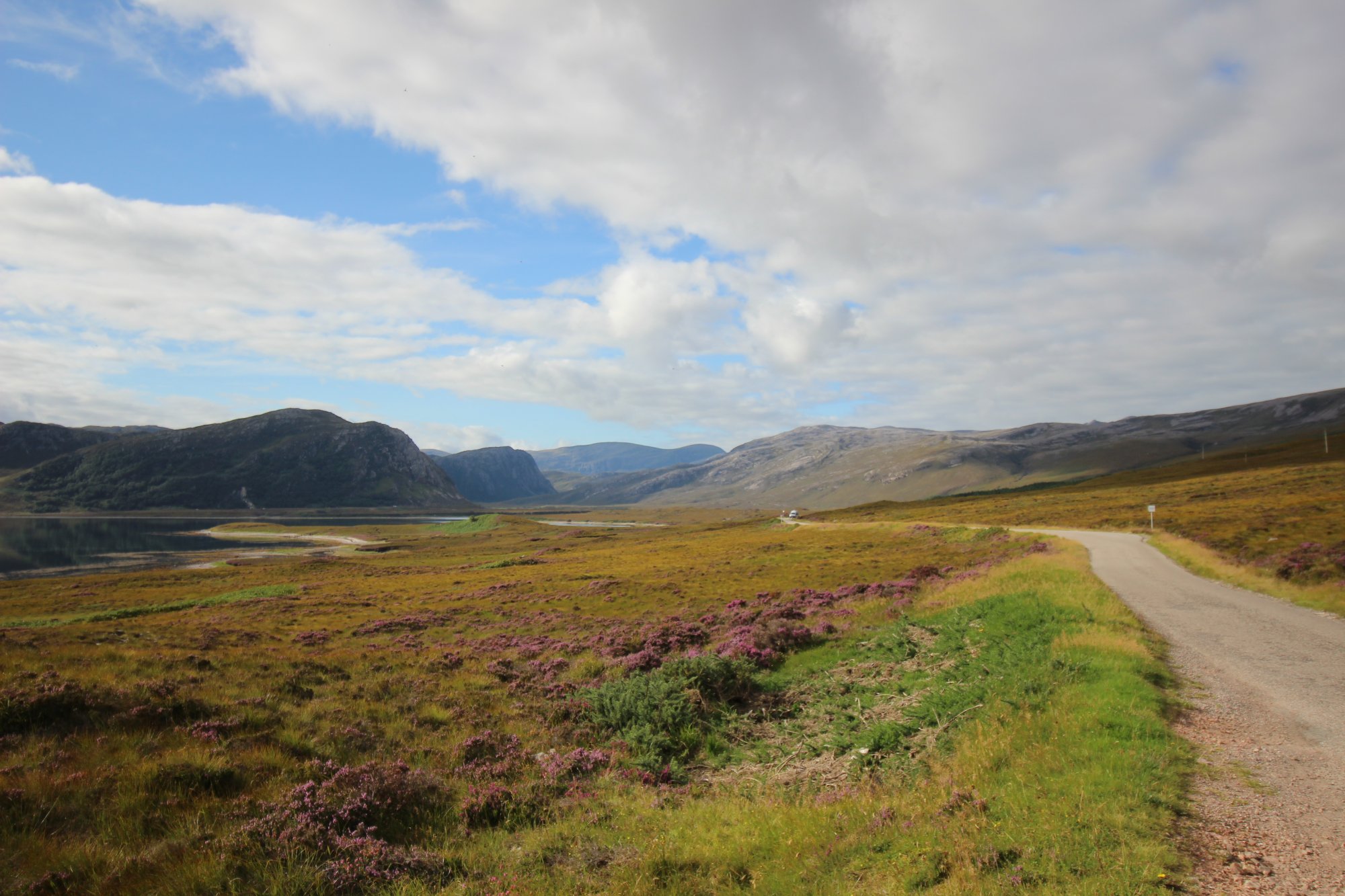
Cutting deeply into the wild, exposed cliffs of the northernmost coast of Sutherland, Loch Eriboll is a vast, dramatic sea loch renowned for its deep, sheltered waters and compelling maritime history. For travelers navigating the iconic North Coast 500 route, the loch provides a striking, panoramic transition from rugged mountain passes to sweeping coastal vistas. Long used as a strategic anchorage by the Royal Navy due to its ability to protect massive fleets from fierce Atlantic gales, Loch Eriboll is today celebrated for its peaceful atmosphere, unique geology, and its most prominent features: the stunning peninsula of Ard Neakie and its industrial relics.
Ard Neakie: The Fertile Heart of the Loch
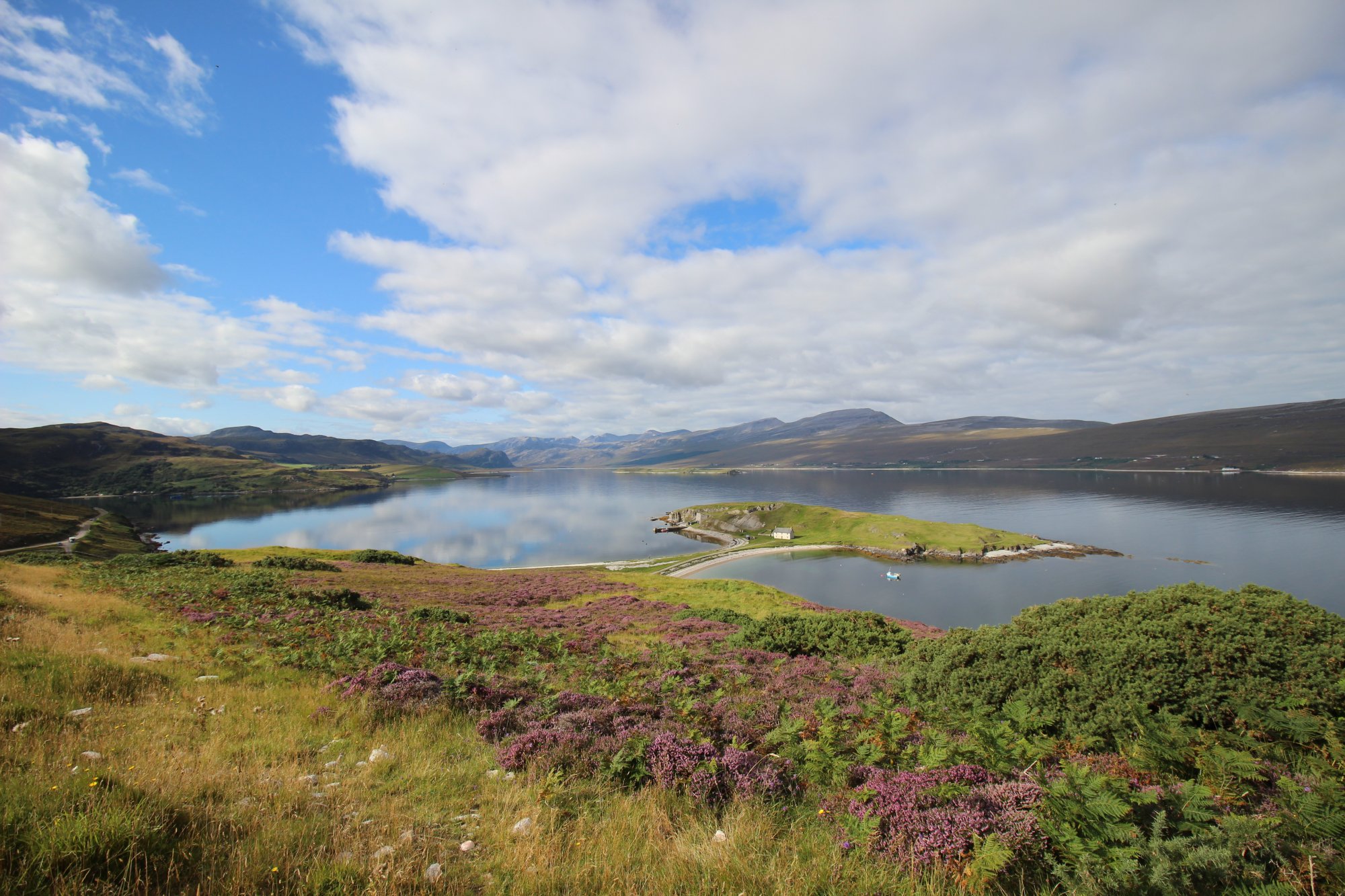
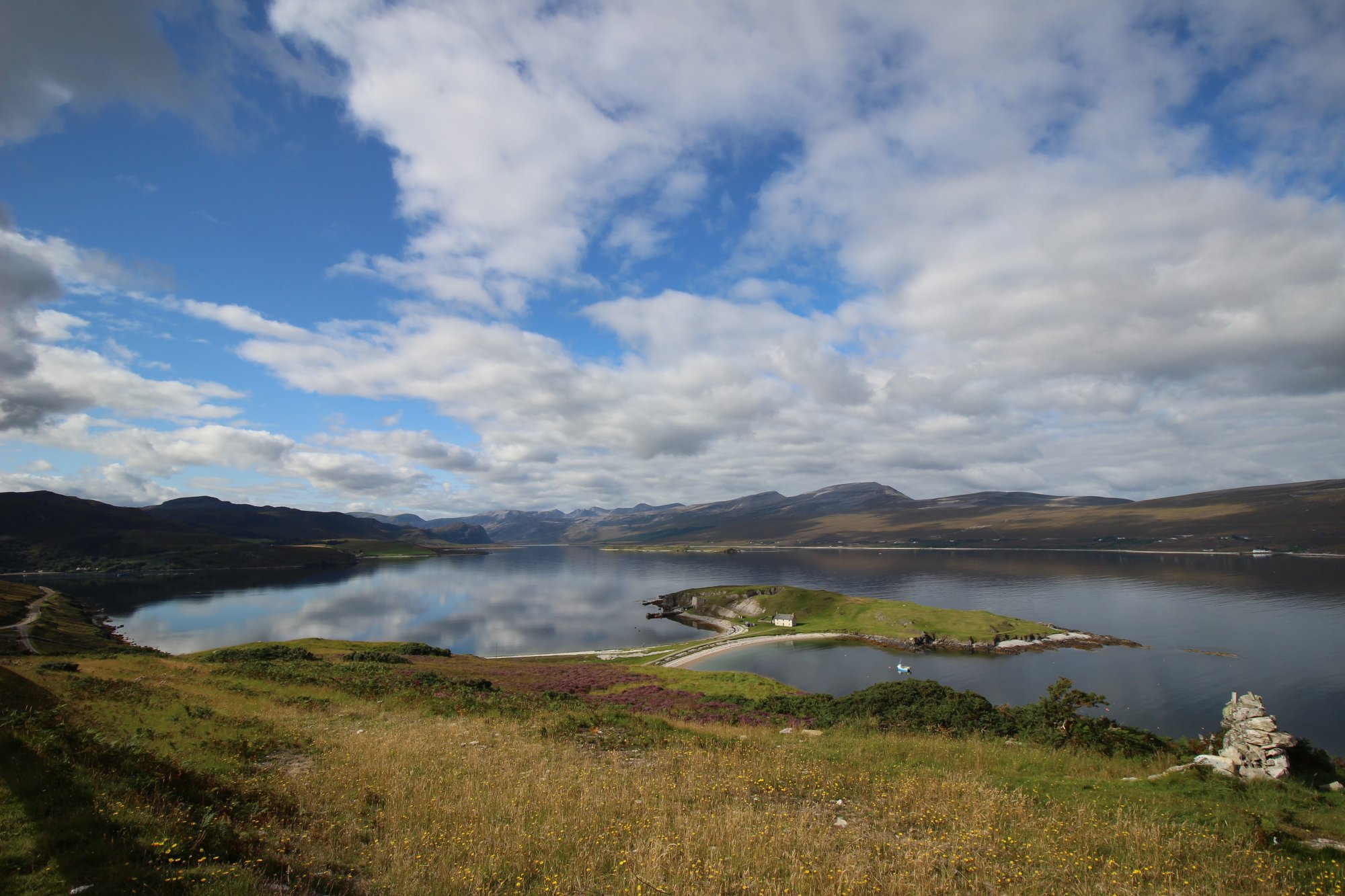
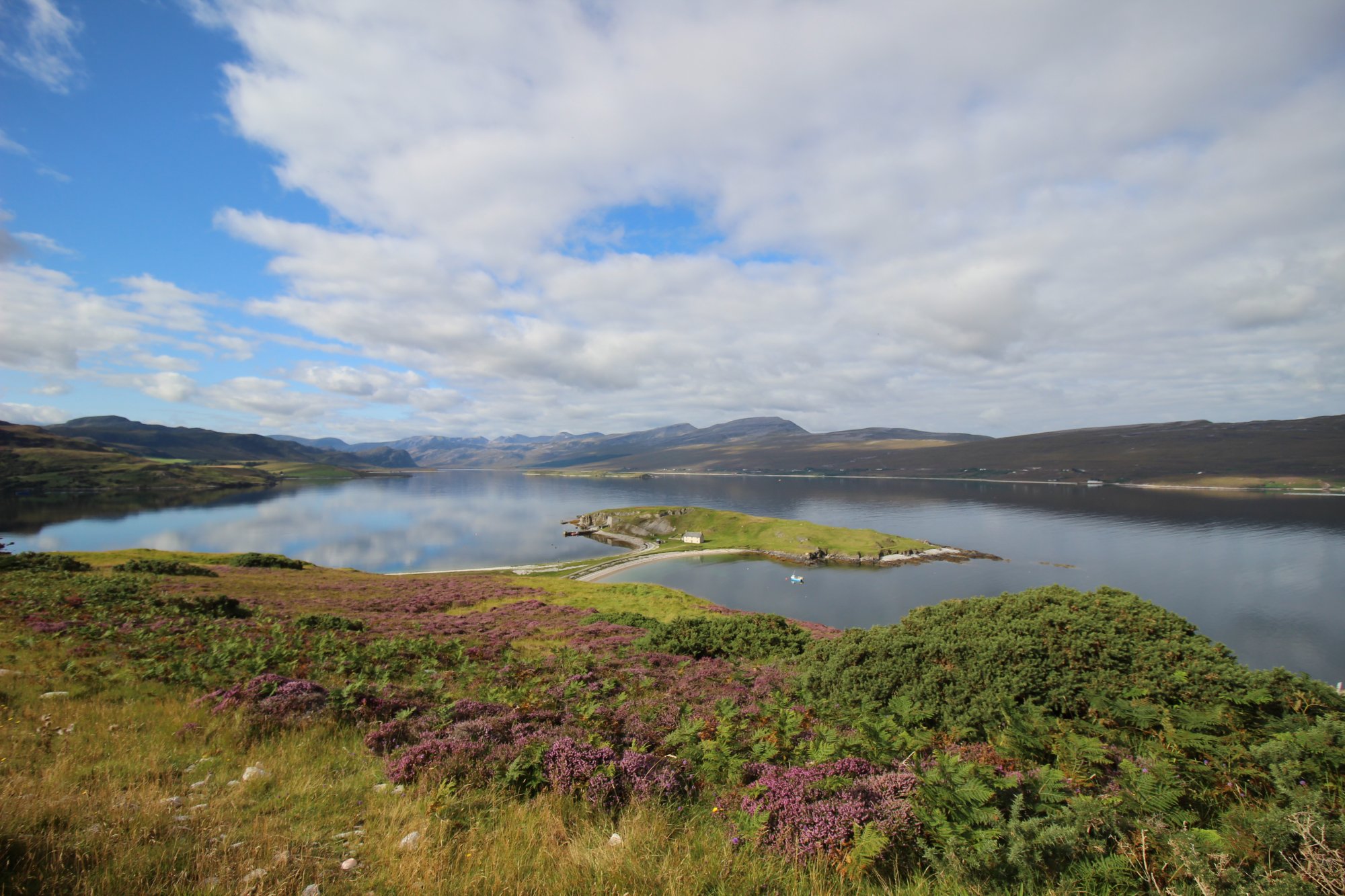
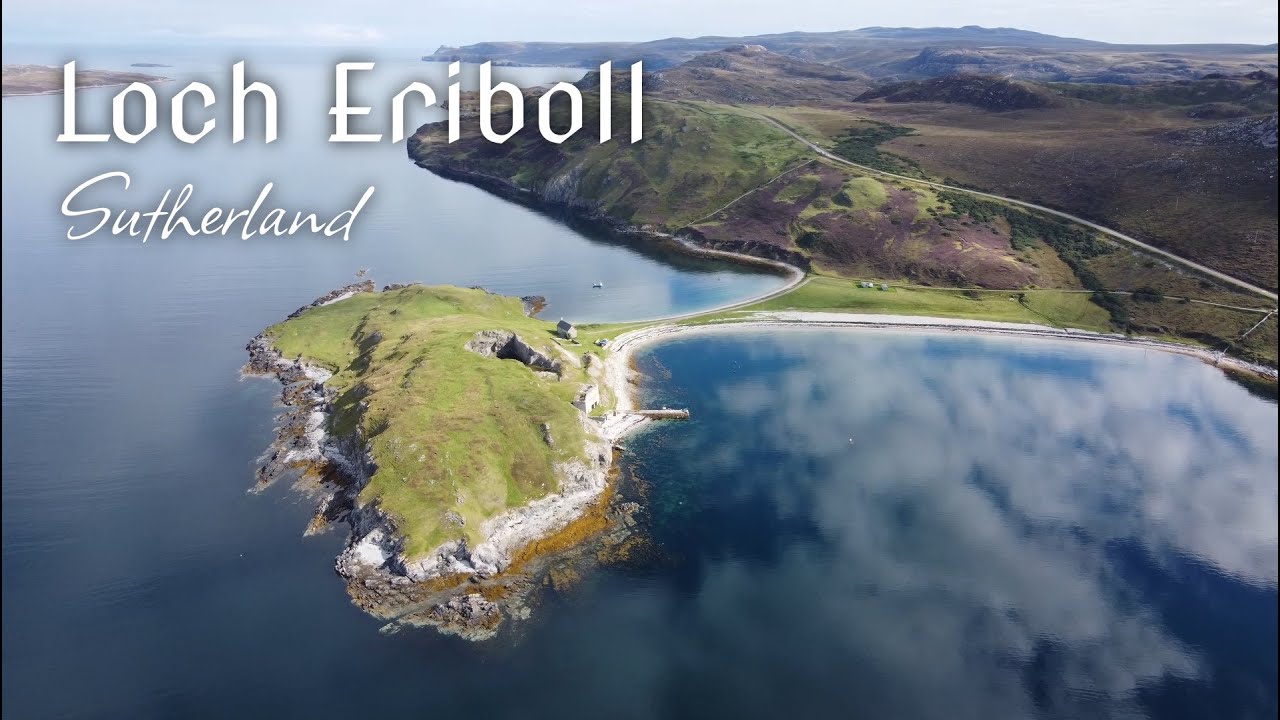
The undeniable focal point and visual anchor of Loch Eriboll is Ard Neakie, an elegant mound of land that escapes the mainland as a near-island. This picturesque peninsula is securely tied to the eastern shore by a narrow, natural tombolo—a causeway flanked on both sides by pristine beaches of gravel and shingle. A quiet, single-track access track traces this causeway, leading visitors directly onto the heart of the promontory.
Unlike much of the surrounding Sutherland landscape, which is defined by acidic peat and barren gneiss, the area immediately surrounding Ard Neakie sits atop a rich, subterranean bed of limestone. This unique geological feature acts as a powerful natural fertilizer. The lime drastically reduces the acidity of the soil, giving rise to incredibly vibrant, lush green pastures and exceptionally healthy heather banks that contrast brilliantly against the deep blue and gray tones of the tidal water.
Lime Kilns and the Abandoned Ferry
Ard Neakie holds a wealth of historical significance, serving as a peaceful open-air museum of rural 19th-century enterprise. Standing proudly near the entrance of the peninsula are four massive, beautifully preserved stone lime kilns, constructed around 1870 by the Duke of Sutherland's estate. Here, limestone quarried from the nearby cliffs was broken down and heated at intense temperatures to produce quicklime, which was then exported by sea for agricultural use across Scotland.
Adjacent to these imposing stone structures sits an old, abandoned slipway and a prominent two-story white building. Before the modern loop road was constructed around the perimeter of the loch, this building served as the official ferry house. Passengers and livestock looking to cross the deep waters of Loch Eriboll would gather at this pier to catch a small boat to the western shore, shaving hours off an arduous overland journey through the trackless mountain passes.
Practical Visitor Information
Getting There: Loch Eriboll is located directly along the northern section of the A838 road, roughly midway between Durness and Tongue. It is an unmissable, highly scenic stretch of the North Coast 500 route.
Parking and Viewpoints: While a high-elevation roadside viewpoint provides a spectacular, sweeping look down onto Ard Neakie from the A838, there is also a small, informal parking layby down near sea level closer to the causeway entrance for those wishing to explore on foot.
Footwear & Exploration: Walking across the natural causeway and exploring the exterior of the lime kilns is a straightforward and highly rewarding walk. However, the ground around the old quarry pits and the shoreline stones can be loose and slippery; sturdy walking shoes are recommended.
Wartime History Note: For history enthusiasts, Loch Eriboll holds a sobering claim to fame: in May 1945, at the conclusion of World War II, the loch served as the designated rendezvous point for the surrender of thirty-three German U-boats, marking the end of the Battle of the Atlantic.
Conclusion: A Sutherland Jewel
Loch Eriboll represents the perfect convergence of natural beauty, industrial heritage, and raw coastal elements. It is a place where the emerald-green slopes of a limestone peninsula defy the dark, moody waters of an Atlantic fjord. Whether you are photographing the iconic stone arches of the Ard Neakie lime kilns, strolling along the dual shingle beaches of the natural causeway, or reflecting on the massive naval fleets that once anchored in its deep basin, Loch Eriboll remains a deeply atmospheric and unforgettable highlight of the Scottish north.