




The Heart of the Moor: A Guide to the Desolate Beauty of Loch Ba
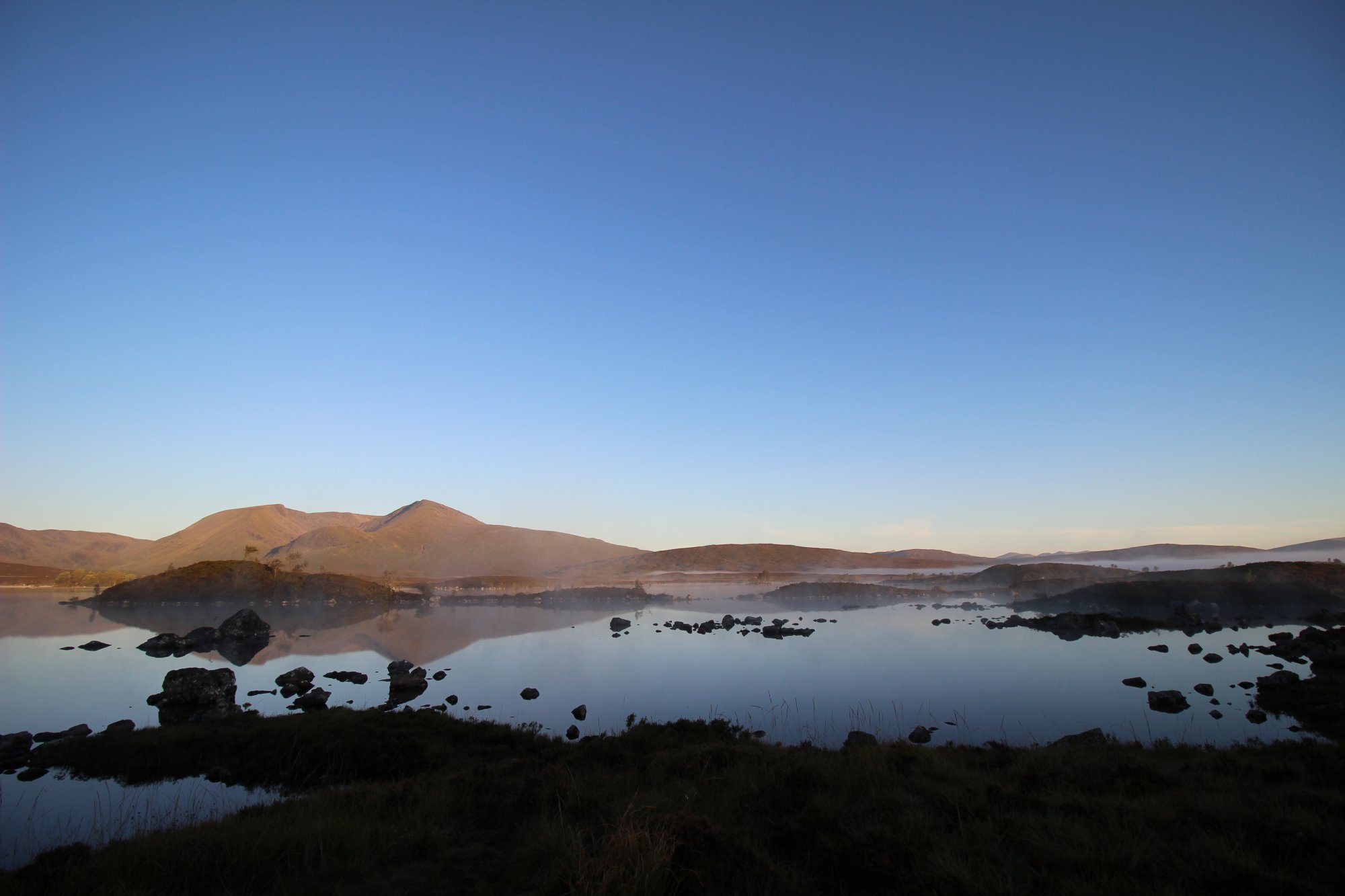
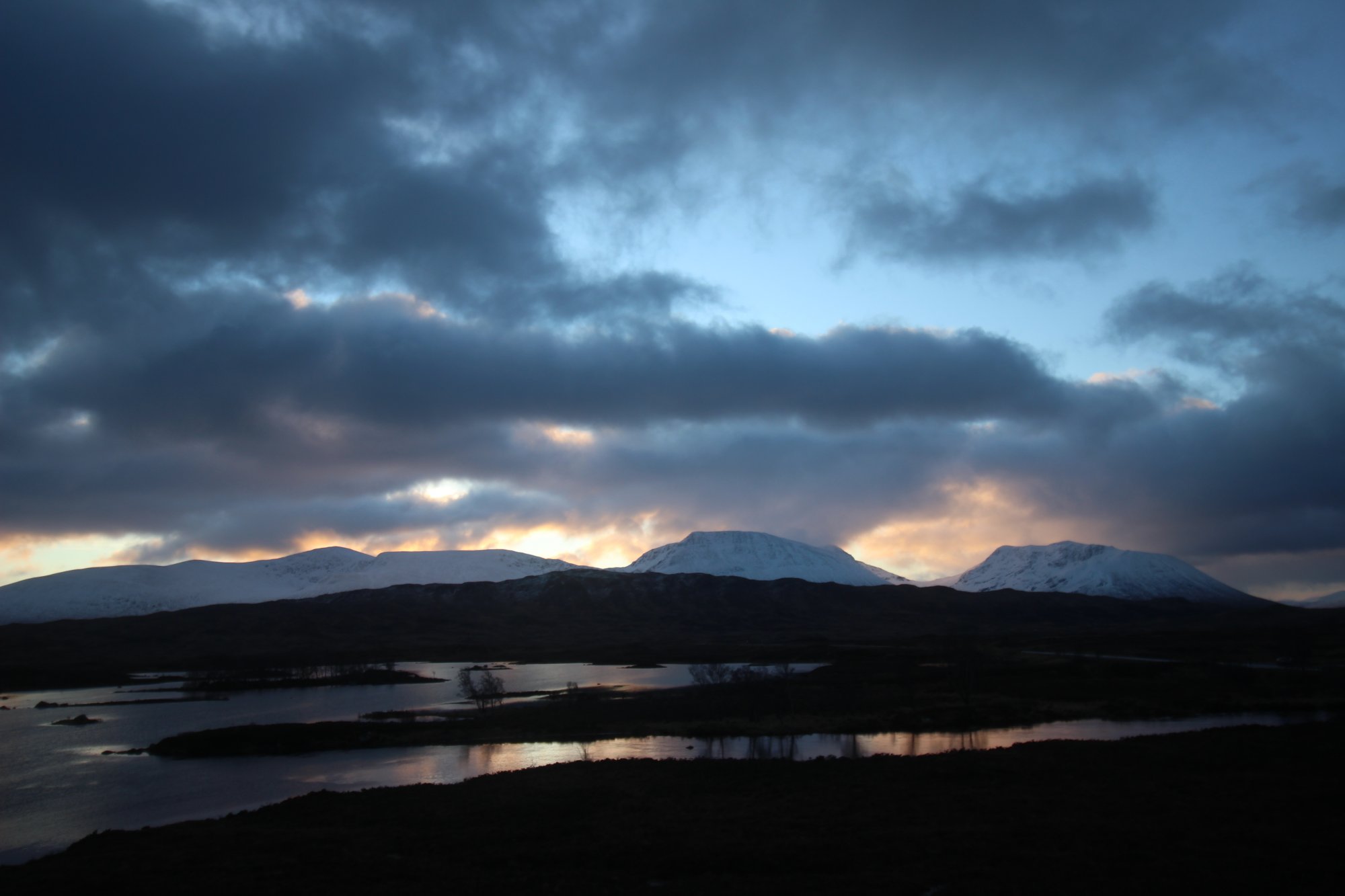
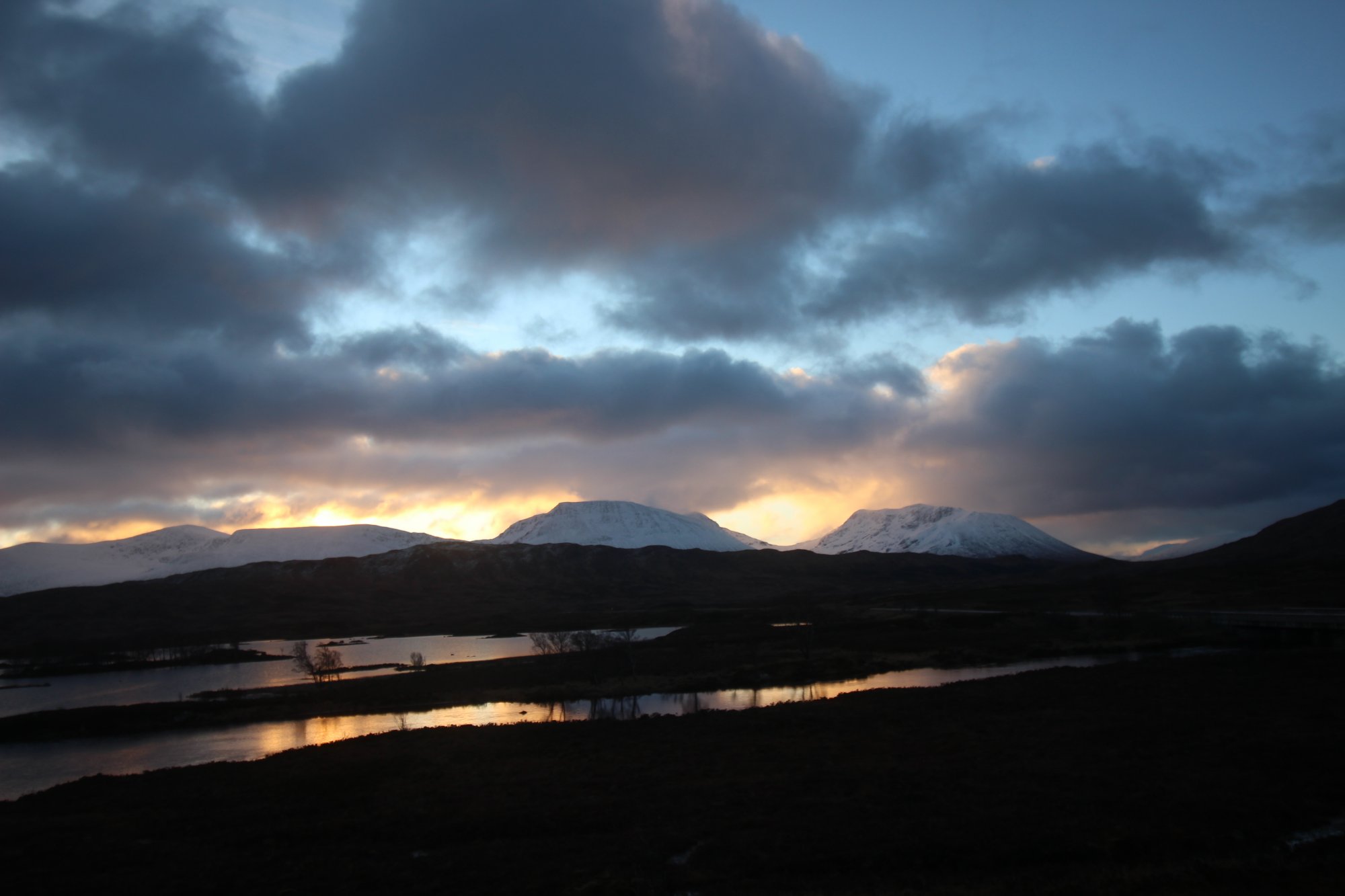
If there is one landscape that completely captures the raw, desolate, and elemental spirit of the Scottish Highlands, it is Loch Ba. Situated in the dead center of Rannoch Moor, this expansive, shallow freshwater loch is a mesmerizing labyrinth of peat, dark water, and ancient stone. While the vast majority of travelers speed past on the nearby A82 road toward the vertical drama of Glencoe, those who pull over at the Loch Ba viewpoint are rewarded with a profound, prehistoric silence that is increasingly rare in the modern world. Defined by its immense horizontal vastness, Loch Ba offers an unrestricted 360-degree horizon that makes the human observer feel beautifully insignificant.
A Glacial Masterpiece and the Living Sponge
The chaotic geography of Loch Ba is a direct result of the Last Glacial Maximum. Thousands of years ago, the vast Rannoch plateau was the core site of a massive, grinding ice cap. As the glaciers slowly retreated, they did not carve out deep, steep-sided glens; instead, the ice heavily scoured the underlying granite floor, leaving behind an uneven surface of shallow depressions and hollows that gradually filled with thousands of years of rainwater.
Because natural drainage across this flat granite basin is exceptionally poor, the terrain has evolved into a massive "living sponge." This has created a highly specialized ecosystem—a vast blanket bog that measures several meters deep in places. When standing along the edge of Loch Ba, you are rarely looking at solid earth. Instead, the shorelines consist of a delicate, shifting crust of heather, sphagnum moss, and deer grass floating directly atop ancient peat. It is this unstable, transitional quality between land and water that gives the loch its highly intricate, fragmented shape.
The West Highland Way and Highland Wildlife
Loch Ba serves as a legendary landmark for those trekking the West Highland Way, Scotland's premier long-distance trail. The path skirts the eastern wilderness of the moor, offering backpackers an intimate perspective of the loch that vehicle travelers entirely miss. For many walkers, this exposed stretch is one of the most mentally demanding portions of the route, completely unprotected from Atlantic gales or the intense summer sun. However, it is equally rewarding; from the elevated sections of the trail, the shallow waters mirror the sky perfectly, shifting from deep indigo to shimmering silver as the clouds race overhead.
Though the moor may appear empty and hostile at first glance, it is designated as a Site of Special Scientific Interest (SSSI). With patience and a good pair of binoculars, the bog reveals its hidden life:
- Red Deer: Large, majestic herds frequently move along the sheltered banks of the loch, particularly during the autumn rut when the deep roars of competing stags echo across the open wilderness.
- Avian Haven: The intricate islands and hummocks provide crucial nesting grounds for rare wading birds, including the Golden Plover, the Dunlin, and on rare occasions, the beautiful and highly protected Black-throated Diver.
- Carnivorous Plants: Because the waterlogged peat soil is almost completely devoid of nutrients, native plants like the Sundew and Butterwort have evolved fascinating carnivorous traits, trapping and digesting small insects to survive.
Practical Advice & Photography
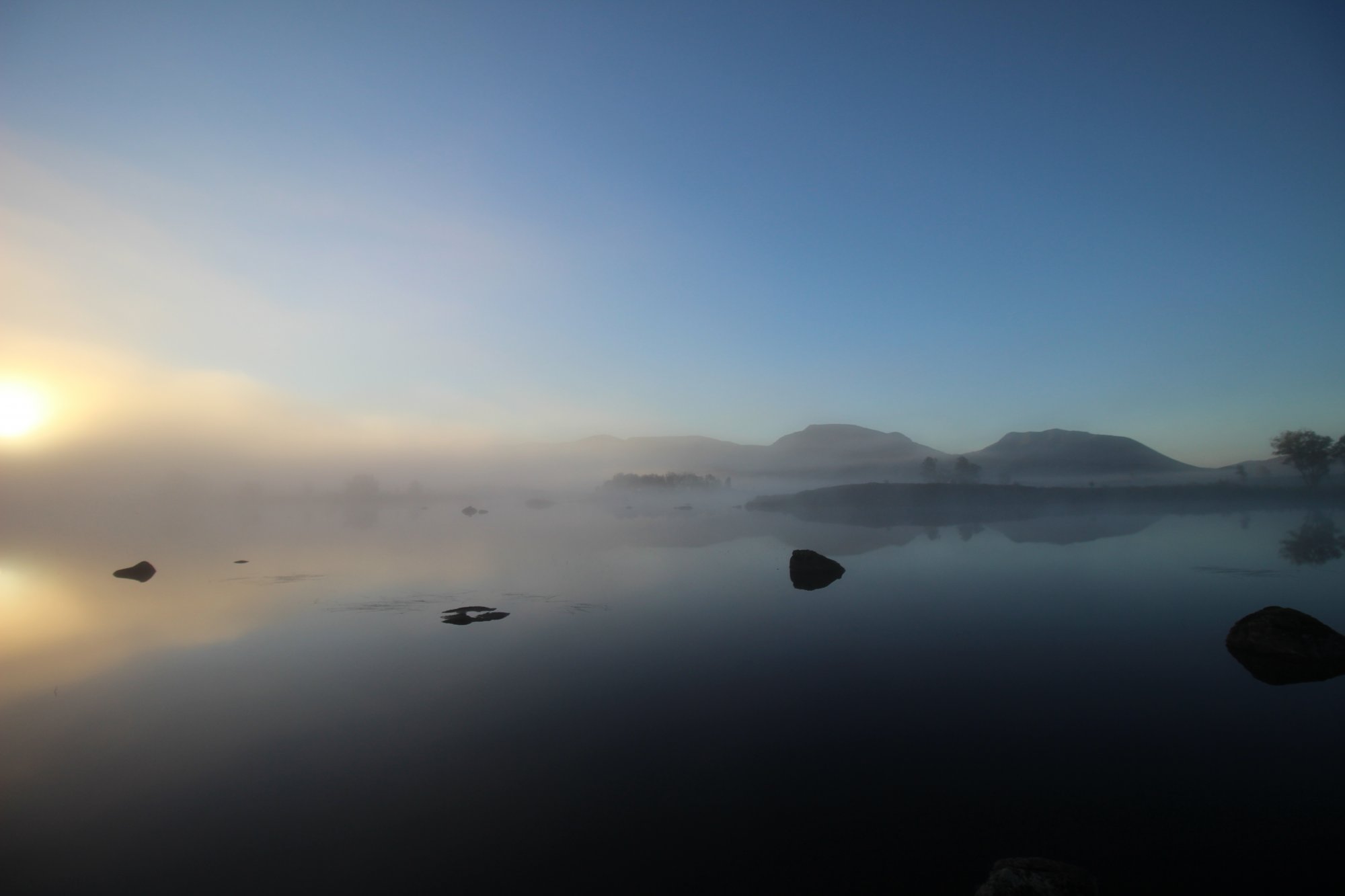
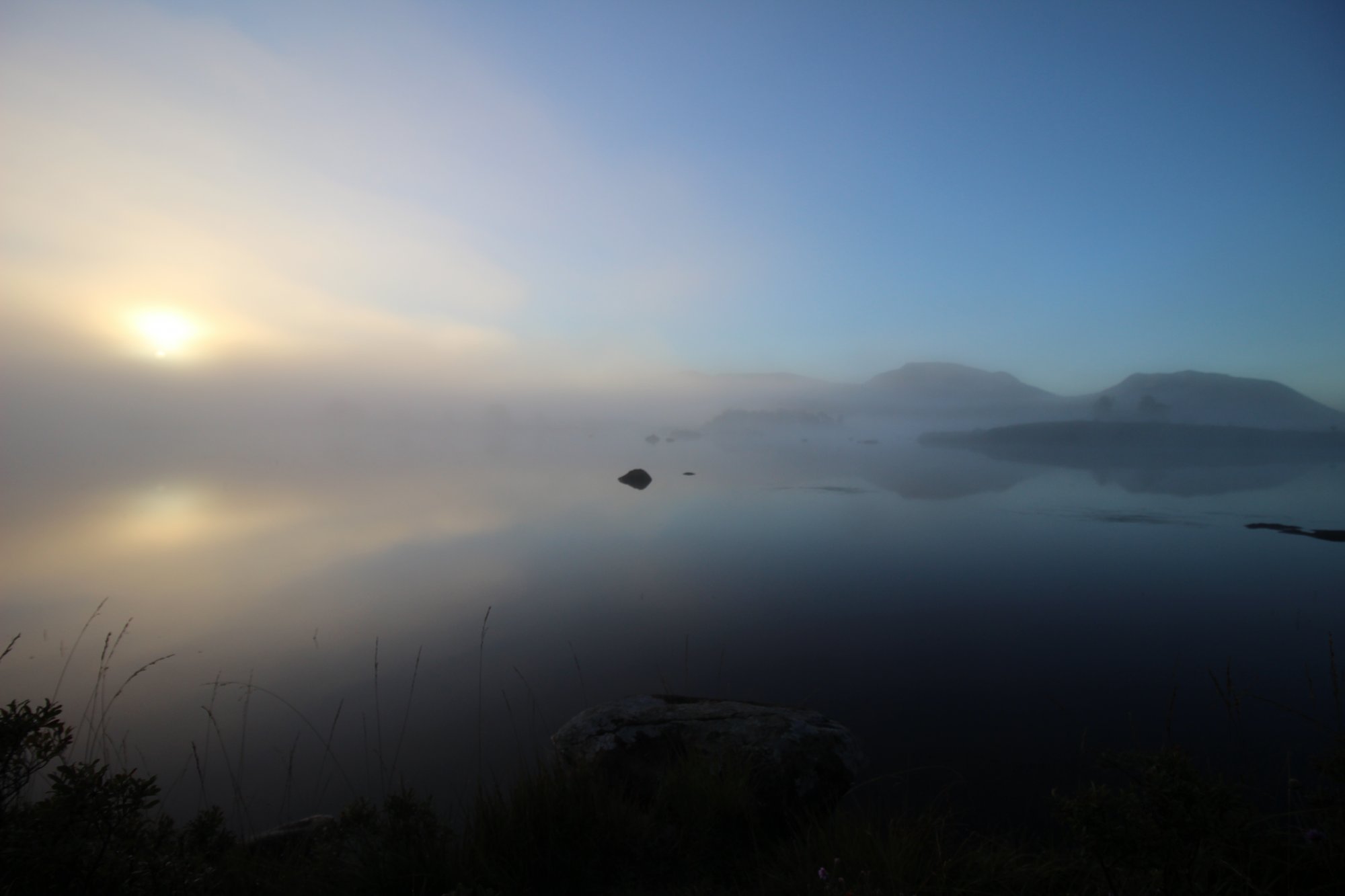
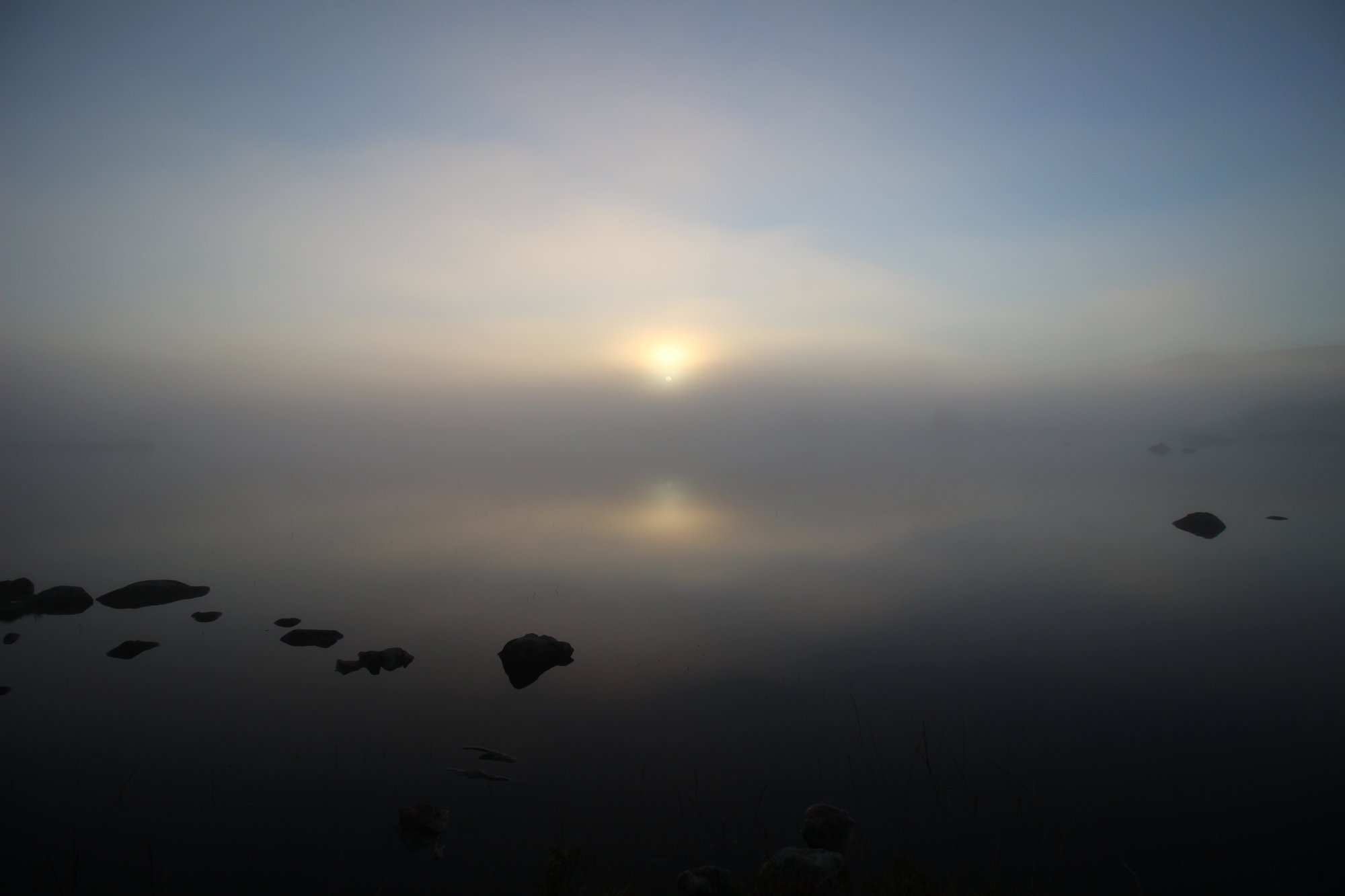
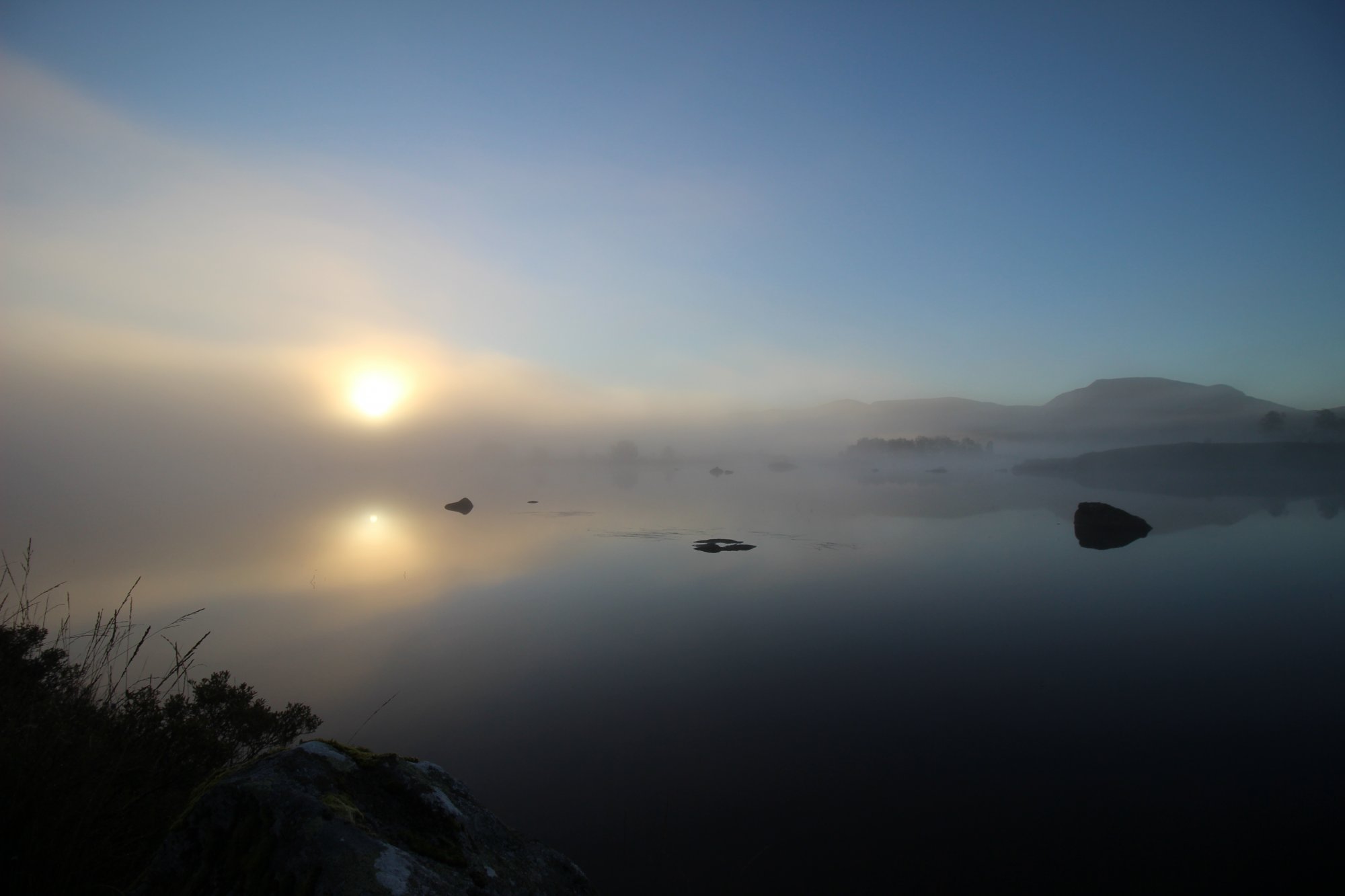
Minimalist Photography: Unlike its neighbor, Lochan na h-Achlaise, which favors classic mountain framing, Loch Ba is all about minimalism. Use the long, shallow "fingers" of the peat shoreline as natural leading lines to direct the viewer’s eye toward the distant, moody peaks of the Black Mount or Clach Leathad. Because the water is shallow, the slightest breeze creates distracting surface ripples; utilizing a strong Neutral Density (ND) filter for a 30-to-60-second exposure will smooth the loch into an ethereal, ghostly sheet of glass.
Deceptive Terrain Warning: We cannot emphasize this enough: do not attempt to hike across the open moor to reach the inner islands. The ground surrounding Loch Ba is deceptively treacherous. What appears to be solid, bright green grass is frequently a thin "floating bog" that can instantly give way. Always stick to the rocky outcrops immediately surrounding the designated viewpoint or stay on the established West Highland Way track.
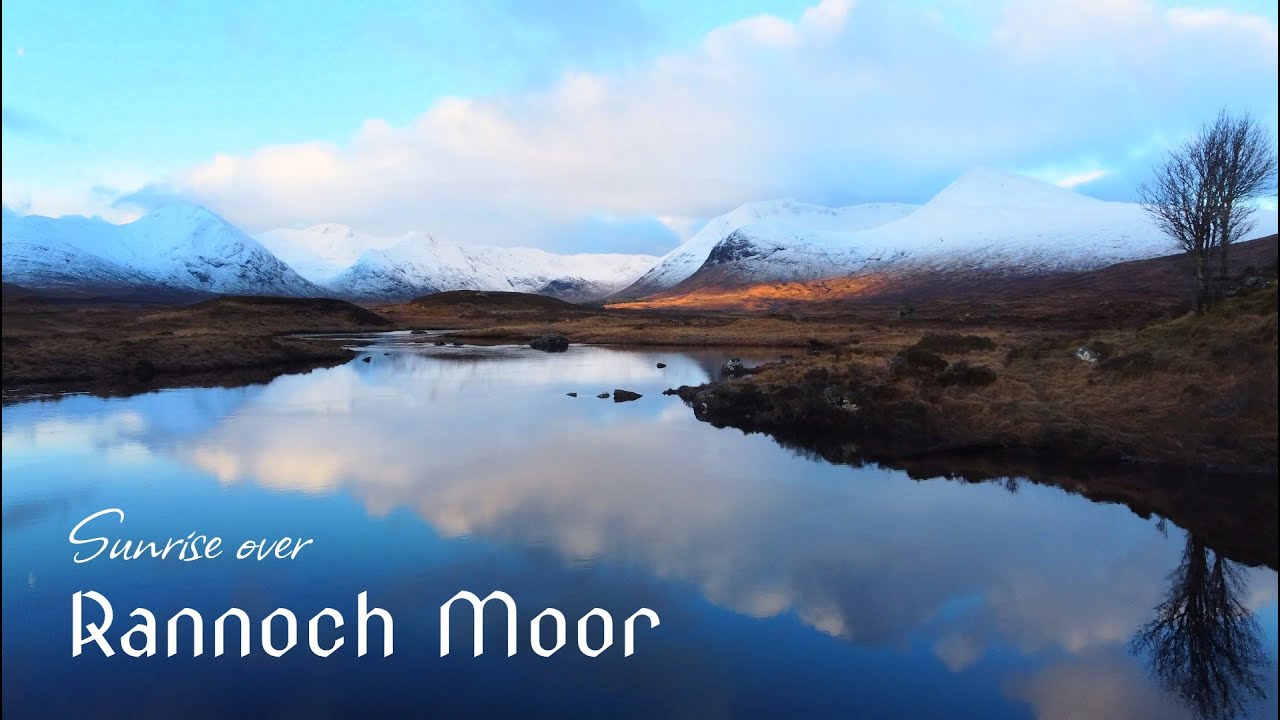
Winter Travel: During the winter months, the high-altitude A82 across Rannoch Moor is notoriously vulnerable to severe weather and is often one of the first trunk roads to close due to heavy drifting snow. Seeing Loch Ba completely frozen over and locked in winter white is a profound, life-changing sight, but it requires winter driving experience and full emergency preparation.
Conclusion: The True Highland Spirit
Loch Ba does not offer manicured viewpoints or tourist gift shops. It is a raw, uncompromising fragment of ancient Scotland that has remained largely unchanged since the end of the last ice age. By stepping away from the tarmac and listening to the wind whip across the dark peat water, you are experiencing the authentic, untamed heart of the Highlands—a quiet, powerful reminder of the beauty found in absolute emptiness.