




Eas a' Chual Aluinn: The Hidden Crown of the Assynt Wilderness
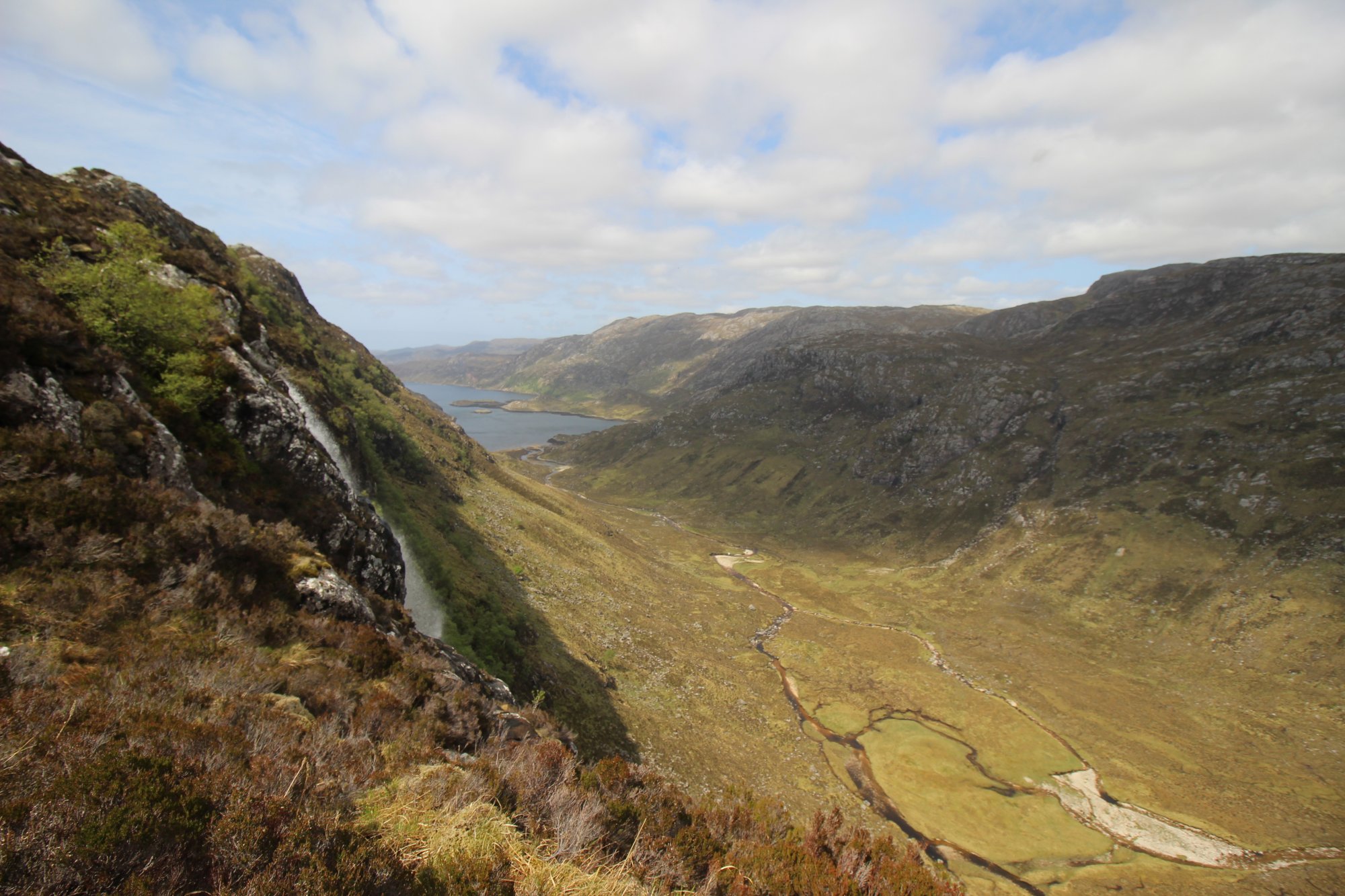
If the nearby Wailing Widow is considered the sparkling "gem" of the Assynt region, then Eas a' Chual Aluinn is indisputably its crown. Boasting a staggering, jaw-dropping vertical drop of over 200 meters (658 feet), this monumental cascade is officially the highest waterfall in both Scotland and the entire United Kingdom. To put its immense scale into perspective, it towers at more than three times the height of Niagara Falls. Yet, despite its record-breaking status, it remains one of the most elusive, isolated, and rewarding sights in the Highlands. Tucked deep within the remote, ancient wilderness of Sutherland, far from the roadside convenience of other North Coast 500 (NC500) stops, reaching this natural wonder requires a dedicated hike, a bit of grit, and a true passion for raw, trackless terrain.
The Gaelic Roots: Waterfall of the Beautiful Tresses
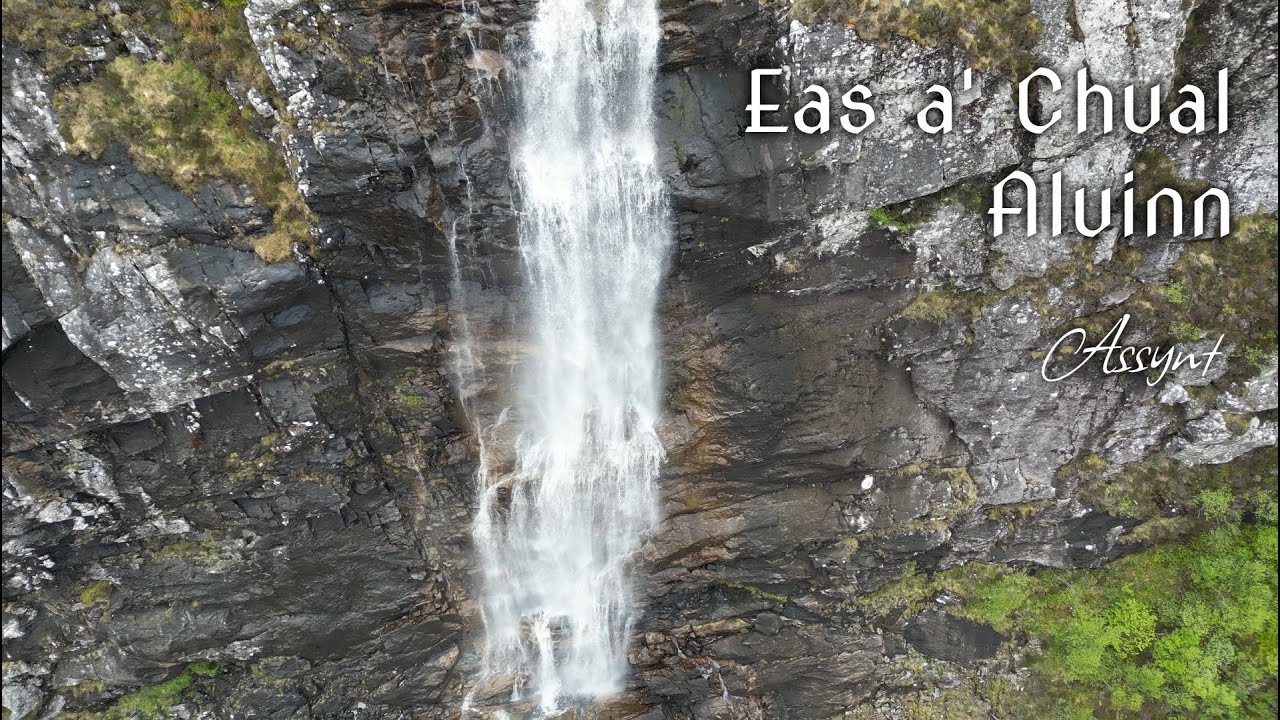
The name of this majestic cascade is a slightly anglicized version of the Scottish Gaelic Eas a’ Chùil Àlainn, which translates poetically to "waterfall of the beautiful tresses." When you finally stand before it and witness the water cascading down the dark, ancient Lewisian Gneiss cliffs in multiple shimmering white ribbons, the name feels perfectly appropriate. Unlike many famous waterfalls that crash down in a single, roaring column of water, Eas a' Chual Aluinn gracefully drapes itself over the tiered, rocky face of a high mountain plateau. After its dramatic plunge, the water gathers in the valley below, eventually emptying into the deep, saltwater depths of Loch Beag and Loch Glencoul.
The Hike: A Test of Assynt Endurance
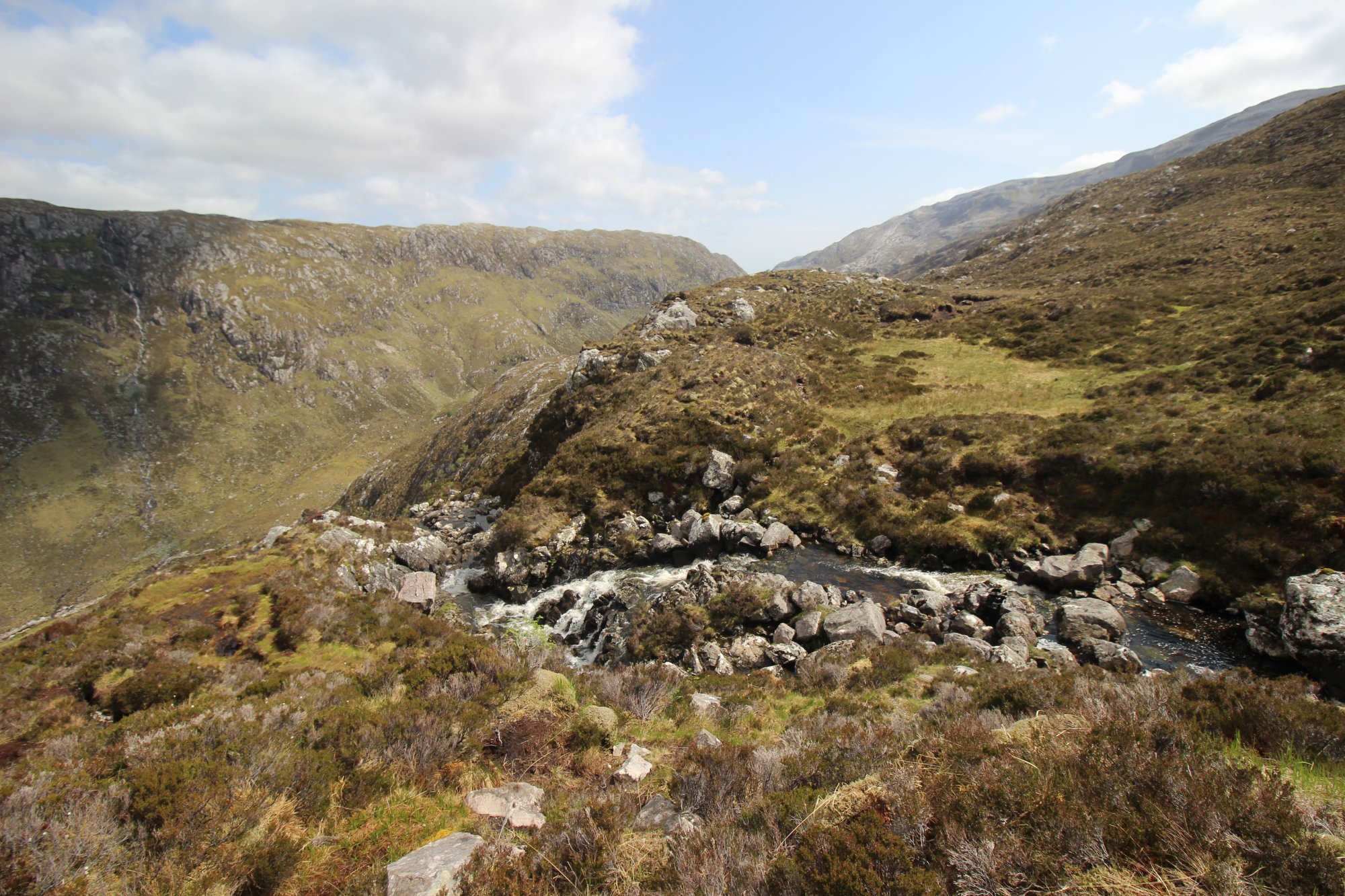
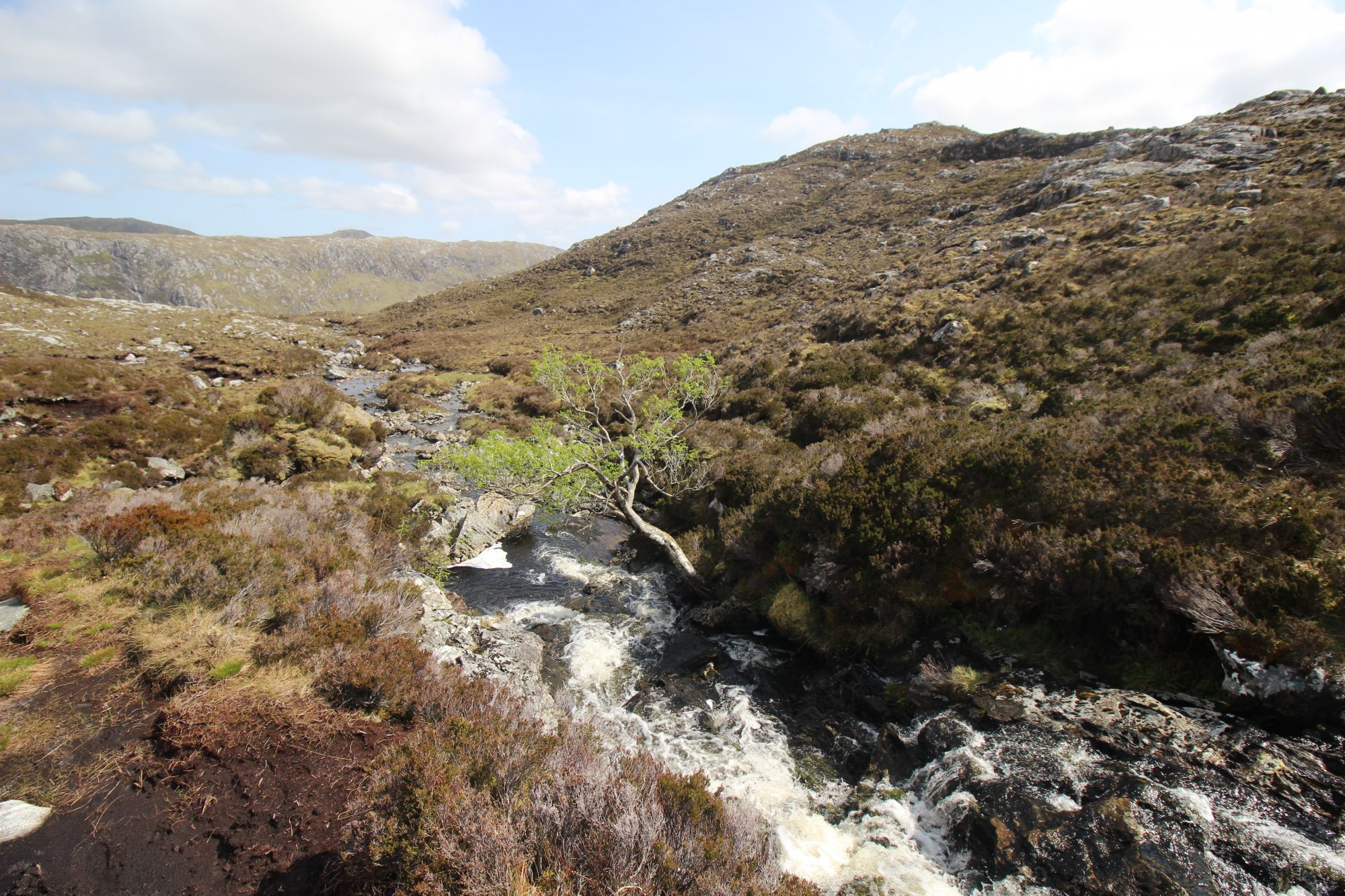
The journey to the top of the falls is a roughly 6-mile (10km) round trip that typically takes between 4 and 5 hours to complete. It is a serious wilderness trek that should not be taken lightly, serving as a true test of Highland endurance. The adventure begins at the northern bank of Loch na Gainmhich, sharing a starting point with the upper path for Wailing Widow Falls—in fact, the two waterfalls are geographical siblings, fed by the exact same loch. To begin the trek, hikers must first navigate notoriously boggy, peat-laden ground toward the upper rim of the Wailing Widow.
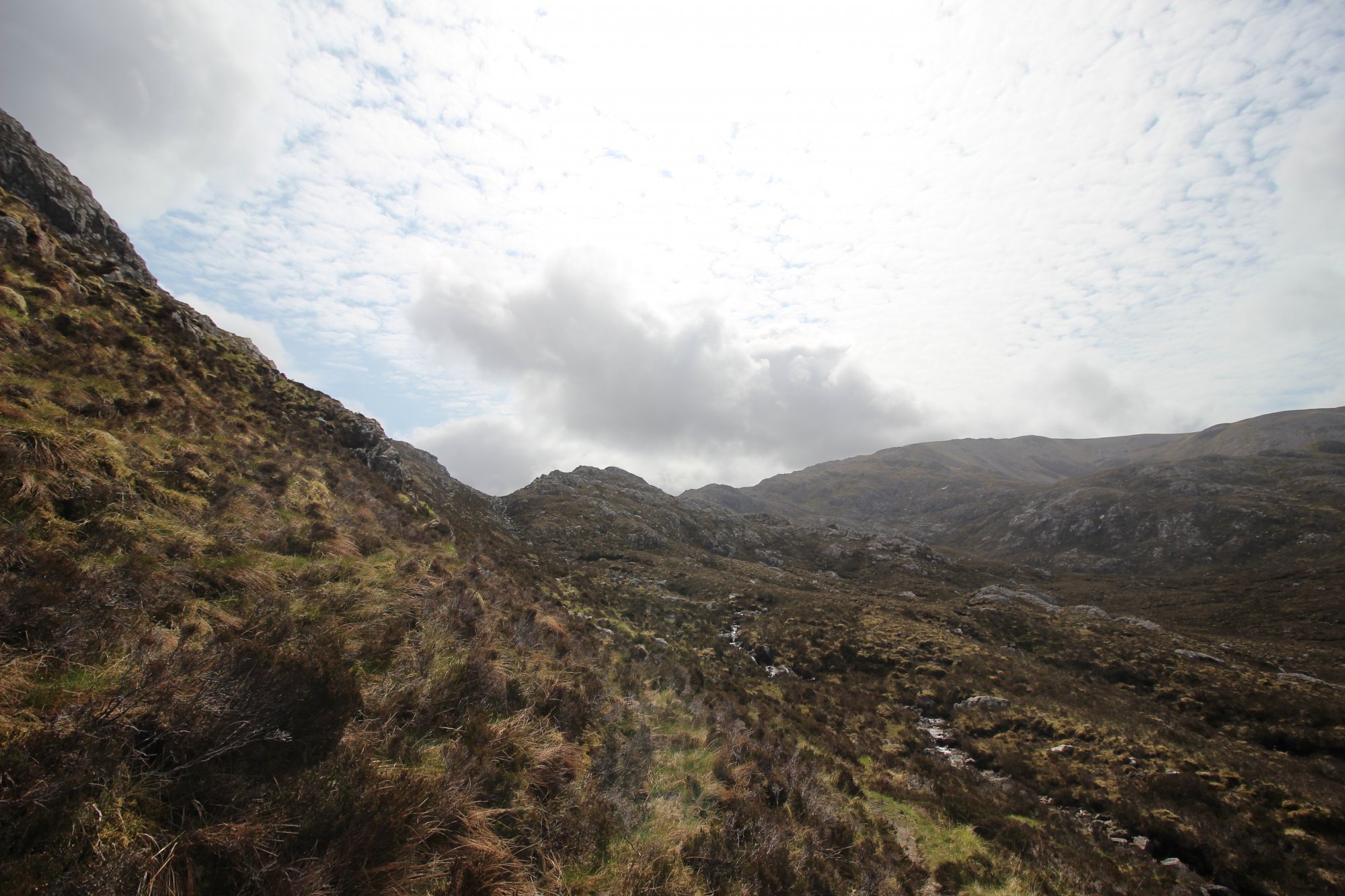
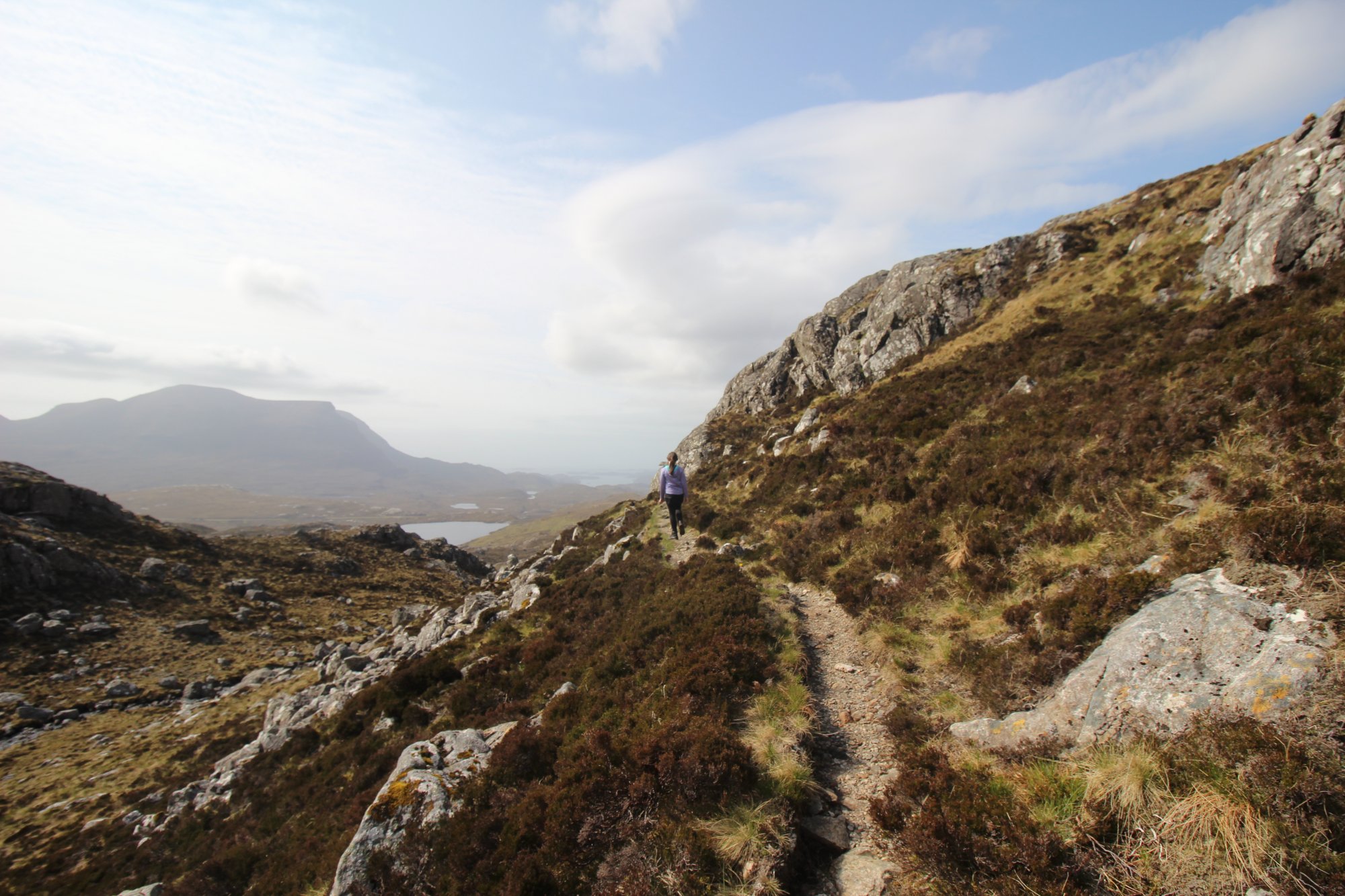
One of the initial highlights—and challenges—of the trail involves negotiating a set of stepping stones over the loch’s main outflow. Hikers must exercise extreme caution here; after heavy rain, these stones can easily become completely submerged or incredibly slippery. Once across the water, the defined path quickly gives way to a barely visible, rugged track that hugs the shoreline before launching into a steady, demanding incline toward the high mountain pass nestled between Cnoc na Creige and Glas Bheinn.
A Lunar Wilderness and the Edge of the Abyss
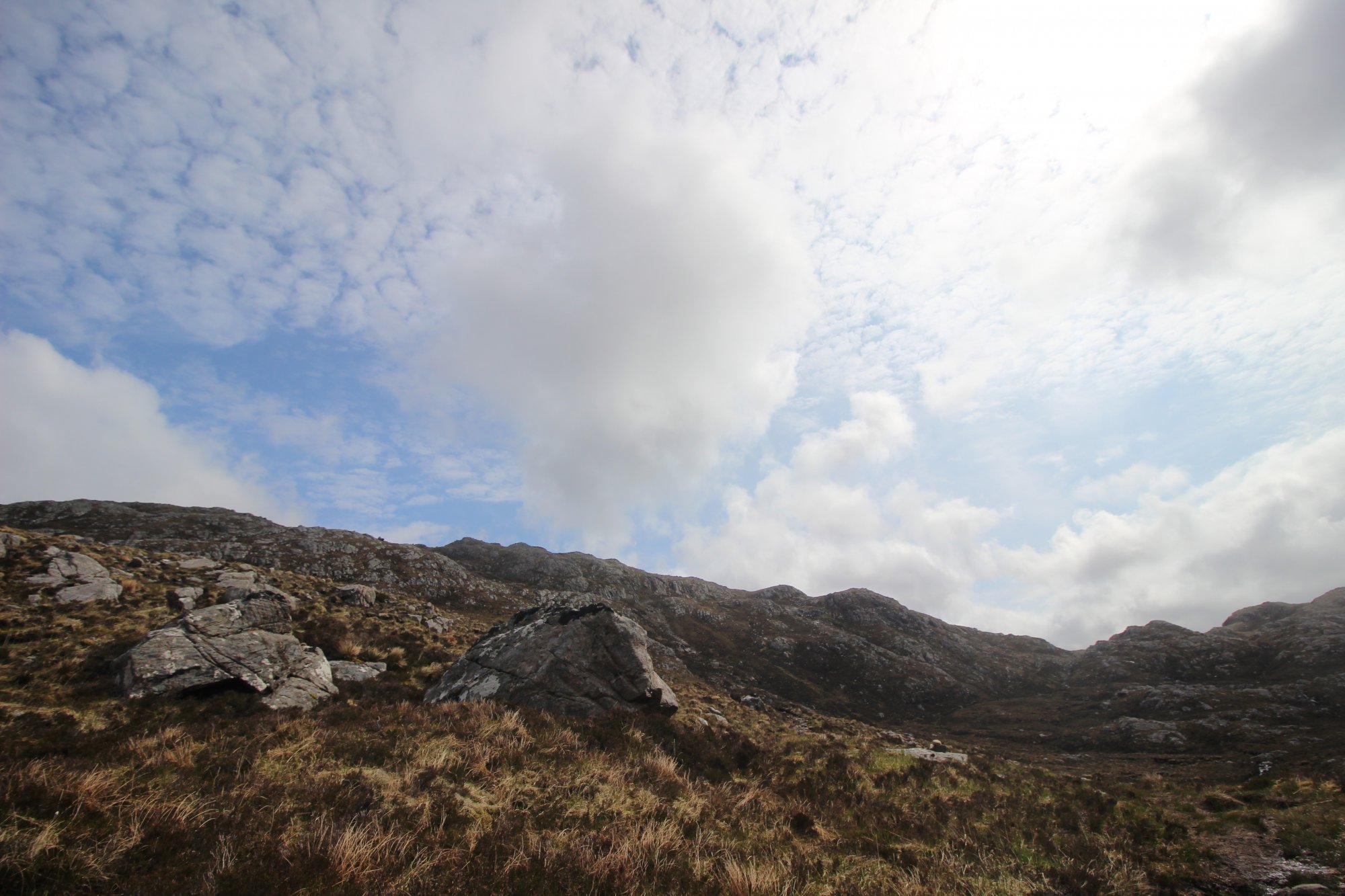
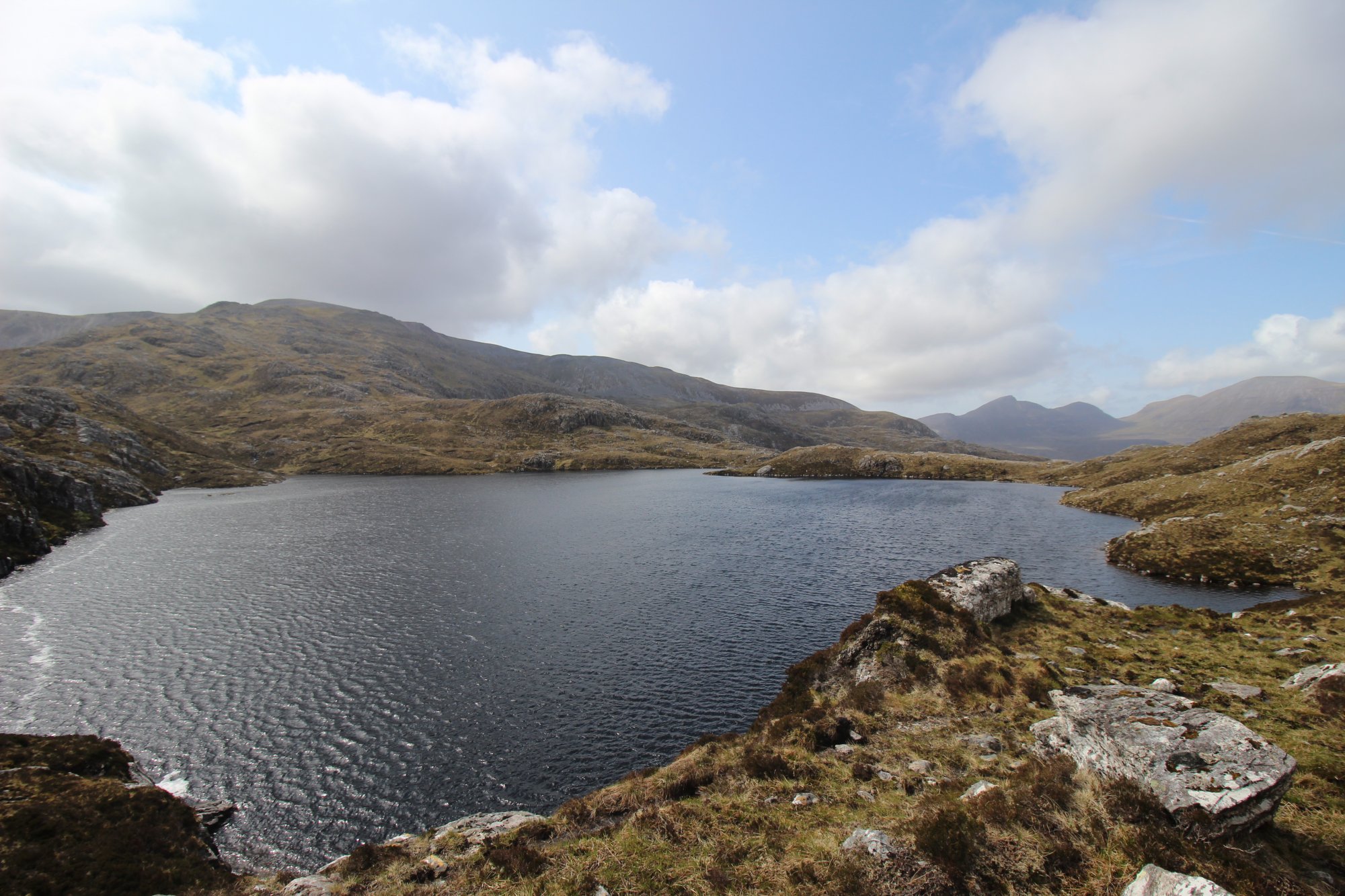
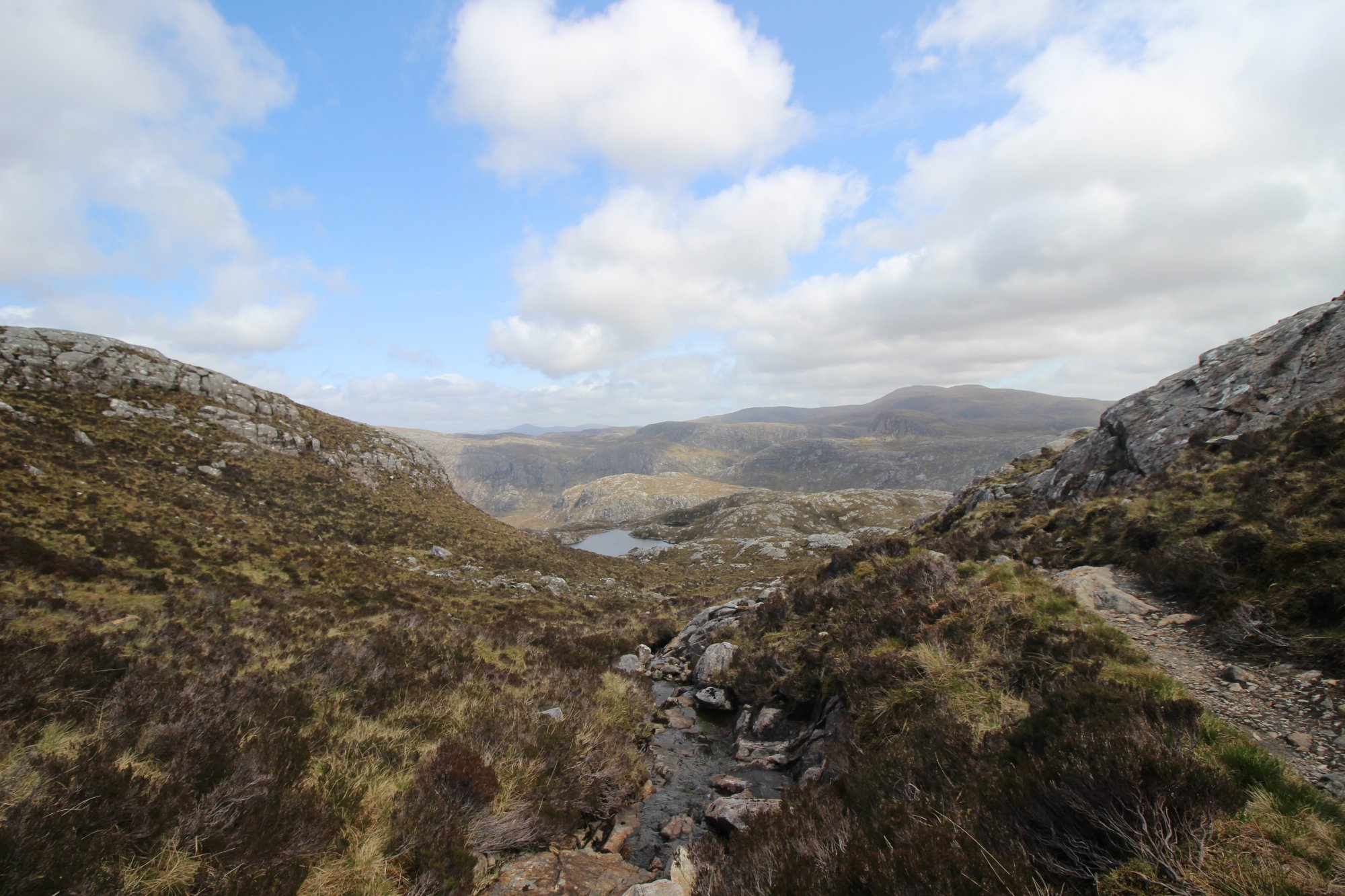
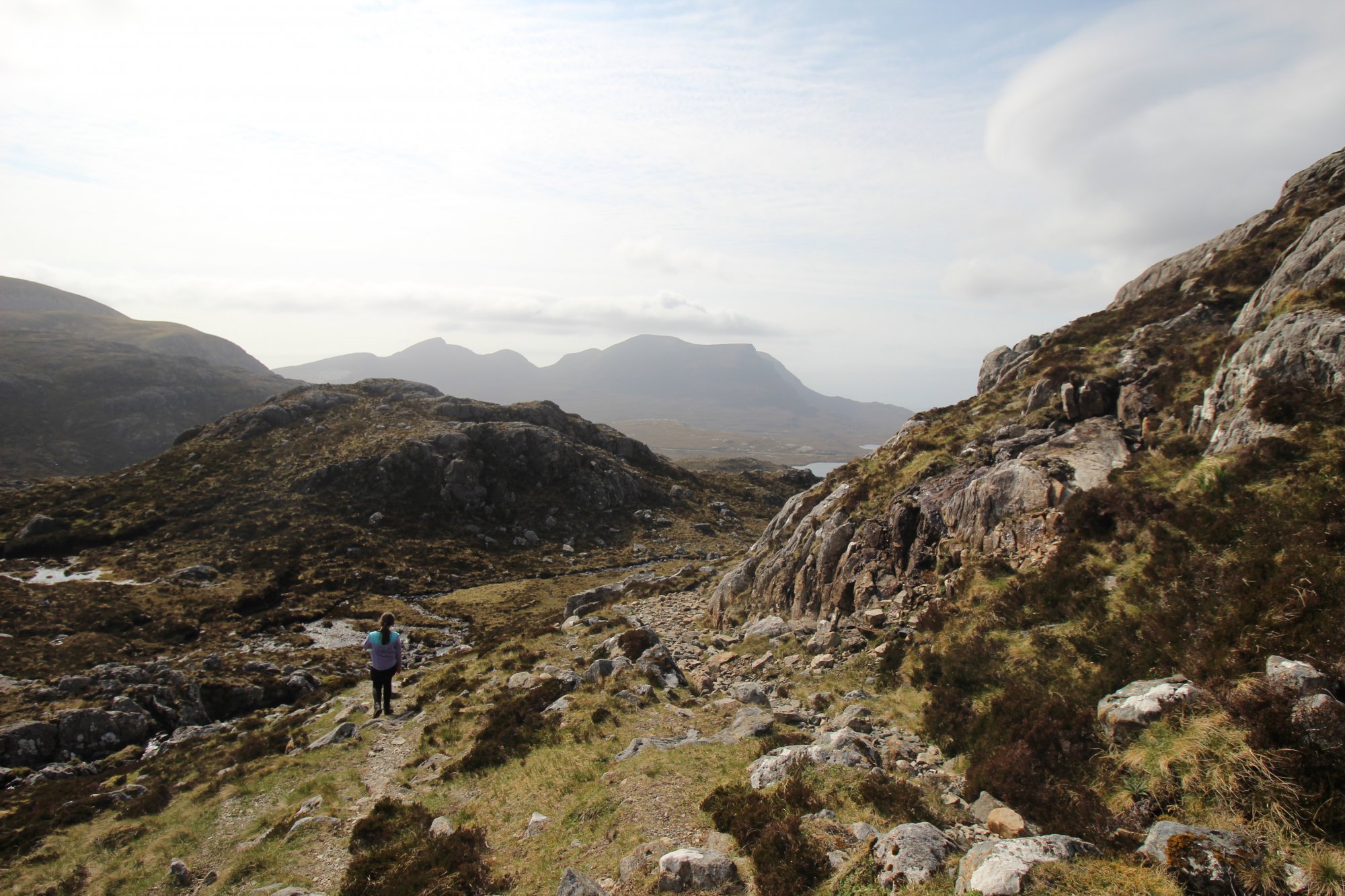
As you gain altitude, the landscape behind you opens up to reveal the magnificent, sweeping peaks of Quinag—often celebrated as the "Crown of Assynt." Upon reaching the mountain pass, the terrain shifts dramatically into a surreal, moon-like wilderness. Here, the trail zigzags through a striking landscape dotted with small, mirror-like lochans and ancient, weathered rocky hillocks. This is the very heart of the North West Highlands Geopark, a protected region where some of the oldest exposed rocks on the planet are laid bare to the elements.
Eventually, the track leads to the very edge of a massive, 200-meter vertical abyss. This introduces the great irony of Eas a' Chual Aluinn: because the cliff face is so exceptionally high and sheer, it is surprisingly difficult to view the waterfall in its entirety from the top. To get even a partial glimpse of the cascading ribbons, you must carefully follow a narrow, exposed, and slippery path at the absolute edge of the plateau. This spot is incredibly dangerous, with an immediate, unforgiving drop-off. In our experience, the only sensible and safe way to fully capture the true grandeur of the entire 200-meter drop is through cinematic drone photography, which allows you to send a camera out over the canyon to see the water falling all the way to the valley floor.
Alternative Perspectives: Boats and Valley Floors
If a 5-hour trek across wet peat hags does not appeal to you, or if you simply wish to experience the waterfall from a completely different vantage point, there are alternative methods to explore the area:
- The Kylesku Boat Trips: Visitors can book a seasonal boat tour from nearby Kylesku that sails directly into the dramatic waters of Loch Beag. Looking up from sea level gives a fantastic sense of scale to the cliffs, though because the waterfall sits so high up the mountainside, you remain at a distance. Bringing a good pair of binoculars or a long camera lens is highly recommended.
- The Bottom Path: For the truly resilient, a legendary lower path exists, leading from the valley floor up to the rocky base of the falls. However, this route adds several arduous hours to an already long day and is famously even boggier than the high plateau trail.
Vital Tips for a Successful Trek in 2026
In 2026, Eas a' Chual Aluinn remains completely wild, undeveloped, and free from tourist infrastructure. To ensure a safe trip, keep these essential guidelines in mind:
Navigation is Key: The trail frequently vanishes completely into deep bog. Do not rely on cellular phone GPS alone; carrying a physical Ordnance Survey map (Explorer 442), a compass, and knowing how to use them is essential.
Footwear: This is strict, uncompromising waterproof boot territory. Even during a dry summer, the peat hags of Assynt remain incredibly wet and muddy.
The High-Water Paradox: While the waterfall is at its most spectacular and roaring after heavy rainfall, that is also when the trail is at its most treacherous and the river crossings become dangerous. For the safest and most rewarding experience, aim to visit a day or two after a major storm has passed.
Conclusion: An Unmatched Highland Triumph
Eas a' Chual Aluinn represents the untamed, dramatic pinnacle of the Scottish wilderness. It is a destination that demands effort, respects preparation, and rewards adventurers with an overwhelming sense of isolation and natural majesty. Standing on the high volcanic plateau, watching the waters of the far north plunge into the sea lochs below, provides an unforgettable highlight for any explorer. Whether you are capturing its sweeping lines via drone or trekking through the ancient geopark, a journey to the UK's highest waterfall is a powerful encounter with the timeless soul of the Highlands.