



Dunfermline Old Town: Walking the Ancient Streets of Scotland's First Capital
While modern developments wrap around its edges, the historic core of Dunfermline Old Town remains a beautifully preserved time capsule of Scotland's early royal and industrial heritage. Long before Edinburgh claimed the title, Dunfermline served as the official, ancient capital of Scotland under King Malcolm Canmore in the 11th century. Walking through the Old Town today is an exercise in time travel, where narrow, winding cobblestone wynds open up into grand historic squares, and centuries-old stone tenements sit in the shadow of monumental medieval ruins. It is a wonderfully compact and atmospheric quarter, offering visitors a peaceful yet deeply educational urban exploration where every street corner reveals a story of kings, radical religious shifts, and global philanthropy.
The Architectural Fabric: Cobblestones and Historic Wynds
The layout of Dunfermline Old Town is anchored by its historic high ground, sloping gently down toward the monastic valley below. The primary spine of the historic quarter is formed by the High Street, Maygate, and Abbot Street, where the medieval street plan is still entirely visible. Here, visitors can admire a striking array of architectural styles, from solid, austere 17th-century merchant houses built from local blonde sandstone to ornate Victorian civic buildings. A highlight of the Old Town's structural charm is the Abbot House (traditionally known as the 'Pink House' due to its vibrant limewash finish). Dating back to at least the 15th century, this resilient building is the oldest residential structure surviving in Dunfermline, having miraculously escaped the catastrophic great fire of 1624 that destroyed most of the medieval wooden town.
From Royal Birthplace to Industrial Powerhouse
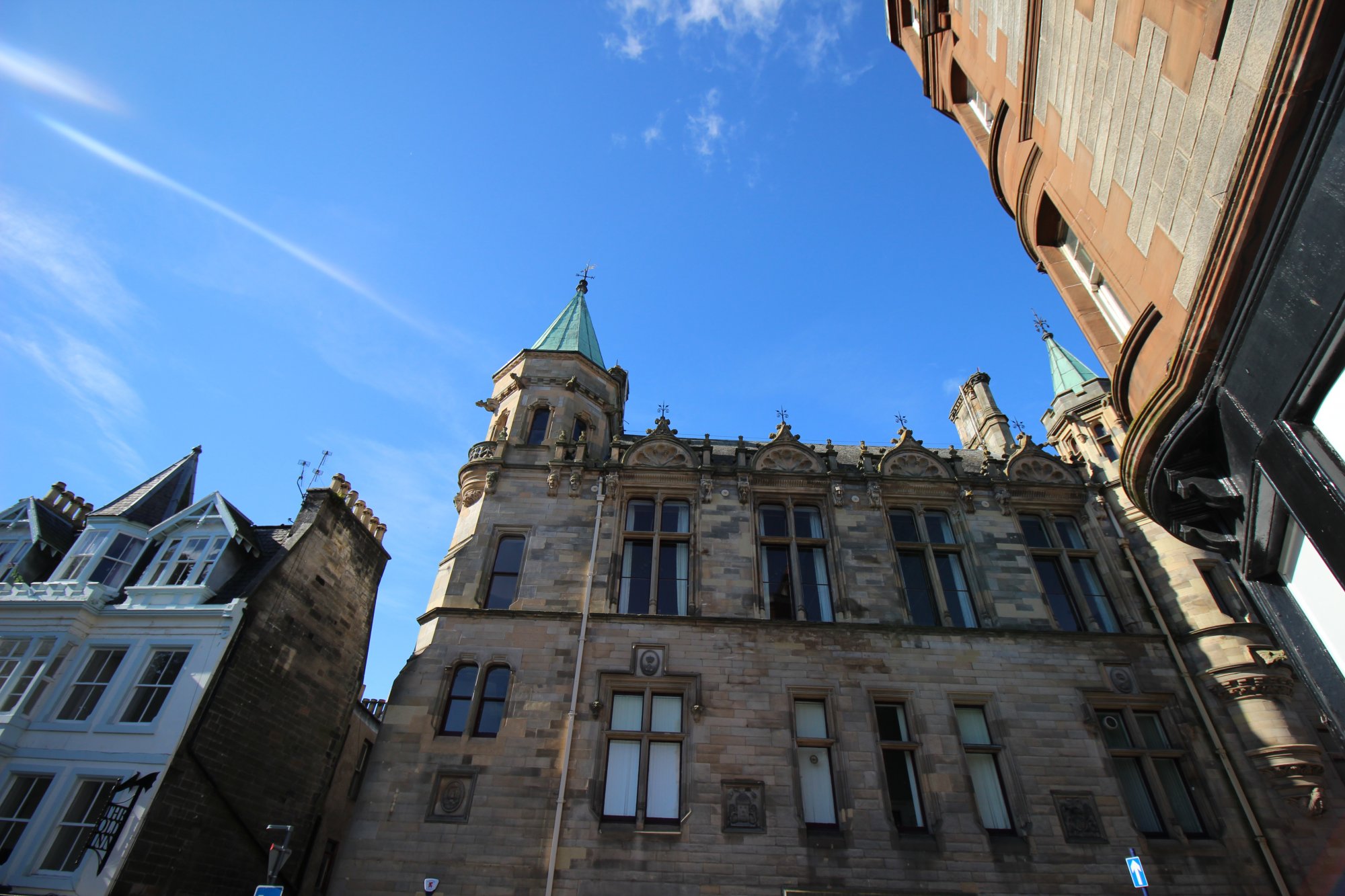
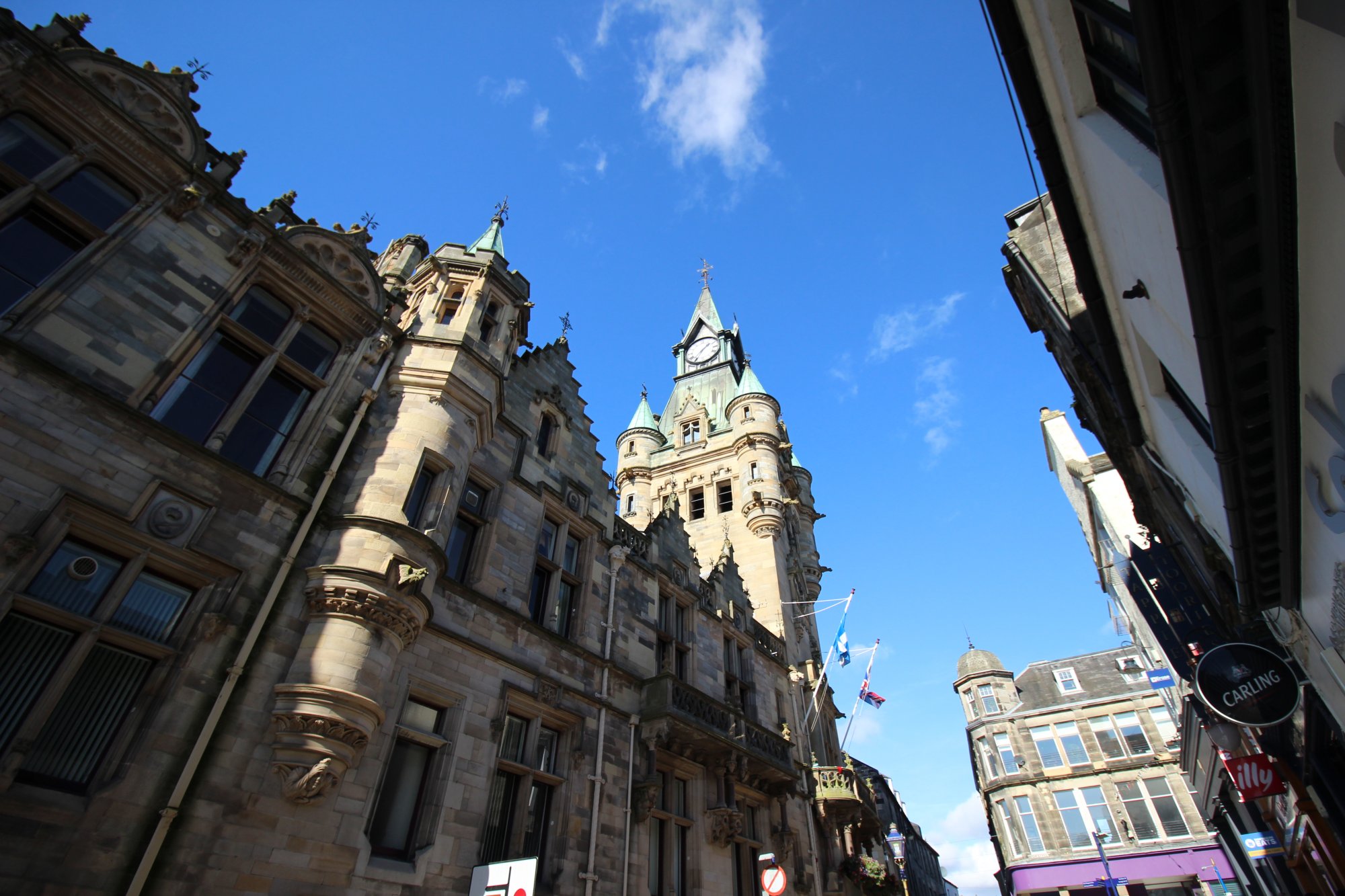
Dunfermline Old Town has witnessed some of the most critical turning points in British history. It was the birthplace of numerous Scottish monarchs, including King Charles I—the last British monarch born on Scottish soil. As you wander past the mercat cross and the grand, French-Gothic style Dunfermline City Chambers (complete with its towering 150-foot clock tower), you step through the layers of a town that transitioned from a sacred medieval sanctuary into a global powerhouse of linen manufacturing during the Industrial Revolution. This rich textile boom heavily reshaped the Old Town, leaving behind an artistic legacy of grand libraries, baths, and institutes funded by the town's most famous son, the industrialist and philanthropist Andrew Carnegie.
A Compact Urban Exploration: Maygate and the Heritage Quarter
The best way to experience Dunfermline Old Town is entirely on foot, allowing you to appreciate the intricate details of the Heritage Quarter. A classic walking itinerary through the ancient center smoothly showcases several key sights:
- The Maygate and Kirkgate: These narrow, atmospheric lanes are lined with independent cafes, historic pubs, and antique shops. The view looking down the cobbled slope of Kirkgate toward the grand imposing gates of the Abbey is one of the most photographed vistas in Fife.
- The Dunfermline Carnegie Library & Galleries: This spectacular modern award-winning building seamlessly integrates a contemporary museum and art gallery with the world's very first Carnegie-funded library, built in 1883. It offers a brilliant, interactive look into the social and industrial history of the Old Town.
- The Birthplace Museum: Located on the southern edge of the historic center, you can visit the humble, tiny weaver’s cottage where Andrew Carnegie was born in 1835, illustrating the dramatic leap from working-class industrial roots to global wealth.
Visiting in 2026: Practical Advice
In 2026, Dunfermline Old Town is a highly accessible and rewarding day-trip destination, located less than 40 minutes from central Edinburgh via regular train services to Dunfermline City station. The historic core is exceptionally pedestrian-friendly, with excellent directional signage guiding visitors between the various heritage sites. While the cobblestone streets and historic lanes provide immense atmosphere, they can be uneven and steep in places, making comfortable, sturdy walking shoes a necessity. Visitors will find a fantastic selection of local eateries, traditional bakeries, and historic inns interspersed throughout the old buildings, perfect for a relaxed lunch break during a day of historic sightseeing.
Conclusion: The Timeless Heart of Fife
Dunfermline Old Town proves that a city's ancient soul can thrive harmoniously alongside modern life. It is an urban landscape shaped equally by the footsteps of medieval royalty, the smoke of industrial looms, and the vision of forward-thinking philanthropists. Wandering through its quiet wynds, admiring its sandstone facades, and feeling the deep historical gravity of its ancient squares provides a profoundly authentic and memorable Scottish experience that uncovers the very foundation of the nation's royal heritage.