



Duncansby Head: The Wild, Fang-Like Stacks of the Far North
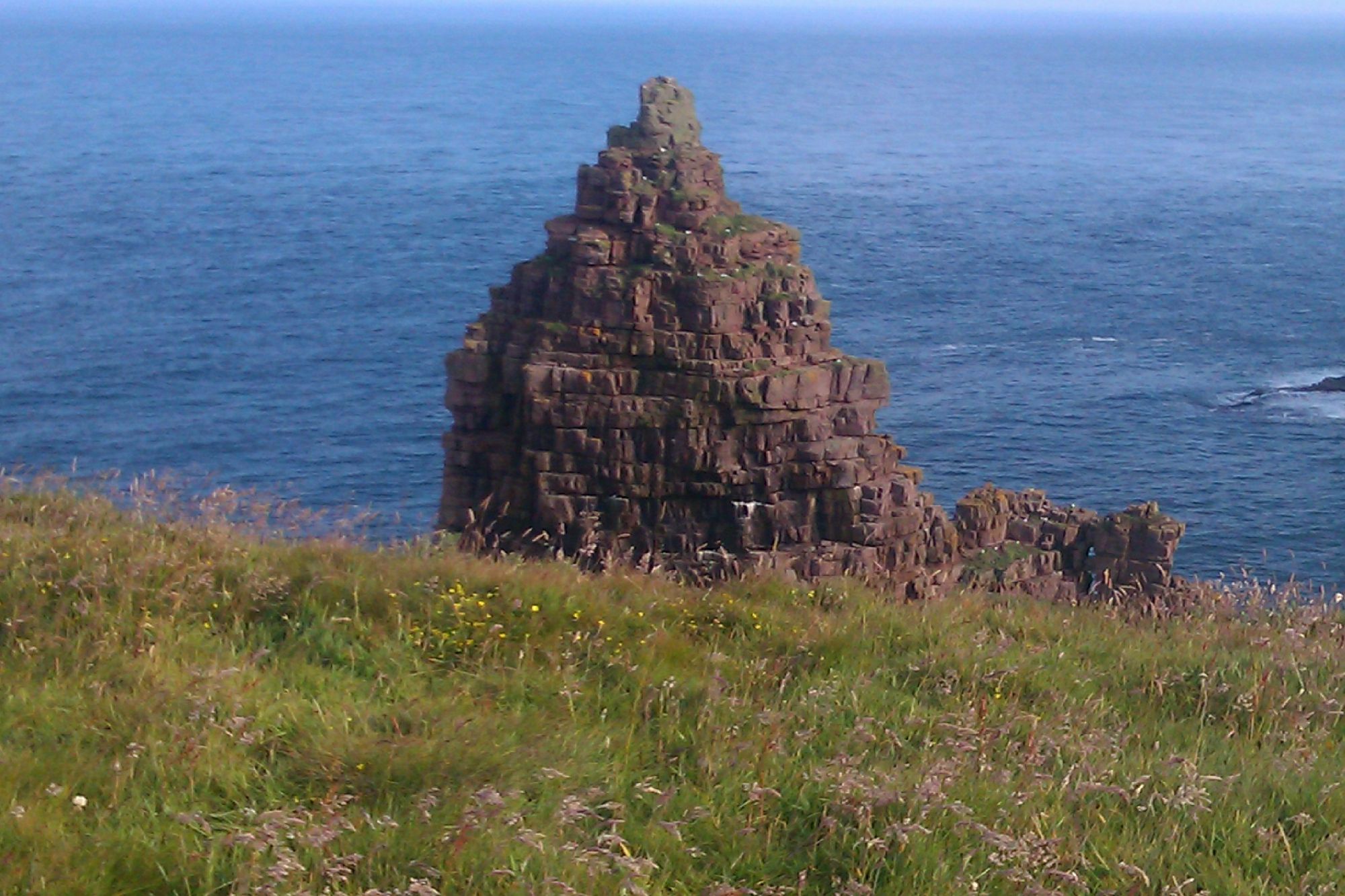
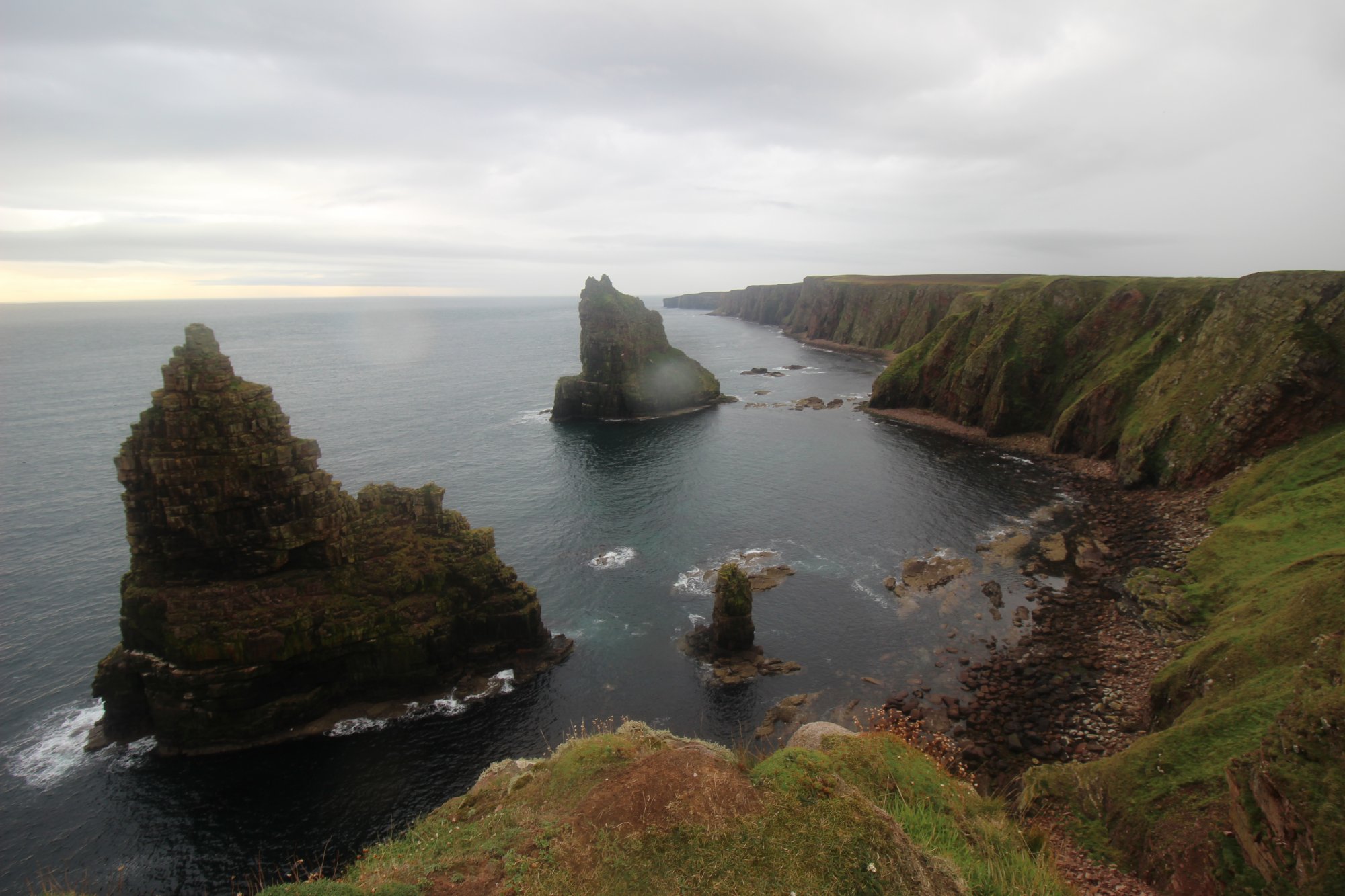
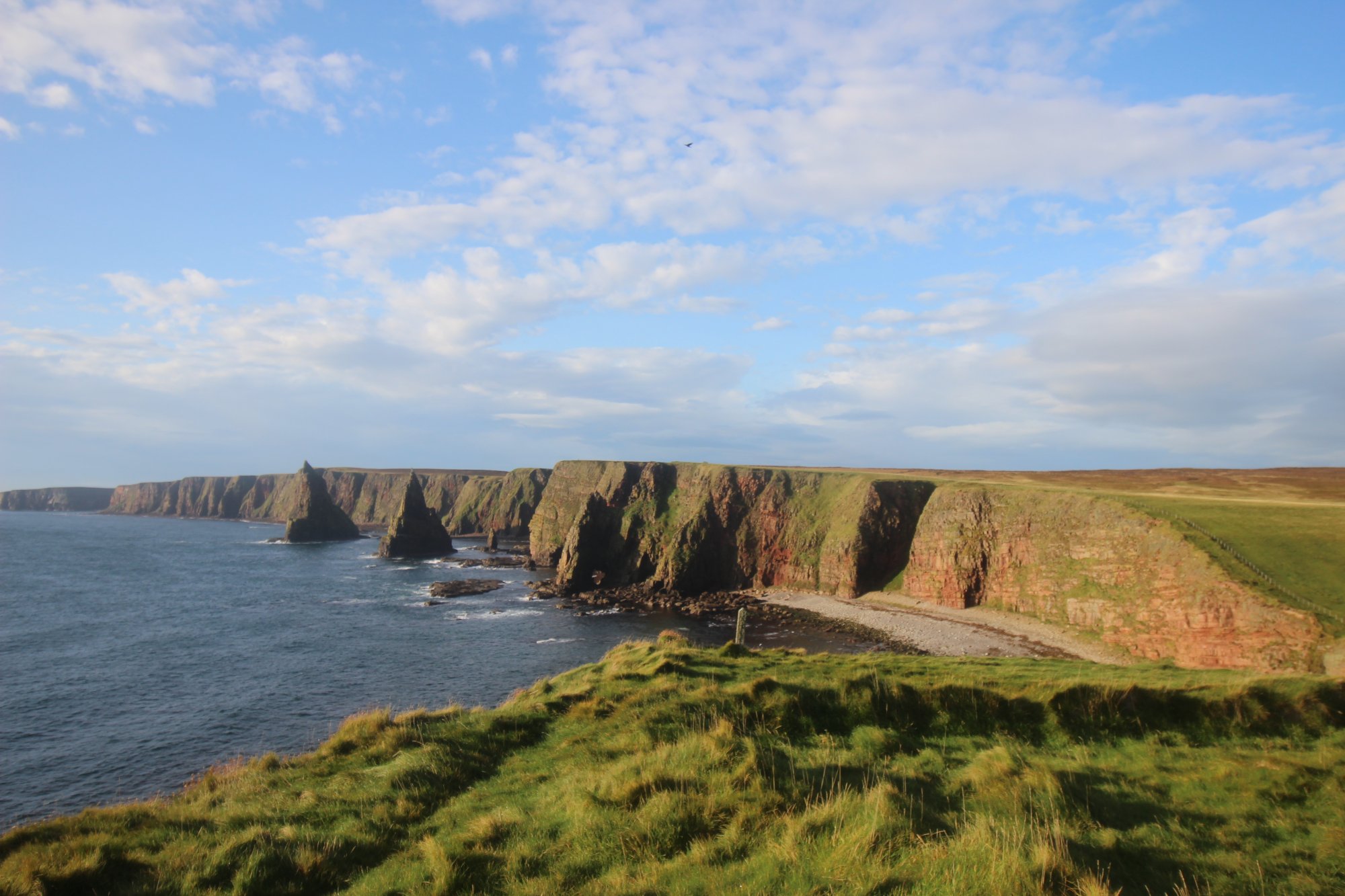
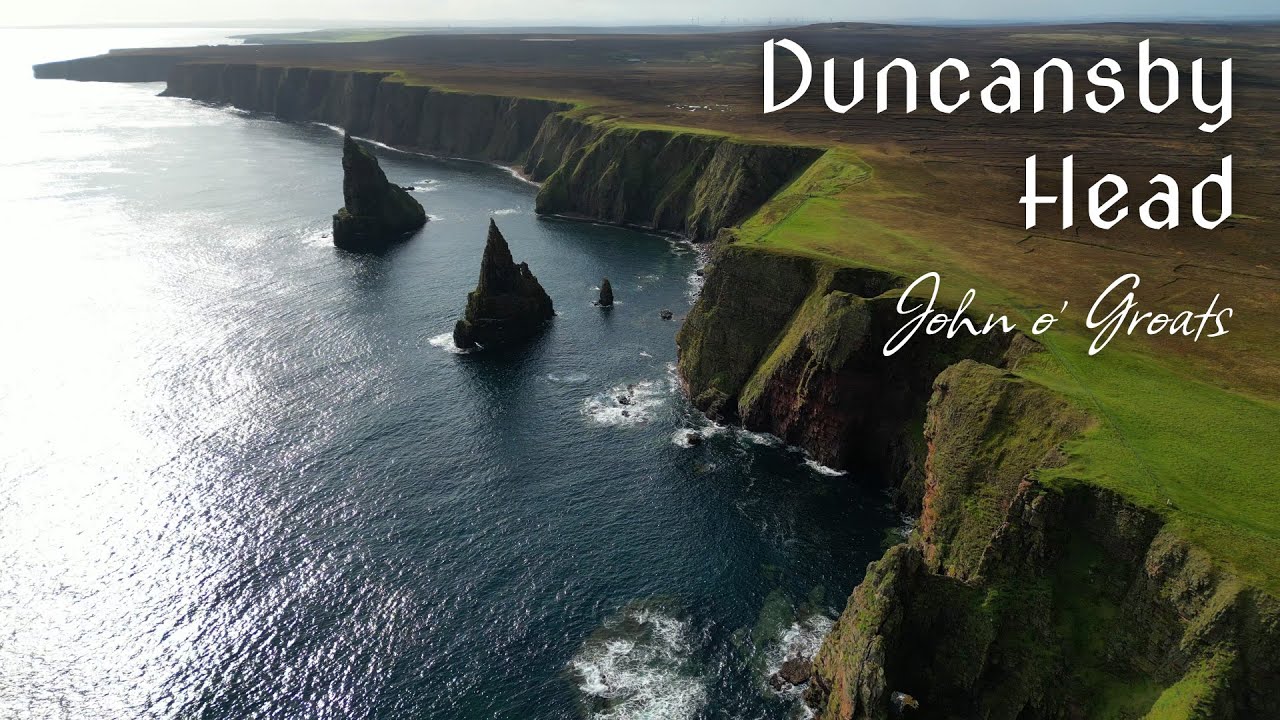
Perched at the extreme northeastern tip of the British mainland near the small village of John o' Groats, Duncansby Head is a place of raw, windswept grandeur and dramatic coastal geography. While many travelers flock to John o' Groats for the famous signpost, the true natural spectacle lies just a few miles east along this rugged peninsula. Duncansby Head is internationally renowned for its spectacular, jagged coastline and the breathtaking Stacks of Duncansby—colossal, tooth-like sea stacks that rise defiantly out of the churning Atlantic waters like giant stone fangs. Guarding these treacherous waters is a historic, scenic lighthouse, making the headland an essential, unforgettable milestone for anyone exploring the iconic North Coast 500 (NC500) route.
The Cold War Secret: How Scottish Weather Saved the Stacks
Beyond its immense natural beauty, Duncansby Head harbors a fascinating and terrifying piece of hidden Cold War history. In 1953, scientists from the British Atomic Weapons Establishment (AWE) in Aldermaston actually proposed using the Stacks of Duncansby as a live nuclear test area. The government was remarkably close to detonating an atomic device right here, which would have blasted these ancient rock formations completely off the face of the earth. Fortunately for modern travelers and local wildlife, the notoriously unpredictable and wet Scottish weather stepped in to save the day. The damp, moisture-laden atmosphere proved to be too much of a hazard for the sensitive, contemporary electronic testing equipment of the 1950s. The experiment had to be postponed and was ultimately shelved indefinitely, preserving the pristine stacks for future generations.
Navigating the Trail: Grassy Pastures and Cliffside Vistas
Exploring the headland requires a relatively short but incredibly scenic walk that brings you face-to-face with the raw power of marine erosion. The practical approach can be broken down into a simple, rewarding trek:
- The Lighthouse Car Park: The journey begins near the automated Duncansby Head Lighthouse, designed by David Alan Stevenson and first lit in 1924. While there is a sizeable parking area, it serves as a primary highlight on the eastern side of the NC500 and fills up incredibly fast, even outside the peak summer tourist season. Arriving early or late in the afternoon is highly recommended.
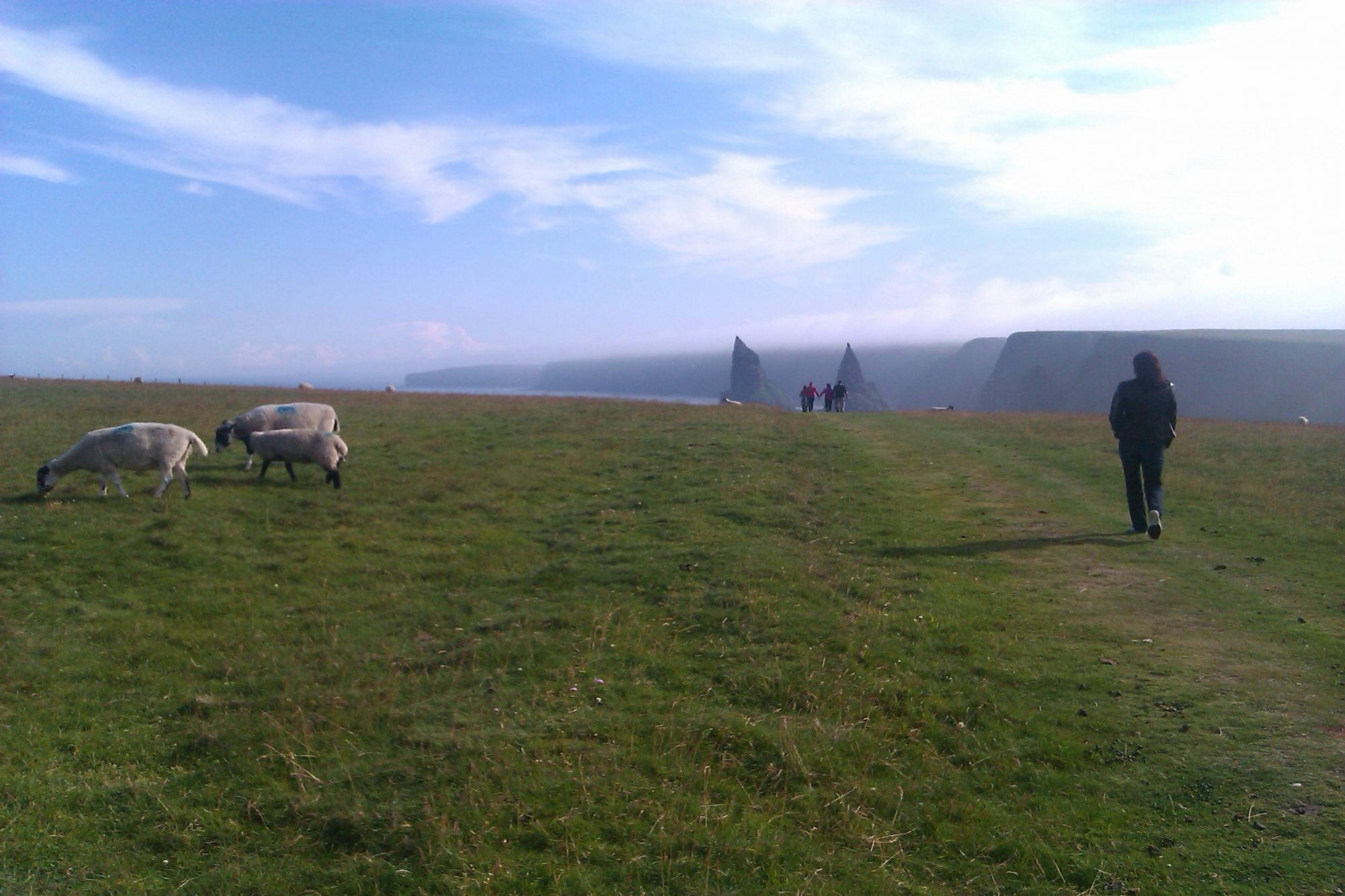
- The Coastal Path: From the car park, a clear path leads visitors through rolling, green, grassy pastures populated by local sheep, steadily climbing along the edges of dramatic cliffs and deep sea chasms (known locally as geos).
- The Main Viewpoint: After an easy 30-minute walk, you arrive at the main cliffside vantage point situated directly over the massive sea stacks. From here, the scale of the rock pillars—towering up to 60 meters above the sea—becomes beautifully apparent, surrounded by thousands of nesting seabirds during the spring and summer months.
The Hidden Rope Descent: A Secret Beach Adventure
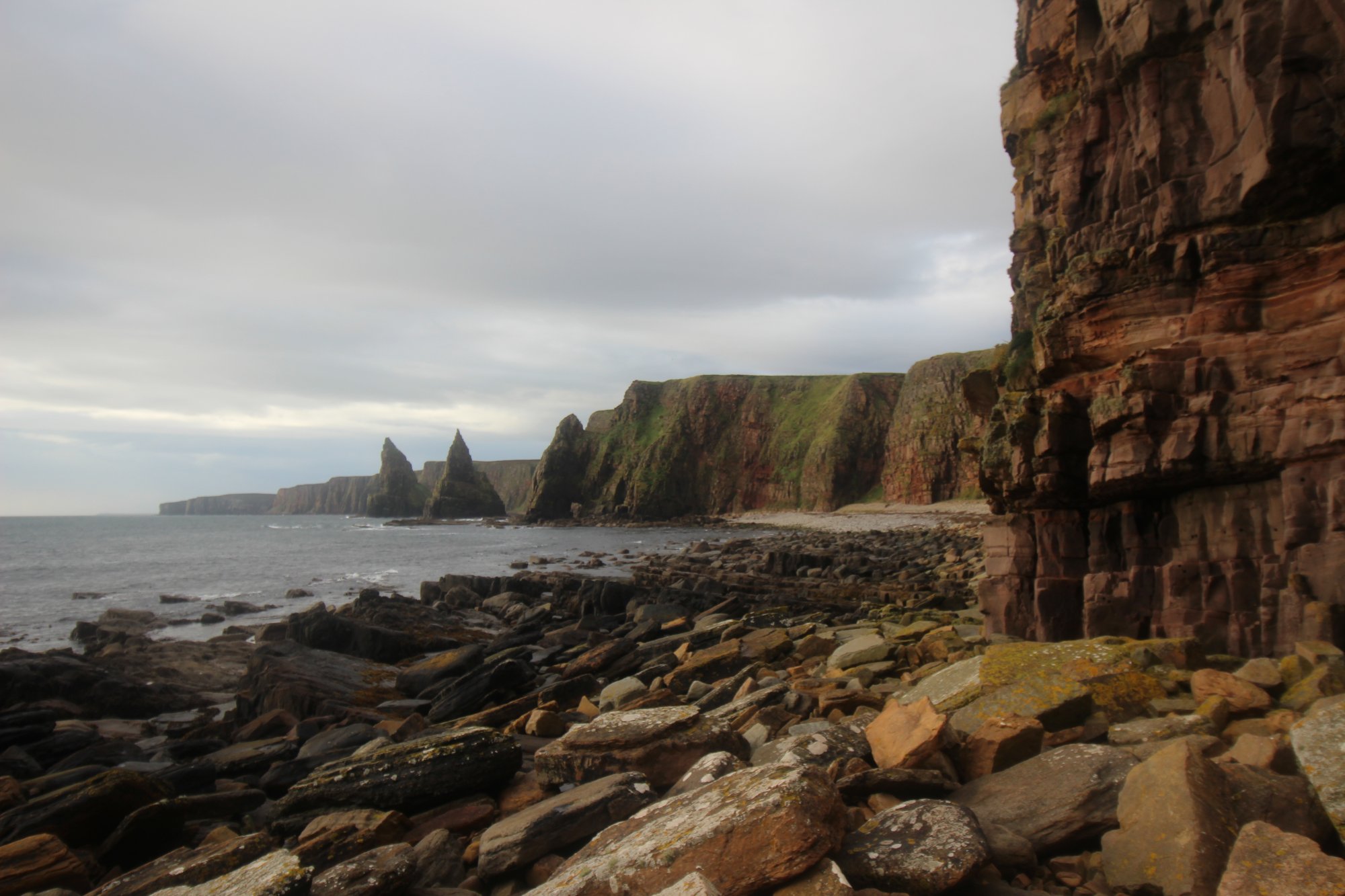
For those with a keen sense of adventure and steady footing, the journey offers a thrilling detour before you reach the main stacks. Along the cliff path, there is a steep, hidden gully where independent explorers have rigged a handy guide rope to assist walkers down the near-vertical slope. This challenging, slippery scramble leads directly down to the rocky, boulder-strewn beach hidden beneath the towering cliff face. While it is certainly not the easiest climb down and requires extreme caution, it offers an incredible, close-up perspective of the geological layers. For younger explorers with good agility—such as our nine-year-old, Annie—this hands-on rope scramble is often remembered as the single best and most exciting attraction in the entire area.
Conclusion: A Majestic Northern Sentinel
Duncansby Head stands as a brilliant testament to the wild, untamed spirit of the Scottish Highlands. It is a location where dramatic geology, military near-misses, and maritime engineering collide on the edge of the continent. Standing on the high cliffs, watching the North Sea crash against stone pillars that were almost turned to atomic dust, provides a profound sense of perspective. Whether you are capturing the perfect long-exposure photograph of the fangs, birdwatching from the grassy plateaus, or braving the rope descent to the rocky shore below, Duncansby Head remains a raw and essential highlight of Scotland's northern wilderness.