


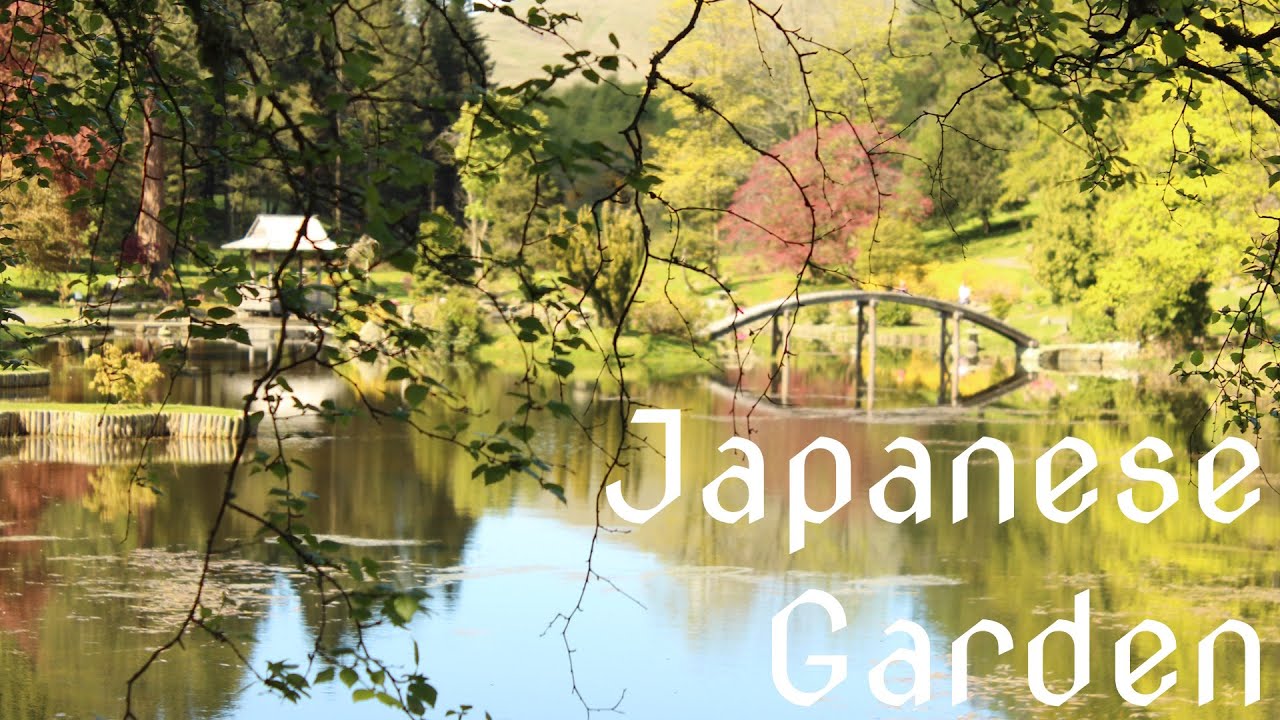

The Japanese Garden at Cowden: A Sanctuary of Reborn Tranquility
Tucked away in the rolling countryside of Clackmannanshire near the town of Dollar, The Japanese Garden at Cowden is one of the most unique, serene, and historically significant gardens in the UK. Originally created in the early 20th century, this hidden seven-acre sanctuary holds the distinction of being the first and only garden of its scale and design in Western Europe to be created by a woman. For anyone looking to step away from the rugged, dramatic landscapes of the Scottish hills and into a space of meticulous artistry, Cowden offers an unforgettable shift in pace. It is a living bridge between Scottish geography and traditional Japanese philosophy, where carefully manicured flora, reflective waters, and authentic architectural features combine to create a profound atmosphere of absolute stillness and contemplation.
The Vision of Ella Christie and Taki Handa
The story of the garden begins with Ella Christie, a remarkably adventurous Scottish globetrotter who became fascinated by Asian landscape design during her travels to the Orient in 1907. Inspired by what she saw, she returned to her estate at Cowden Castle determined to bring a piece of Japan to the Ochil hills. To achieve true authenticity, Christie bypassed fashionable Western imitations and directly chose Taki Handa, a highly talented female Japanese garden designer who was studying at Studley College at the time. Together, these two pioneering women transformed a standard piece of Scottish parkland into an authentic stroll garden. Handa meticulously selected the layout, choosing plants and shaping the ground to reflect deep spiritual meaning, making it a rare example of a traditional Japanese layout successfully taking root in Scottish soil.
Destruction, Survival, and the Great Restoration
Though the garden flourished for decades—even being described by the modern Japanese ambassador to the UK as "the most important Japanese garden in the Western world"—it suffered a tragic period of near-total destruction. Following Ella Christie's death, the estate fell into decline, and in 1963, a devastating act of vandalism saw the tea houses burned down, lanterns smashed, and the unique wooden bridges thrown into the lake. The garden sat abandoned and overgrown, reclaimed by wilderness for over fifty years. The miracle of Cowden is its recent, painstaking resurrection. Led by Christie's great-great-niece, Sara Stewart, a dedicated trust brought in world-renowned Japanese garden professor Professor Masao Fukuhara—famous for restoring the Japanese garden at Kew Gardens—to oversee a multi-million-pound restoration. Using historic photographs, Fukuhara restored the garden precisely to its former glory, breathing life back into the stone, wood, and water.
Exploring the Sha Raku En: Key Features
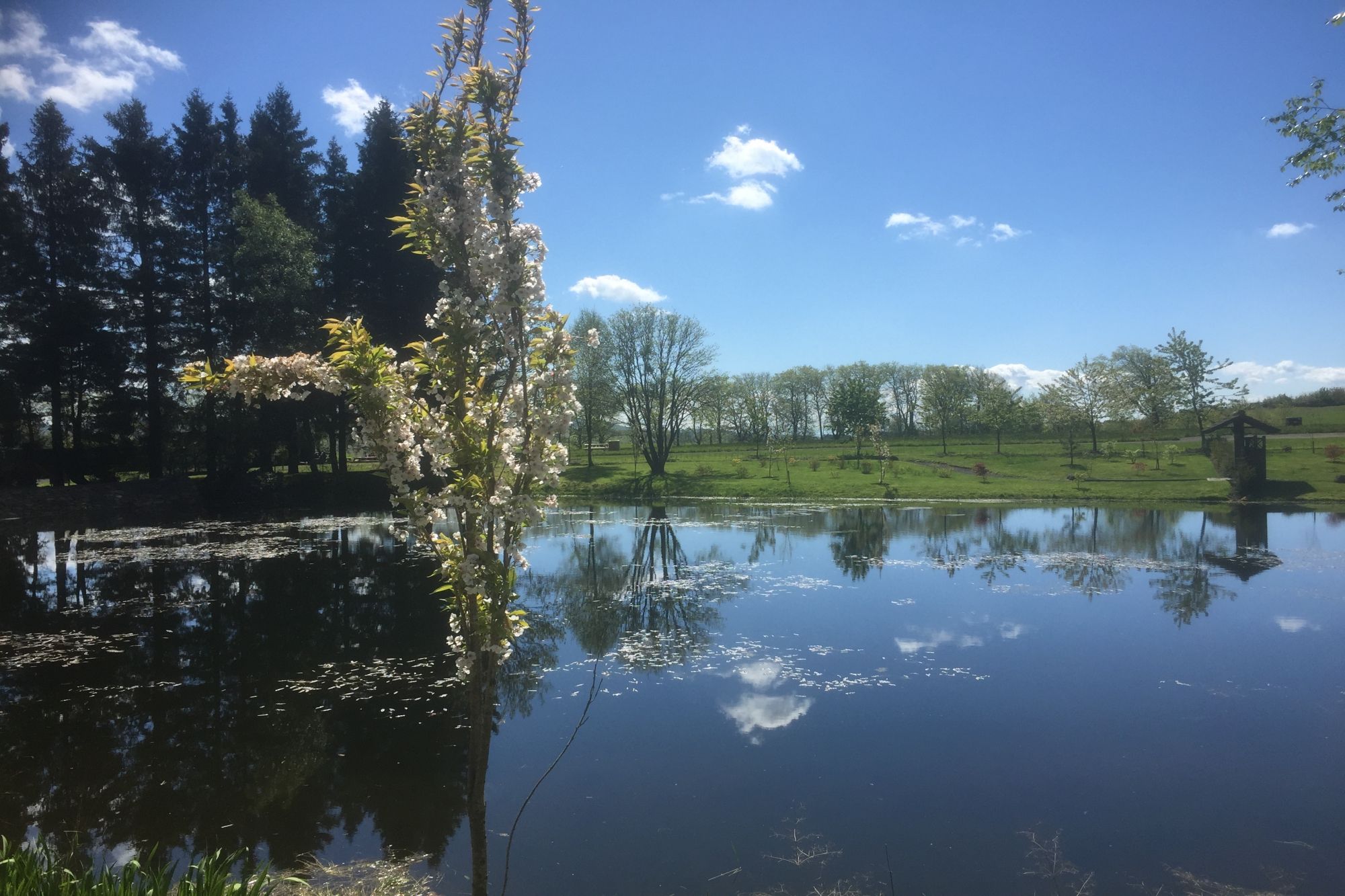
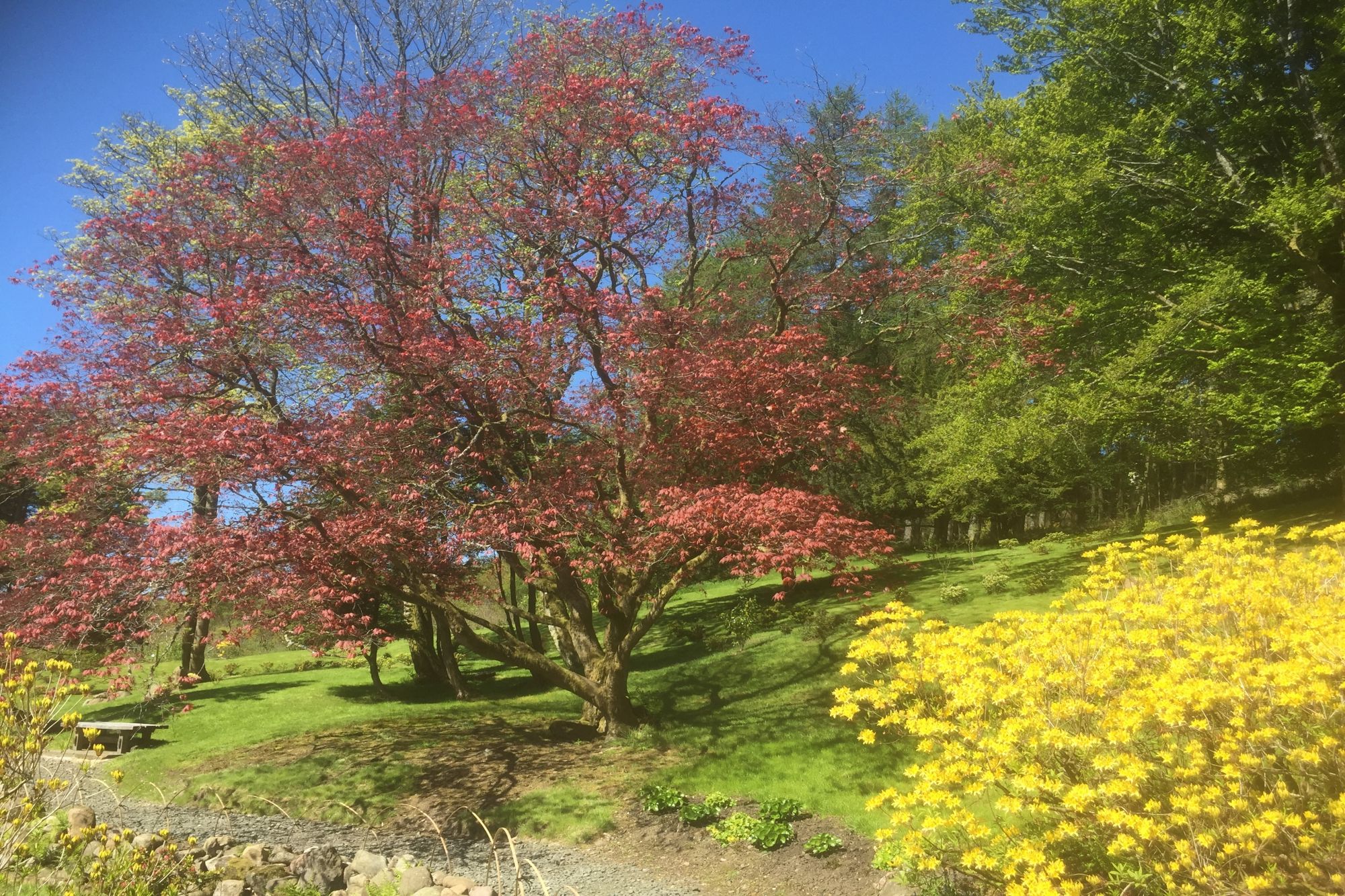
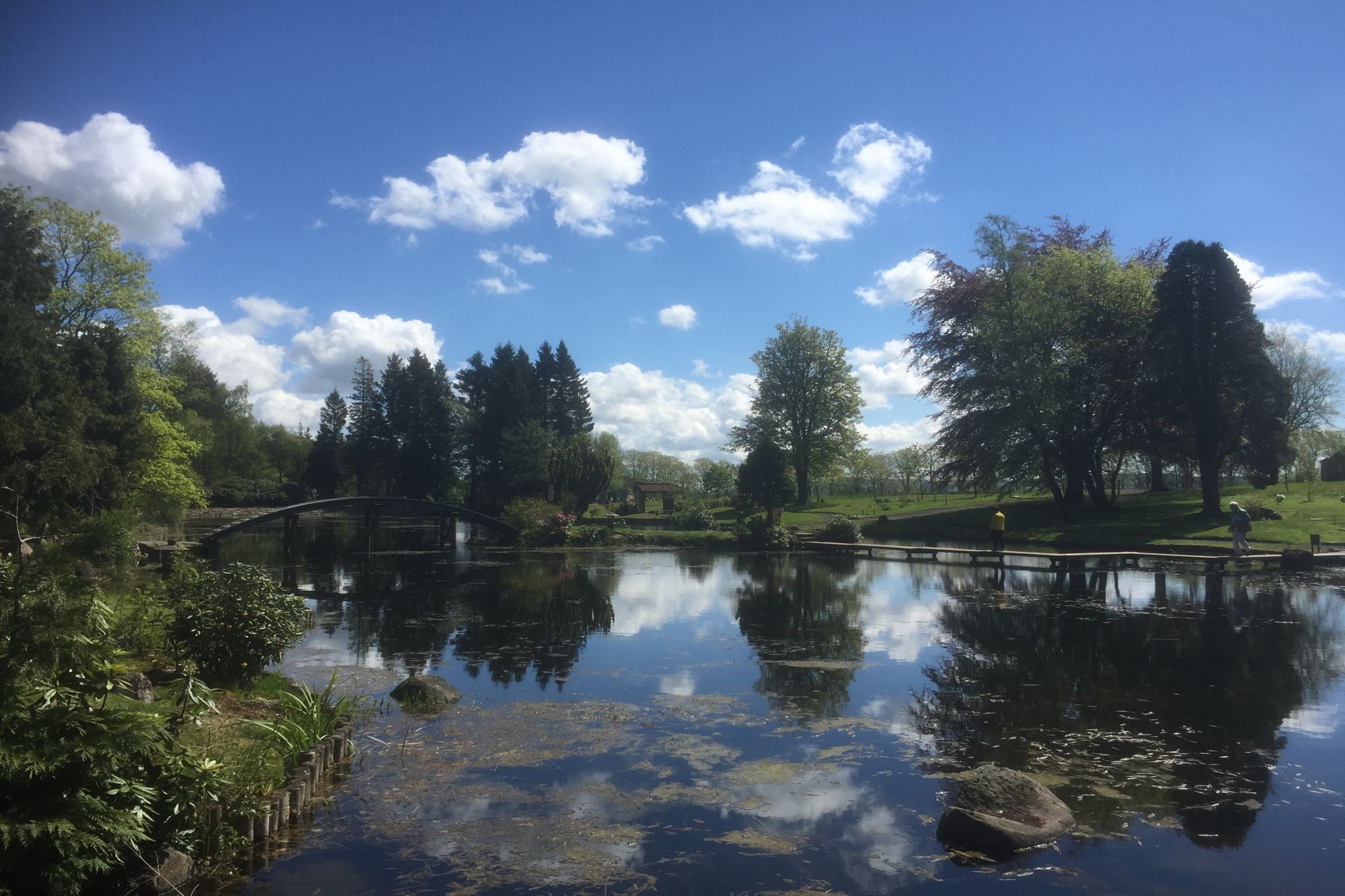
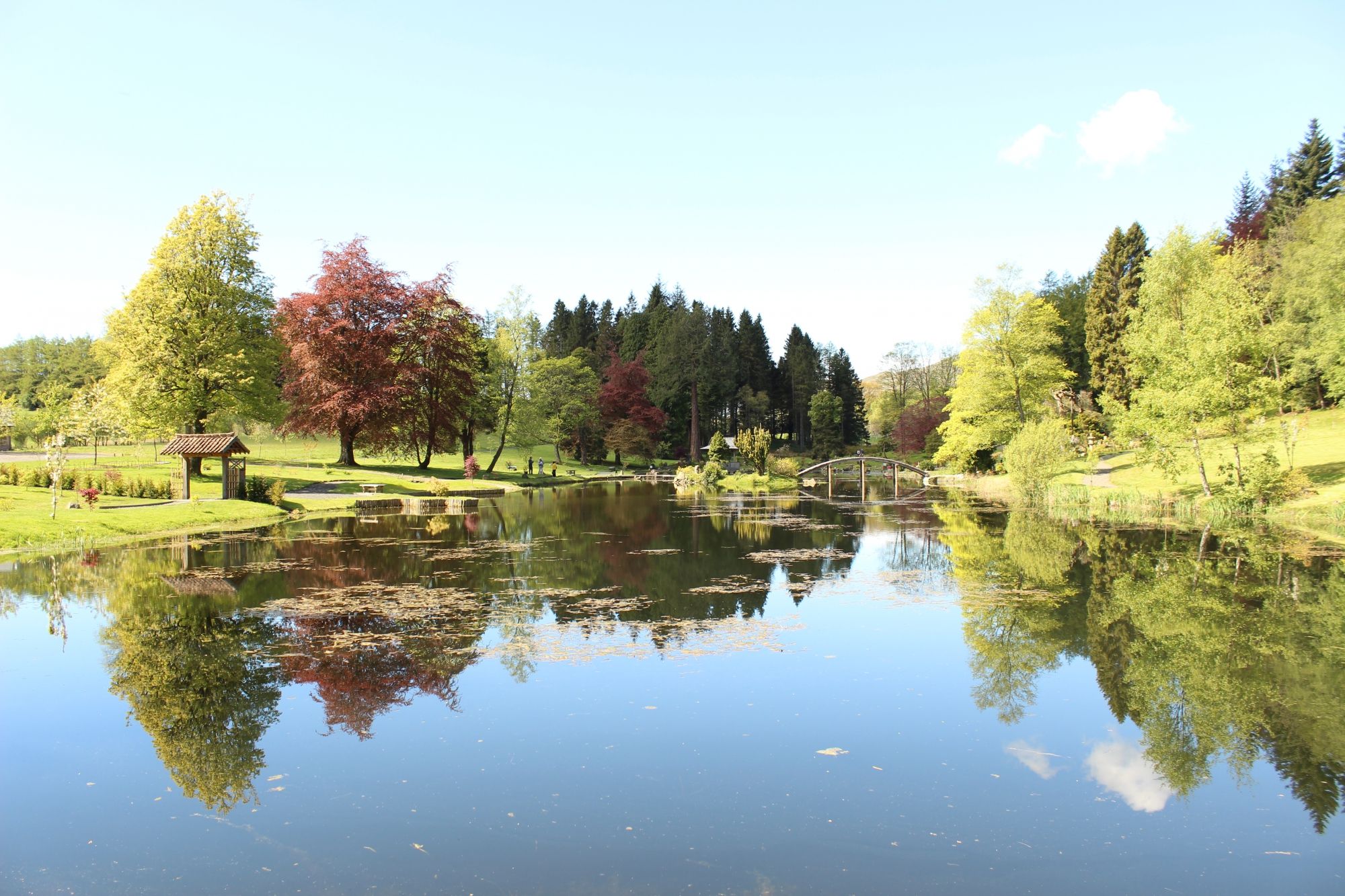
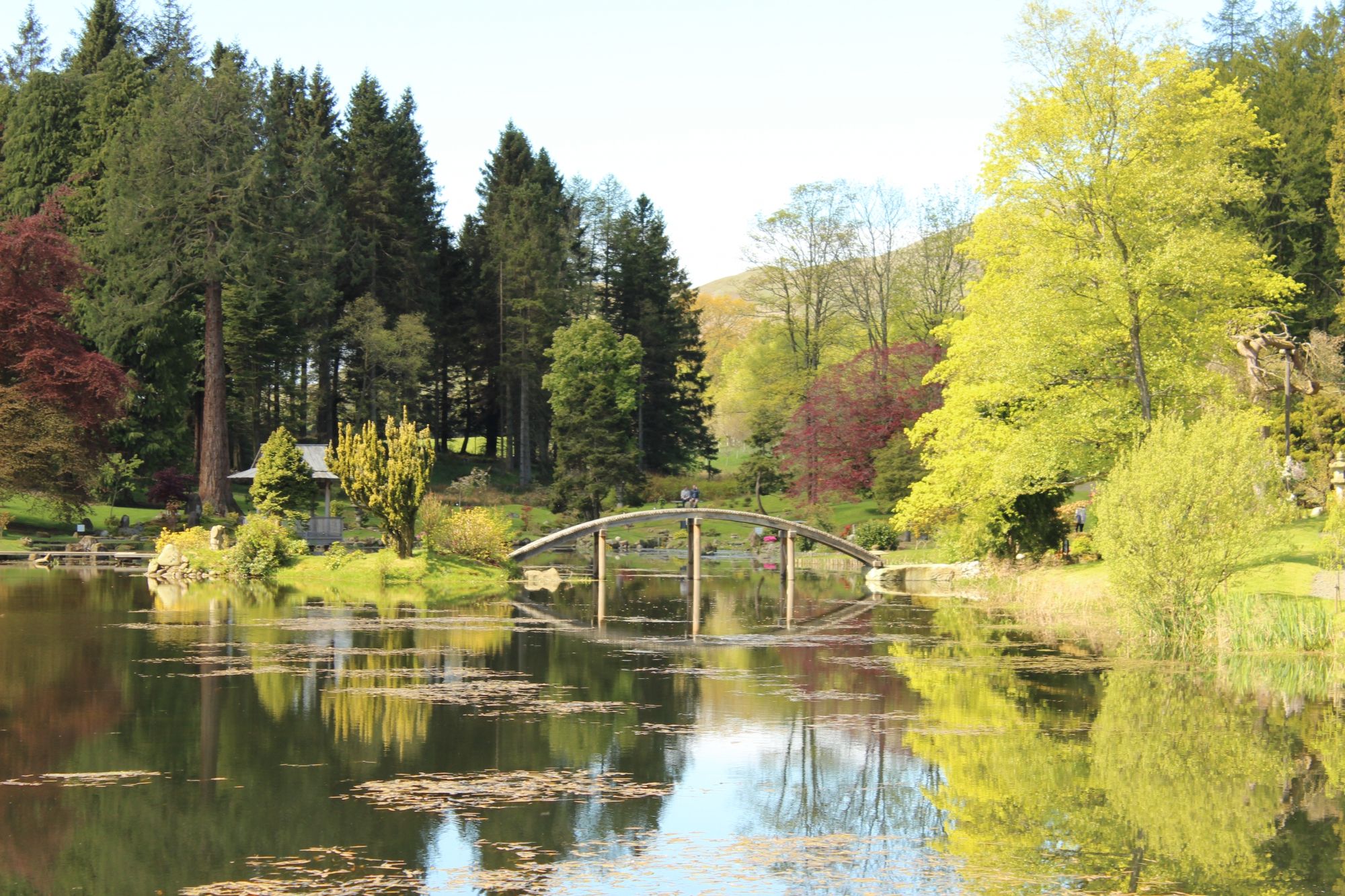
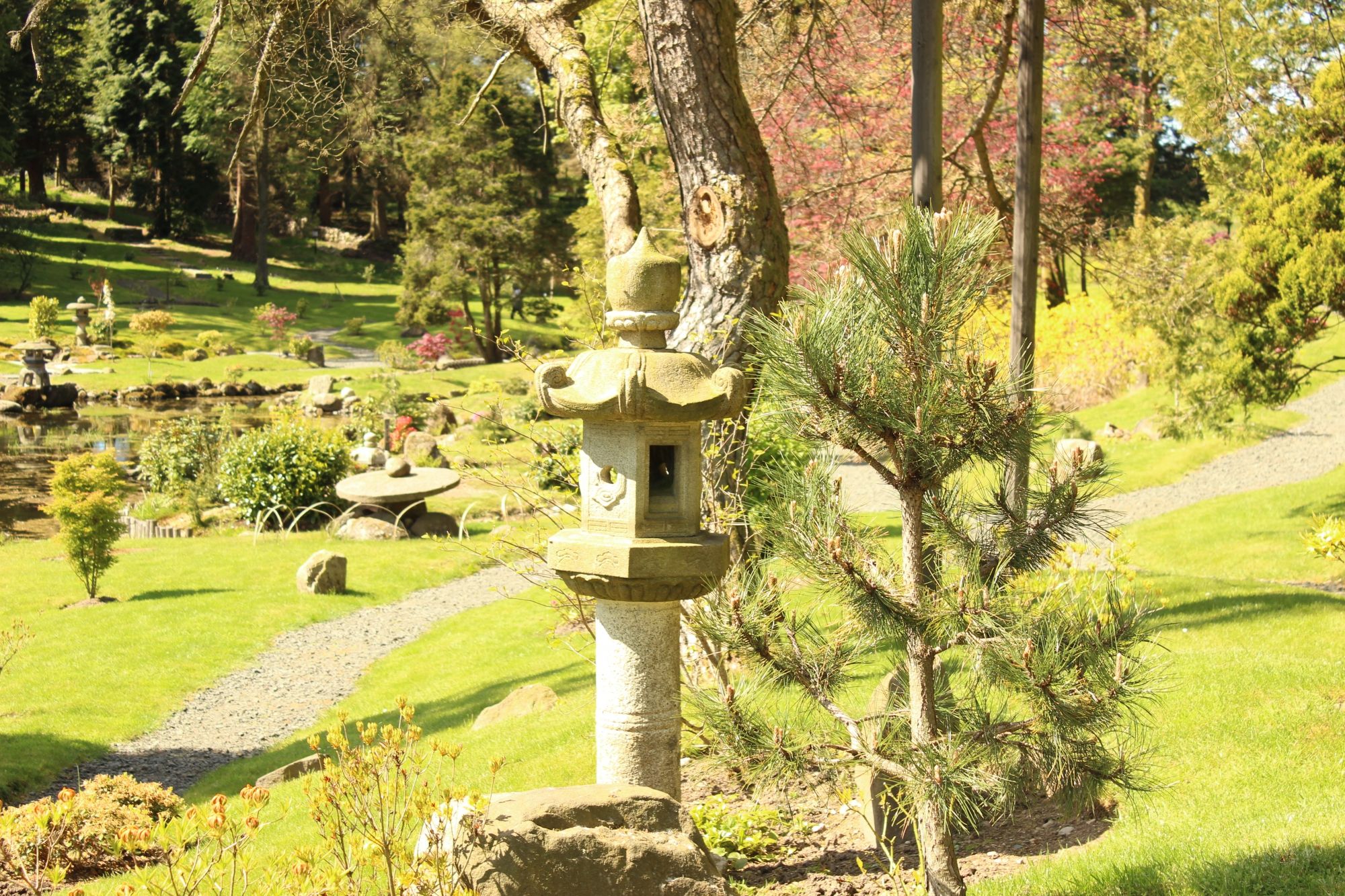
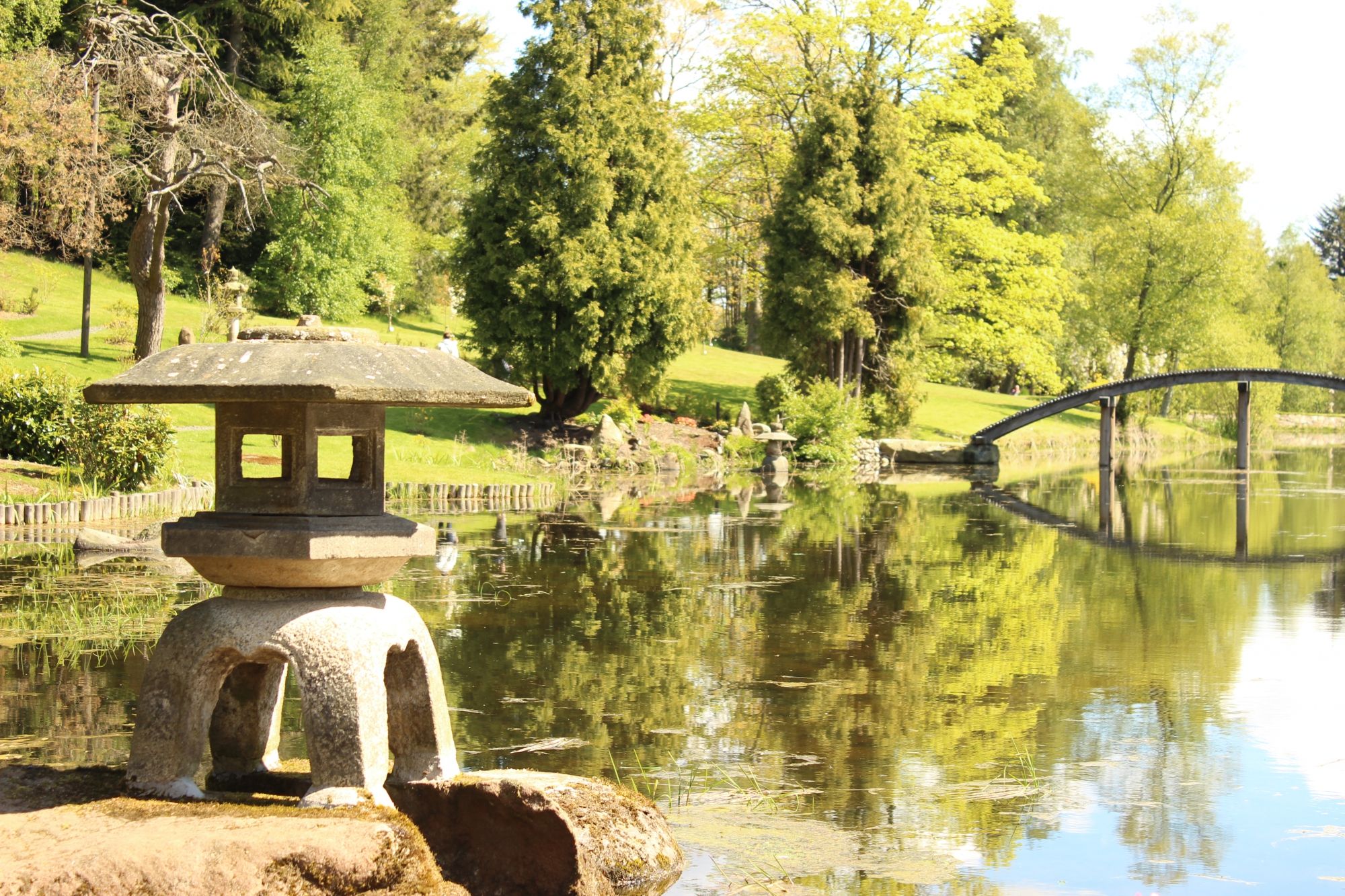
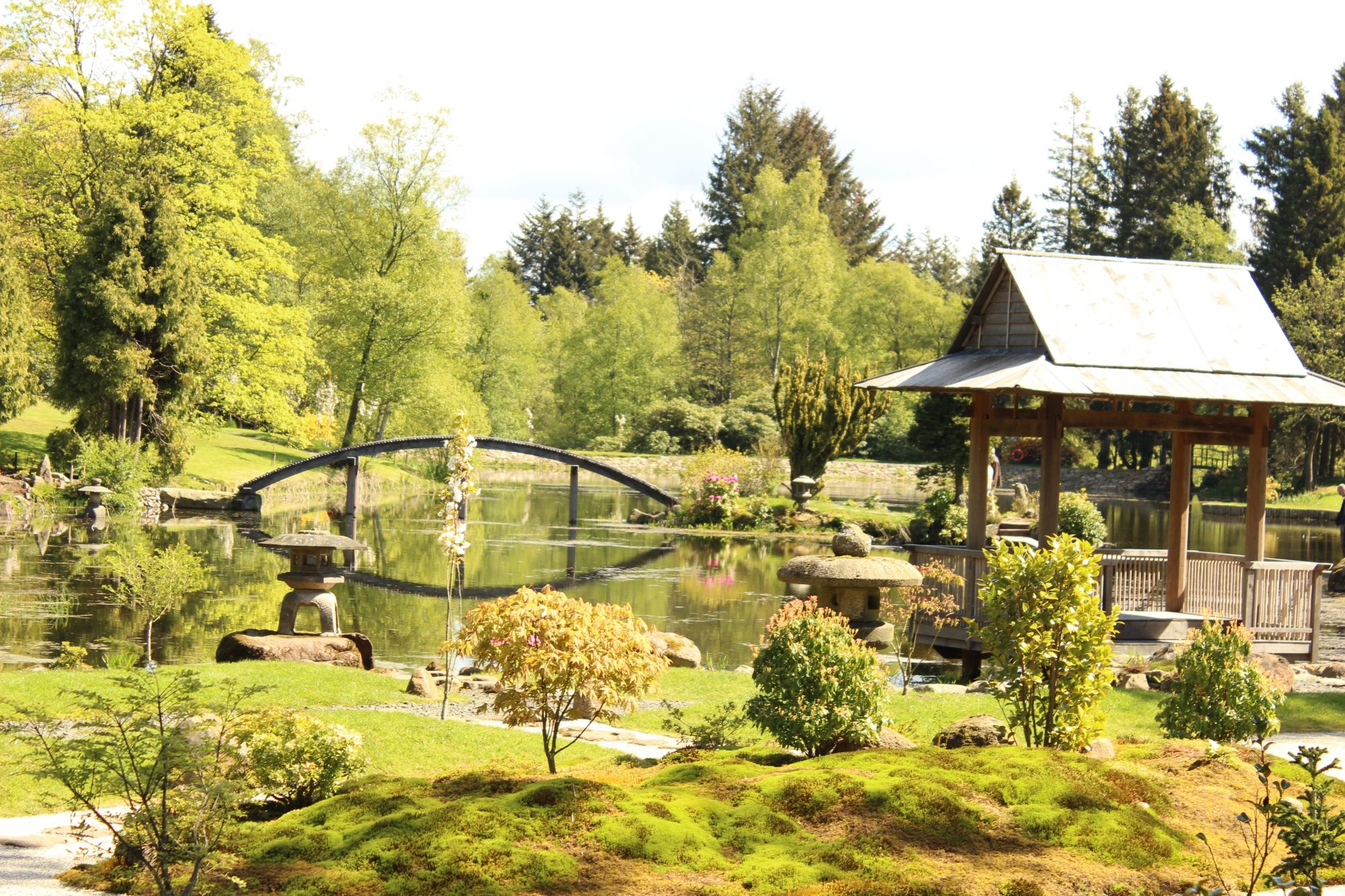
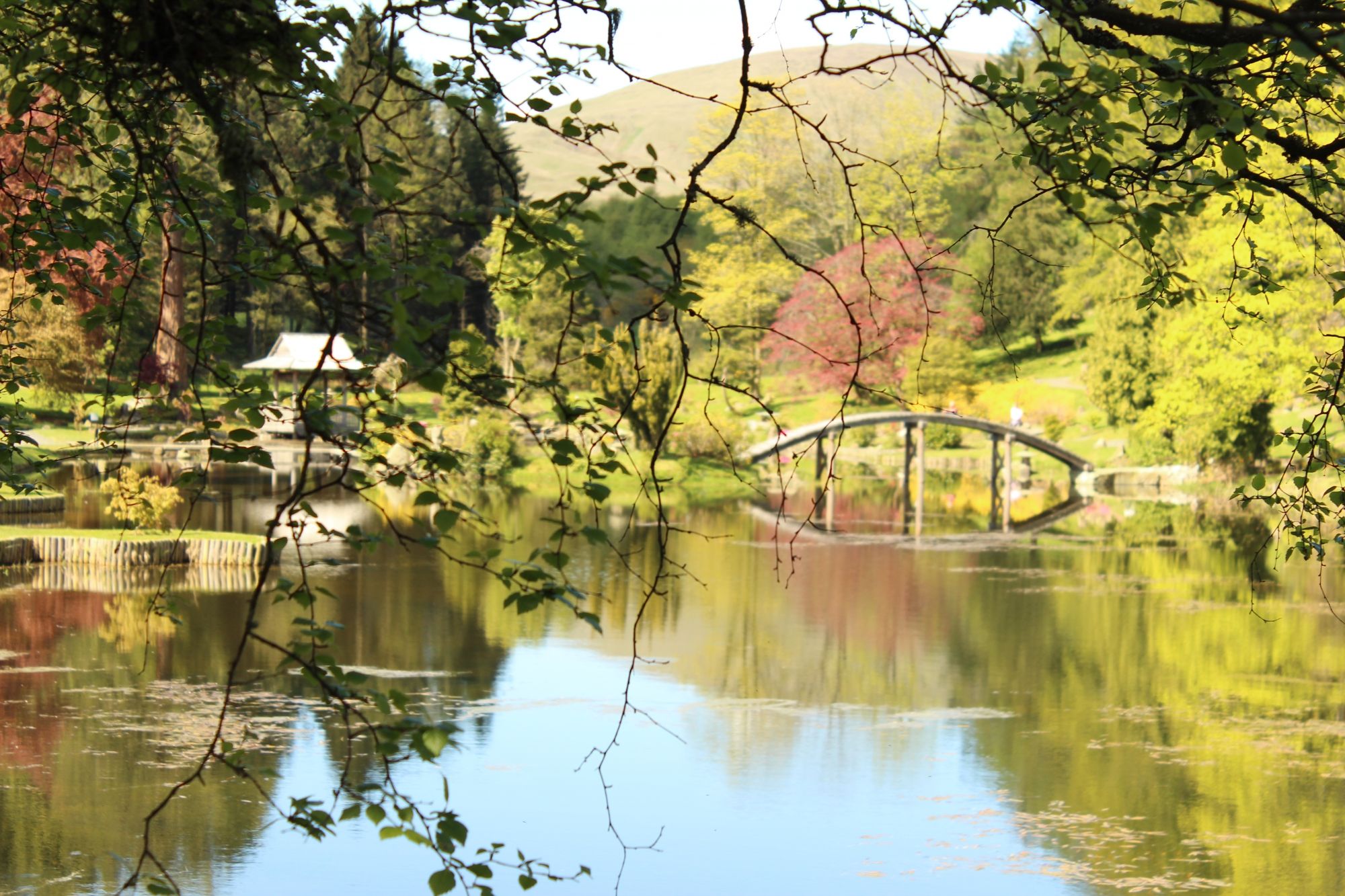
Walking through the gates today feels like entering a perfectly framed painting. The garden is designed as a traditional "stroll garden," where every turn of the path reveals a new, deliberate perspective. The central focal point is the magnificent ornamental loch, which reflects the surrounding weeping willows, acers, and cherry blossoms. Key authentic structures have been completely rebuilt by master craftsmen using traditional methods, including the striking red Zig-Zag Bridge, the floating pavilion, and the authentic Shinto shrine gates. Scattered throughout the moss-covered grounds are ancient stone lanterns that survived the period of neglect, standing as silent witnesses to the garden's survival. The blend of vibrant Japanese maples with the mature Scottish woodland creates a stunning contrast of colors that shifts beautifully with every passing season.
Visiting in 2026: Practical Advice
In 2026, the Japanese Garden at Cowden is open to the public on a seasonal basis, and because it has rightfully gained popularity as a place of peaceful retreat, booking tickets online in advance is highly recommended to secure entry. The site features an excellent visitor center, a highly rated contemporary café serving locally sourced food, and a plant sales area. The main pathways around the water are smooth and well-maintained, making a large portion of the garden accessible, though sturdy walking shoes are still recommended if you plan to explore the adjacent woodland walks. To fully experience the tranquility that Ella Christie intended, visiting on a quiet weekday morning is ideal. This allows you to sit by the water without the weekend crowds, listening only to the wind through the bamboo and the gentle ripple of the lake.
Conclusion: A Triumph of Resilience
The Japanese Garden at Cowden is far more than just a collection of beautiful plants; it is a triumphant story of resilience, cultural bridge-building, and artistic dedication. It proves that even when a masterpiece is seemingly lost to time and malice, vision and passion can bring it back to life. Standing on the wooden bridges today, looking out over the calm water toward the Ochil hills, it is impossible not to feel a deep sense of peace. It remains a stunning, living testament to the shared vision of two extraordinary women who, over a century ago, looked at a Scottish glen and saw a place of pure pleasure and delight.