




Corrie Fee: The Glacial Cathedral of Glen Clova
There are moments in Scottish hiking when the landscape shifts so suddenly that it takes your breath away. The transition from the dense, pine-scented shadows of the Glendoll Forest into the wide, sun-drenched bowl of Corrie Fee is exactly one of those moments. Located at the head of Glen Clova within the Angus Glens, Corrie Fee is often described as a natural cathedral. It is a massive, glacier-carved amphitheater that serves as a stunning finale to the valley. While many visitors to the Cairngorms flock straight to the high plateaus, Corrie Fee offers a majestic, low-level view of mountain grandeur that rivals the famous vistas of Glencoe and easily surpasses the crowded coastal trails of the western islands. It is a place that delivers a sense of scale and wonder that no photograph can fully translate, standing as an absolute favorite destination for hikers who appreciate the deep, preserved stillness of the eastern Highlands.
A Masterpiece of Glacial Sculpture
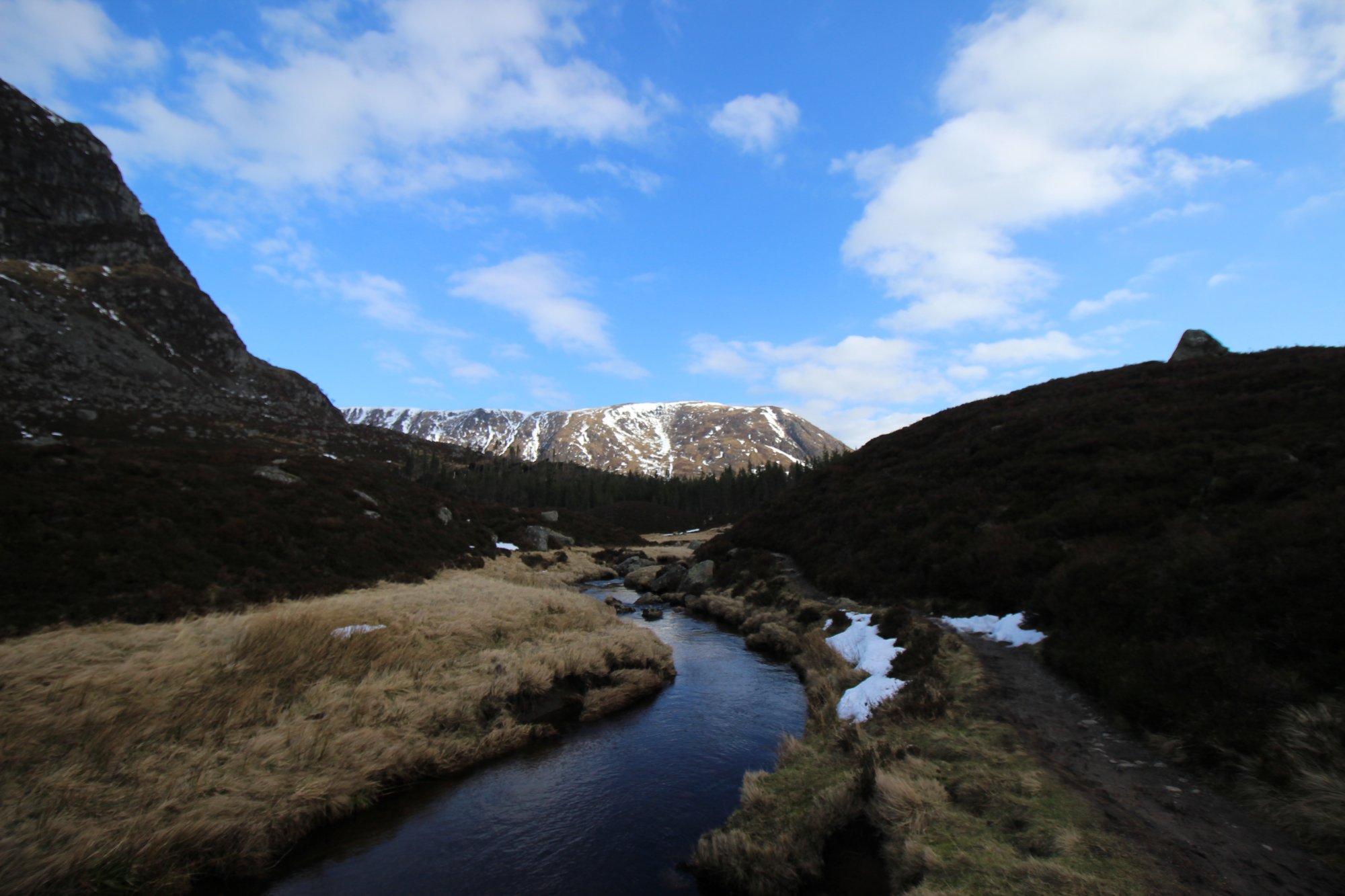
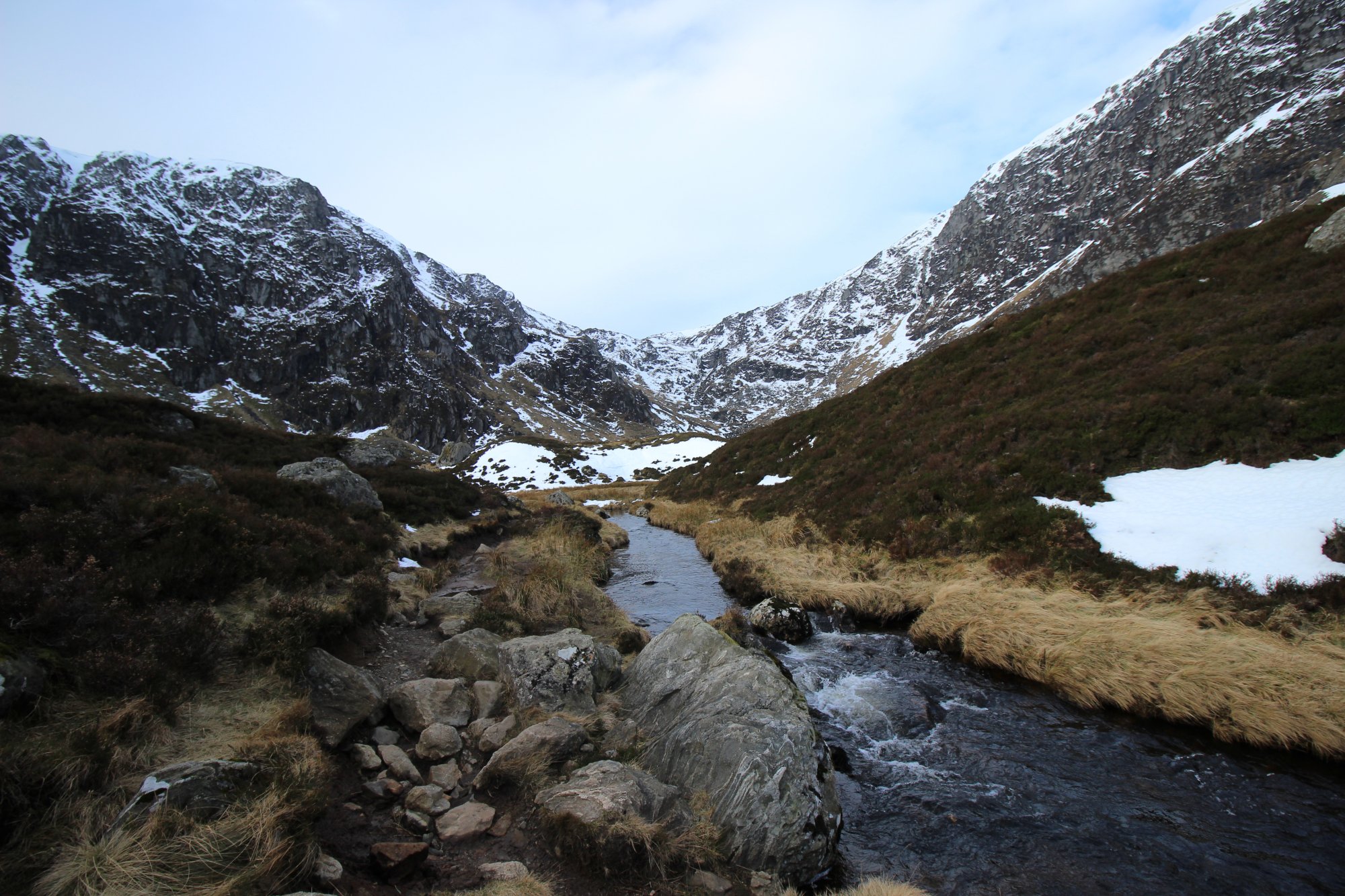
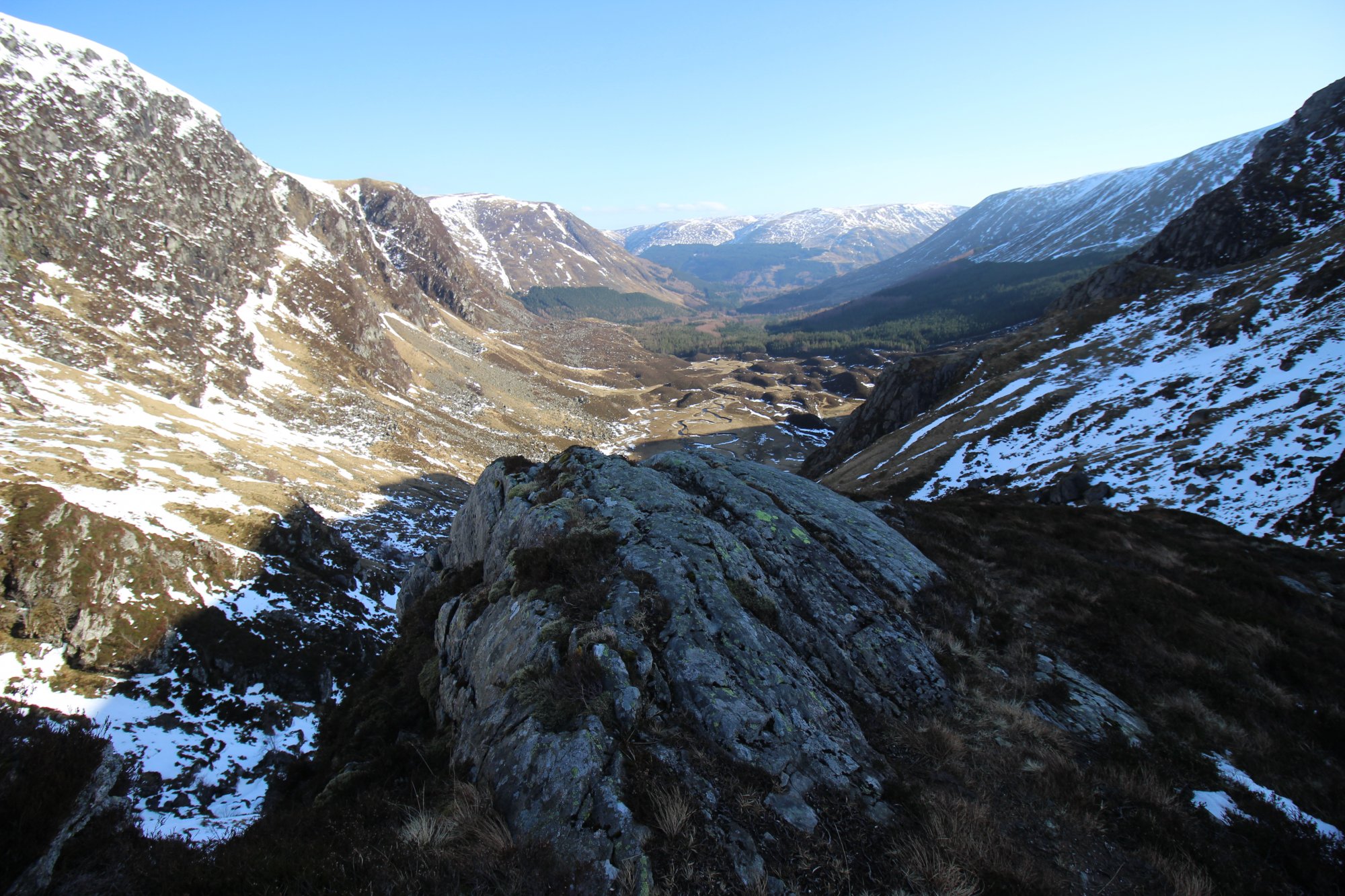
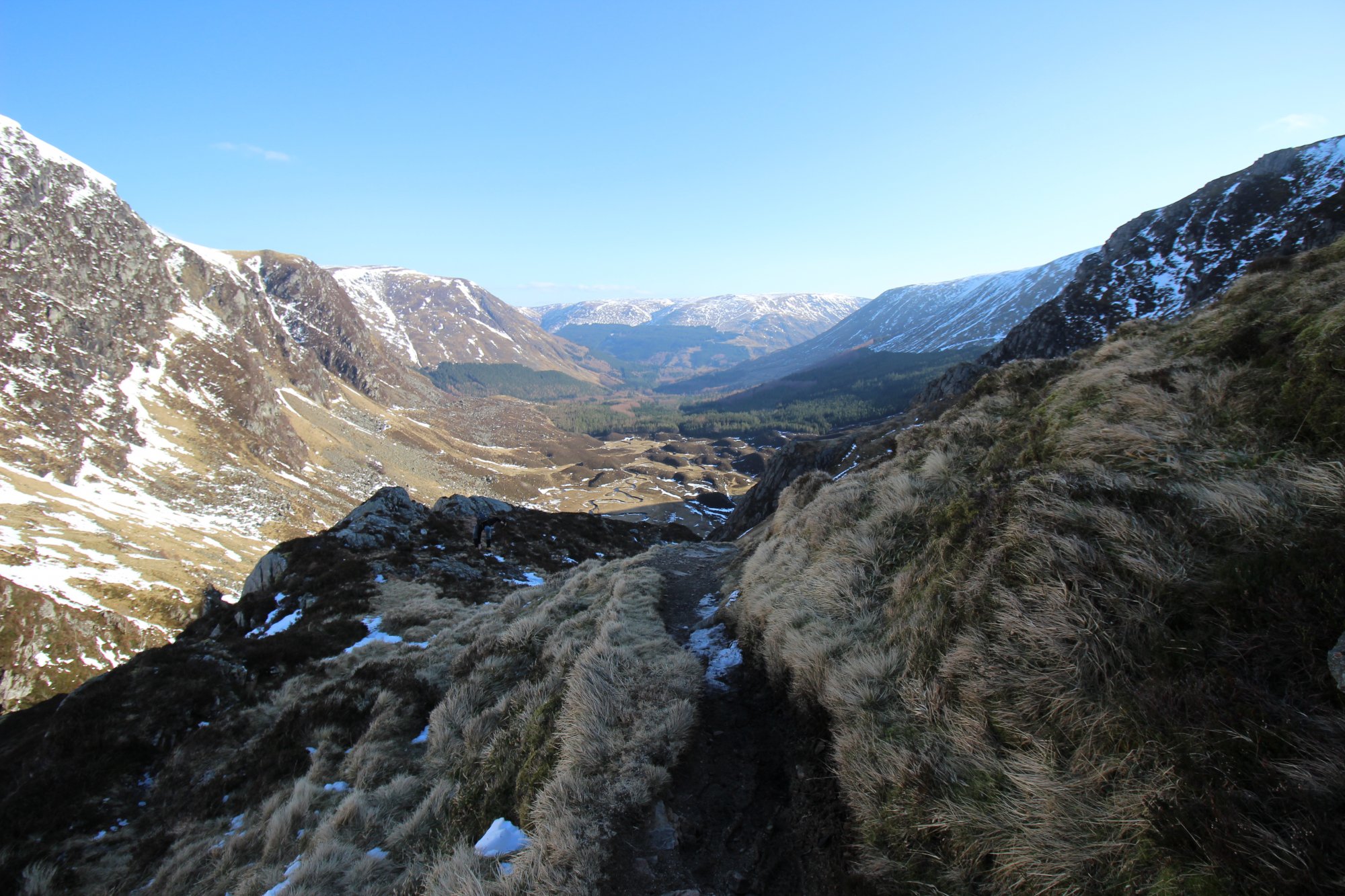
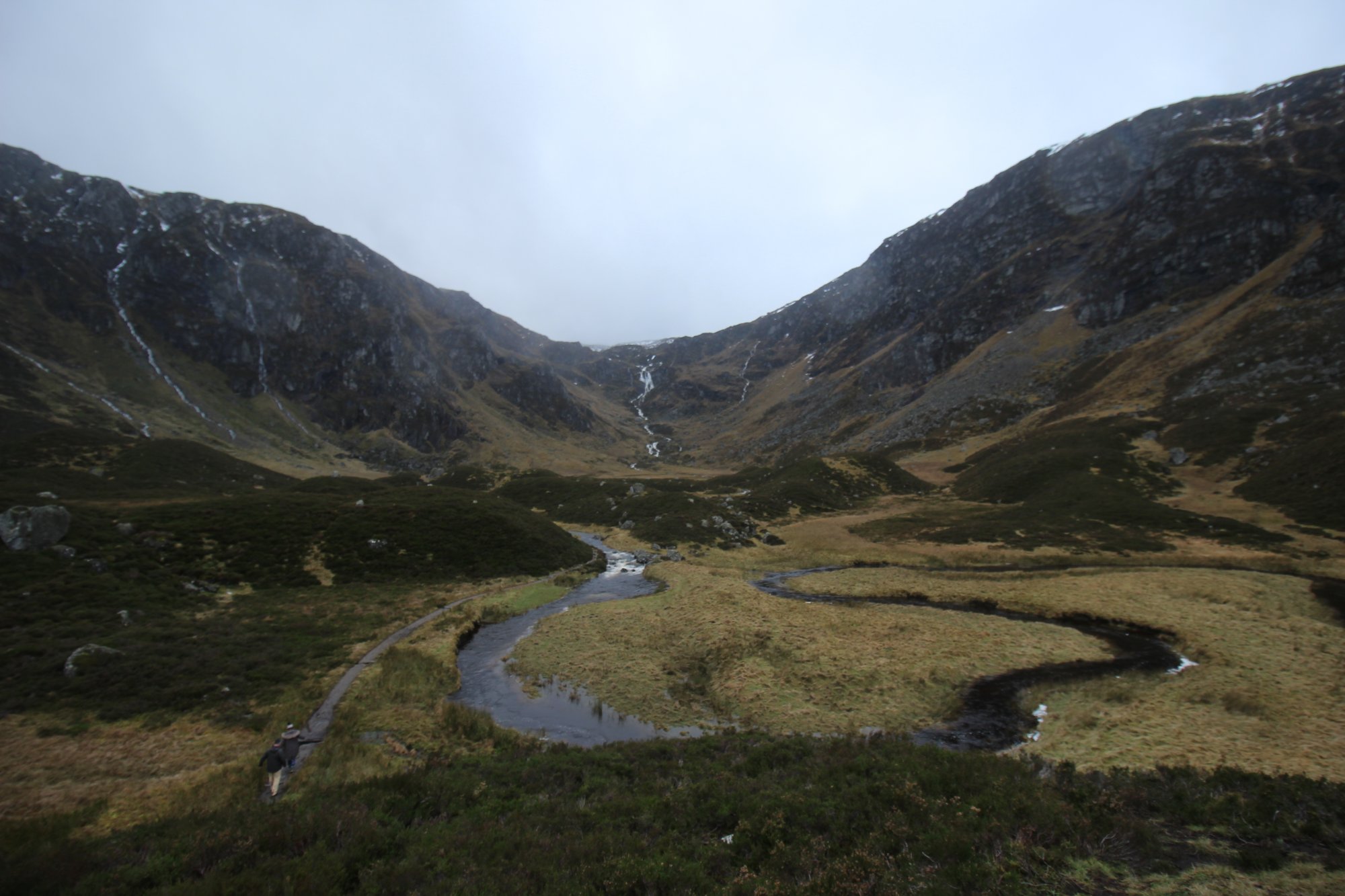
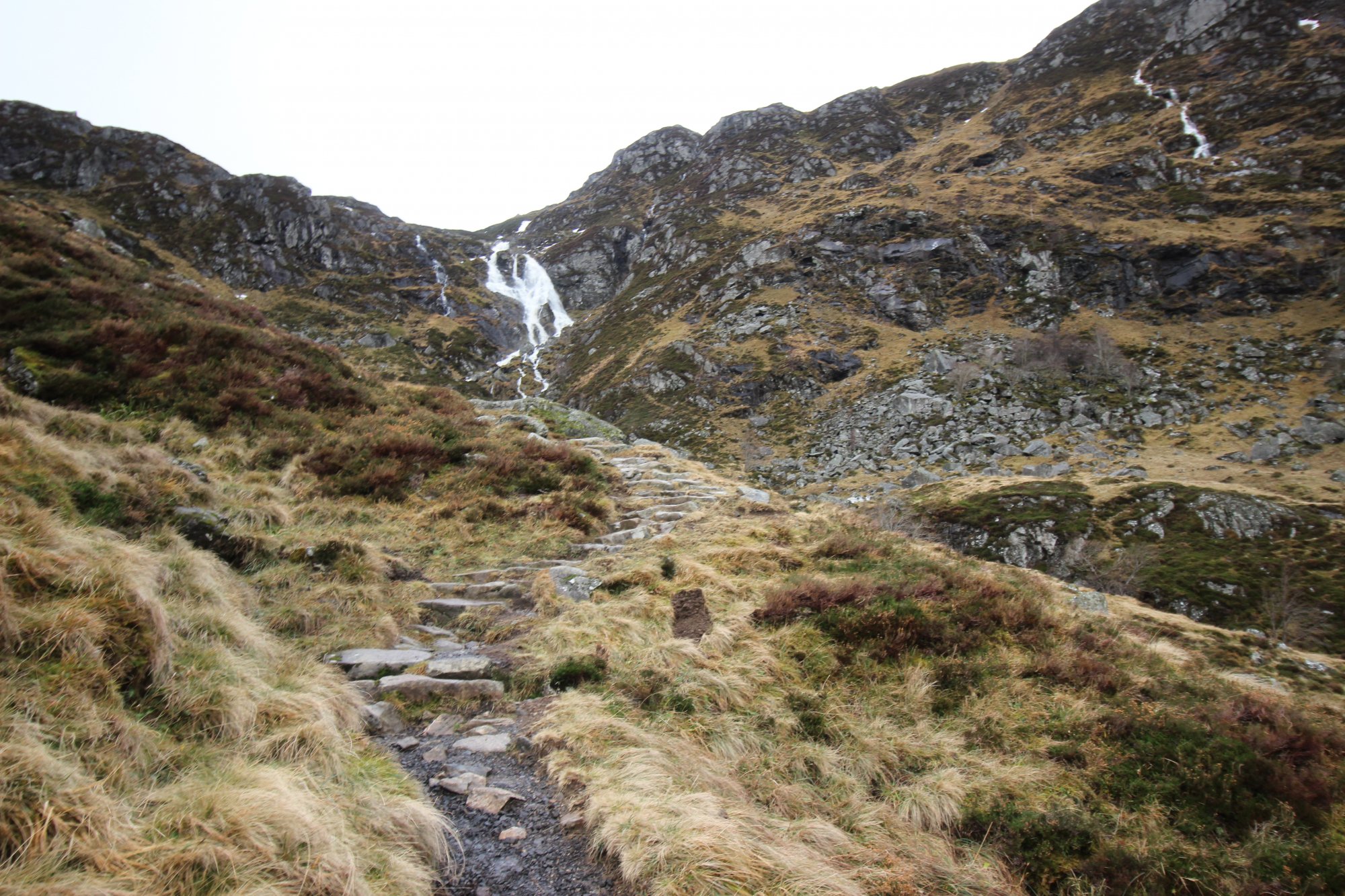
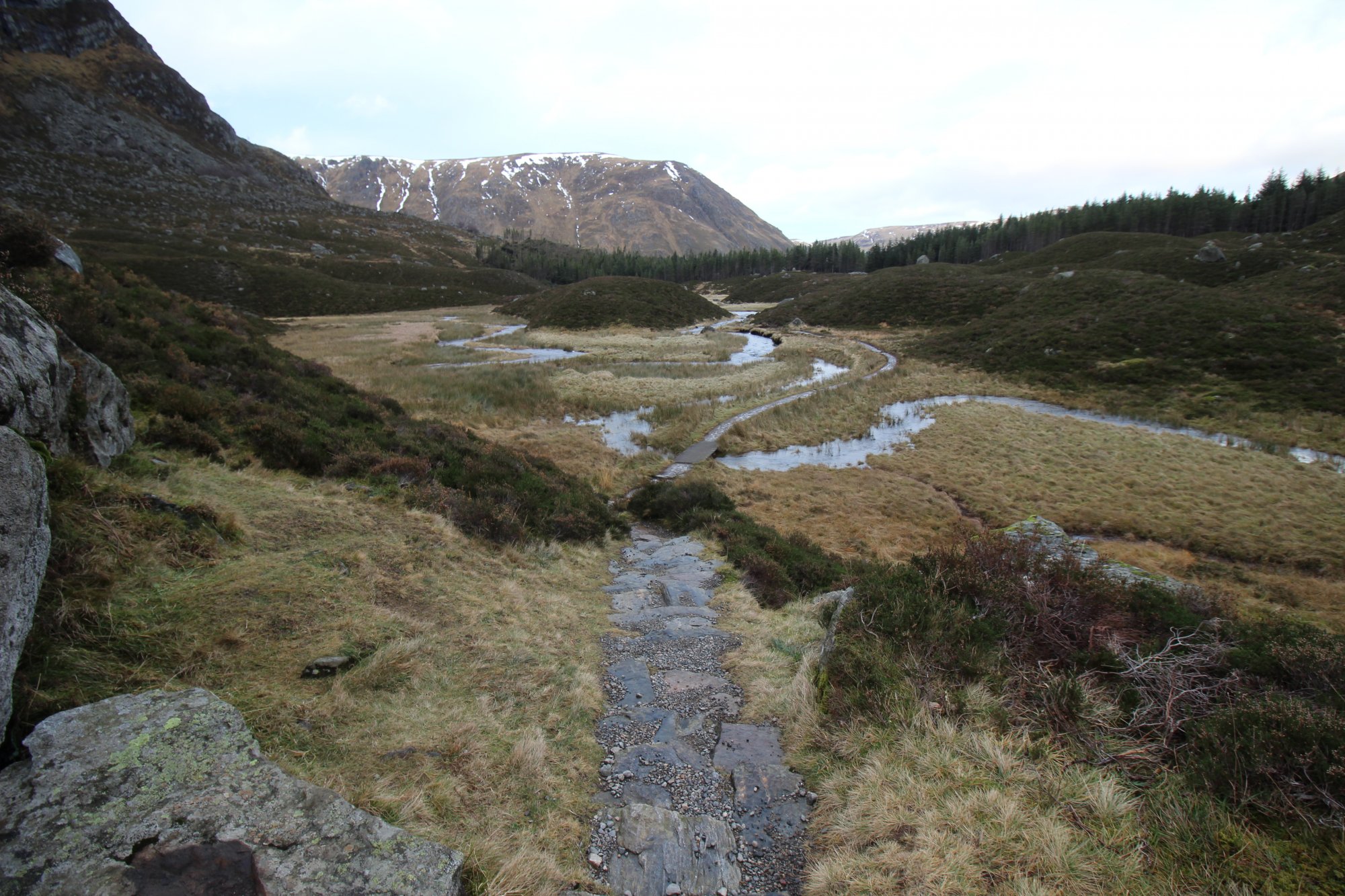
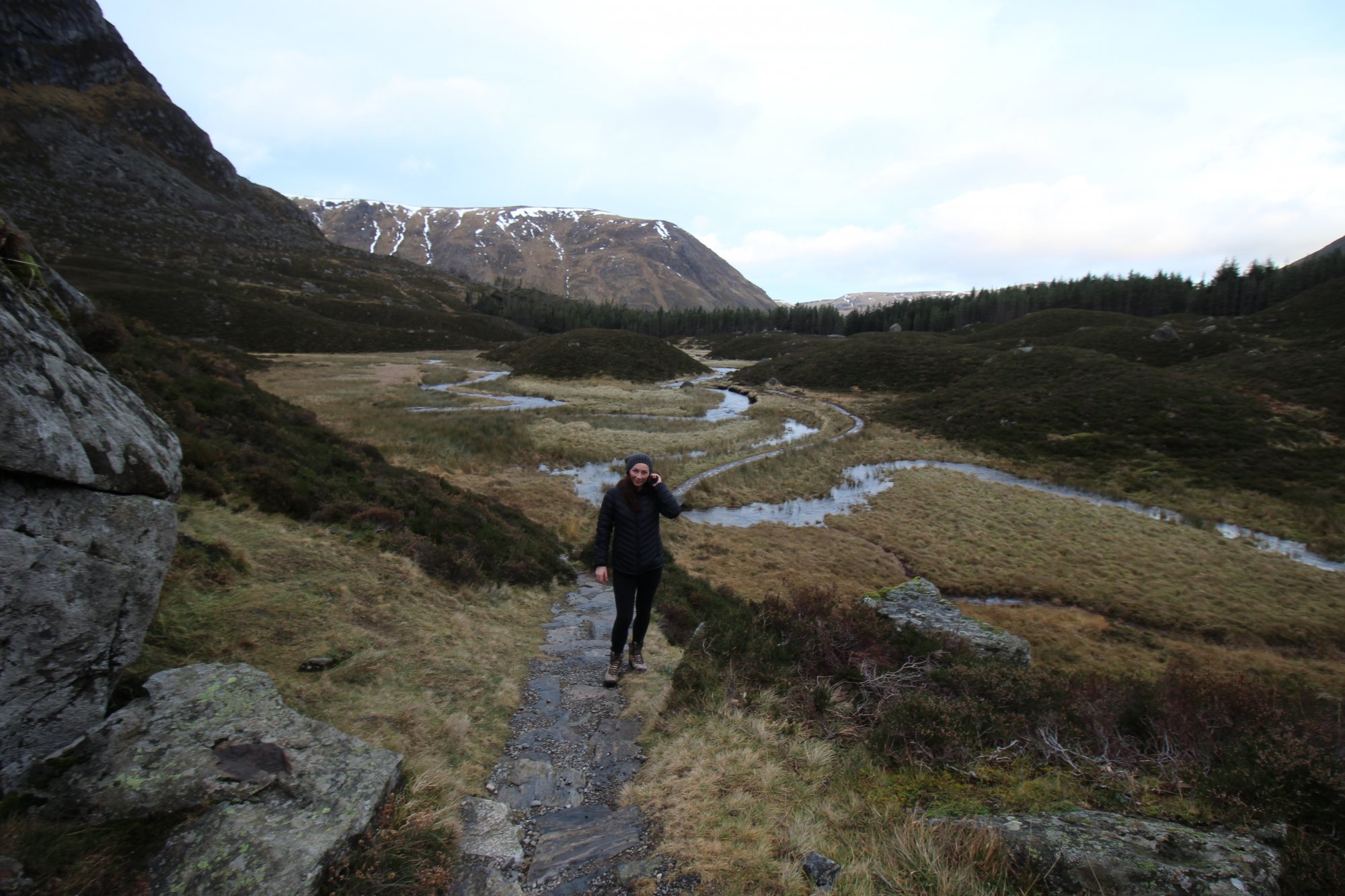
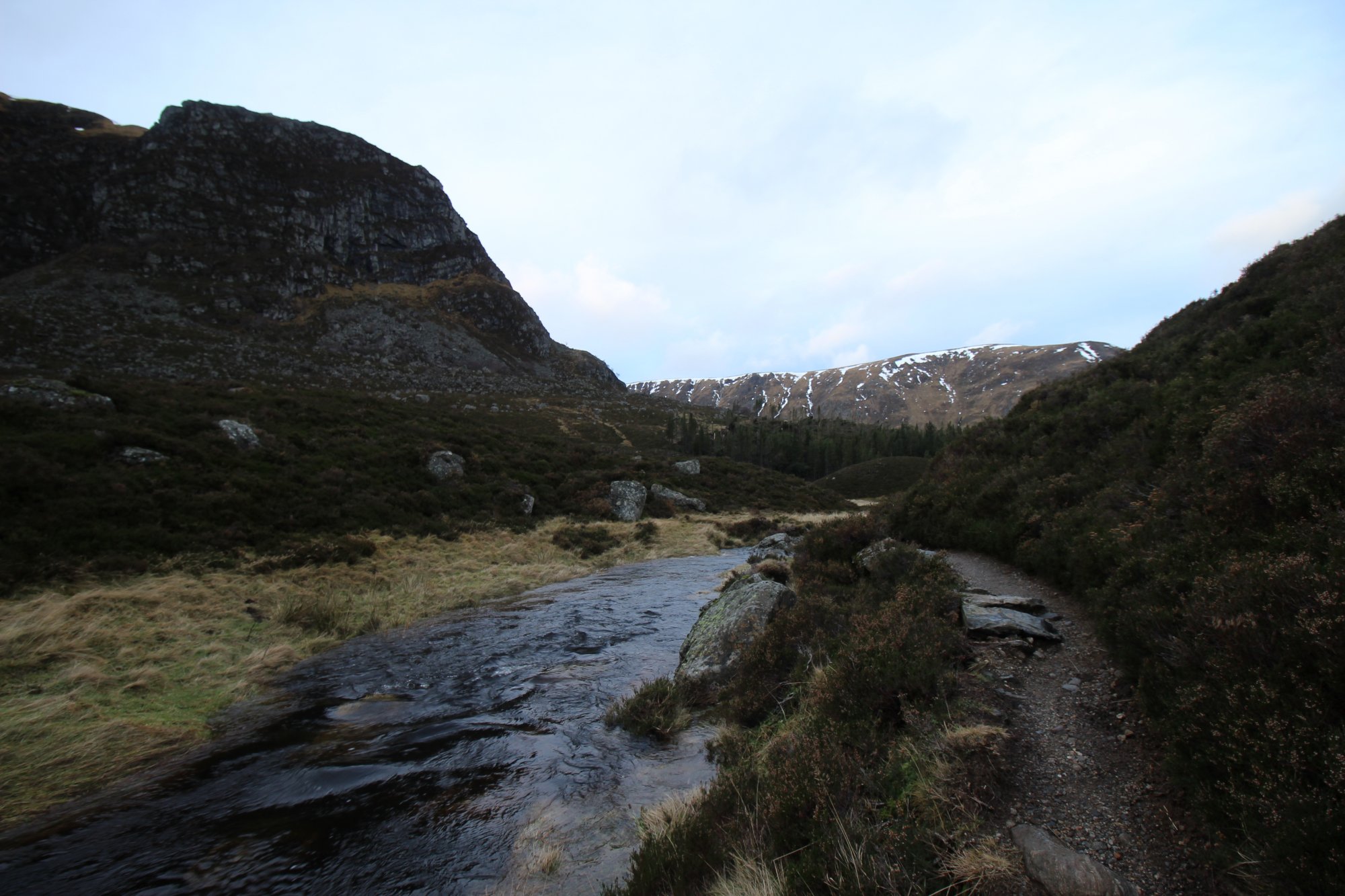
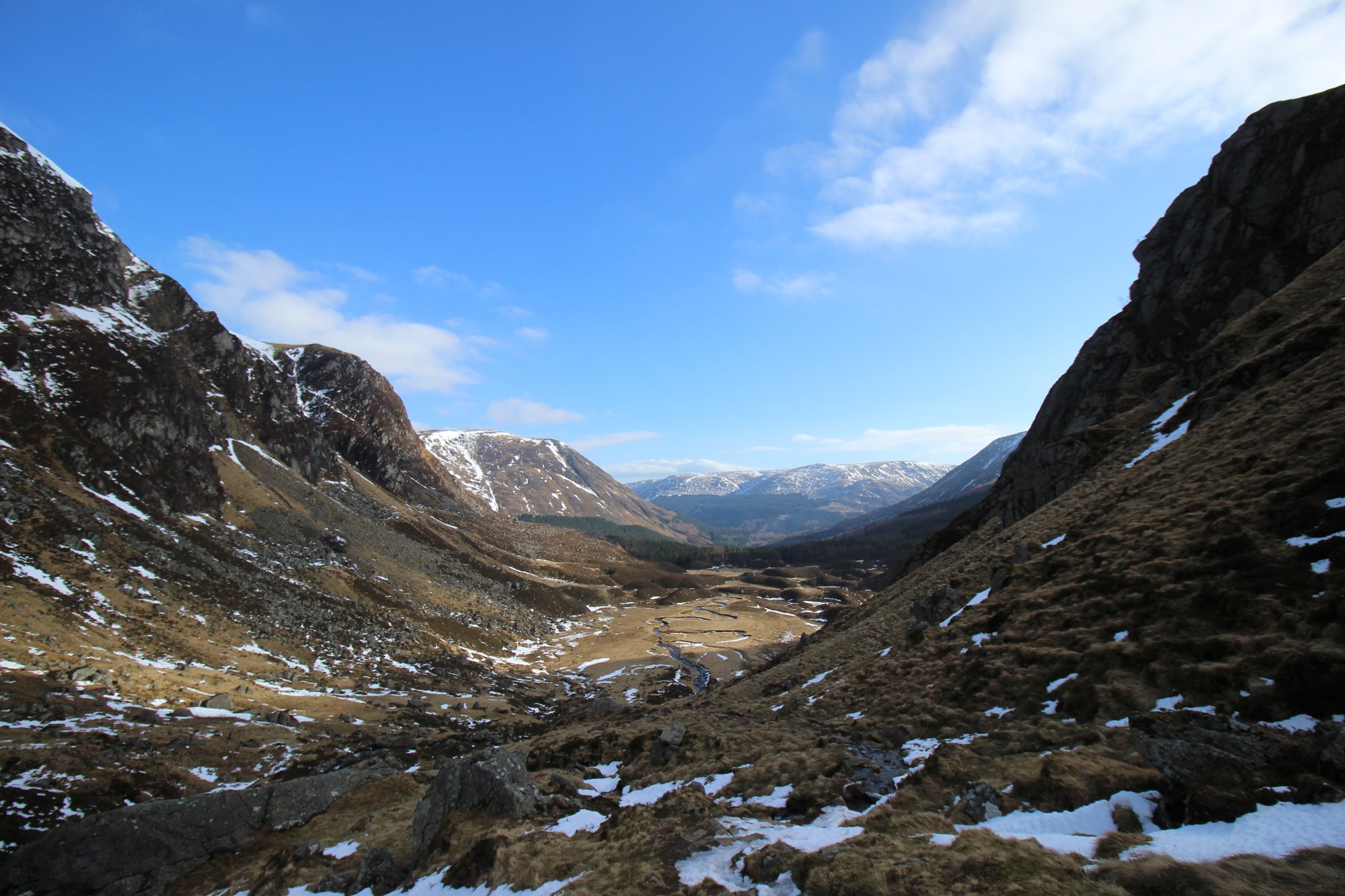
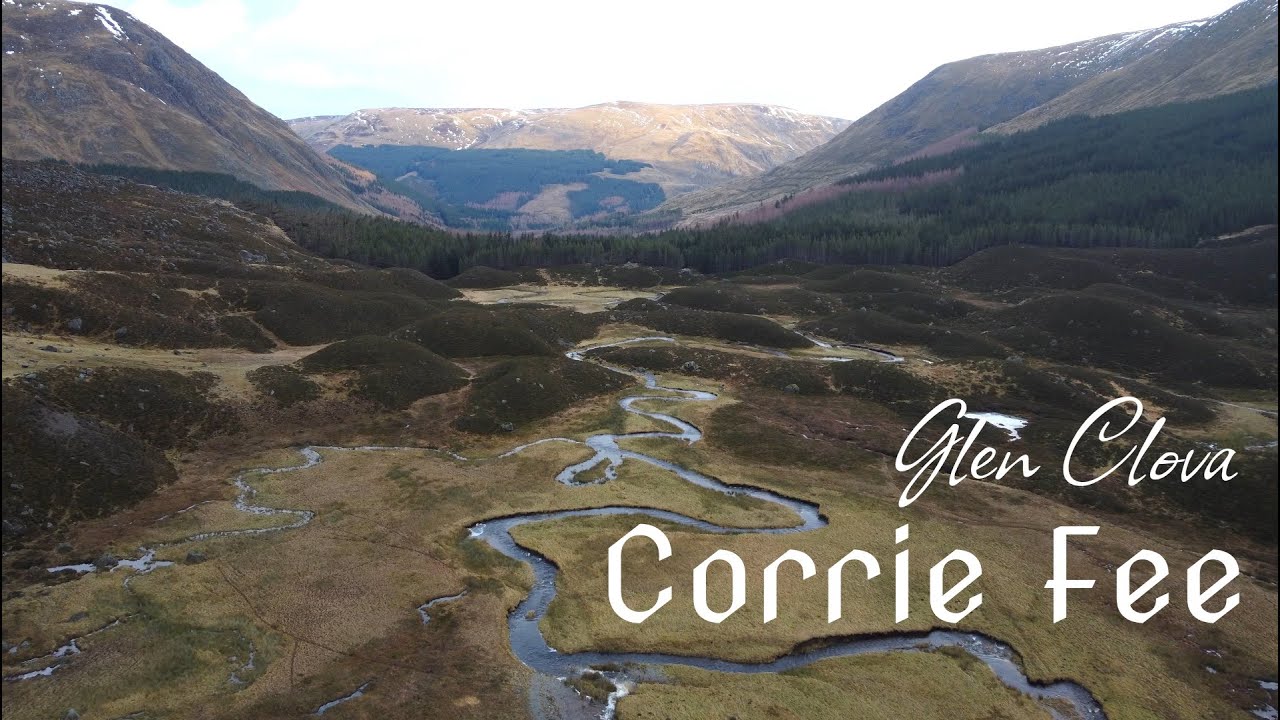
When you emerge from the sheltering tree line of the forest trail, you are greeted by a view that looks almost too perfect to be natural. Corrie Fee is a classic "cirque" or "corrie"—a dramatic bowl-shaped valley gouged out of the plateau by the grinding action of crushing ice during the last glacial period. The floor of the valley is a geological work of art. The retreating glaciers left behind a series of hummocky moraines, which manifest today as little grassy hills shaped like rolling green waves. Winding its way smoothly between these prehistoric mounds is the Fee Burn, a crystal-clear stream that meanders in brilliant silver loops across the valley floor. At the far western end of the bowl, ancient cliffs rise vertically toward the sky, and a mountain torrent cascades down the rock face in a picturesque white ribbon. Seeing the symmetry of the cliffs, the serpentine river meanders, and the waterfall in one panoramic sweep is one of the most magnificent experiences you can have in Scotland.
The Hidden Arctic Garden
Corrie Fee is not just a visual triumph; it is a National Nature Reserve (NNR) and a site of international botanical importance. Because of its unique amphitheater shape and high-altitude, moisture-retaining cliffs, the corrie creates a sheltered microclimate that supports incredibly rare arctic-alpine plant communities. Many of the flowers found clinging to the damp, inaccessible rock ledges here are ice age survivors—vulnerable species like the Alpine Blue-sow-thistle and various rare saxifrages that are found in very few other places in Britain. It is a fragile ecosystem that has remained relatively unspoiled for thousands of years. As you walk through the valley, you are literally walking through a living museum of the Scottish landscape as it appeared immediately after the ice melted, making it a sanctuary for naturalists and quiet observers alike.
The Trail: From Glen Doll to the Waterfall
The walk from the main Glen Doll car park is relatively straightforward but full of character, taking roughly one hour of steady, slightly upward walking to reach the entrance of the corrie. The journey can be broken down into three distinct phases:
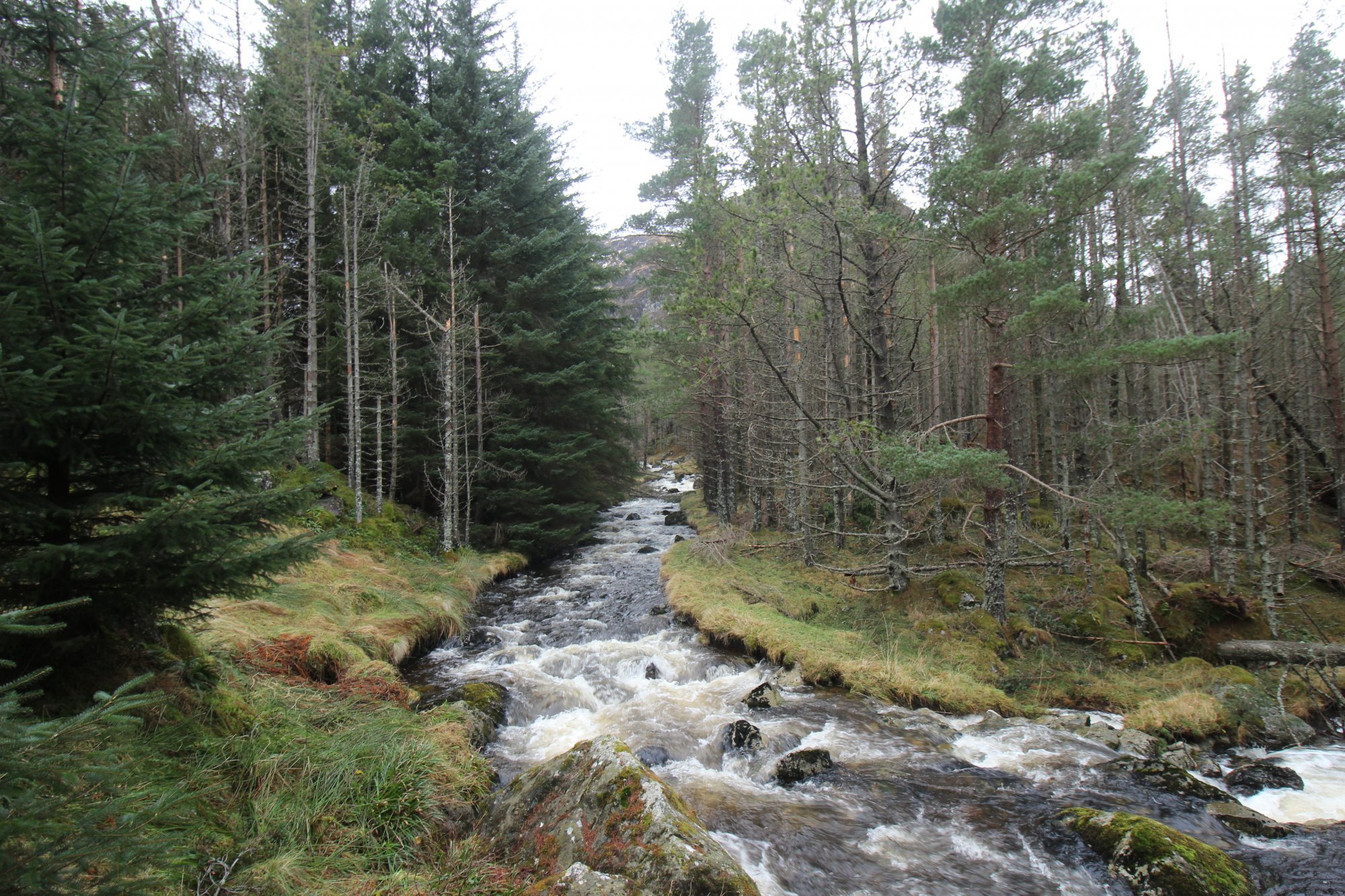
- The Forest Path: The trail leads you through the managed timber and native woodland of Glen Doll. For several years, navigating this path was a physical challenge due to the thousands of trees leveled by Storm Arwen. In 2026, the forestry teams have successfully cleared the main arterial routes, though you can still see the massive, upturned root plates of fallen giants along the trail margins, serving as a powerful reminder of the raw strength of Highland storms.
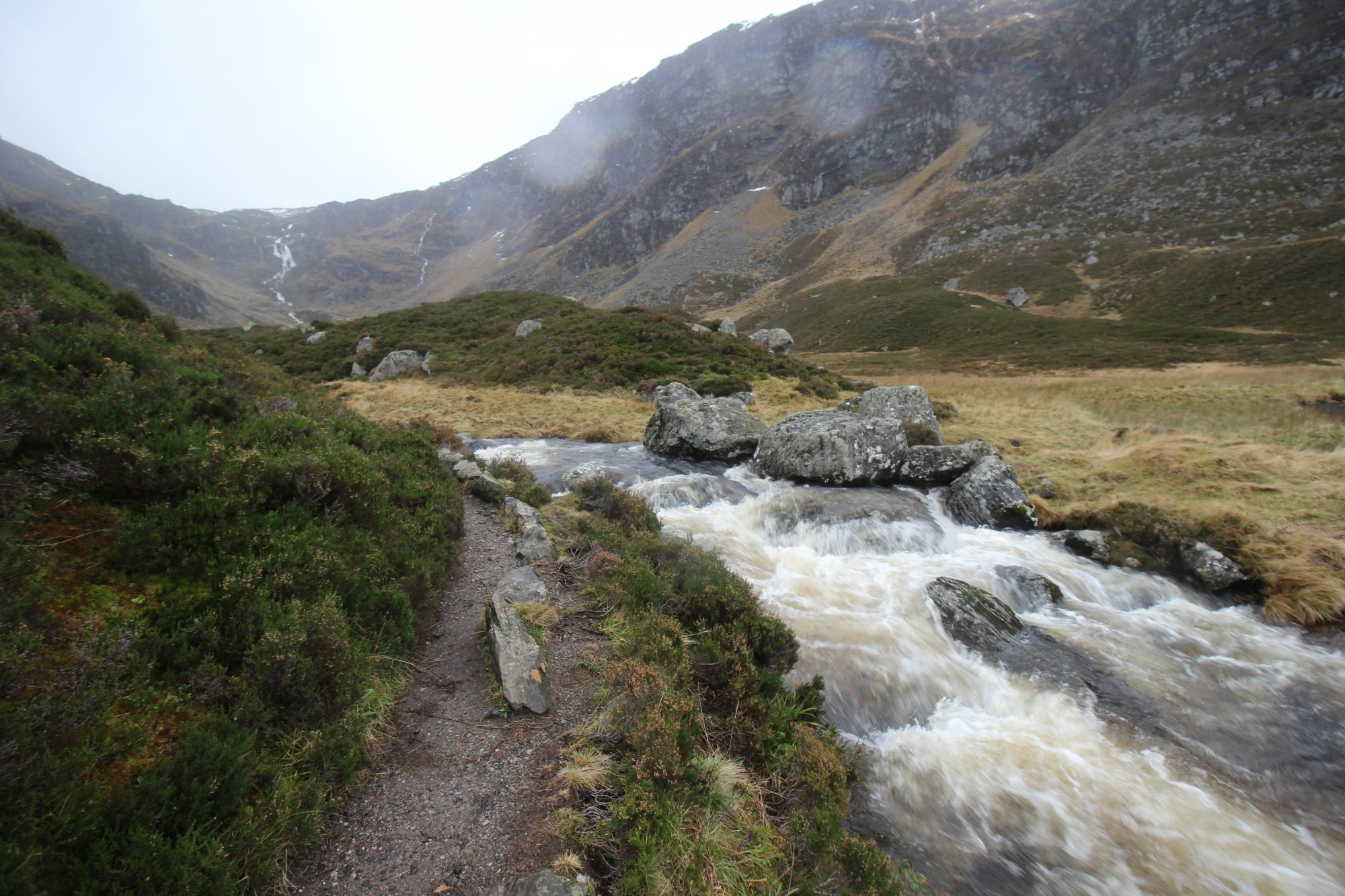
- The Reveal: The exact moment the trees thin out and the massive glacial bowl opens up before you is the undeniable highlight of the trip. The path remains well-constructed and dry as it heads directly through the heather toward the base of the waterfall.
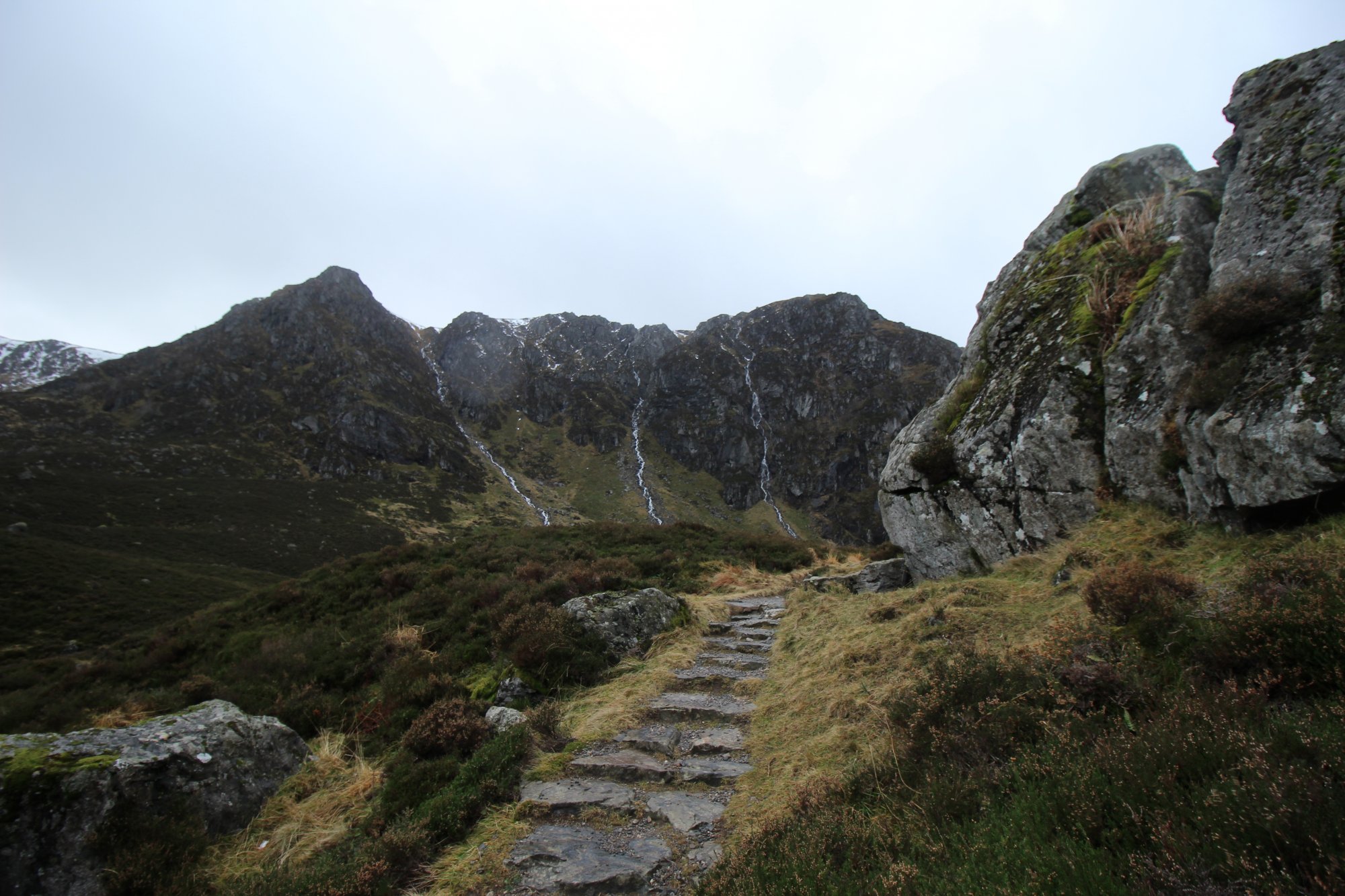
- The Munro Ascent: For those with more energy, the path continues onward. A series of steep, rocky steps known as the Kilbo Path takes you up beside the roaring waterfall and onto the high plateau, leading toward two popular Munros: Mayar (928m) and Driesh (947m).
Visiting in 2026: Practical Advice
Corrie Fee is a popular spot for good reason, but its status as a highly protected Nature Reserve means it requires a bit of "tread lightly" respect from every visitor. Before you start your walk, it is highly recommended to stop by the Glen Doll Ranger Centre located at the car park. The staff are incredibly helpful and can provide up-to-date info on ground conditions, especially if recent heavy rain has caused the Fee Burn to swell. The car park is large but can fill up by 10:00 AM on sunny weekends; in 2026, a small parking fee remains in place, with all proceeds going directly toward maintaining the paths through the reserve. For photography enthusiasts, a late afternoon visit during the summer or crisp autumn months is ideal, as the sun dips behind the peaks of Mayar, casting long shadows across the moraines and making the river loops glow like a silver thread. Finally, if you plan to use a drone to capture the waterfall, always check for local nesting notices at the Ranger Centre first, as Corrie Fee is a vital nesting site for protected Golden Eagles and Peregrine Falcons.
Conclusion: An Unforgettable Wilderness Sanctuary
There is a profound, echoing stillness inside Corrie Fee that is incredibly hard to find elsewhere. Because the valley is enclosed on three sides by jagged, towering peaks, it feels perfectly protected—a secret world hidden away at the far end of the road. Whether you are using its well-graded paths as a gateway to the high summits of Mayar and Driesh, or simply sitting on top of one of the grassy glacial waves to watch the water fall from the cliffs, it is a place that feels genuinely magical. It stands as arguably the finest example of classic glacial geography in the British Isles, leaving an indelible mark on the soul of everyone who steps out from the forest to witness its grand reveal.