



Conic Hill: The Gateway to the Highlands and Loch Lomond Vistas
Rising directly above the picturesque village of Balmaha, Conic Hill stands proudly as one of the most popular and heavily frequented peaks in all of Scotland, firmly sharing the spotlight with legendary landmarks like Ben Nevis, The Cobbler, and Arthur's Seat. Despite its modest height of just 361 meters (1,184 feet), this sharp volcanic ridge punches far above its weight class, serving as a dramatic physical marker of the Highland Boundary Fault line—the ancient geological division where the rolling Scottish Lowlands abruptly collide with the rugged Highlands. Because it sits within exceptionally easy driving distance from Glasgow and Stirling, Conic Hill acts as an incredibly popular weekend escape for urbanites, hillwalkers, and families alike. It is a bustling, energetic hill where you can almost always guarantee a crowd at the summit. For those planning an excursion, starting early in the morning is absolutely vital to secure a parking space, as the massive main visitor car park in Balmaha can fill to absolute capacity by mid-morning during pleasant weather, proving just how deeply loved this iconic viewpoint truly is.
The Trail: A Reconstructed Path for All Generations
One of the primary reasons for the immense popularity of Conic Hill is the highly accessible nature of its trail. The route begins right from the edge of the Balmaha car park, initially winding through a beautiful, mature oak woodland before breaking out onto the open, heather-clad slopes. To combat the severe erosion caused by hundreds of thousands of annual footsteps, the path has recently undergone a major, high-quality stone reconstruction. This extensive upgrade has transformed what was once a deeply eroded, muddy trench into a series of clear, well-defined stone steps and gravel pathways, making the ascent significantly easier and safer to climb for walkers of all generations. Under fair summer conditions, an average walker can reach the summit ridge in roughly 45 minutes to an hour. Its approachable nature makes it a fantastic, rewarding trail for young adventurers; even in the dead of winter, a family navigating the trail with an eight-year-old child can comfortably achieve the summit in less than 1.5 hours. It serves as an ideal, confidence-boosting training ground for anyone looking to practice their hillcraft before stepping up to the more physically demanding Munros.
Winter Warning: The Seasonal Shift
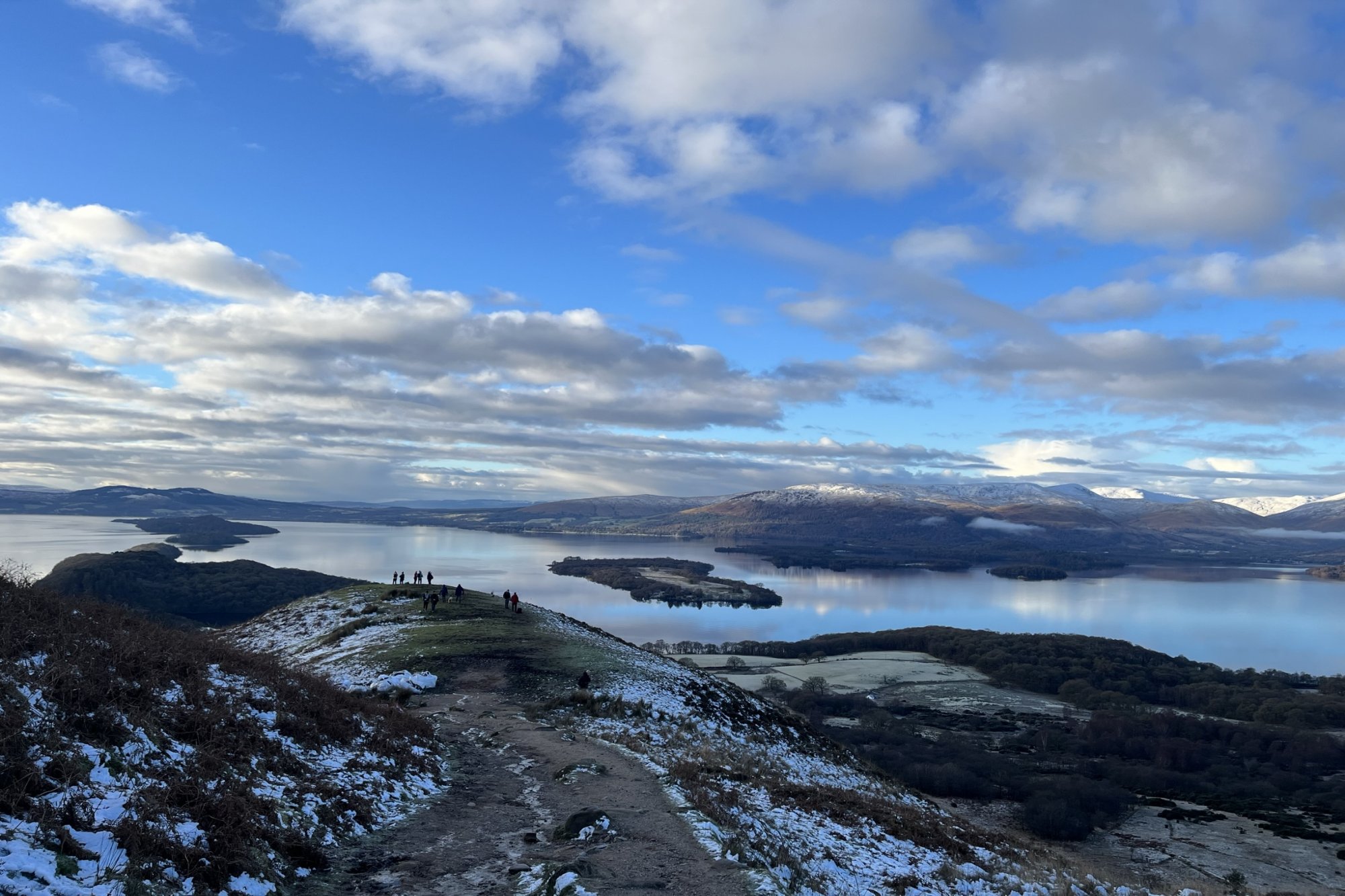
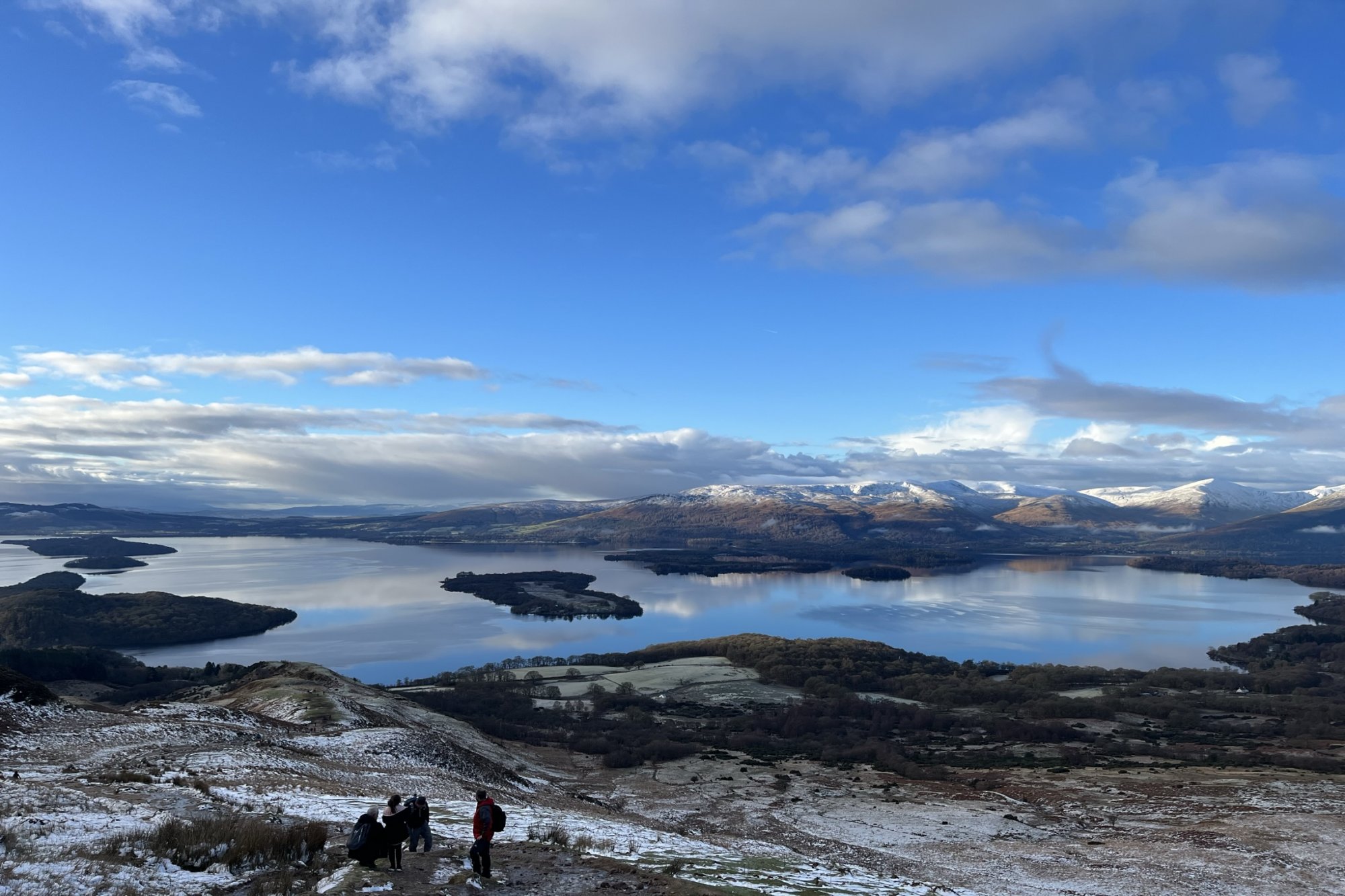
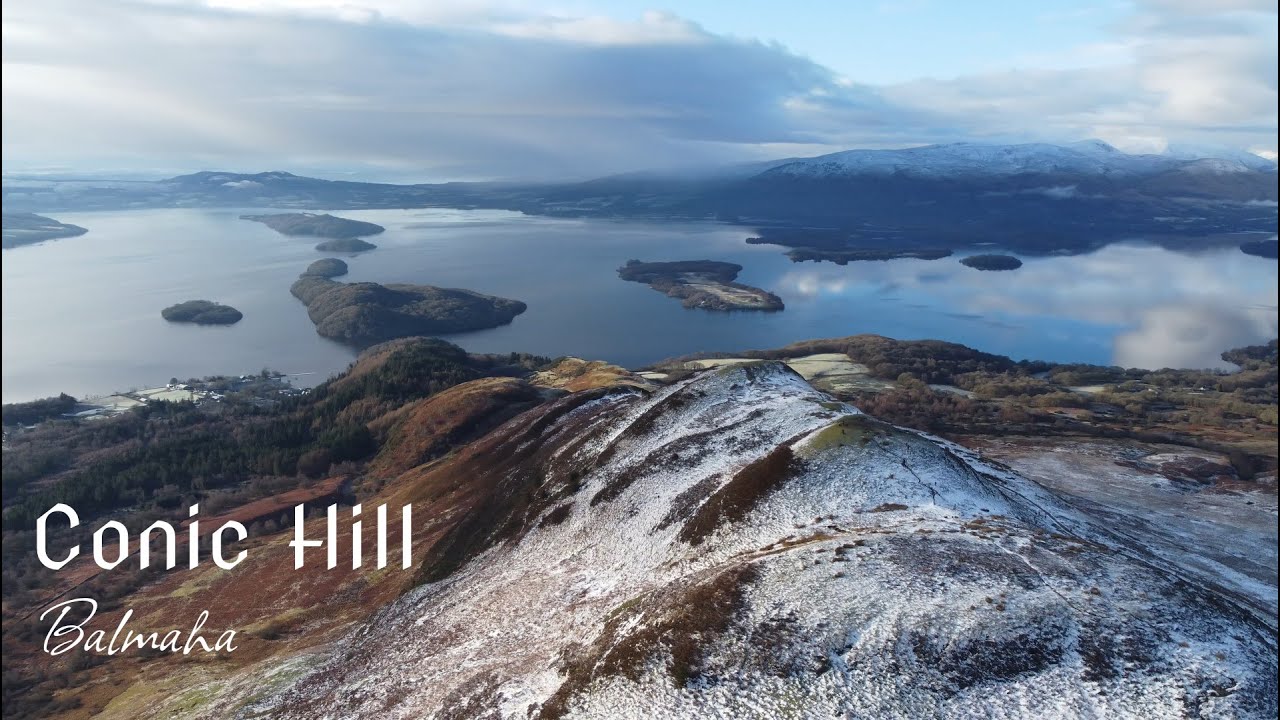
While the reconstructed path has vastly improved accessibility, it is important to stress that Conic Hill must still be treated with respect, particularly during the colder months. In the winter, the heavy stone steps and gravel sections routinely trap moisture, which freezes overnight into treacherous, invisible sheets of black ice. This makes sections of the trail exceptionally slick and slippery, especially during the early morning hours before the sun has a chance to soften the frost. Without proper waterproof hiking footwear featuring deep, aggressive tread—or even a simple pair of microspikes packed in your rucksack—navigating the steep upper sections can quickly become tricky and dangerous. The hill may be low in altitude, but its exposed position on the edge of Loch Lomond means that biting arctic winds and sudden drops in temperature can catch ill-prepared walkers off guard, reminding visitors that even a "training hill" requires essential winter awareness.
The Reward: Loch Lomond’s Great Island Chain
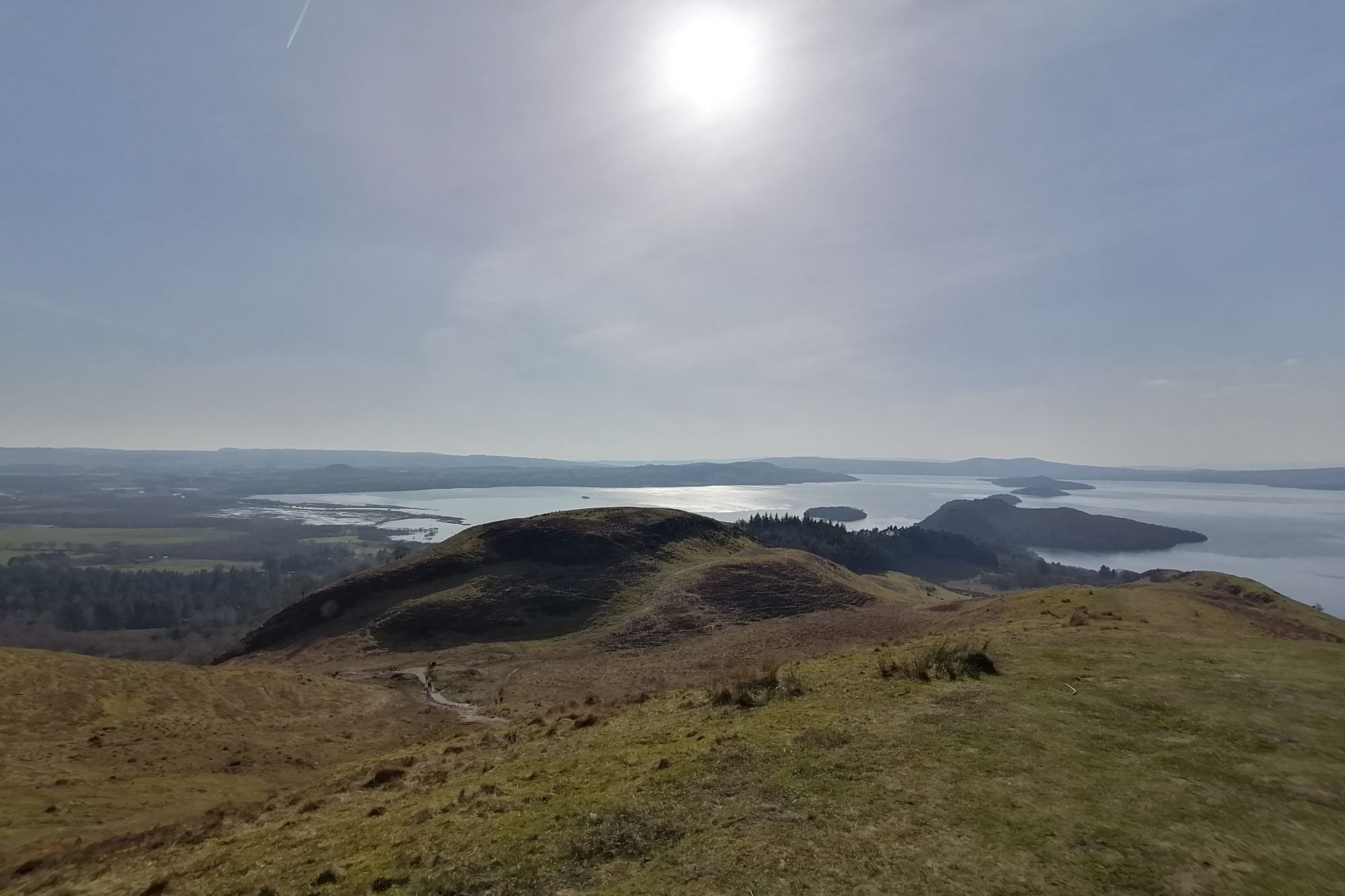
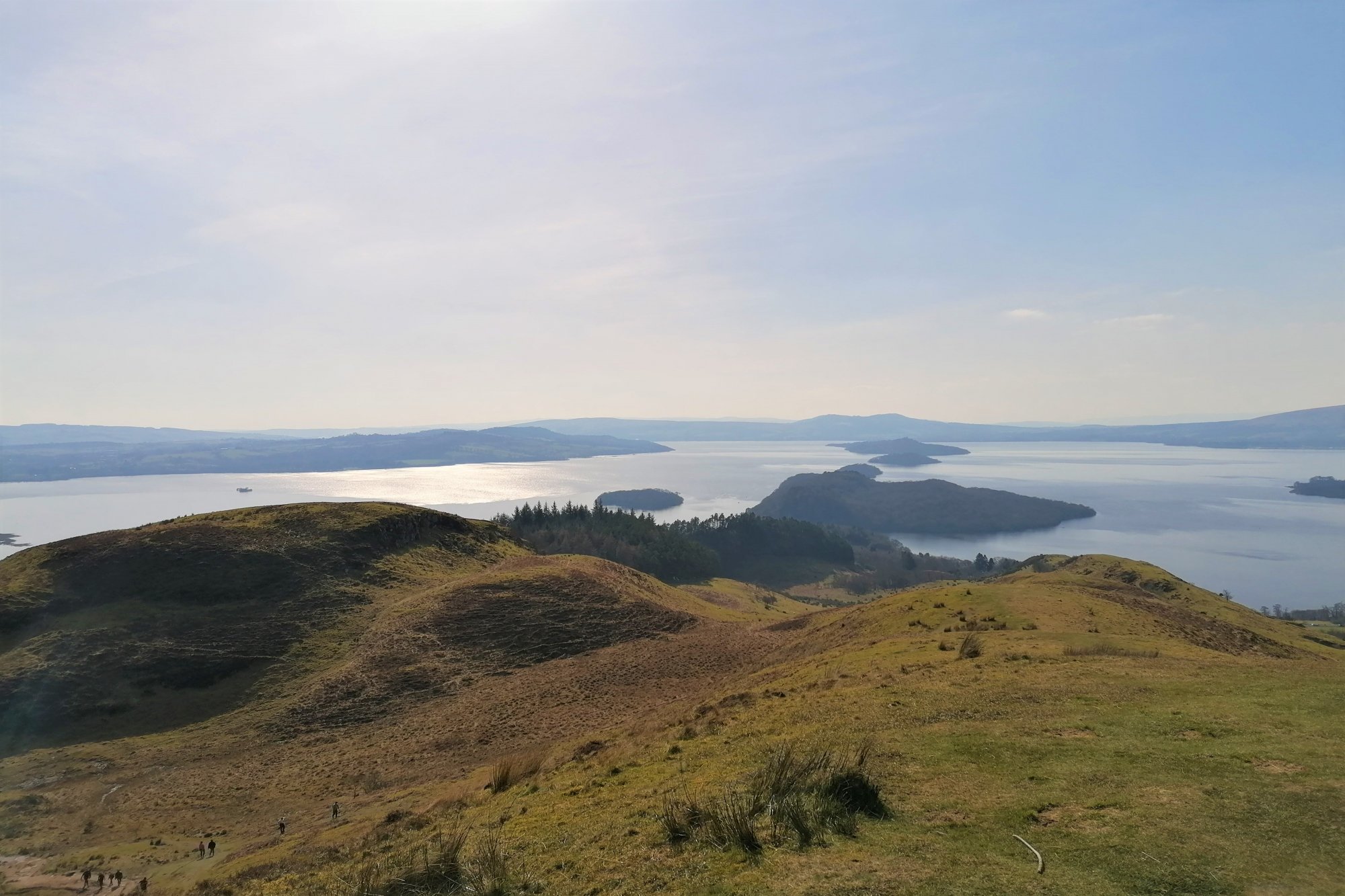
The ultimate reason for Conic Hill's legendary status—and arguably the most important draw for visitors—is the staggering, world-class view from the ridge. Because of its unique position directly on the geological fault line, the hill offers an unmatched, front-row seat to the dramatic topography of Loch Lomond, the largest body of freshwater by surface area in Great Britain. Roughly halfway through the steady climb, the trees fall away and the landscape opens up to reveal a breathtaking, panoramic vista that only grows more rewarding the higher you climb. Looking down across the shimmering water, you can clearly trace a perfect, straight line of emerald-green islands—including Inchcailloch, Torinch, and Creinch—which are actually the protruding tops of the subterranean fault line itself. Looking across to the far side of the loch, the horizon is dominated by the jagged, snow-capped peaks of the Arrochar Alps, while turning your gaze to the right reveals the massive, brooding bulk of Ben Lomond rising majestically just 10 miles away along the eastern bank.
A Superior Training Ground
When compared to other popular, low-altitude "training" hills scattered across central Scotland, such as the rolling paths of the Pentland Hills near Ediburgh or the steep grass slopes of the Ochil Hills near Stirling, Conic Hill occupies a league of its own. While those ranges certainly offer excellent physical exercise, the visual reward at the top of Conic Hill is vastly superior. Instead of looking out over suburban sprawl or agricultural fields, standing on the summit of Conic provides a raw, cinematic introduction to the true Scottish wilderness. It is a place where you can stand with one foot in the Lowlands and one foot in the Highlands, watching the weather fronts roll in from the Atlantic over a vast labyrinth of water, islands, and ancient mountains. For anyone looking to capture the quintessential spirit of Scotland's natural beauty without embarking on an exhausting all-day mountain expedition, Conic Hill remains an absolute masterpiece of the landscape.
Practical Tips for a Perfect Ascent
To ensure a successful and enjoyable hike up Conic Hill, a few practical considerations will help you stay ahead of the crowds. If the Balmaha car park is full upon arrival, limited overflow parking can sometimes be found, but arriving before 9:00 AM is the easiest way to avoid stress. After completing the descent, hikers should take advantage of the excellent local hospitality in Balmaha, which features a famous traditional inn and a cozy village shop perfect for a celebratory post-hike meal or a hot coffee. For photography enthusiasts, the absolute best time for a trek is during the late afternoon "Golden Hour" or a clear winter sunset. As the sun drops behind the Arrochar Alps on the western horizon, it casts a warm, fiery amber glow across the entire chain of islands and turns the waters of Loch Lomond a deep, metallic silver, creating a dramatic, postcard-perfect scene that will linger in your memory long after you have returned to the glen.
Conclusion: An Enduring Highland Classic
Conic Hill perfectly encapsulates why people fall in love with the Scottish landscape. It beautifully balances accessibility with immense scenic reward, offering a short, newly upgraded trail that can be safely enjoyed by families, yet delivering a panoramic summit view that rivals the grandest peaks in Europe. It is a bustling crossroads of outdoor enthusiasm, where the energy of the crowds reflects the shared joy of standing at the true gateway to the Highlands. Whether you are using its stone steps to build up your fitness for the high peaks, introducing a young family member to their very first summit, or standing on the ridge in the crisp winter air capturing the sun setting over the islands, Conic Hill remains an unmissable, deeply rewarding Scottish classic.